Cork Handicrafts
CN → US| HS Code | Tariff Rate | Origin | Destination | Doc |
|---|---|---|---|---|
| 6808000000 | 35.0% | CN | US | Official Doc |
| 4504104000 | 35.0% | CN | US | Official Doc |
| 4504103000 | 35.0% | CN | US | Official Doc |
Product Images
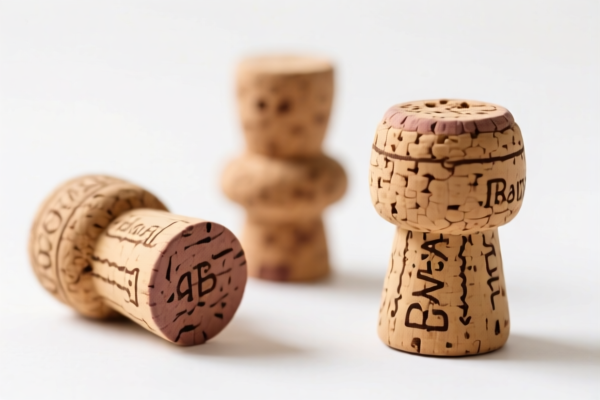
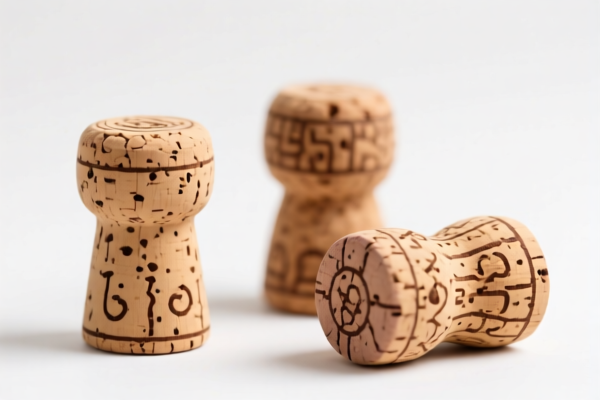
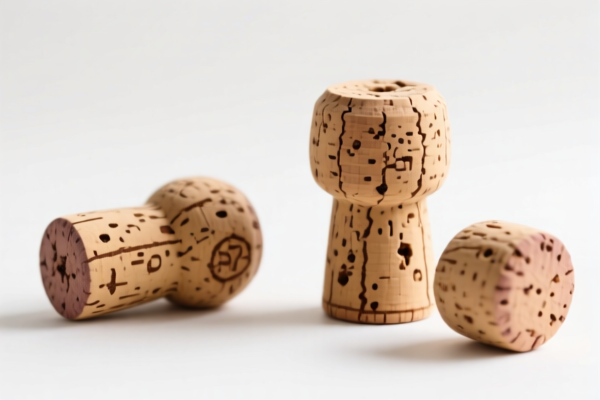
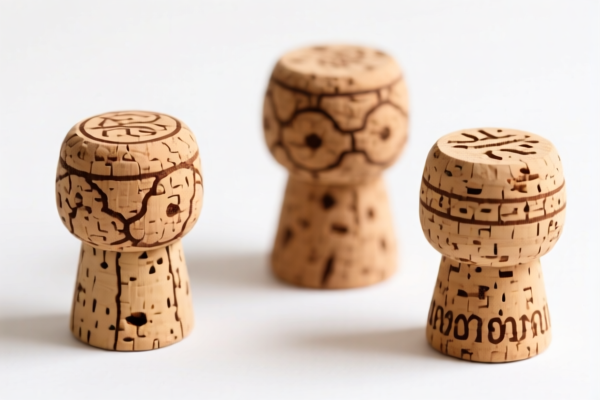
AI Analysis
🪵 Cork Handicrafts (Softwood Building Materials / Architectural Components)
🌐 HS Code Reference & Customs Clearance Guide | 2026 Latest Tariff Analysis | Professional Clearance Strategy
📌 I. Product Definition & Classification: What Are "Cork Handicrafts" in Trade?
In international trade, "Cork Handicrafts" (软木工艺/建材) is a broad term. However, based on the provided data, the focus is on Cork Building Materials/Components (e.g., panels, tiles, boards, blocks). These are primarily derived from the bark of the cork oak tree (Quercus suber) and are used for insulation, decoration, flooring, or structural accents.
⚠️ Key Classification Distinction:
- If the product is processed cork boards, tiles, or blocks used for building/construction purposes → It falls under Chapter 45 (Cork and manufactures of cork).
- If the product is raw cork slabs or specific unprocessed forms categorized under general building materials in older or specific national subheadings → It might historically align with Chapter 68 (Mineral materials), though Chapter 45 is the modern standard for cork products.
- Critical Note: The provided data maps these items to both6808.00.00.00(as "Building Materials") and4504.10.x.x(as "Cork Manufactures"). This reflects potential classification disputes or specific national interpretations where cork is treated akin to mineral-based building materials or strictly as cork manufactures.
📦 II. HS Code Classification Details (Based on Provided Data)
| HS Code | Product Description | Application Scenario | Material/Form |
|---|---|---|---|
6808.00.00.00 |
Hard rubber (ebonite) and articles thereof; Mineral building materials/planks made of vegetable fibers/wood | Classified as "Building Materials" based on form (boards/products) | Plant fiber/Wood-like structure |
4504.10.40.00 |
Agglomerated cork, whether or not with added binder; Cork granules, chips, powder, and waste | Cork building materials, matching material and basic form inferred by building use | Agglomerated Cork |
4504.10.30.00 |
Agglomerated cork; Covers for corks, bottles, etc.; Cork tiles, flags, and similar products | Covers tiles, boards, blocks, etc., matching material and use | Cork Tiles/Boards/Blocks |
🔍 Key Insight:
-4504.xxxxis the most accurate modern classification for manufactured cork products (agglomerated cork tiles, boards, etc.).
-6808.00.00.00is less common for cork today but appears in the data as a "Building Material" category, possibly due to specific national tariff line structures or historical grouping of "cork-like" insulating boards.
- Always verify with local customs if "Cork" is explicitly listed under Chapter 45 or if it falls under Chapter 68 for "insulating boards."
💰 III. 2026 Latest Tariff Rate Breakdown (Including Surtaxes & Policy Add-ons)
✅ Applicable Country: United States (US)
✅ Country of Origin: China (CN)
✅ Effective Date: November 10, 2025 (and subsequent imports)
🎯 1. 6808.00.00.00 – Cork/Mineral Building Materials (Board/Product Form)
| Item | Content |
|---|---|
| Base Duty Rate | 0% (ad valorem) |
| USITC Surtax (Section 301) | +25% (From USITC Footnote related to Section 301) |
| IEEPA Surtax (Section 122/122) | +10% (针对中国/香港产品,自2025年11月10日起) |
| Total Duty Rate | 35.0% |
| Duty Calculation | CIF Value × 35% |
| De Minimis Eligibility | ❌ Not Eligible (deny_de_minimis) |
| Legal Basis Path | IEEPA:9903.01.25 → IEEPA:9903.01.24 → USITC:6808.00.00.00 → FOOTNOTE:Section 301/122 |
📌 Explanation:
- The 0% base rate suggests the product itself has a low conventional duty.
- The 25% Section 301 surtax is the standard USITC penalty on many Chinese goods.
- The 10% IEEPA surtax (often referred to as "122 Clause" in some contexts or Section 232/301 variations) adds an additional layer.
- Total 35% is a significant cost factor for cork building materials.
🎯 2. 4504.10.40.00 – Agglomerated Cork Products (Inferred Building Use)
| Item | Content |
|---|---|
| Base Duty Rate | 0% |
| USITC Surtax (Section 301) | +25% |
| IEEPA Surtax (Section 122/122) | +10% |
| Total Duty Rate | 35.0% |
| Duty Calculation | CIF × 35% |
| De Minimis Eligibility | ❌ Not Eligible |
| Legal Basis Path | IEEPA:9901.25 → IEEPA:9903.01.24 → USITC:4504.10.40.00 → FOOTNOTE:Section 301 |
📌 Note:
- Same tax structure as above. Cork products from China are heavily impacted by US-China trade tariffs.
- Even though cork is a natural, sustainable material, it is not exempt from these surtaxes.
🎯 3. 4504.10.30.00 – Cork Tiles, Flags, Blocks (Building Materials)
| Item | Content |
|---|---|
| Base Duty Rate | 0% |
| USITC Surtax (Section 301) | +25% |
| IEEPA Surtax (Section 122/122) | +10% |
| Total Duty Rate | 35.0% |
| Duty Calculation | CIF × 35% |
| De Minimis Eligibility | ❌ Not Eligible |
| Legal Basis Path | IEEPA:9901.25 → IEEPA:9903.01.24 → USITC:4504.10.30.00 → FOOTNOTE:Section 301 |
📌 Note:
- This subheading covers cork tiles and boards, which are very common in home decor and construction.
- Same 35% total rate applies. Do not assume "handicrafts" or "decor" lowers the duty; if it's a building material/component, the surtax applies.
🛠️ IV. Customs Clearance Practical Advice (Real-World Pitfall Avoidance)
✅ 1. Required Documentation Checklist (All Must Be Provided)
| Document | Required? | Notes |
|---|---|---|
| ✅ Product Specification Sheet | ✔️ | Include dimensions, density, composition (100% cork or agglomerated with binder), fire rating. |
| ✅ Photos of Product & Packaging | ✔️ | Show texture, labeling, and how it's packed (blocks/tiles/rolls). |
| ✅ Commercial Invoice | ✔️ | Clearly state "Cork Building Materials/Tiles" or "Agglomerated Cork Products." Avoid vague terms like "Handicraft" if used for construction. |
| ✅ Packing List | ✔️ | Detail net/gross weight, number of units. |
| ✅ Certificate of Origin (CO) | ✔️ | If from non-China origin, may qualify for lower rates. |
| ✅ Third-Party Test Report | ✔️ | Fire Rating Test (ASTM E84 Class A/B/C) is often required for building materials in the US. |
| ✅ Declaration of Material | ✔️ | Confirm if binders/adhesives are used. If >5% binder by weight, it remains cork; if >20%, it might shift classification. |
✅ 2. Declaration Tips (Key Mnemonic)
🔥 "Be Specific: 'Cork Board' not 'Handicraft'! Declare Use, Avoid Penalties!"
| Situation | Correct Declaration | Incorrect Practice |
|---|---|---|
| Cork tiles for flooring | 4504.10.30.00 – "Agglomerated Cork Tiles for Flooring" |
"Handicrafts" or "Decorative Items" → May trigger scrutiny for misclassification. |
| Cork boards for insulation | 4504.10.40.00 – "Cork Boards for Insulation" |
"Building Materials" (too vague) → Delay in clearance. |
| Raw cork slabs (if applicable) | Check 6808 or 4501 |
Mislabeling as "Wood Panels" → 35% duty + potential fines. |
| Cork coasters/keepsakes (non-building) | Check 4901 or 4907 or 9503 |
If declared as "Building Materials" → Over-declaration risk. |
✅ 3. Special Cases
| Situation | Handling Advice |
|---|---|
| Cork with Adhesives | If adhesives are integral, still 4504. Ensure the bond is durable and not just a temporary fix. |
| Pre-fab Cork Panels | If assembled with other materials (e.g., wood frame), it may no longer be "cork manufactures" but a composite. Get a binding ruling. |
| Fire-Rated Cork | High demand in US commercial buildings. Ensure you have UL or FM approval documents for smooth customs entry. |
| Small Samples | Do NOT use de minimis ($800) for commercial shipments. If it's a bulk order, it will be audited. |
🌍 V. Global Market Clearance Comparison (2026 Latest)
| Country/Region | Recommended HS Code | Duty | Certification Requirements | Notes |
|---|---|---|---|---|
| 🇺🇸 USA | 4504.10.30.00 / 4504.10.40.00 |
35% (CN Origin) | Fire Rating (ASTM E84) | High barrier due to 301/122 tariffs. |
| 🇨🇳 China | 4504.10.x.x |
5% | None | Low duty, high domestic production. |
| 🇪🇺 EU | 4504.10 |
0% (if FTA) | REACH, Fire Safety | Often duty-free under GSP or FTA. |
| 🇬🇧 UK | 4504.10 |
0% | UKCA, Fire Safety | Post-Brexit rules similar to EU. |
| 🇦🇺 Australia | 4504.10 |
5% | AS/NZS Fire Standards | Moderate duty. |
📌 Conclusion:
- The US market is the most expensive for Chinese cork building materials due to the 35% combined duty.
- EU and UK offer much better duty rates (often 0%). Consider supply chain diversification if targeting the US.
📌 VI. Common Errors & Pitfall Guide (Lessons Learned)
❌ Error 1: Declaring Cork Tiles as "Handicrafts" or "Decor" to avoid high duties.
👉 Consequence: Customs may reclassify as building materials (4504) and apply 35% duty + penalties for misdeclaration.
❌ Error 2: Using vague terms like "Cork Products" on the invoice.
👉 Consequence: Customs will assign a "best judgment" code, likely applying the highest possible duty (35%) and causing delays.
❌ Error 3: Ignoring Fire Rating Tests.
👉 Consequence: Even if customs clears, US retailers/builders will reject the goods if they lack UL/ASTM fire ratings.
❌ Error 4: Assuming "Natural" means "Duty-Free."
👉 Consequence: Cork is natural, but manufactured cork from China is subject to Section 301 and IEEPA surtaxes.
✅ Correct Practice:
"Agglomerated Cork Tiles, 1200x600x10mm, Fire-Rated Class A, ASTM E84 Compliant, Model CT-100, Made in China"
🎯 VII. Conclusion: Professional Declaration Saves Costs!
🎯 Remember the Mnemonic:
🔹 "Cork is Natural, but Tariffs Are Real: 35% in US, 0% in EU!"
🔹 "Be Specific: 'Cork Tiles' not 'Handicrafts'! Avoid Misclassification!"
🔹 "Fire Rating is Key: US Buyers Demand ASTM E84!"
📌 Pro Tip:
- For US imports, calculate the 35% duty into your pricing model.
- Consider sourcing cork from Portugal or Spain (if applicable) to avoid China-specific surtaxes.
- Apply for an Advance Ruling with US CBP if you have a large, consistent shipment to ensure correct HS code classification.
📣 Immediate Action:
📞 Contact a licensed US Customs Broker + Provide Fire Rating Certificates + Use precise HS Codes
4504.10.30.00or4504.10.40.00.
🚀 Let your cork products clear smoothly, comply fully, and maintain your profit margins!
✨ Professional Clearance Starts with Accurate Classification!
💼 Every Penny Saved on Duty Is Pure Profit!
Customer Reviews
About HS Code Classification
The Harmonized System (HS) is an internationally standardized nomenclature developed by the World Customs Organization (WCO) to classify traded products. Over 200 countries use the HS system as the basis for customs tariffs, trade statistics, and import/export regulations.
Each HS code follows a hierarchical structure:
- Chapter (2 digits) — Broad category of goods (e.g., Chapter 84: Machinery and Mechanical Appliances)
- Heading (4 digits) — More specific grouping within the chapter
- Subheading (6 digits) — Internationally standardized breakdown, used by all WCO member countries
- National subdivisions (8-10 digits) — Country-specific extensions for further classification, such as US HTSUS 10-digit codes
Correct HS code classification is essential for smooth customs clearance, accurate duty payment, and compliance with trade regulations. Misclassification can lead to customs delays, overpayment of duties, or penalties.
When importing from CN to US, the applicable tariff rates may include:
- Most-Favored-Nation (MFN) rate — The standard duty rate applied to WTO members
- General rate — Applied to countries without trade agreements
- Trade remedy duties — Additional tariffs such as Section 301 (anti-dumping), Section 232 (national security), or countervailing duties
The information provided on this page is for reference purposes only. For official classification, please consult with your local customs authority or a licensed customs broker.