Cork Laboratory Substrate
CN → USProduct Images
AI Analysis
🍄 Cork Laboratory Substrate (Petri Dishes & Culture Media Bases)
🌐 HS Code Reference & Customs Clearance Guide | 2026 Latest Tariff Analysis | Professional-Level Entry Strategy
📌 I. Product Definition & Classification: Do You Truly Understand "Cork Laboratory Substrate"?
In the international trade of scientific equipment and biological consumables, "Cork Laboratory Substrate" typically refers to solidified culture media (agar-based) or physical support materials (agar/cork-like polymers) used for culturing microorganisms, plant tissue, or fungi in a laboratory setting. It is crucial to distinguish between the biological material itself and the container or physical support.
1. Solidified Culture Media (Agar/Jelly-like): * Description: Sterile nutrient gels in petri dishes or plates. * Function: Used for growing bacteria, fungi, and plant cells. * Key Component: Agar, peptone, yeast extract, glucose, etc.
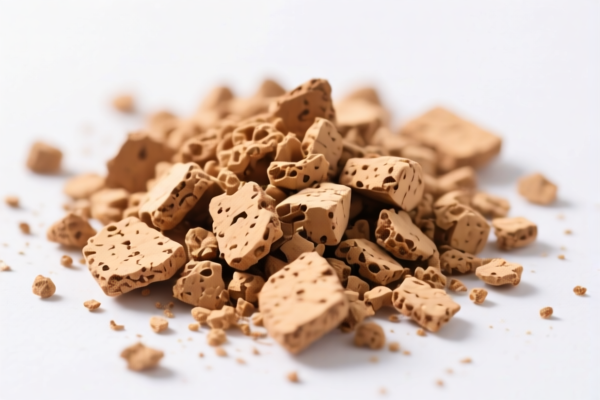
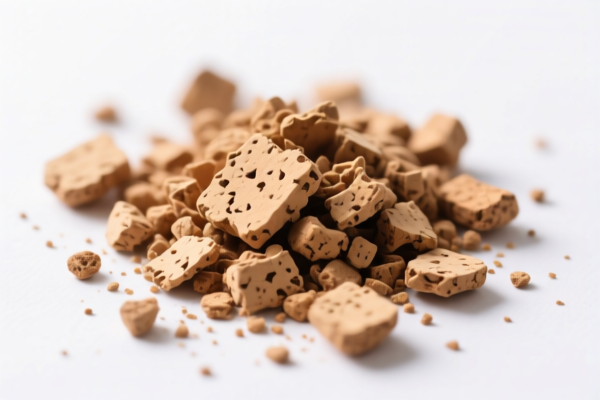
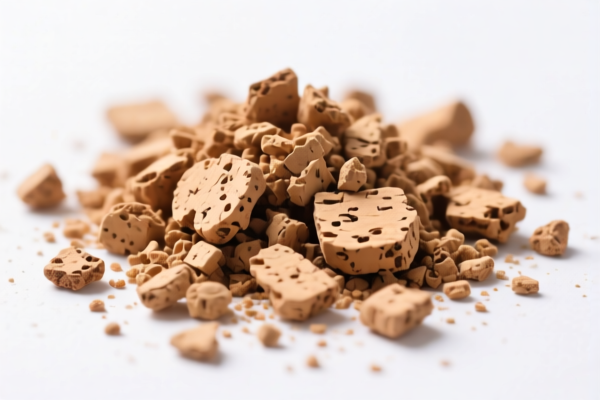
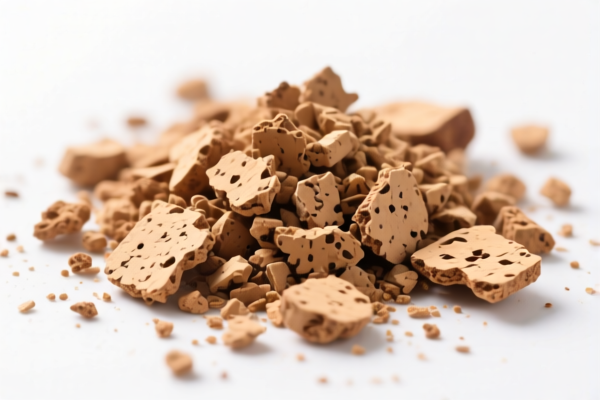
2. Physical Support/Cork-like Polymers: * Description: Solid blocks or sheets made of synthetic cork or expanded polymers used as a physical substrate for tissue culture or filtration. * Function: Provides structural support for samples.
⚠️ Critical Distinction Point:
- If the product is sterile, pre-poured agar plates → Classified under 3501 or 3822 (depending on sterilization and composition).
- If the product is raw cork/plant material → Classified under 4501.
- If the product is a complete analytical instrument with a built-in substrate holder → Could fall under 9027.
- Most Common Commercial Scenario: Sterile Petri Dishes filled with Agar Media are often grouped under 3822 (Diagnostic/Reagent Kits) or 3501 (Agar), while empty Petri Dishes are 3926.
📦 II. HS Code Classification Details (2026 Latest Tariff Authority Comparison)
| HS Code | Product Description | Application Scenario | Contains Culture Media? |
|---|---|---|---|
3501.00.00.00 |
Agar, whether or not modified; Alginic acid... | Raw agar, modified agar for lab use | ✅ Yes (Base material) |
3822.00.90.00 |
Diagnostic or laboratory reagents (incl. certified reference materials); Prepared reagents... | Prepared culture media (e.g., nutrient agar in plates), sterile lab substrates | ✅ Yes (Prepared kit) |
3926.90.97.00 |
Other articles of plastics... | Empty plastic Petri dishes, empty plastic culture boxes | ❌ No (Container only) |
4501.90.00.00 |
Cork, waste, granules, fragments | Raw cork pieces, granules, or blocks for filtration/support | ❌ No (Raw material) |
9027.80.90.00 |
Other instruments and apparatus... | Automated colony counters or integrated lab systems with substrate | ❌ No (Instrument) |
🔍 Key Reminder:
- Most commercial "Cork Laboratory Substrate" in the form of pre-made culture plates falls under3822.00.90.00.
- If it is pure, sterile agar powder or modified agar, it may fall under3501.00.00.00.
- Do not confuse with empty plastic dishes (3926), which have significantly different tax implications.
💰 III. 2026 Latest Tariff Rate Details (Including Surcharges & Policy Add-ons)
✅ Applicable Country: United States (US)
✅ Country of Origin: China (CN)
✅ Effective Date: From November 10, 2025 (including subsequent imports)
🎯 1. 3822.00.90.00 —— Prepared Diagnostic/Laboratory Reagents (e.g., Culture Media)
| Item | Content |
|---|---|
| Base Tariff Rate | 0% (ad valorem) |
| USITC Surcharge | +25% (from USITC Footnote 9903.88.01) |
| IEEPA Surcharge | +10% (Against China/HK products, from Nov 10, 2025) |
| Total Tariff Rate | 35% |
| Tax Calculation | CIF Value × 35% |
| De Minimis Eligibility | ❌ Not Eligible (deny_de_minimis) |
| Legal Basis Path | IEEPA:9903.01.25 → IEEPA:9903.01.24 → USITC:3822.00.90.00 → FOOTNOTE:9903.88.01 |
📌 Explanation:
- "USITC Surcharge 25%" comes from the "Additional Tariffs" under Section 301 of the U.S. Trade Act;
- "IEEPA 10%" is the additional tariff against China under the International Emergency Economic Powers Act;
- Total 35%, considered a high tariff, must be anticipated in advance!
🎯 2. 3501.00.00.00 —— Agar, whether or not modified
| Item | Content |
|---|---|
| Base Tariff Rate | 0% |
| USITC Surcharge | +25% |
| IEEPA Surcharge | +10% |
| Total Tariff Rate | 35% |
| Tax Calculation | CIF × 35% |
| De Minimis Eligibility | ❌ Not Eligible |
| Legal Basis Path | IEEPA:9901.25 → IEEPA:9903.01.24 → USITC:3501.00.00.00 → FOOTNOTE:9903.88.01 |
📌 Note:
- Same as above, belonging to "raw/modified material" category, same tax rate;
- Even if it is "sterile agar powder," "plant tissue culture agar," or "fungal culture medium," as long as it is pre-prepared agar, it applies this tariff.
🎯 3. 3926.90.97.00 —— Other Plastic Articles (e.g., Empty Petri Dishes)
| Item | Content |
|---|---|
| Base Tariff Rate | 3.4% |
| USITC Surcharge | +25% |
| IEEPA Surcharge | +10% |
| Total Tariff Rate | 38.4% |
| Tax Calculation | CIF × 38.4% |
| De Minimis Eligibility | ❌ Not Eligible |
📌 Note:
- If the product is only the empty plastic container (without media), the base rate is slightly higher, leading to a total of 38.4%.
🛠️ IV. Customs Clearance Practical Advice (Combat Pitfall Avoidance Guide)
✅ 1. Document Checklist (None Missing)
| Material | Required | Description |
|---|---|---|
| ✅ Product Specification Sheet | ✔️ | Composition, sterilization method, shelf life, storage conditions |
| ✅ Certificate of Analysis (COA) | ✔️ | For sterile products, proving purity and absence of contaminants |
| ✅ Sterilization Certificate | ✔️ | Gamma irradiation or autoclave proof (critical for biological goods) |
| ✅ Commercial Invoice | ✔️ | Clearly state "Laboratory Culture Media, Agar-based, Sterile" |
| ✅ Packing List | ✔️ | Specify unit (plate, bag, bottle), net/gross weight |
| ✅ MSDS (Material Safety Data Sheet) | ✔️ | Required for chemical/biological components |
✅ 2. Declaration Tips (Key Mantra)
🔥 "Media vs. Material, Sterile vs. Raw, Name Precise, Tax Saved!"
| Scenario | Correct Declaration | Wrong Practice |
|---|---|---|
| Pre-poured Sterile Agar Plates | 3822.00.90.00 |
Misdeclared as "Plastic Dish" → 38.4% |
| Raw Agar Powder (Unsterile) | 3501.00.00.00 |
Misdeclared as "Reagent" → 35% (Similar, but legally distinct) |
| Empty Plastic Petri Dishes | 3926.90.97.00 |
Misdeclared as "Media" → 35% (Lower than actual 38.4%? No, base is 3.4%+35%=38.4%) |
| Cork Blocks (Raw) | 4501.90.00.00 |
Misdeclared as "Lab Equipment" → Potential seizure |
✅ 3. Special Case Handling
| Scenario | Handling Advice |
|---|---|
| Biological Safety Level (BSL) | Ensure products are non-pathogenic. If pathogenic, additional CDC/USDA permits are required. |
| OEM Custom Media | Provide formula sheet (confidentiality agreement) + HS Code pre-ruling. |
| Temperature-Sensitive Goods | Declare "Refrigerated Transport Required" on invoice to avoid degradation claims. |
| Hybrid Kits (Media + Instrument) | If sold as a complete system, may fall under 9027. Requires strong justification. |
🌍 V. Global Major Market Clearance Comparison (2026 Latest)
| Country/Region | Recommended HS Code | Tariff | Certification Requirements | Remarks |
|---|---|---|---|---|
| 🇺🇸 USA | 3822.00.90.00 |
35% (China) | FDA Registration (optional for non-diagnostic), MSDS | High tariff on all lab consumables |
| 🇨🇳 China | 3822.00.90.00 |
0% - 5% | N/A | Low tariff, high demand |
| 🇪🇺 EU | 3822.00.90.00 |
0% (if CE certified) | CE Marking, REACH Compliance | No additional surcharges |
| 🇯🇵 Japan | 3822.00.90.00 |
0% - 3% | PSE (if electrical components), ISO 13485 | Strict sterilization standards |
📌 Conclusion:
- USA imposes the highest effective tariff due to IEEPA and Section 301 surcharges;
- EU and Japan are more favorable for lab consumables;
- China origin products face significant cost pressure in the US market for lab substrates.
📌 VI. Common Errors & Pitfall Guide (Lessons Learned)
❌ Error 1: Declaring "Agar Plates" as "Food Ingredients"
👉 Consequence: Denied entry due to FDA mismatch + 35% tax backcharge!
❌ Error 2: Missing Sterilization Certificate for "Sterile" Products
👉 Consequence: Customs holds goods for biological inspection → Delay of 2-4 weeks!
❌ Error 3: Using "Cork" generically for Synthetic Polymer Substrates
👉 Consequence: Misclassification under 4501 → Potential audit for "Natural Cork" origin fraud!
❌ Error 4: Not providing MSDS for Chemical Components in Media
👉 Consequence: Shipment detained by CBP for hazmat review!
✅ Correct Practice:
"Pre-Poured Nutrient Agar Plates, Sterile, Gamma Irradiated, 90mm Diameter, Pack of 20, HS 3822.00.90.00, Made in China"
🎯 VII. Conclusion: Professional Declaration, Time-Saving, Cost-Effective!
🎯 Remember the Mantra:
🔹 "Media vs. Material, Name Precise, Tax Saved!"
🔹 "HS Code Determines Life, Rate Differs by 25 Points, Declaration Step Wrong, Backcharge Upward!"
📌 Tips:
If your substrate originates from Vietnam, Mexico, Thailand, Malaysia, you may apply for IEEPA Exemption, with tariffs only 0%~5%;
Suggest Advance Ruling (Advance Classification) to avoid clearance risks.
📣 Immediate Action:
📞 Contact Professional Broker + Provide Product Specs + Apply for HS Code Advance Ruling
🚀 Let Your Lab Substrate, Clear Customs Smoothly, Efficient Global Trade, Profit Doubled!
✨ Professional Clearance, Starts with Precise Classification!
💼 Every Penny of Your Cost Deserves Precise Calculation!
Customer Reviews
About HS Code Classification
The Harmonized System (HS) is an internationally standardized nomenclature developed by the World Customs Organization (WCO) to classify traded products. Over 200 countries use the HS system as the basis for customs tariffs, trade statistics, and import/export regulations.
Each HS code follows a hierarchical structure:
- Chapter (2 digits) — Broad category of goods (e.g., Chapter 84: Machinery and Mechanical Appliances)
- Heading (4 digits) — More specific grouping within the chapter
- Subheading (6 digits) — Internationally standardized breakdown, used by all WCO member countries
- National subdivisions (8-10 digits) — Country-specific extensions for further classification, such as US HTSUS 10-digit codes
Correct HS code classification is essential for smooth customs clearance, accurate duty payment, and compliance with trade regulations. Misclassification can lead to customs delays, overpayment of duties, or penalties.
When importing from CN to US, the applicable tariff rates may include:
- Most-Favored-Nation (MFN) rate — The standard duty rate applied to WTO members
- General rate — Applied to countries without trade agreements
- Trade remedy duties — Additional tariffs such as Section 301 (anti-dumping), Section 232 (national security), or countervailing duties
The information provided on this page is for reference purposes only. For official classification, please consult with your local customs authority or a licensed customs broker.