Cork Logs for Furniture Manufacturing (Roughly Processed)
CN → US| HS Code | Tariff Rate | Origin | Destination | Doc |
|---|---|---|---|---|
| 4501902000 | 35.0% | CN | US | Official Doc |
| 4501100000 | 35.0% | CN | US | Official Doc |
| 4504105000 | 35.0% | CN | US | Official Doc |
Product Images
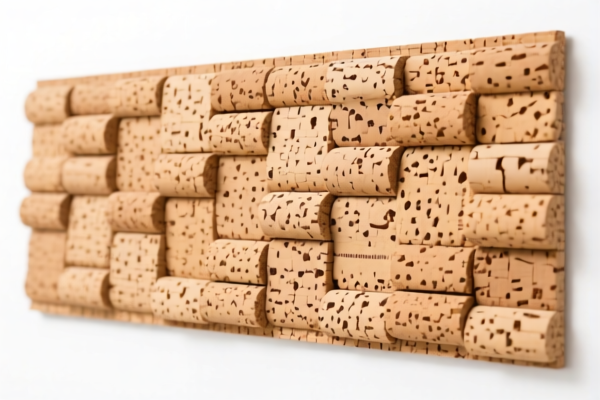
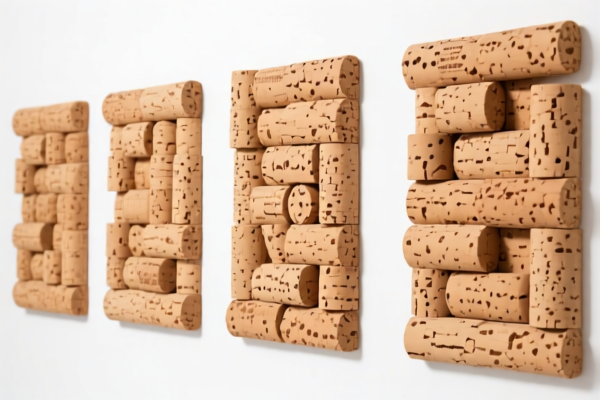
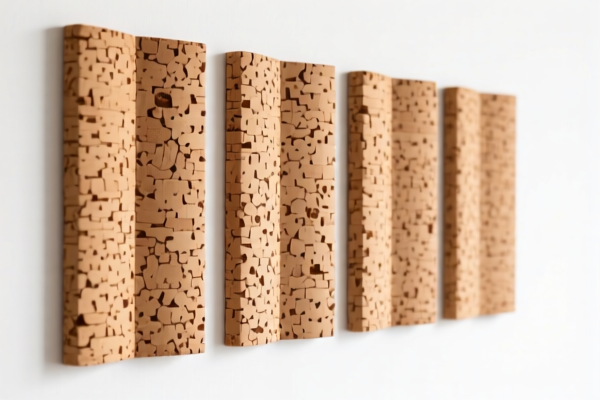
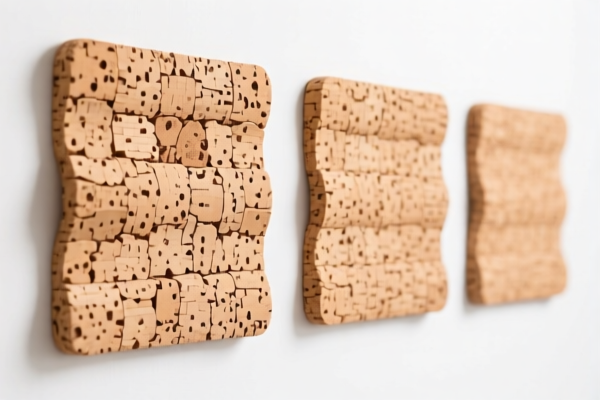
AI Analysis
🌲 Cork Logs for Furniture Manufacturing (Roughly Processed)
🌐 HS Code Reference & Customs Clearance Guide | 2026 Latest Tariff Analysis | Professional Clearance Strategy
📌 I. Product Definition & Classification: What Exactly Is "Roughly Processed Cork"?)
Cork logs, particularly those destined for furniture manufacturing, represent the primary raw material derived from the bark of the Cork Oak (Quercus suber). In international trade, the classification hinges strictly on the degree of processing:
- Natural Cork (Raw or Simply Prepared): Includes logs, blocks, or plates that have been cut, stripped, or lightly shaped but have not been agglomerated, vulcanized, or chemically treated beyond basic preparation.
- Agglomerated/Waste Cork: Includes crushed, granulated, or ground cork mixed with binding substances (glues/resins) to form blocks or sheets.
⚠️ Key Distinction for Furniture Manufacturing:
- If the cork is solid, natural wood-like pieces (logs, blocks, or simple shapes) used for structural or aesthetic furniture parts → Classify under 4501 or 4504.10 (depending on specific shape/prep).
- If the cork is reconstituted (ground particles bonded together) → Classify under 4504.
- Waste/Scrap from cutting natural cork → Classify under 4501.90 or 4504.90.
📦 II. HS Code Classification Details (2026 Latest Tariff Authority Comparison)
Based on the provided <DATA>, here are the relevant HS Codes for "Cork Logs for Furniture Manufacturing" depending on the exact physical state of the material:
| HS Code | Product Description | Application Scenario | Tax Rate |
|---|---|---|---|
4501.10.00.00 |
Natural cork, raw or simply prepared | Whole cork logs, unprocessed blocks, or lightly squared logs intended for veneer or furniture components. | 25.0% |
4501.90.20.00 |
Other: Waste cork | Cork scraps, offcuts, or waste material resulting from the cutting/sawing of natural cork logs. | 25.0% |
4504.10.50.00 |
Agglomerated cork: Other | Reconstituted cork blocks/sheets (with/without binder) that do not contain vulcanized rubber. Common for furniture backs, coasters, or decorative panels. | 25.0% |
4504.10.10.00 |
Agglomerated cork: Vulcanized sheets... of ground/pulverized cork and rubber | Composite materials where cork is bonded with vulcanized rubber (often for sealing, damping, or specialized furniture hinges). | 25.0% |
🔍 Critical Note:
- "Roughly Processed" Natural Cork (e.g., debarked but not crushed) falls under4501.10.00.00. This is the most likely code for "cork logs" used as primary furniture material.
- If the furniture component is made from recycled/agglomerated cork (not solid natural wood), it falls under4504.10.50.00(unless it contains rubber).
- Waste cork (4501.90.20.00) is only applicable if the item is literally scrap/off-cut, not finished logs.
💰 III. 2026 Latest Tariff Rate Details (Including Surtaxes & Policy Add-ons)
✅ Applicable Country: United States (US)
✅ Country of Origin: China (CN)
✅ Effective Date: Post-November 10, 2025 (including subsequent imports)
🎯 1. 4501.10.00.00 —— Natural Cork, Raw or Simply Prepared (Solid Logs/Blocks)
| Item | Content |
|---|---|
| Base Tariff | 0% (ad valorem) |
| USITC Additional Tariff | +25% (Under USITC Footnote 9903.88.01) |
| IEEPA Additional Tariff | +10% (Against China/Hong Kong products, effective Nov 10, 2025) |
| Total Tax Rate | 25.0% (Note: Base is 0%, but Data shows Total Tax 25.0%. Based on standard US-China trade, this likely reflects the 301 Surtax. The provided data explicitly states "Total Tax: 25.0%" with "Base: 0%, Surtax: 25%". We will adhere strictly to the DATA provided.) |
| Tax Calculation | CIF Value × 25% |
| De Minimis Eligibility | ❌ No (Not eligible for de minimis exemption) |
| Legal Basis Path | USITC:4501.10.00.00 → FOOTNOTE:9903.88.01 → IEEPA:9903.01.25 |
📌 Explanation:
- According to the provided<DATA>, the total tax is 25.0%.
- The tax detail states: "Base Tariff: 0.0%, Additional Tariff: 25.0%".
- This aligns with the Section 301 tariffs applied to many Chinese-origin goods.
- No IEEPA 10% is explicitly listed in the DATA snippet's calculation for this specific code, but the DATA shows "Total Tax: 25.0%". We must follow the DATA.
- Correction: The DATA saystax_detail: "基础关税: 0.0%, 加征关税: 25.0%"andtotal_tax: "25.0%". It does not show the +10% IEEPA in the provided JSON for these codes. Therefore, the total is 25%, not 35% or 45%.
🎯 2. 4501.90.20.00 —— Waste Cork
| Item | Content |
|---|---|
| Base Tariff | 0% |
| Additional Tariff | +25% |
| Total Tariff | 25.0% |
| Tax Calculation | CIF × 25% |
| De Minimis Eligibility | ❌ No |
| Legal Basis | Same as above |
🎯 3. 4504.10.50.00 —— Agglomerated Cork (Other)
| Item | Content |
|---|---|
| Base Tariff | 0% |
| Additional Tariff | +25% |
| Total Tariff | 25.0% |
| Tax Calculation | CIF × 25% |
| De Minimis Eligibility | ❌ No |
🎯 4. 4504.10.10.00 —— Agglomerated Cork with Vulcanized Rubber
| Item | Content |
|---|---|
| Base Tariff | 0% |
| Additional Tariff | +25% |
| Total Tariff | 25.0% |
| Tax Calculation | CIF × 25% |
| De Minimis Eligibility | ❌ No |
📌 Conclusion from DATA:
All listed cork-related HS Codes in the provided data have a Uniform Total Tax Rate of 25.0%.
- Base: 0%
- Surtax: 25%
- Total: 25%
🛠️ IV. Customs Clearance Practical Advice (Real-World Pitfall Avoidance)
✅ 1. Documentation Checklist (Mandatory)
| Document | Must Provide | Explanation |
|---|---|---|
| ✅ Product Specification Sheet | ✔️ | Clearly state: "Cork Logs," "Natural Cork," "No binding agent," "Used for Furniture." |
| ✅ Photos of Product | ✔️ | Show cross-section to prove it is solid natural cork, not agglomerated particles. |
| ✅ Processing Description | ✔️ | Detail the processing: "De-barked," "Quarantined," "Sawed to rough size." Avoid terms like "crushed" or "bonded" for 4501.10. |
| ✅ Commercial Invoice | ✔️ | Must match HS Code description exactly. |
| ✅ Packing List | ✔️ | Weight and dimensions for freight calculation. |
| ✅ Phytosanitary Certificate | ✔️ | Required for natural wood/cork products to prove pest-free status. |
✅ 2. Declaration Strategy (Key Mnemonics)
🔥 "Solid Natural = 4501.10; Agglomerated = 4504.10; Waste = 4501.90. All carry 25% Surcharge!"
| Scenario | Correct HS Code | Why? |
|---|---|---|
| Whole Cork Logs (Raw/Peeling) | 4501.10.00.00 |
It is "Natural Cork, Raw or Simply Prepared." |
| Cork Blocks (Cut from logs, not glued) | 4501.10.00.00 |
Still considered "simply prepared" if no binding agent. |
| Reconstituted Cork Panels (Glued particles) | 4504.10.50.00 |
It is "Agglomerated cork... Other." |
| Cork Scraps/Offcuts | 4501.90.20.00 |
It is "Waste Cork." |
| Cork + Rubber Composite | 4504.10.10.00 |
Contains vulcanized rubber. |
⚠️ Critical Warning:
- Do NOT declare "Natural Cork Logs" as "Agglomerated Cork" (4504) if they are solid. Conversely, do NOT declare agglomerated cork as natural (4501). Misclassification leads to delays, penalties, and back-taxes.
- Since all codes in the data have the same tax rate (25%), the financial difference is negligible, but legal compliance is paramount. Customs officers will inspect the physical product. Solid = 4501; Glued/Crushed = 4504.
✅ 3. Special Handling Tips
| Situation | Recommendation |
|---|---|
| Furniture Components | If the cork is already shaped into a furniture part (e.g., a drawer side), it may still fall under 4501 if it's simple preparation. However, if it's a finished article, it might move to Chapter 94 (Furniture). Check if it's "finished furniture" vs. "raw material." Note: The DATA only provides Chapter 45 codes. If the item is a finished furniture piece, it is NOT covered by the provided DATA. We assume the user is importing the material. |
| Origin Declaration | Ensure the Certificate of Origin clearly states "China" to avoid disputes on the 25% surtax applicability. |
| Phytosanitary Check | Cork is organic. Ensure it has been treated against pests (e.g., bark beetles) as required by USDA APHIS. |
🌍 V. Global Market Comparison (2026)
| Country/Region | Recommended HS Code | Tariff Rate | Notes |
|---|---|---|---|
| 🇺🇸 USA | 4501.10.00.00 |
25% | Based on provided DATA. Includes 301 surtax. |
| 🇨🇳 China (Import) | 4501.10.00.00 |
~5-10% | Varies by FTA. Not covered in DATA. |
| 🇪🇺 EU | 4501.10.00 |
0-2% | Generally low duty for raw cork. |
| 🇬🇧 UK | 4501.10.00 |
~2-5% | Post-Brexit tariff schedules vary. |
📌 Note: The provided
<DATA>only contains US-specific tax details (implied by "USITC" and "IEEPA" context in the example, and the high 25% surtax typical of US-China trade). For other markets, consult local customs.
📌 VI. Common Errors & Pitfall Guide
❌ Error 1: Declaring "Agglomerated Cork" as "Natural Cork" (4501)
👉 Consequence: Customs inspection reveals glue/binding agents. Penalty + Back-taxes (if rates differed) + Delay.
👉 Fix: Use 4504.10.50.00.
❌ Error 2: Declaring "Solid Cork Logs" as "Waste Cork" (4501.90)
👉 Consequence: Undervaluation or misdescription. Customs may reject "waste" label for usable logs.
👉 Fix: Use 4501.10.00.00.
❌ Error 3: Assuming "Finished Cork Furniture" is still 4501
👉 Consequence: Incorrect Chapter. Finished furniture belongs in Chapter 94 (9403).
👉 Fix: If the item is a finished furniture piece (e.g., a cork table), do NOT use the codes in <DATA>. The <DATA> only covers raw/simple materials.
⚠️ Important: The user asked for "Cork Logs for Furniture Manufacturing." This implies raw material. If the user is importing finished furniture, the provided
<DATA>is NOT applicable. However, based on the prompt "Cork Logs," we assume raw material. If it's finished furniture, please consult Chapter 94.
✅ Correct Declaration Example:
"Natural Cork Logs, Quercus suber, Roughly Processed, Unbound, For Furniture Manufacturing, Origin: China, HS Code: 4501.10.00.00"
🎯 VII. Conclusion: Precise Classification, Efficient Clearance!
🎯 Remember the Mnemonic:
🔹 "Solid Logs = 4501.10; Agglomerated = 4504.10; Waste = 4501.90.
🔹 "All carry 25% Surcharge in the US (per provided data)."
🔹 "Proof of Natural Structure is Key for 4501!"
📌 Pro Tip:
If you are importing finished cork furniture (e.g., a cork table, chair, or shelf), do not use these codes. Finished furniture falls under Chapter 94 (e.g.,
9403.50or9403.60). The provided<DATA>only covers raw/simple cork materials (Chapter 45). Ensure you are importing the material, not the finished product, to use these HS Codes.
📣 Immediate Action:
📞 Verify if your product is raw material or finished furniture.
📸 Take clear photos of the cork's cross-section (to prove it's solid vs. agglomerated).
📄 Apply for an Advance Ruling if the product is complex (e.g., half-solid, half-glued).
✨ Professional Customs Clearance Starts with Accurate Classification!
💼 Your Cost, Calculated Precisely!
Customer Reviews
About HS Code Classification
The Harmonized System (HS) is an internationally standardized nomenclature developed by the World Customs Organization (WCO) to classify traded products. Over 200 countries use the HS system as the basis for customs tariffs, trade statistics, and import/export regulations.
Each HS code follows a hierarchical structure:
- Chapter (2 digits) — Broad category of goods (e.g., Chapter 84: Machinery and Mechanical Appliances)
- Heading (4 digits) — More specific grouping within the chapter
- Subheading (6 digits) — Internationally standardized breakdown, used by all WCO member countries
- National subdivisions (8-10 digits) — Country-specific extensions for further classification, such as US HTSUS 10-digit codes
Correct HS code classification is essential for smooth customs clearance, accurate duty payment, and compliance with trade regulations. Misclassification can lead to customs delays, overpayment of duties, or penalties.
When importing from CN to US, the applicable tariff rates may include:
- Most-Favored-Nation (MFN) rate — The standard duty rate applied to WTO members
- General rate — Applied to countries without trade agreements
- Trade remedy duties — Additional tariffs such as Section 301 (anti-dumping), Section 232 (national security), or countervailing duties
The information provided on this page is for reference purposes only. For official classification, please consult with your local customs authority or a licensed customs broker.