Cork Molding Material
CN → US| HS Code | Tariff Rate | Origin | Destination | Doc |
|---|---|---|---|---|
| 4503906000 | 49.0% | CN | US | Official Doc |
| 4502000000 | 35.0% | CN | US | Official Doc |
| 4503902000 | 35.0% | CN | US | Official Doc |
| 4504102000 | 35.0% | CN | US | Official Doc |
| 4504101000 | 35.0% | CN | US | Official Doc |
Product Images
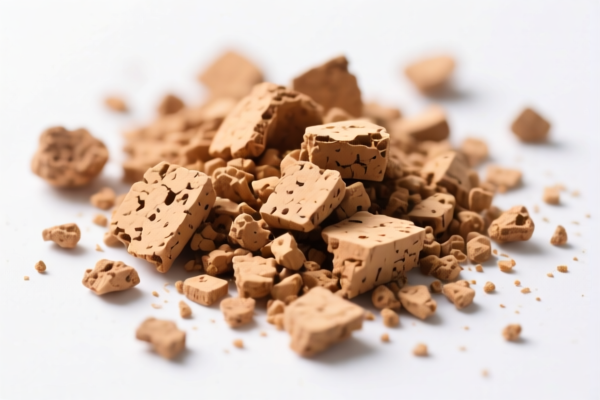
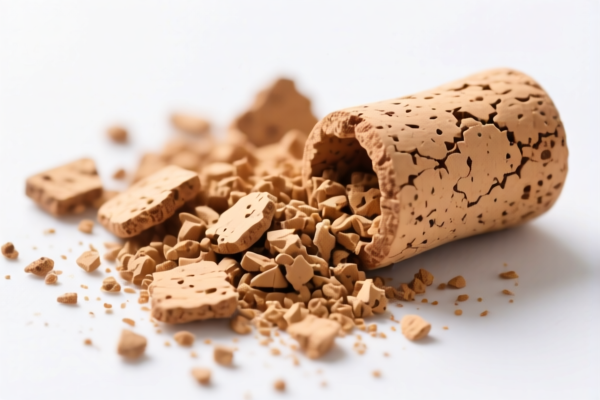
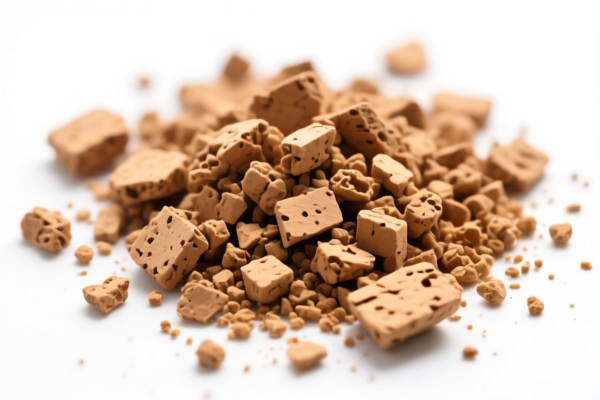
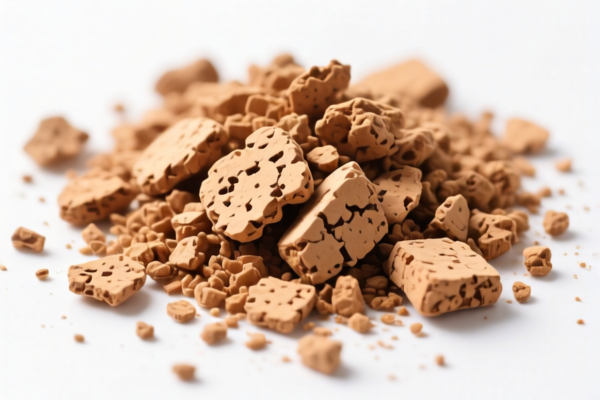
AI Analysis
🌳 Cork Molding Material: HS Code Classification & US Customs Clearance Guide (2026)
🌐 HS Code Reference & Clearance Strategy | 2026 Latest Tariff Analysis | Professional通关 Strategy
📌 一、 Product Definition & Classification: Do You Truly Understand "Cork Molding Material"?
"Cork Molding Material" is a broad commercial term that can refer to various stages of cork processing, ranging from raw agglomerated cork to finished semi-finished products. In international trade, the level of processing is the decisive factor for HS Code classification.
1. Agglomerated/Reconstituted Cork (Raw/Medium Stage): Cork granules or powder bound together with natural or synthetic binders. This includes cork crumbs, chips, and compressed blocks before they are cut into specific shapes or thin sheets.
2. Finished/Processed Cork Products: Cork sheets, stoppers, insulation boards, or specific shaped components ready for immediate use in industrial or consumer applications.
⚠️ Key Distinction Point: - If the material is primary/semi-finished (e.g., large blocks, uncut sheets, granules used for further molding) → It often falls under Chapter 45 subheadings for "Articles of Cork" or "Agglomerated Cork." - If it is highly processed/compressed into specific shapes or thin films → It may fall under different subheadings based on physical form. - Critical Check: Does the product have a specific function (e.g., a wine stopper vs. raw moldable mass)? Raw molding material is generally not classified as a specific article (like a stopper) but as a material.
📦 二、 HS Code Classification Details (2026 Latest Tariff Concordance)
Based on the provided data, "Cork Molding Material" is classified under Chapter 45 (Cork and Articles of Cork). The following 5 HS Codes are relevant, differentiated by their physical form and processing level.
| HS Code | Product Description | Applicable Scenario | Processing Level |
|---|---|---|---|
4503.90.60.00 |
Other Articles of Cork - Compressed Cork Material | Finished or semi-finished compressed blocks, specific shapes for molding, high-density compressed cork. | High (Finished/Semi-finished) |
4502.00.00.00 |
Natural Cork - Raw/Semi-finished Form | Raw cork planks, unprocessed natural cork logs, or primary semi-finished natural cork sheets before agglomeration. | Low (Raw/Primary) |
4503.90.20.00 |
Other Articles of Cork - Sheets/Thin Layers | Cork sheets, thin layers used for gaskets, insulation, or further processing into molds. | Medium (Processed) |
4504.10.20.00 |
Agglomerated Cork - Compressed Cork & Articles | Agglomerated cork blocks, granules bound together, ready for compression molding. | Medium (Agglomerated) |
4504.10.10.00 |
Agglomerated Cork - Granular/Crumb Form | Cork granules, crumbs, or powder used as raw material for molding. | Low/Medium (Raw Material for Molding) |
🔍 Important Reminder: - "Molding Material" usually implies it is not a final article (like a cork stopper). Therefore, it is NOT classified under
4503.90.60.00if it is just granules or raw compressed blocks intended for molding. - Granules/Crumbs (4504.10.10.00) and Agglomerated Blocks (4504.10.20.00) are the most common classifications for "molding material" in raw form. - If the "molding material" is already in a compressed sheet/block form ready for cutting,4503.90.20.00or4503.90.60.00might apply depending on specific US customs interpretations of "Article." - Natural Cork (4502.00.00.00) is rare for "molding" unless it's raw planks, which are then processed.
💰 三、 2026 Latest Tariff Rate Breakdown (Including Surtaxes & Policy Add-ons)
✅ Applicable Country: United States (US)
✅ Country of Origin: China (CN)
✅ Effective Date: From November 10, 2025 (and subsequent imports)
🎯 1. 4503.90.60.00 – Other Articles of Cork (Compressed/Finished)
| Item | Content |
|---|---|
| Base Tariff | 14.0% (ad valorem) |
| Section 301 Surtax | +25.0% (Under USITC Footnote 9903.88.01) |
| IEEPA Surtax | +10.0% (Against Chinese/HK products, effective Nov 10, 2025) |
| Total Tax Rate | 49.0% |
| Tax Calculation | CIF Value × 49.0% |
| De Minimis Eligibility | ❌ Not Eligible (deny_de_minimis) |
| Legal Basis Path | IEEPA:9903.01.25 → IEEPA:9903.01.24 → USITC:4503.90.60.00 → FOOTNOTE:9903.88.01 |
📌 Explanation: - Base 14%: Standard Most Favored Nation (MFN) rate for "Other Articles of Cork." - 301 Surtax 25%: The standard Section 301 tariff on Chinese goods. - IEEPA 10%: The new additional tariff under the International Emergency Economic Powers Act for Chinese cork products. - Total 49%: Very High Tariff! Must be factored into cost calculations.
🎯 2. 4502.00.00.00 – Natural Cork (Raw/Semi-finished)
| Item | Content |
|---|---|
| Base Tariff | 0.0% |
| Section 301 Surtax | +25.0% |
| IEEPA Surtax | +10.0% |
| Total Tax Rate | 35.0% |
| Tax Calculation | CIF Value × 35.0% |
| De Minimis Eligibility | ❌ Not Eligible |
| Legal Basis Path | IEEPA:9901.25 → IEEPA:9903.01.24 → USITC:4502.00.00.00 → FOOTNOTE:9903.88.01 |
📌 Note: - Even though the base rate is 0%, the surtaxes (35%) are still very significant. - This code is for natural cork in its primary form. If your "molding material" is agglomerated (reconstituted), this code DOES NOT APPLY.
🎯 3. 4503.90.20.00 – Other Articles of Cork (Sheets/Thin Layers)
| Item | Content |
|---|---|
| Base Tariff | 0.0% |
| Section 301 Surtax | +25.0% |
| IEEPA Surtax | +10.0% |
| Total Tax Rate | 35.0% |
| Tax Calculation | CIF Value × 35.0% |
| De Minimis Eligibility | ❌ Not Eligible |
| Legal Basis Path | IEEPA:9901.25 → IEEPA:9903.01.24 → USITC:4503.90.20.00 → FOOTNOTE:9903.88.01 |
📌 Note: - Applies to cork sheets, thin layers, or other processed cork articles not specified elsewhere. - If your material is cork sheeting used for sealing or insulation, this is the likely code.
🎯 4. 4504.10.20.00 – Agglomerated Cork (Compressed)
| Item | Content |
|---|---|
| Base Tariff | 0.0% |
| Section 301 Surtax | +25.0% |
| IEEPA Surtax | +10.0% |
| Total Tax Rate | 35.0% |
| Tax Calculation | CIF Value × 35.0% |
| De Minimis Eligibility | ❌ Not Eligible |
| Legal Basis Path | IEEPA:9901.25 → IEEPA:9903.01.24 → USITC:4504.10.20.00 → FOOTNOTE:9903.88.01 |
📌 Note: - This is a very common code for "Cork Molding Material" if it is agglomerated (bound granules) in compressed block or sheet form. - "Agglomerated" means reconstituted from cork waste/crumbs.
🎯 5. 4504.10.10.00 – Agglomerated Cork (Granular/Crumb)
| Item | Content |
|---|---|
| Base Tariff | 0.0% |
| Section 301 Surtax | +25.0% |
| IEEPA Surtax | +10.0% |
| Total Tax Rate | 35.0% |
| Tax Calculation | CIF Value × 35.0% |
| De Minimis Eligibility | ❌ Not Eligible |
| Legal Basis Path | IEEPA:9901.25 → IEEPA:9903.01.24 → USITC:4504.10.10.00 → FOOTNOTE:9903.88.01 |
📌 Note: - This code is for cork granules, crumbs, or powder used as raw material for molding. - If your product is loose granules, this is the correct code. - Base rate 0% is attractive, but the 35% surtax remains a heavy burden.
🛠️ 四、 Customs Clearance Practical Advice (Real-World Pitfall Avoidance Guide)
✅ 1. Required Documentation Checklist (All Mandatory)
| Document | Mandatory? | Description |
|---|---|---|
| ✅ Product Specification Sheet | ✔️ | Details: Form (granules/sheets/blocks), composition (100% natural vs. agglomerated), binder type (if any), density. |
| ✅ Commercial Invoice | ✔️ | Must clearly state "Cork Molding Material" and specify HS Code. Avoid vague terms like "Cork." |
| ✅ Packing List | ✔️ | Detail weight, volume, and packaging type. |
| ✅ Certificate of Origin (CO) | ✔️ | Required to verify Chinese origin for surtax application. |
| ✅ Product Photos | ✔️ | Clear images showing the physical state (granules, sheets, blocks) to support HS Code classification. |
| ✅ Bill of Lading/Air Waybill | ✔️ | Standard shipping document. |
| ✅ Declaration of Non-Phytosanitary Items (if applicable) | ✔️ | Cork may require phytosanitary certification if it is raw natural cork (4502). Agglomerated cork (4504) is usually exempt. |
✅ 2. Classification Strategy (Key Mantra)
🔥 "Granules go to 4504.10.10, Compressed to 4504.10.20, Finished to 4503.90.60. Don't Mix Them!"
| Scenario | Correct HS Code | Wrong Practice | Consequence |
|---|---|---|---|
| Loose Cork Granules/Crumbs | 4504.10.10.00 |
Classifying as "Finished Cork Article" (4503.90.60.00) |
Under-taxing: 35% vs 49%. Risk of penalty + back taxes. |
| Agglomerated Cork Blocks/Sheets | 4504.10.20.00 or 4503.90.20.00 |
Classifying as "Natural Cork" (4502.00.00.00) |
Over-taxing: Unnecessary complexity. May be rejected if not natural. |
| Finished Cork Sheets for Gaskets | 4503.90.20.00 |
Classifying as "Granules" | Under-taxing: If deemed finished, 35% vs 35% (same), but risk of scrutiny. |
| Compressed Cork Blocks for Molding | 4503.90.60.00 |
Classifying as "Granules" | Under-taxing: 49% vs 35%. High Risk! |
| Raw Natural Cork Planks | 4502.00.00.00 |
Classifying as "Agglomerated" | Over-taxing: 35% vs 35% (same), but wrong description. |
📌 Critical Tip: - Agglomerated Cork (
4504) is reconstituted from cork waste. - Natural Cork (4502) is sliced from cork oak trees. - Other Articles (4503) are finished products. - If your "Molding Material" is agglomerated, use4504. If it is finished compressed blocks, use4503.
✅ 3. Special Circumstances Handling
| Situation | Handling Advice |
|---|---|
| OEM Custom Cork Blocks | Provide mold designs and order specs. Clarify if it's a "semi-finished good" or "article." |
| Cork with Synthetic Binders | Still classified under 4504 (Agglomerated Cork) if the cork content is predominant. Declare binder type. |
| Phytosanitary Requirements | If using Natural Cork (4502), you MUST provide a Phytosanitary Certificate from the country of origin. Agglomerated cork (4504) is generally exempt. |
| Mixed Containers | If a container has both granules (4504.10.10.00) and finished sheets (4503.90.20.00), declare separately. Do not combine. |
🌍 五、 Global Market Comparison (2026 Latest)
| Country/Region | Recommended HS Code | Tariff (China Origin) | Certification | Notes |
|---|---|---|---|---|
| 🇺🇸 USA | 4504.10.10.00 / 4504.10.20.00 |
35% (Base 0% + 25% + 10%) | No special cert for agglomerated | Highest Barrier due to IEEPA + 301 |
| 🇨🇳 China | 4504.10.10.00 |
0% (Export Duty) | None | China is a major exporter |
| 🇪🇺 EU | 4504.10.10.00 |
0% | None | No additional tariffs on cork |
| 🇬🇧 UK | 4504.10.10.00 |
0% | None | Post-Brexit, similar to EU |
| 🇦🇺 Australia | 4504.10.10.00 |
5% | None | Lower than US |
📌 Conclusion: - The USA is the ONLY major market imposing heavy surtaxes (35%-49%) on Chinese cork products. - European and Asian markets are more favorable, with 0% tariffs. - If targeting the US, consider cost optimization or supply chain adjustments (e.g., third-country processing) if feasible.
📌 六、 Common Mistakes & Pitfall Guide (Blood Tears Lessons)
❌ Mistake 1: Declaring Agglomerated Cork as Natural Cork (4502.00.00.00)
👉 Consequence: Customs may require Phytosanitary Certificate. If missing, goods are held or returned.
❌ Mistake 2: Declaring Finished Compressed Blocks as Granules (4504.10.10.00)
👉 Consequence: Under-declaration of duty. 35% vs 49%. Risk of penalty, back taxes, and fines.
❌ Mistake 3: Using vague description "Cork" on Invoice
👉 Consequence: Customs officer may classify to the highest possible rate or request additional documentation, causing delays.
❌ Mistake 4: Ignoring IEEPA 10% Surtax
👉 Consequence: Underestimating landed cost. Total tariff is 35%-49%, not just 25%.
✅ Correct Practice:
"Agglomerated Cork Granules, For Molding, HS Code 4504.10.10.00, Origin: China"
"Compressed Agglomerated Cork Blocks, HS Code 4504.10.20.00, Origin: China"
🎯 七、 Conclusion: Professional Classification, Cost Saving & Efficiency
🎯 Remember the Mantra:
🔹 "Granules are 4504.10.10, Sheets are 4503.90.20, Compressed Blocks are 4503.90.60 or 4504.10.20."
🔹 "Base Rate is often 0%, but Surtax is 35% (US). Don't let the 0% fool you!"
🔹 "Agglomerated vs. Natural: One needs Phytosanitary, the other doesn't. Know the difference!"
📌 Pro Tip:
If your cork product is 100% natural and unprocessed, it falls under
4502.00.00.00(35% total).
If it is agglomerated, it falls under4504(35% total).
If it is finished, it falls under4503(35%-49% total).
Get a Pre-Ruling from US Customs (CBP) to confirm your specific product's classification. This saves time and money in the long run.
📣 Immediate Action:
📞 Contact a professional customs broker.
📸 Provide clear product images and specifications.
📝 Apply for a CBP Pre-Ruling to confirm the correct HS Code.
🚀 Ensure smooth clearance, avoid delays, and calculate true landed costs accurately.
✨ Professional Clearance Starts with Accurate Classification!
💼 Every cent of duty counts. Get it right the first time.
Customer Reviews
About HS Code Classification
The Harmonized System (HS) is an internationally standardized nomenclature developed by the World Customs Organization (WCO) to classify traded products. Over 200 countries use the HS system as the basis for customs tariffs, trade statistics, and import/export regulations.
Each HS code follows a hierarchical structure:
- Chapter (2 digits) — Broad category of goods (e.g., Chapter 84: Machinery and Mechanical Appliances)
- Heading (4 digits) — More specific grouping within the chapter
- Subheading (6 digits) — Internationally standardized breakdown, used by all WCO member countries
- National subdivisions (8-10 digits) — Country-specific extensions for further classification, such as US HTSUS 10-digit codes
Correct HS code classification is essential for smooth customs clearance, accurate duty payment, and compliance with trade regulations. Misclassification can lead to customs delays, overpayment of duties, or penalties.
When importing from CN to US, the applicable tariff rates may include:
- Most-Favored-Nation (MFN) rate — The standard duty rate applied to WTO members
- General rate — Applied to countries without trade agreements
- Trade remedy duties — Additional tariffs such as Section 301 (anti-dumping), Section 232 (national security), or countervailing duties
The information provided on this page is for reference purposes only. For official classification, please consult with your local customs authority or a licensed customs broker.