Cork Packaging Filler
CN → US| HS Code | Tariff Rate | Origin | Destination | Doc |
|---|---|---|---|---|
| 9604000000 | 22.4% | CN | US | Official Doc |
| 4503902000 | 35.0% | CN | US | Official Doc |
| 4502000000 | 35.0% | CN | US | Official Doc |
| 4503906000 | 49.0% | CN | US | Official Doc |
| 4504102000 | 35.0% | CN | US | Official Doc |
| 4504101000 | 35.0% | CN | US | Official Doc |
Product Images
AI Analysis
🧱 Cork Packaging Filler (Cork Granules & Compressed Products)
🌐 HS Code Reference & Customs Clearance Guide | 2026 Latest Tariff Analysis | Professional Compliance Strategy
📌 I. Product Definition & Classification: What is "Cork Packaging Filler"?
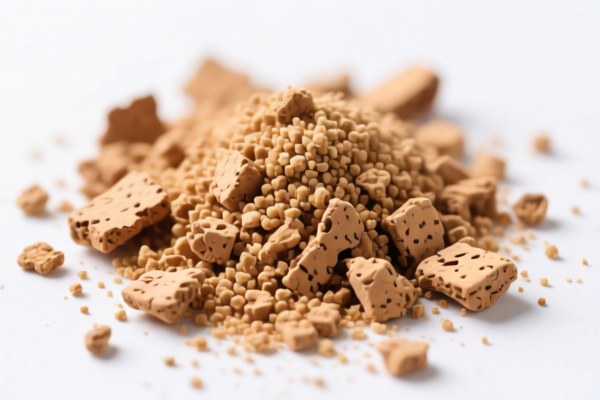
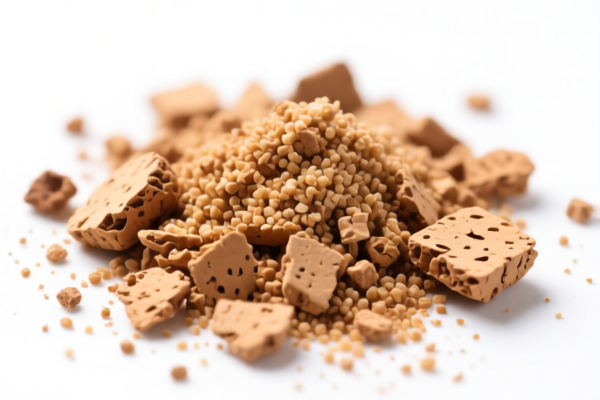
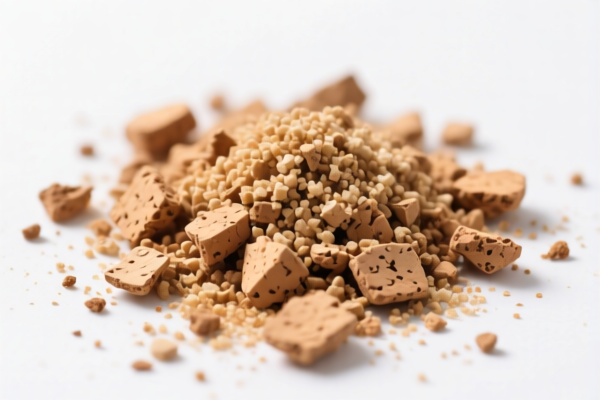
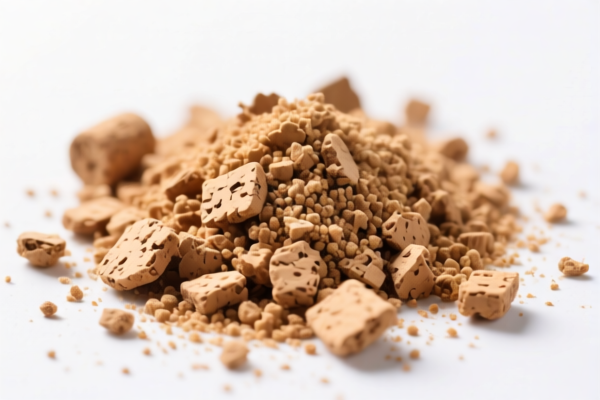
Cork packaging filler, primarily sourced from the bark of the Quercus suber (Cork Oak), is a sustainable, eco-friendly material used for shock absorption, insulation, and void filling in shipping. In international trade, its classification depends heavily on its physical form and degree of processing.
1. Raw/Primary Form (Granules/Pellets): * Loose cork granules, chips, or filler beads. * Often used for void filling in boxes, wine bottle preservation, or craft applications. * Considered "primary shape" or minimally processed.
2. Processed/Compressed Form: * Sheets, tiles, or custom-molded shapes. * Produced by compressing cork granules with a binder or natural latex. * Considered "manufactured articles" or "semi-finished goods."
⚠ Key Distinction Point:
- If the product is loose, granular, or in natural chunks without significant structural binding → It falls under Headings 9604 or 4502 (Primary/Basic Cork).
- If the product is compressed into solid sheets, tiles, or molded shapes → It falls under Headings 4503 or 4504 (Manufactured Cork Articles).
📦 II. Detailed Breakdown of Possible TSUs (Tariff Schedule Units)
Below is the exact mapping from the provided data to the relevant HS Codes, including the rationale for classification and the detailed tax structure.
🎯 1. 9604.00.00.00 —— Loose Cork Granules (Primary Form)
| Item | Detail |
|---|---|
| Description | Cork filling granules, in granular form, made of cork, conforming to the definition of primary shape. |
| Rationale | Classified under "Brooms, brushes... other articles of vegetable materials." Specifically, loose cork granules used as packing material are often routed here if they are not yet "manufactured" into solid forms. |
| Total Tax Rate | 22.4% |
| Breakdown | Base Duty: 4.9% Additional Duty (Sec 301): 7.5% Section 122 Duty (China-specific): 10% (Note: 4.9 + 7.5 + 10 = 22.4%) |
📌 Explanation:
- Base Duty (4.9%): Standard Most-Favored-Nation ( MFN) rate for this category.
- Additional Duty (7.5%): Typically associated with Section 301 tariffs on certain Chinese goods.
- Section 122 Duty (10%): A specific punitive tariff often applied to Chinese-origin cork products under recent trade actions.
- Total: 22.4% is the lowest among the options, making this the most cost-effective classification if the product is strictly loose granules.
🎯 2. 4503.90.20.00 —— Compressed Cork Material (Manufactured)
| Item | Detail |
|---|---|
| Description | Compressed cork materials, made of cork, falling within the category of processed cork products. |
| Rationale | This code covers "Other articles of natural cork." If the cork has been significantly processed (compressed) into a usable structural material, it moves from "primary" to "manufactured." |
| Total Tax Rate | 35.0% |
| Breakdown | Base Duty: 0.0% Additional Duty (Sec 301): 25.0% Section 122 Duty (China-specific): 10% (Note: 0.0 + 25.0 + 10 = 35.0%) |
📌 Explanation:
- Base Duty (0.0%): Natural cork articles often have low base duties.
- Additional Duty (25.0%): High Section 301 tariff on manufactured Chinese cork goods.
- Section 122 Duty (10%): Additional punitive tariff.
- Total: 35.0%. Significantly higher than granules due to the "manufactured" status triggering higher Section 301 rates.
🎯 3. 4502.00.00.00 —— Compressed Cork Material (Natural/Semi-Finished)
| Item | Detail |
|---|---|
| Description | Compressed cork materials, made of natural cork, in primary/semi-finished form. |
| Rationale | "Cork, unworked, suitably prepared for further use, waste of natural cork, and cork bricks, blocks, plates and strips." If it is compacted but still considered "semi-finished" (e.g., cork boards ready for cutting), it may fall here. |
| Total Tax Rate | 35.0% |
| Breakdown | Base Duty: 0.0% Additional Duty (Sec 301): 25.0% Section 122 Duty (China-specific): 10% (Note: 0.0 + 25.0 + 10 = 35.0%) |
📌 Explanation:
- Identical tax structure to4503.90.20.00.
- Total: 35.0%.
- Note: The distinction between4502and4503is technical (raw material vs. article). However, both incur the same high combined tariff.
🎯 4. 4503.90.60.00 —— Compressed Cork Material (Generic/Fallback)
| Item | Detail |
|---|---|
| Description | Compressed cork materials, made of natural cork, in primary/semi-finished form, fitting the "catch-all" category. |
| Rationale | This is a "residual" or "other" code for cork articles not specifically listed elsewhere. If the product is a unique composite or processed in a way that doesn't fit 4502, it may default here. |
| Total Tax Rate | 49.0% |
| Breakdown | Base Duty: 14.0% Additional Duty (Sec 301): 25.0% Section 122 Duty (China-specific): 10% (Note: 14.0 + 25.0 + 10 = 49.0%) |
📌 Explanation:
- Base Duty (14.0%): Higher base rate for "other" cork articles.
- Additional Duty (25.0%): Standard Section 301.
- Section 122 Duty (10%): Standard punitive tariff.
- Total: 49.0%. This is the most expensive option and should be avoided if a more specific code applies.
🎯 5. 4504.10.20.00 —— Compressed Cork Material (Specific Form)
| Item | Detail |
|---|---|
| Description | Cork agglomerates and articles of cork agglomerates; other articles of cork, in agglomerated form. |
| Rationale | "Cork agglomerates" refers to cork granules bonded together (often with latex). If the packaging filler is molded or bonded (not loose), it may fall here. The description notes "compression molding," which aligns with agglomerated cork. |
| Total Tax Rate | 35.0% |
| Breakdown | Base Duty: 0.0% Additional Duty (Sec 301): 25.0% Section 122 Duty (China-specific): 10% (Note: 0.0 + 25.0 + 10 = 35.0%) |
📌 Explanation:
- Base Duty (0.0%): Favorable base rate for agglomerated cork.
- Additional Duty (25.0%): High Section 301.
- Section 122 Duty (10%): High punitive tariff.
- Total: 35.0%. Same as other manufactured codes.
💰 III. 2026 Tariff Rate Summary & Tax Clause Detail
✅ Applicable Country: United States (US)
✅ Origin: China (CN) (Implied by Section 122 & 301 structure)
✅ Effective Time: Current 2026 Regulations
📊 Comparison Table
| TSU | Product Form | Base Duty | Sec 301 Add. | Sec 122 Add. | Total Tax |
|---|---|---|---|---|---|
9604.00.00.00 |
Loose Granules (Primary) | 4.9% | 7.5% | 10.0% | 22.4% ✅ Best Option |
4503.90.20.00 |
Compressed (Manufactured) | 0.0% | 25.0% | 10.0% | 35.0% |
4502.00.00.00 |
Compressed (Semi-finished) | 0.0% | 25.0% | 10.0% | 35.0% |
4504.10.20.00 |
Agglomerated/Compressed | 0.0% | 25.0% | 10.0% | 35.0% |
4503.90.60.00 |
Generic/Other | 14.0% | 25.0% | 10.0% | 49.0% ❌ Avoid |
🔍 Critical Insight:
- The single biggest differentiator is whether the cork is loose/granular (9604.00.00.00, 22.4%) or compressed/manufactured (45xxseries, 35-49%).
- Section 122 Duty (10%) is a fixed penalty for Chinese cork products.
- Section 301 Duty jumps from 7.5% for granules to 25.0% for manufactured/compressed products. This is a 17.5% difference!
🛠 IV. Customs Clearance Recommendations
✅ 1. Documentation Checklist
| Document | Required? | Notes |
|---|---|---|
| Commercial Invoice | ✅ Yes | Must clearly state: "Cork Granules for Packing" OR "Compressed Cork Sheets." |
| Packing List | ✅ Yes | Specify form: "Loose" vs. "Compressed." |
| Product Description | ✅ Yes | Crucial: Use exact terms from TSU. E.g., "Loose cork granules, unagglomerated." |
| Material Safety Data Sheet (MSDS) / Non-Hazardous Declaration | ✅ Yes | Cork is non-hazardous, but proof may be requested. |
| Fumigation Phytosanitary Cert | ✅ Yes | If from non-FMO countries, to prove no pests. |
| Customs Ruling Letter | ✅ Optional | If unsure, get an ISF Ruling or Pre-Ruling from CBP. |
✅ 2. Classification Strategy (How to Save Money)
🎯 Scenario A: You are importing Loose Cork Granules
- HS Code:
9604.00.00.00 - Total Tax: 22.4%
- Why: It is considered a "primary shape" or vegetable material article, not a manufactured good.
- Declaration Tip: Use terms like "Loose," "Granules," "Chips," "Filler." Avoid words like "Sheet," "Tile," "Molded."
🎯 Scenario B: You are importing Compressed Cork Sheets/Tiles
- HS Code:
4504.10.20.00or4503.90.20.00 - Total Tax: 35.0%
- Why: It is processed, agglomerated, or compacted into a specific shape.
- Declaration Tip: Use terms like "Agglomerated Cork," "Compressed Cork," "Cork Boards."
🚫 Scenario C: Avoid 4503.90.60.00
- Total Tax: 49.0%
- Why: This is a "catch-all" code with a high base duty (14%). Only use if no other code fits. Never use this if
4504or4502applies.
✅ 3. Common Pitfall & How to Avoid
| Mistake | Consequence | Solution |
|---|---|---|
| Misdeclaring Compressed Cork as Loose Granules | High risk of Customs Audit, back-tariff (12.6% difference), and fines. | Provide clear photos and specifications showing compression. |
| Misdeclaring Loose Granules as Compressed | Paying 35% instead of 22.4% unnecessarily. | Clearly state "Loose," "Unbound," "Non-agglomerated" on the invoice. |
| Ignoring Section 122 | Underpaying duties by 10%. | Always include 10% Section 122 in cost calculations for Chinese-origin cork. |
| Using Generic "Cork" Description | CBP may assign 4503.90.60.00 (49%). | Be specific: "Cork Granules" or "Cork Agglomerates." |
🌍 V. Global Market Comparison (2026)
| Country | Recommended TSU | Total Tax (China Origin) | Notes |
|---|---|---|---|
| 🇺🇸 USA | 9604.00.00.00 (if granules) |
22.4% | Best rate. Ifcompressed, 35-49%. |
| 🇪🇺 EU | 9604.00.00 (likely) |
~0-5% | Lower base duties. No Sec 301. |
| 🇨🇳 China | 9604.00.00.00 |
4.9% | Export tax may apply. |
📌 Conclusion:
The US market is the most expensive for cork packaging filler due to Section 301 (7.5-25%) and Section 122 (10%).
Strategic Move: If you are importing loose granules, classify under9604.00.00.00to save 12.6% compared to manufactured codes.
📌 VI. Final Advice for Importers
- Define Your Form: Is it loose or pressed? This determines your tax rate.
- Use Precise Language: Invoice must say "Cork Granules, Loose, for Packaging" or "Cork Agglomerates, Compressed."
- Check Section 122: Ensure the 10% punitive duty is calculated. It is non-negotiable for Chinese cork.
- Avoid "Other" Codes: Do not use
4503.90.60.00unless necessary. It is the most expensive option.
🎯 Remember:
🔹 "Loose is 22.4%, Compressed is 35%+!"
🔹 "Granules = 9604 (Cheapest). Sheets = 4504 (Expensive)."
📣 Action Item:
📝 Update your commercial invoice to specify the exact form of cork.
📞 Consult your customs broker to confirm the distinction between9604(loose) and4504(agglomerated).
🚀 Optimize your landed cost by choosing the correct classification!
✨ Clear Classification, Lower Duties, Smoother Clearance!
💼 Every percentage point counts in international trade!
Customer Reviews
About HS Code Classification
The Harmonized System (HS) is an internationally standardized nomenclature developed by the World Customs Organization (WCO) to classify traded products. Over 200 countries use the HS system as the basis for customs tariffs, trade statistics, and import/export regulations.
Each HS code follows a hierarchical structure:
- Chapter (2 digits) — Broad category of goods (e.g., Chapter 84: Machinery and Mechanical Appliances)
- Heading (4 digits) — More specific grouping within the chapter
- Subheading (6 digits) — Internationally standardized breakdown, used by all WCO member countries
- National subdivisions (8-10 digits) — Country-specific extensions for further classification, such as US HTSUS 10-digit codes
Correct HS code classification is essential for smooth customs clearance, accurate duty payment, and compliance with trade regulations. Misclassification can lead to customs delays, overpayment of duties, or penalties.
When importing from CN to US, the applicable tariff rates may include:
- Most-Favored-Nation (MFN) rate — The standard duty rate applied to WTO members
- General rate — Applied to countries without trade agreements
- Trade remedy duties — Additional tariffs such as Section 301 (anti-dumping), Section 232 (national security), or countervailing duties
The information provided on this page is for reference purposes only. For official classification, please consult with your local customs authority or a licensed customs broker.