Cork Placemat
CN → US| HS Code | Tariff Rate | Origin | Destination | Doc |
|---|---|---|---|---|
| 4504900000 | 35.0% | CN | US | Official Doc |
| 4503904000 | 35.0% | CN | US | Official Doc |
| 4504105000 | 35.0% | CN | US | Official Doc |
| 4503906000 | 49.0% | CN | US | Official Doc |
Product Images
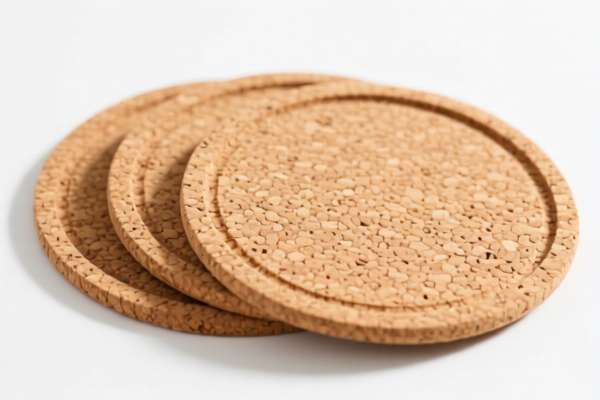
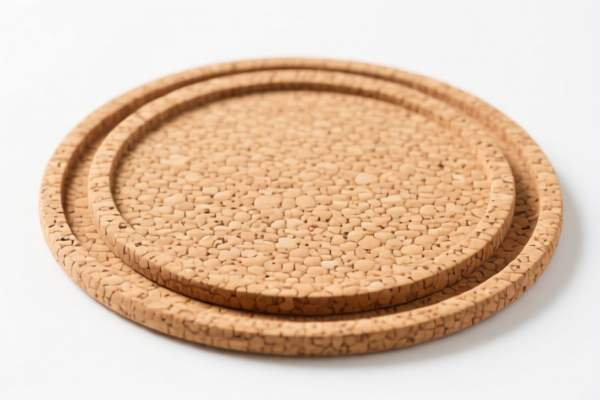
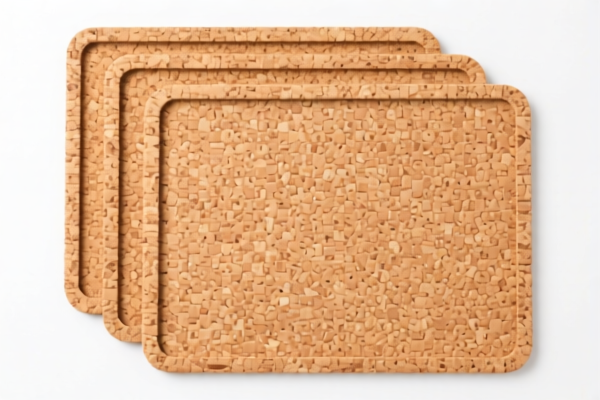
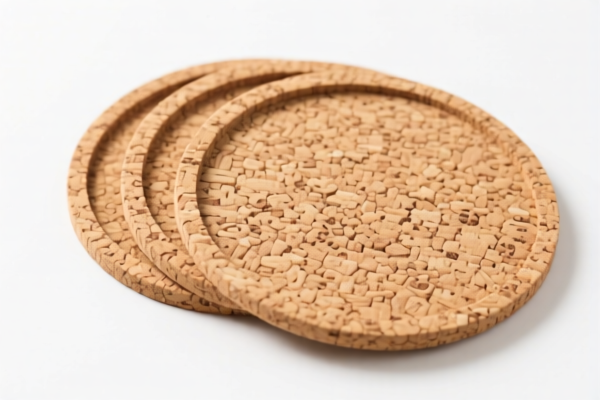
AI Analysis
🍷 Cork Placemat (软木餐垫)
🌐 HS Code Reference & Customs Clearance Guide | 2026 Latest Tariff Analysis | Professional Clearance Strategy
📌 I. Product Definition and Classification: Do You Really Understand "Cork Placemats"?
Cork placemats are essential tableware accessories made from cork, known for their natural texture, heat resistance, and eco-friendly properties. In international trade, the classification depends heavily on material composition (natural vs. agglomerated/crafted) and form factor (finished article vs. semi-finished).
Natural Cork Sheets/Blocks: Raw or simply cut natural cork materials;
Processed Cork Articles: Finished placemats, tiles, or composite cork products.
⚠️ Key Distinction Point:
- If the product is a finished placemat made from natural cork (cut, shaped, possibly laminated but primarily natural structure) → It often falls under 4503 (Articles of natural cork).
- If the product is made from agglomerated cork (cork granules bound together) or considered a specific craft article → It may fall under 4504 (Agglomerated cork).
- Critical Logic: Customs authorities scrutinize whether it’s a "natural cork article" (4503) or an "other cork product" (4504). The summary in the data suggests multiple interpretations based on how "natural" vs. "processed" is defined.
📦 II. HS Code Classification Details (2026 Latest Tariff Authority Reference)
| HS Code | Product Description | Application Scenario | Tax Rate Summary |
|---|---|---|---|
4504.10.50.00 |
Cork placemats, material: cork, form: placemat, classified under "Other" in agglomerated cork products | Crafted cork placemats, agglomerated cork, composite | 35.0% |
4503.90.60.00 |
Cork placemats, material: natural cork, form: cork articles, fits "Other" category fallback | Pure natural cork cut-to-shape placemats | 49.0% |
4504.90.00.00 |
Cork placemats, material: cork, classified under "Other" in cork and cork articles | General agglomerated or processed cork placemats | 35.0% |
4503.90.40.00 |
Cork placemats, material: cork, form: natural cork articles extending to wallpaper/pad categories | Natural cork used as垫类 (pad-like) articles | 35.0% |
🔍 Key Reminder:
- The difference between 35% and 49% hinges on whether the customs officer classifies the product as natural cork article (4503) or agglomerated/other cork (4504).
-4503.90.60.00has the highest tax burden (49%) due to stricter interpretation of "natural cork."
- Most commercially available agglomerated cork placemats should aim for 4504 codes to benefit from 0% base tariff.
💰 III. 2026 Latest Tariff Rate Breakdown (Including Surcharges, Policy Add-ons)
✅ Applicable Country: United States (US)
✅ Country of Origin: China (CN)
✅ Effective Date: November 10, 2025 onwards
🎯 1. 4504.10.50.00 & 4504.90.00.00 — Agglomerated/Other Cork Placemats
| Item | Details |
|---|---|
| Base Tariff | 0% (ad valorem) |
| USITC Surcharge (Section 301) | +25% |
| IEEPA Surcharge (Section 122/China-specific) | +10% |
| Total Tax Rate | 35.0% |
| Tax Calculation | CIF Value × 35% |
| De Minimis Exemption | ❌ Not Applicable (deny_de_minimis) |
| Legal Basis Path | IEEPA:9903.01.24 → USITC:4504.10.50.00 → FOOTNOTE:9903.88.01 |
📌 Explanation:
- Base 0%: Agglomerated cork products generally enjoy lower base tariffs.
- +25% USITC: Section 301 tariffs on Chinese goods.
- +10% IEEPA: Additional surcharge for China-origin products under specific executive orders.
- Total 35%: High but lower than natural cork classifications.
🎯 2. 4503.90.60.00 — Natural Cork Placemats (Highest Risk)
| Item | Details |
|---|---|
| Base Tariff | 14% (ad valorem) |
| USITC Surcharge (Section 301) | +25% |
| IEEPA Surcharge (Section 122/China-specific) | +10% |
| Total Tax Rate | 49.0% |
| Tax Calculation | CIF Value × 49% |
| De Minimis Exemption | ❌ Not Applicable (deny_de_minimis) |
| Legal Basis Path | IEEPA:9901.25 → USITC:4503.90.60.00 → FOOTNOTE:9903.88.01 |
📌 Note:
- Base 14%: Natural cork articles attract higher base tariffs.
- +25% +10%: Same surcharges apply.
- Total 49%: Highest risk category. Avoid if possible by clarifying product composition as "agglomerated" or "processed."
🎯 3. 4503.90.40.00 — Natural Cork Placemats (Pad/Extension Category)
| Item | Details |
|---|---|
| Base Tariff | 0% (ad valorem) |
| USITC Surcharge (Section 301) | +25% |
| IEEPA Surcharge (Section 122/China-specific) | +10% |
| Total Tax Rate | 35.0% |
| Tax Calculation | CIF Value × 35% |
| De Minimis Exemption | ❌ Not Applicable (deny_de_minimis) |
| Legal Basis Path | IEEPA:9903.01.24 → USITC:4503.90.40.00 → FOOTNOTE:9903.88.01 |
📌 Note:
- Despite being under 4503 (natural cork), this subheading allows 0% base tariff if classified as a "pad-like" extension.
- Total 35%: Competitive rate. Requires strong documentation to prove it’s not a "finished natural cork article."
🛠️ IV. Customs Clearance Practical Advice (Battle-Tested Pitfall Avoidance)
✅ 1. Required Documentation Checklist (Non-Negotiable)
| Document | Mandatory | Explanation |
|---|---|---|
| ✅ Product Specification Sheet | ✔️ | Must specify: Material (natural/agglomerated), thickness, composition percentage |
| ✅ Composition Declaration | ✔️ | Clear statement: "100% Natural Cork" vs. "Agglomerated Cork Granules" |
| ✅ Product Photos (Label & Structure) | ✔️ | Show texture: Granular (agglomerated) vs. Solid/Natural (natural) |
| ✅ Commercial Invoice | ✔️ | Describe as: "Cork Table Mat, Agglomerated, Heat Resistant" |
| ✅ Packing List | ✔️ | Itemize quantities, weights, dimensions |
| ✅ Certificate of Origin (CO) | ✔️ | Required for origin verification; non-CN origins may qualify for exemptions |
✅ 2. Declaration Strategy (Key Mantra)
🔥 "Agglomerated is King, Natural is Risky, Describe Precisely, Save 14%!"
| Scenario | Correct Declaration | Wrong Practice |
|---|---|---|
| Agglomerated Cork Placemat | 4504.10.50.00 or 4504.90.00.00 |
Mislabel as "Natural" → 49% |
| 100% Natural Cork Cut | 4503.90.60.00 |
Risk of 49% tax |
| Natural Cork Used as Pad | 4503.90.40.00 |
Requires proof of "pad" function |
| Mixed Material (Cork + Fabric) | Potentially 4504 |
If cork is primary material, still 4504/4503 |
✅ 3. Special Case Handling
| Situation | Recommendation |
|---|---|
| Composite Placemat (Cork + Silicone) | Declare based on essential character; if cork is dominant, use 4503/4504. Provide bill of materials. |
| OEM/Private Label | Provide client design specs to prove material composition. Avoid vague terms like "eco-friendly." |
| Natural vs. Agglomerated Ambiguity | Provide microscopy photos or lab test results showing granular structure for agglomerated. |
| Low-Value Shipments | ❌ No De Minimis Exemption. All cork placemats from China are subject to full duty even under $800. |
🌍 V. Global Market Comparison (2026 Latest)
| Country/Region | Recommended HS Code | Tariff (China Origin) | Certification | Notes |
|---|---|---|---|---|
| 🇺🇸 USA | 4504.10.50.00 |
35% (Base 0% + 25% + 10%) | FDA (if food-contact) | Avoid 4503.90.60.00 (49%) |
| 🇨🇳 China | 4504.10.50.00 |
5% | None | Low domestic tariff |
| 🇪🇺 EU | 4504.10.50.00 |
0% (if GSP/EBA applies) | CE (if applicable) | No Section 301/IEEPA |
| 🇬🇧 UK | 4504.10.50.00 |
0% | UKCA | Post-Brexit alignment with EU |
| 🇦🇺 Australia | 4504.10.50.00 |
5% | None | Free Trade Agreement (ChAFTA) may apply |
📌 Conclusion:
- USA is the most punitive market due to 35%-49% total duties.
- Agglomerated cork (4504) is strongly preferred over natural cork (4503) for cost efficiency.
- Non-Chinese origins (e.g., Portugal, Spain) may enjoy 0% US tariffs, but sourcing is limited.
📌 VI. Common Errors & Pitfalls (Blood-Tear Lessons)
❌ Error 1: Declaring "Agglomerated Cork" as "Natural Cork"
👉 Consequence: Tax jumps from 35% to 49% → Profit erosion!
❌ Error 2: Vague Description "Cork Mat"
👉 Consequence: Customs flags for clarification → Delay + Storage Fees
❌ Error 3: Assuming De Minimis Applies
👉 Consequence: Shipment seized or reassessed for full 35%-49% duty regardless of value
❌ Error 4: Mixing Natural and Agglomerated in Same Shipment
👉 Consequence: Higher duty applied to entire shipment if not properly segregated
✅ Correct Practice:
"Agglomerated Cork Table Placemat, Heat Resistant, Eco-Friendly, Model XYZ, FDA Compliant for Food Contact"
🎯 VII. Conclusion: Precision Classification, Cost Optimization!
🎯 Remember the Mantra:
🔹 "Agglomerated = 0% Base, Natural = 14% Base, Total Differs 14%!"
🔹 "HS Code Decides Fate, 14% Difference, Declaration Mistake, Profit Disappears!"
📌 Pro Tip:
- If your cork placemats are agglomerated, always declare under 4504 series.
- If natural, provide evidence of shape/process to argue for 4503.90.40.00 (35%) over 4503.90.60.00 (49%).
- Pre-Ruling (Advance Ruling): Highly recommended for large volumes to lock in the 35% rate.
📣 Immediate Action:
📞 Contact Professional Customs Broker + Provide Product Photos + Apply for HS Code Pre-Ruling
🚀 Ensure smooth clearance, maximize margins, and stay compliant!
✨ Professional Customs Clearance Starts with Accurate Classification!
💼 Every Penny of Duty Matters – Calculate Precisely!
Customer Reviews
About HS Code Classification
The Harmonized System (HS) is an internationally standardized nomenclature developed by the World Customs Organization (WCO) to classify traded products. Over 200 countries use the HS system as the basis for customs tariffs, trade statistics, and import/export regulations.
Each HS code follows a hierarchical structure:
- Chapter (2 digits) — Broad category of goods (e.g., Chapter 84: Machinery and Mechanical Appliances)
- Heading (4 digits) — More specific grouping within the chapter
- Subheading (6 digits) — Internationally standardized breakdown, used by all WCO member countries
- National subdivisions (8-10 digits) — Country-specific extensions for further classification, such as US HTSUS 10-digit codes
Correct HS code classification is essential for smooth customs clearance, accurate duty payment, and compliance with trade regulations. Misclassification can lead to customs delays, overpayment of duties, or penalties.
When importing from CN to US, the applicable tariff rates may include:
- Most-Favored-Nation (MFN) rate — The standard duty rate applied to WTO members
- General rate — Applied to countries without trade agreements
- Trade remedy duties — Additional tariffs such as Section 301 (anti-dumping), Section 232 (national security), or countervailing duties
The information provided on this page is for reference purposes only. For official classification, please consult with your local customs authority or a licensed customs broker.