Cork Sawdust Building Insulation
CN → US| HS Code | Tariff Rate | Origin | Destination | Doc |
|---|---|---|---|---|
| 6808000000 | 35.0% | CN | US | Official Doc |
Product Images
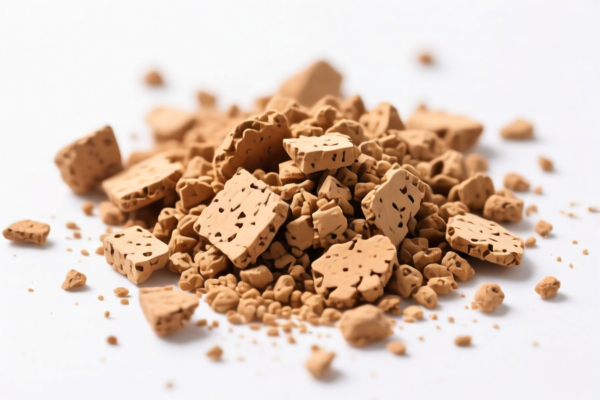
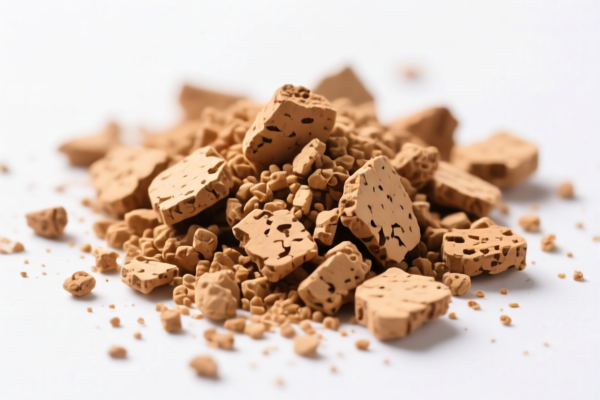
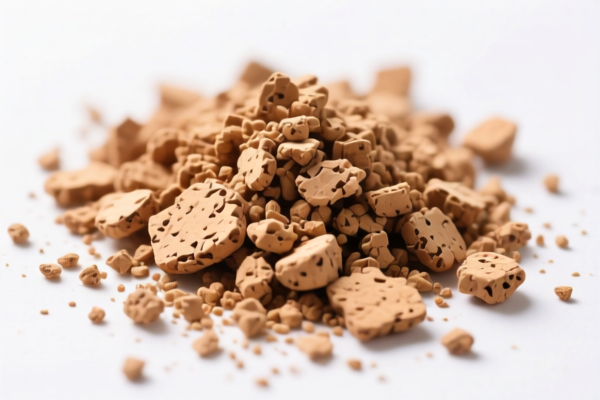
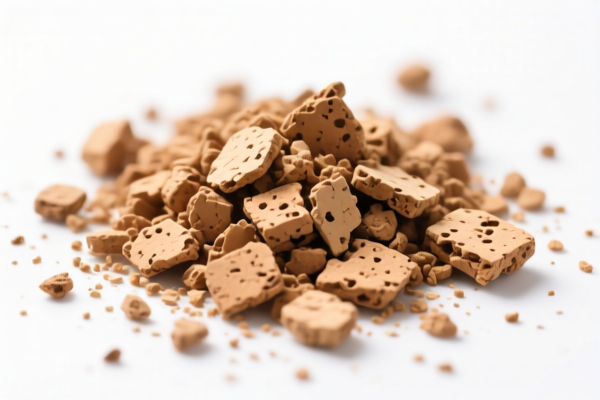
AI Analysis
🌲 Cork Sawdust Building Insulation (Agglomerated Wood Particles)
🌐 HS Code Reference & Customs Clearance Guide | 2026 Latest Tariff Analysis | Professional Strategy
📌 I. Product Definition & Classification: What Exactly Is This Product?
Cork Sawdust Building Insulation refers to articles made from vegetable fibers (cork) or wood waste (sawdust/chips) that have been agglomerated or bound together. In international trade, specifically under Chapter 68, these products are defined by their binding agent.
The key to classification lies in the binder used: * Mineral Binders: If the cork/sawdust is bound with cement, plaster, or other mineral binders, it falls under Heading 6808. * Organic Binders (e.g., resins, glues): If bound with organic substances, it may fall under different chapters (e.g., Chapter 44 for wood or Chapter 39 for plastic).
⚠️ Critical Distinction for
<DATA>Scope:
The provided<DATA>explicitly specifies: "Articles of vegetable fiber... of wood... agglomerated with cement, plaster or other mineral binders."
Therefore, this guide strictly applies to insulation panels/blocks where cement, plaster, or similar mineral binders are used. If organic resins are used, this specific HS Code (6808.00.00.00) is incorrect.
📦 II. HS Code Classification Detail (Based on Provided <DATA>)
Since <DATA> only provides one specific entry, we focus exclusively on this classification. Misclassification is the #1 cause of customs delays.
| HS Code | Product Description | Key Criteria | Application Scenario |
|---|---|---|---|
6808.00.00.00 |
Panels, boards, tiles, blocks of vegetable fiber (cork) or wood (sawdust/chips) agglomerated with cement, plaster, or other mineral binders. | ✅ Must contain cork or wood waste. ✅ Must be agglomerated. ✅ Binder must be mineral (cement/plaster/mineral). |
Building insulation boards, acoustic tiles, lightweight concrete blocks with cork additive, plaster-based wood fiber boards. |
🔍 Important Note:
- Do NOT use this code for "Cork Insulation Sheets" bound with rubber or latex (these usually fall under Chapter 40 or 44).
- Do NOT use this code for pure wood chips without mineral binding (Chapter 44).
- The description in<DATA>is exhaustive for mineral-bound agglomerates.
💰 III. 2026 Tariff Rate Breakdown (Detailed Tax Clauses)
✅ HS Code:
6808.00.00.00
✅ Product: Cork/Wood Sawdust Insulation (Mineral-Bound)
✅ Source Data:<DATA>provided
🎯 1. Tariff Structure Analysis
Based on the <DATA> content:
| Tax Component | Rate | Explanation |
|---|---|---|
| Basic Tariff (MFN) | 0.0% | The base Most-Favored-Nation duty is 0%. This is favorable for basic mineral-based building materials. |
| Additional Tariff (Surtax) | 25.0% | A specific additional tax is applied. This is likely a Section 301 or similar retaliatory/special duty on Chinese-origin goods (common in 2025-2026 trade dynamics for specific HS codes). |
| Total Tax Rate | 25.0% | 0% + 25% = 25% |
📌 Tax Clause Detail:
- "基础关税: 0.0%": No standard import duty is charged on the CIF value for this specific commodity code.
- "加征关税: 25.0%": This is a mandatory surcharge. It is non-negotiable and applies to the customs value.
- "总税率: 25.0%": The final duty rate to be paid is 25% of the declared customs value.⚠️ No De Minimis Exemption?
Unlike some electronics or low-value goods, building materials often do not qualify for de minimis exemptions (e.g., Section 321 in the US) if they are subject to specific trade remedies. Assume full duty applies.
🛠️ IV. Customs Clearance Practical Advice (Risk Mitigation)
✅ 1. Documentation Checklist (Mandatory)
To prove the product fits 6808.00.00.00 and avoid misclassification penalties:
| Document | Requirement | Purpose |
|---|---|---|
| Technical Data Sheet | Must explicitly state: "Binder: Cement/Plaster/Mineral" | Proves compliance with HS 6808 (mineral binding). If it says "Resin" or "Polyurethane," this HS Code is wrong. |
| Composition Analysis | Percentage of cork/sawdust vs. mineral binder. | Verifies it is an "agglomerated article" not just raw chips. |
| Product Photos | Clear view of cross-section showing mineral matrix binding wood/cork particles. | Visual proof for customs inspectors. |
| Commercial Invoice | Description: "Insulation Boards, Cork & Sawdust, Agglomerated with Cement" | Must match HS Code description precisely. |
| Certificate of Origin | Standard CO or Form E/F (if applicable for FTZ benefits, though 25% surtax may still apply). | Determines country of origin. |
✅ 2. Declaration Best Practices
🔥 Golden Rule:
"Declare the Binder, Not Just the Material!"
| Scenario | Correct Declaration | Risk if Incorrect |
|---|---|---|
| Mineral-Bound Cork Board | 6808.00.00.00 - "Cork panels agglomerated with cement" |
Correct: 25% Total Tax |
| Resin-Bound Cork Sheet | Do NOT use 6808.00.00.00 | Wrong: May be reclassified to Chapter 40/44, leading to penalties + back duties |
| Pure Sawdust (Unbound) | Do NOT use 6808.00.00.00 | Wrong: Classified as Chapter 47 or 44. Different rates apply. |
| Wood Planks (Raw) | Chapter 44 | Wrong: HS 6808 is for processed/agglomerated articles. |
✅ 3. Special Clearance Tips
-
Verify the "Mineral" Claim:
Customs may request lab tests if the binder is ambiguous. Ensure your supplier certifies that no significant organic adhesives are used that would shift classification to Chapter 44 (Wood) or Chapter 39 (Plastics). -
Weight vs. Value:
Since the base tax is 0%, the 25% surtax is the primary cost driver. Ensure your CIF Value (Cost + Insurance + Freight) is accurately declared, as duties are calculated on this total. -
Packaging:
Insulation boards are bulky. Ensure packaging complies with ISPM 15 (if wood pallets are used) to avoid quarantine delays.
🌍 V. Global Market Comparison (Contextual)
While <DATA> provides a specific 25% total tax (likely US-China specific due to the "Surtax" terminology), here is how this product is viewed globally:
| Market | Typical HS Code | General Duty Rate | Notes |
|---|---|---|---|
| 🇺🇸 USA | 6808.00.00.00 |
25% (as per <DATA>) |
Subject to Section 301 Surtax. Base duty 0%. |
| 🇪🇺 EU | 6808.00.00 |
0% - 4.5% | Often duty-free under GSP or standard MFN for building materials. No surtax. |
| 🇨🇳 China | 6808.00.00 |
0% | Imported cork insulation may have 0% duty. |
| 🇦🇺 Australia | 6808.00.00 |
5% | Standard MFN rate. |
📌 Strategic Insight:
If your<DATA>source is US Customs, the 25% additional tax is significant. Consider: - Supply Chain Diversification: Sourcing from non-China origins (if eligible for preferential rates) to avoid the 25% surtax. - Pre-Ruling: Apply for a Binding Tariff Information (BTI) or US CBP Ruling to confirm the "mineral binder" status is accepted, preventing future disputes.
📌 VI. Common Pitfalls & Avoidance
❌ Pitfall 1: Declaring "Cork Insulation" without specifying the binder.
👉 Result: Customs may assume organic binding → Classify under Chapter 40 → Wrong Tariff + Penalty.
❌ Pitfall 2: Using "Wood Fiber Boards" generically.
👉 Result: If the binder is gypsum (plaster), it might be classified under 6813 or 6808. Be specific: "Cork/Sawdust + Mineral Binder."
❌ Pitfall 3: Ignoring the 25% Surtax in Cost Calculations.
👉 Result: Profit margin erosion. Always add 25% to CIF cost for US imports under this HS Code.
✅ Correct Declaration Example:
"Building Insulation Boards, composed of 70% Cork and 30% Sawdust, agglomerated with Portland Cement, Size 1m x 1m, Model XYZ."
🎯 VII. Conclusion: Professional Clearance Strategy
🎯 Key Takeaways:
🔹 HS Code:
6808.00.00.00(Only for Mineral-Bound Agglomerates).
🔹 Total Tax: 25% (0% Base + 25% Surtax).
🔹 Critical Proof: Technical Sheet must prove Cement/Plaster/Mineral Binder.
🔹 Action: Verify origin and binder type before shipping.
📌 Pro Tip:
If your product uses organic resins instead of mineral binders, do not use 6808.00.00.00. Seek a different HS Code (e.g., 4411 for wood fiber boards) to avoid severe penalties for misdeclaration.
📣 Immediate Action:
📄 Request a Material Safety Data Sheet (MSDS) and Technical Specification from the supplier confirming the mineral binder.
📊 Calculate landed cost including the 25% surtax.
🚚 Declare precisely: "Agglomerated with Mineral Binder."
✨ Precision in Classification = Savings in Customs!
💼 Ensure your insulation boards are declared with the right binder, or face the 25% penalty.
Customer Reviews
About HS Code Classification
The Harmonized System (HS) is an internationally standardized nomenclature developed by the World Customs Organization (WCO) to classify traded products. Over 200 countries use the HS system as the basis for customs tariffs, trade statistics, and import/export regulations.
Each HS code follows a hierarchical structure:
- Chapter (2 digits) — Broad category of goods (e.g., Chapter 84: Machinery and Mechanical Appliances)
- Heading (4 digits) — More specific grouping within the chapter
- Subheading (6 digits) — Internationally standardized breakdown, used by all WCO member countries
- National subdivisions (8-10 digits) — Country-specific extensions for further classification, such as US HTSUS 10-digit codes
Correct HS code classification is essential for smooth customs clearance, accurate duty payment, and compliance with trade regulations. Misclassification can lead to customs delays, overpayment of duties, or penalties.
When importing from CN to US, the applicable tariff rates may include:
- Most-Favored-Nation (MFN) rate — The standard duty rate applied to WTO members
- General rate — Applied to countries without trade agreements
- Trade remedy duties — Additional tariffs such as Section 301 (anti-dumping), Section 232 (national security), or countervailing duties
The information provided on this page is for reference purposes only. For official classification, please consult with your local customs authority or a licensed customs broker.