Cork Sealing Washers
CN → US| HS Code | Tariff Rate | Origin | Destination | Doc |
|---|---|---|---|---|
| 4823908000 | 35.0% | CN | US | Official Doc |
| 4823908620 | 35.0% | CN | US | Official Doc |
| 4504104500 | 35.0% | CN | US | Official Doc |
| 4504104700 | 35.0% | CN | US | Official Doc |
| 6812999000 | 35.0% | CN | US | Official Doc |
| 6812992000 | 35.0% | CN | US | Official Doc |
Product Images
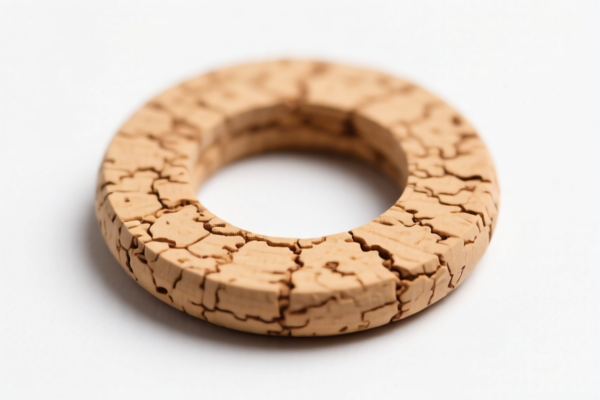
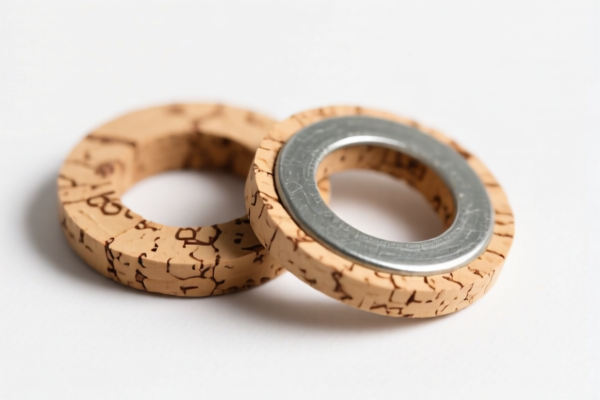
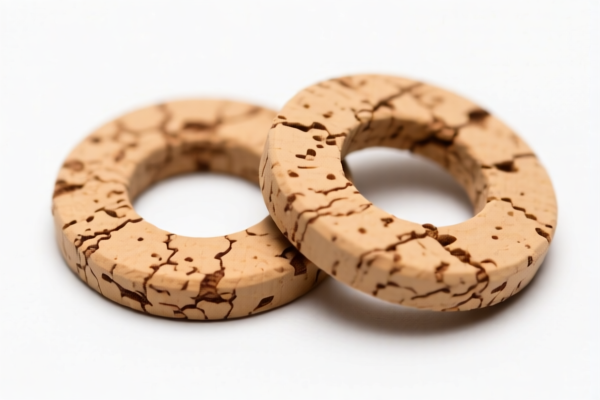
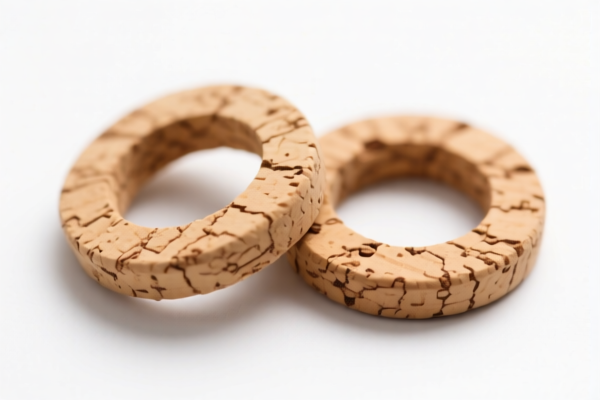
AI Analysis
🍷 Cork Sealing Washers & Gaskets (Natural & Agglomerated)
🌐 HS Code Reference & Customs Clearance Guide | 2026 Latest Tariff Analysis | Professional Compliance Strategy
📌 I. Product Definition & Classification: Are You Sure It’s Just “Cork”?
Cork Sealing Washers and Gaskets are critical components used in plumbing, automotive, aerospace, and industrial applications to prevent leaks. In international trade, the classification depends strictly on the material source and physical form.
Natural Cork vs. Agglomerated Cork: * Natural Cork: Derived directly from the bark of the Quercus suber tree. Often used for high-end wine stoppers or specific high-pressure gaskets. * Agglomerated Cork: Made from crushed cork granules bound with a binding substance (usually polyurethane). This is the most common form for industrial washers and gaskets due to uniformity and cost-effectiveness.
⚠️ Critical Distinction: - If the product is cut from solid cork blocks/shapes → Potential Heading 4503 (if raw) or 4504 (if agglomerated/articles). - If the product is manufactured from agglomerated cork blocks/sheets → Heading 4504. - Note: The provided
<DATA>only covers Heading 4823 (Paper/Paperboard) and Heading 4504 (Agglomerated Cork). It does not cover natural cork articles under 4503. Therefore, we focus exclusively on Agglomerated Cork products as per the data constraints.
📦 II. HS Code Classification Details (Based on Provided Data)
The <DATA> provided contains six specific HS codes. All six carry the same tax burden but apply to different material categories or specific sub-descriptions. We must match the "Cork Washer" to the correct agglomerated cork code.
| HS Code | Product Description | Applicability for "Cork Sealing Washers" | Material Type |
|---|---|---|---|
4504.10.45.00 |
Agglomerated Cork: Stoppers, not tapered, wholly of cork, of a thickness > max diameter | ❌ Unlikely Specifically for large, non-tapered stoppers (like wine corks). Washers are flat and thin. |
Agglomerated Cork |
4504.10.47.00 |
Agglomerated Cork: Other | ✅ HIGHLY LIKELY “Other” catches agglomerated cork gaskets, washers, and seals not specifically listed elsewhere. |
Agglomerated Cork |
4823.90.80.00 |
Other Paper/Paperboard: Gaskets, washers, seals | ❌ Wrong Material For Paper/Cardboard seals only. Do not use if made of cork. |
Paper/Cardboard |
4823.90.86.20 |
Other Paper/Paperboard: Shoe covers | ❌ Wrong Product Specifically for shoe covers. |
Paper/Cardboard |
6812.99.90.00 |
Fabricated Asbestos: Other | ❌ Wrong Material For Asbestos gaskets. (Asbestos is banned/restricted in many regions). |
Asbestos |
6812.99.20.00 |
Fabricated Asbestos: Compressed asbestos fiber jointing | ❌ Wrong Material For Asbestos sheets/rolls. |
Asbestos |
🔍 Key Insight: - If your washers are made of Agglomerated Cork, the correct code from the list is
4504.10.47.00. - Codes4823...and6812...are included in the data but are irrelevant for cork products. Misclassifying cork as paper (4823) or asbestos (6812) is a serious compliance error.
💰 III. 2026 Latest Tariff Rate Breakdown
✅ Applicable Country: United States (US) ✅ Origin: China (CN) ✅ Effective Date: Current rates apply (2025-2026 landscape)
🎯 1. 4504.10.47.00 —— Agglomerated Cork Articles (Other) – Recommended for Cork Washers
| Item | Content |
|---|---|
| Base Tariff Rate | 0% (ad valorem) |
| Section 301 Add-on Tariff | +25% |
| Total Tariff Rate | 25.0% |
| Tax Calculation | CIF Value × 25% |
| De Minimis Exemption | ❌ Not Eligible (Section 301 goods are excluded from de minimis thresholds) |
| Legal Basis | USITC Tariff Schedule; Section 301 List 4B |
📌 Explanation: - Agglomerated cork articles are subject to the 25% Section 301 tariff if originating from China. - The base MFN (Most Favored Nation) rate is 0%, meaning the entire tax burden comes from the trade remedy tariff. - No IEEPA 10% surcharge applies here (unlike electronics), so the total is strictly 25%.
🛠️ IV. Customs Clearance Practical Advice (Real-World Pitfall Guide)
✅ 1. Essential Documentation Checklist
| Document | Required? | Why It Matters |
|---|---|---|
| ✅ Product Specification Sheet | ✔️ | Must explicitly state "Agglomerated Cork" or "Ground Cork" and "Polyurethane Binder" to distinguish from natural cork or paper. |
| ✅ Material Composition Certificate | ✔️ | Proves it is not natural cork (which might have different duty treatments) and contains no asbestos (which would trigger health bans). |
| ✅ HS Code Justification Memo | ✔️ | Explain why it is 4504.10.47.00 and NOT 4823 (Paper). Key argument: "Material is cork, not paper pulp." |
| ✅ Commercial Invoice | ✔️ | Clear description: "Agglomerated Cork Gaskets/Washers, Industrial Use." Avoid vague terms like "Seals." |
| ✅ COO (Certificate of Origin) | ✔️ | To confirm Chinese origin for accurate tariff application. |
✅ 2. Declaration Tips (Key Mnemonic)
🔥 “Cork is not Paper, Not Asbestos, Just Agglomerated Cork!”
| Scenario | Correct Declaration | Wrong Practice | Consequence |
|---|---|---|---|
| Washers made of cork granules | 4504.10.47.00 (Agglomerated Cork) |
Declare as 4823.90.80.00 (Paper Washers) |
Customs Penalty: Misclassification. Paper vs. Cork distinction is critical. |
| Washers made of natural cork | Not in data list (Likely 4503/4504 different subhead) | Force into 4504.10.47.00 |
Risk of rejection if not technically "agglomerated." |
| Washers with asbestos content | 6812.99.90.00 |
Declare as cork | CRITICAL VIOLATION: Asbestos is hazardous. Seizure & Legal Action. |
✅ 3. Special Considerations
| Situation | Handling Advice |
|---|---|
| Mixed Packaging (Cork + Paper) | Declare separately. Cork items go to 4504. Paper items to 4823. Do not bundle them to hide the cork tariff. |
| OEM/Private Label | Ensure the supplier’s spec sheet matches your declaration. Custom marks don’t change the HS code. |
| Small Samples (< $800) | ❌ No De Minimis! Section 301 goods (including Chinese agglomerated cork under 4504) do not qualify for the $800 de minimis exemption (Type 86/861). Taxes apply even for small samples. |
🌍 V. Global Market Comparison (2026 Update)
| Country/Region | Recommended HS Code | Tariff Rate (China Origin) | Notes |
|---|---|---|---|
| 🇺🇸 USA | 4504.10.47.00 |
25% (Section 301) | No base tax, only 301 tariff. |
| 🇨🇳 China | 4504.10.47.00 |
~10-15% (Import Duty) | Check current Chinese import duties for re-export. |
| 🇪🇺 EU | 4504.10.40 (approx) |
0-5% | Generally low tariffs on cork, but verify specific subheading. |
| 🇬🇧 UK | 4504.10.40 |
0-5% | Post-Brexit tariff schedule may vary slightly from EU. |
📌 Conclusion: - The US market is the most expensive for these goods due to the flat 25% Section 301 tariff. - There are no hidden 10% IEEPA surcharges for cork, keeping the total at a manageable 25%.
📌 VI. Common Errors & Pitfalls (Lessons Learned)
❌ Error 1: Classifying Agglomerated Cork washers as Paper Washers (4823.90.80.00) to "hide" them.
👉 Consequence: Customs will seize goods for material misrepresentation. Cork and paper have different chemical compositions and uses.
❌ Error 2: Using 6812 (Asbestos) codes for all industrial seals.
👉 Consequence: Asbestos is highly regulated. If you don’t contain asbestos, do not use these codes. It triggers FDA/CBP inspections for hazardous materials.
❌ Error 3: Assuming De Minimis ($800) applies to small shipments. 👉 Consequence: Since these are Chinese-origin Section 301 goods, taxes must be paid even on small parcels. Do not use a broker who claims "no tax for small packages" for these items.
✅ Correct Practice:
"Agglomerated Cork Gaskets, Cut to Size, Bonded with Polyurethane, for Industrial Pipe Sealing."
🎯 VII. Conclusion: Precision Saves Money!
🎯 Remember the Mantra:
🔹 "Cork is not Paper, Don’t mislabel."
🔹 "Section 301 hits hard, 25% is the cost."
🔹 "No De Minimis for Chinese Cork!"
📌 Pro Tip:
If you are importing large volumes, consider:
1. Supply Chain Diversification: Sourcing cork from Portugal or Spain (non-China origin) to avoid the 25% US Section 301 tariff entirely.
2. Advance Ruling: File an ACE Ruling with US CBP to confirm 4504.10.47.00 classification before shipping.
📣 Immediate Action:
📞 Consult your customs broker with material specs. 🚀 Verify Origin: If you can source cork from non-China countries, you save 25% instantly!
✨ Professional Clearance Starts with Accurate Classification! 💼 Don’t let a 25% tariff eat your margin!
Customer Reviews
About HS Code Classification
The Harmonized System (HS) is an internationally standardized nomenclature developed by the World Customs Organization (WCO) to classify traded products. Over 200 countries use the HS system as the basis for customs tariffs, trade statistics, and import/export regulations.
Each HS code follows a hierarchical structure:
- Chapter (2 digits) — Broad category of goods (e.g., Chapter 84: Machinery and Mechanical Appliances)
- Heading (4 digits) — More specific grouping within the chapter
- Subheading (6 digits) — Internationally standardized breakdown, used by all WCO member countries
- National subdivisions (8-10 digits) — Country-specific extensions for further classification, such as US HTSUS 10-digit codes
Correct HS code classification is essential for smooth customs clearance, accurate duty payment, and compliance with trade regulations. Misclassification can lead to customs delays, overpayment of duties, or penalties.
When importing from CN to US, the applicable tariff rates may include:
- Most-Favored-Nation (MFN) rate — The standard duty rate applied to WTO members
- General rate — Applied to countries without trade agreements
- Trade remedy duties — Additional tariffs such as Section 301 (anti-dumping), Section 232 (national security), or countervailing duties
The information provided on this page is for reference purposes only. For official classification, please consult with your local customs authority or a licensed customs broker.