Cork Shavings for Building Insulation
CN → USProduct Images
AI Analysis
🌲 Cork Shavings for Building Insulation (Thermal & Acoustic Insulation Material)
🌐 HS Code Reference & Customs Clearance Guide | 2026 Latest Tariff Full Analysis | Professional Clearance Strategy
📌 Part 1: Product Definition & Classification: Do You Really Understand "Cork Shavings"?
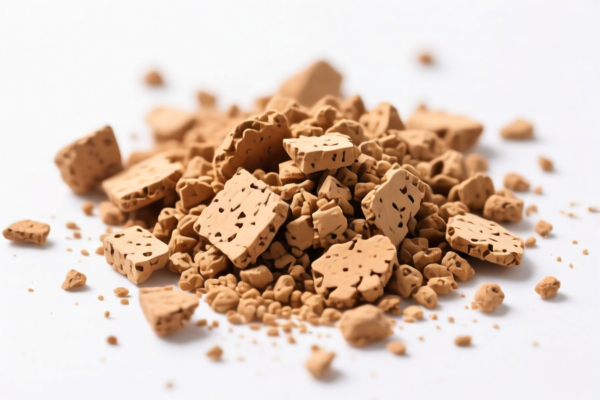
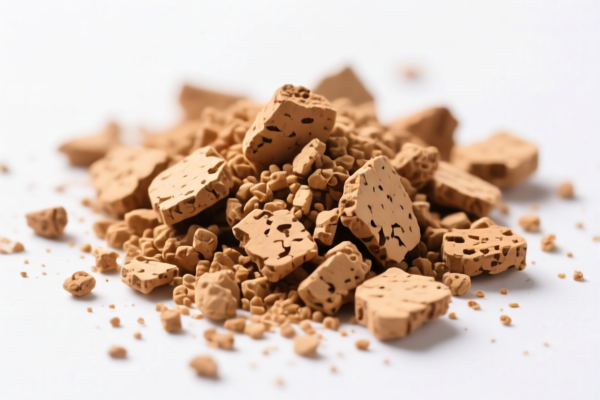
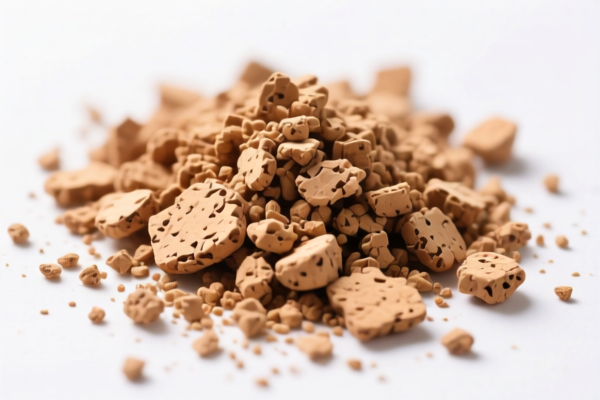
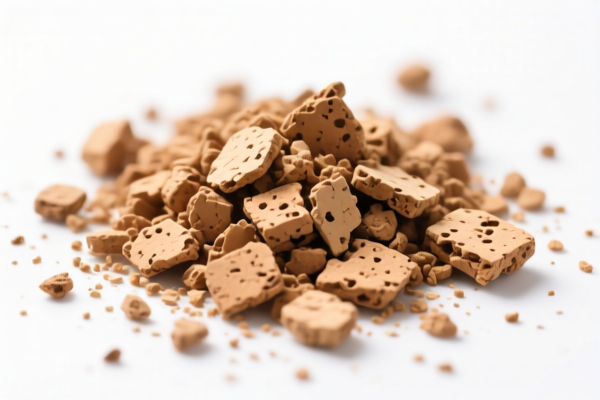
Cork shavings, primarily used in building construction for thermal and acoustic insulation, are processed from the bark of the cork oak (Quercus suber). In international trade, they are generally classified based on their processing level and form:
- Raw or Roughly Processed: Small fragments, particles, or granules obtained from the stripping or grinding of cork bark.
- Agglomerated/Engineered Cork: Shavings often bonded with a binder (though pure shavings are usually just fragmented pieces).
- Key Distinction: The classification depends on whether the material is considered a "raw material" (Chapter 45) or a "manufactured article/insulation material" (Chapter 68 or 39). However, loose cork shavings/granules for insulation are predominantly classified under Chapter 45.
⚠️ Key Classification Point:
- If the product is loose granules, shavings, or dust derived from cork, suitable for insulation fillings → Classified under 4504.
- If the product is rigid panels or blocks made from agglomerated cork with binders, potentially classified under 6813 or 4504 depending on the binding agent and form.
- Note: Pure cork shavings without significant binding agents fall squarely under HS Code 4504.
📦 Part 2: HS Code Classification Details (2026 Latest Tariff Authority Comparison)
| HS Code | Product Description | Application Scenario | Binding Agent? |
|---|---|---|---|
4504.10.00.00 |
Agglomerated cork, whether or not with added binding material | Compressed cork boards, agglomerated cork blocks, insulation boards | ✅ Yes (if agglomerated) |
4504.90.00.00 |
Other articles of cork | Loose shavings, granules, dust, cork wool for insulation | ❌ No (loose/shredded form) |
6813.90.00.00 |
Asbestos-cork insulation goods | Mixed materials containing asbestos (rare/banned) | ❌ N/A |
3926.90.97.00 |
Other articles of plastics | If shavings are mixed with significant plastic binders forming a plastic article | ✅ Yes (Plastic dominant) |
🔍 Key Reminder:
- Loose cork shavings (granules, particles) for filling wall cavities or attic insulation are classified under4504.90.00.00(Other articles of cork).
- Agglomerated cork boards (pressed into sheets) are classified under4504.10.00.00.
- Do not classify as Chapter 39 (Plastics) or Chapter 68 (Stone/Ceramic) unless heavily bound with other materials that change the essential character.
💰 Part 3: 2026 Latest Tariff Rate Details (Including Surcharges & Policy Add-ons)
✅ Applicable Country: United States (US)
✅ Origin: China (CN)
✅ Effective Time: November 10, 2025 onwards (including subsequent imports)
🎯 1. 4504.90.00.00 —— Other Articles of Cork (Loose Shavings, Granules, Dust)
| Item | Content |
|---|---|
| Basic Tariff Rate | 2.5% (ad valorem) |
| USITC Surcharge (Section 301) | +25% |
| IEEPA Surcharge | +10% (for China/HK products, from Nov 10, 2025) |
| Total Tariff Rate | 37.5% |
| Tax Calculation | CIF Value × 37.5% |
| Eligible for De Minimis? | ❌ No (deny_de_minimis) |
| Legal Basis Path | IEEPA:9903.01.25 → IEEPA:9903.01.24 → USITC:4504.90.00.00 → FOOTNOTE:9903.88.01 |
📌 Explanation:
- The 25% USITC surcharge is imposed under Section 301 of the Trade Act on certain Chinese imports.
- The 10% IEEPA surcharge is an additional levy on Chinese-origin goods under the International Emergency Economic Powers Act.
- Total 37.5% is a significant cost burden. Cork from non-Chinese origins (e.g., Portugal, Spain, Morocco) may avoid the IEEPA and potentially the Section 301 surcharge if rules of origin are strictly met.
🎯 2. 4504.10.00.00 —— Agglomerated Cork (Compressed Boards/Blocks)
| Item | Content |
|---|---|
| Basic Tariff Rate | 2.5% |
| USITC Surcharge (Section 301) | +25% |
| IEEPA Surcharge | +10% |
| Total Tariff Rate | 37.5% |
| Tax Calculation | CIF Value × 37.5% |
| Eligible for De Minimis? | ❌ No |
| Legal Basis Path | Same as above |
📌 Note:
- Both loose shavings and agglomerated cork from China face the same high tariff rate due to the nature of the Chapter 45 classification.
- If the agglomerated cork uses a plastic binder that gives the article its essential character, it might be reclassified under Chapter 39, but this is risky and requires expert advice. Pure cork-based agglomerates remain in Chapter 45.
🛠️ Part 4: Customs Clearance Practical Advice (Real-World Pitfall Guide)
✅ 1. Required Documentation Checklist
| Document | Must Provide | Description |
|---|---|---|
| ✅ Product Specification Sheet | ✔️ | Details on particle size, density, moisture content, thermal conductivity (R-value) |
| ✅ Certificate of Origin (CO) | ✔️ | Critical to prove non-Chinese origin if sourcing from Portugal/Spain to avoid IEEPA |
| ✅ Commercial Invoice | ✔️ | Clearly state "Cork Shavings for Insulation" or "Agglomerated Cork Boards" |
| ✅ Packing List | ✔️ | Specify net/gross weight, volume, and whether loose or bagged |
| ✅ Mill Test Report/Quality Cert | ✔️ | Proof of natural cork origin, no mold or pest contamination |
| ✅ ISF Filing (10+2) | ✔️ | Required for ocean shipments to US |
✅ 2. Declaration Tips (Key Mantra)
🔥 "Loose is 4504.90, Boards are 4504.10, Name it Cork, Not Plastic!"
| Scenario | Correct Declaration | Wrong Practice |
|---|---|---|
| Loose cork granules in bags | 4504.90.00.00 |
Misdeclare as "Plastic Granules" → Higher tariff + penalties |
| Cork boards for walls | 4504.10.00.00 |
Declare as "Wood Fiberboard" → Wrong chapter, detention |
| Mixed with plastic binder | Evaluate essential character | Blindly declare as Cork → If plastic dominates, Chapter 39 applies |
| Small samples for testing | Check De Minimis rules | Assume $800 exemption applies → Deny_de_minimis for China origin |
✅ 3. Special Circumstances Handling
| Scenario | Handling Advice |
|---|---|
| Sourcing from Portugal/Spain | Provide EUR.1 Movement Certificate or Form A to prove non-China origin. This can avoid IEEPA 10% and potentially Section 301 if rules of origin are met. |
| Moisture Content | Ensure moisture content is <10%. High moisture can lead to rejection by USDA/APHIS for pest/fungal risk. |
| Pest Control | Cork is organic. Provide a Fumigation Certificate or Phytosanitary Certificate if required by destination port to prevent quarantine delays. |
| Agglomerated vs. Loose | Clearly distinguish in description. "Cork Granules" vs. "Cork Boards" to ensure correct HTS subheading. |
🌍 Part 5: Global Major Market Clearance Comparison (2026 Latest)
| Country/Region | Recommended HS Code | Tariff | Certification Requirements | Notes |
|---|---|---|---|---|
| 🇺🇸 USA | 4504.90.00.00 / 4504.10.00.00 |
37.5% (CN) | None specific, but ISF required | High tariff for China; consider EU/Morocco origin |
| 🇨🇳 China | 4504.90.00.00 |
2.5% - 8% | None | Low import tariff, good for domestic use |
| 🇪🇺 EU | 4504.10.00 / 4504.90.00 |
0% - 3% | CE Marking (if part of construction product) | Favorable if from Portugal (main producer) |
| 🇬🇧 UK | 4504.10.00 / 4504.90.00 |
0% - 3% | UKCA Marking | Similar to EU post-Brexit |
| 🇯🇵 Japan | 4504.10.00 / 4504.90.00 |
0% - 3% | FFC (if applicable) | Low tariffs, strict quality checks |
📌 Conclusion:
- USA imposes a heavy 37.5% tariff on Chinese cork insulation products.
- EU/UK/Japan offer minimal tariffs, making these markets more attractive for price-sensitive insulation materials.
- Strategic Sourcing: Sourcing cork from Portugal (world's largest producer) can significantly reduce US tariff burden if origin rules are met.
📌 Part 6: Common Errors & Pitfall Guide (Blood & Tears Lessons)
❌ Error 1: Declaring "Cork Shavings" as "Wood Particles" (HS 4401)
👉 Consequence: Wrong classification, potential 10-15% tariff difference, and detention for incorrect documentation.
❌ Error 2: Ignoring "De Minimis" restrictions for Chinese-origin goods
👉 Consequence: Even small packages (<$800) from China are not exempt from duties. You will pay 37.5% on the entire value, plus customs processing fees.
❌ Error 3: Failing to declare moisture content or pest risks
👉 Consequence: US Customs and Border Protection (CBP) or USDA may seize or order re-exportation if fungal/pest concerns are raised.
❌ Error 4: Confusing "Agglomerated Cork" with "Cork Board" (paper-backed)
👉 Consequence: If the product has a paper or foil facing, it may be classified as a composite good under Chapter 48 or 39. Pure cork agglomerates are 4504.
✅ Correct Practice:
"Natural Cork Granules, Agglomerated from Quercus suber bark, for Thermal Insulation, Loose, No Plastic Binder, Origin: Portugal"
🎯 Part 7: Conclusion: Professional Declaration, Time & Cost Saving!
🎯 Remember the Mantra:
🔹 "Cork is 4504, Not 4401. China Origin = 37.5%. EU Origin = Low Tariff."
🔹 "De Minimis Does Not Apply to China. Always Declare Origin Clearly."
📌 Pro Tip:
If you are sourcing from China, consider the total landed cost including 37.5% tariff. Alternatively, source from Portugal, Spain, or Morocco to leverage free trade agreements or lower duty rates.
For USA imports, consider applying for a Tariff Class Code (TCC) Exclusion if applicable, though cork exclusions are limited.
📣 Immediate Action:
📞 Contact a licensed customs broker + Provide product samples/photos + Verify Origin Certificate
🚀 Ensure your insulation material clears customs smoothly, avoids costly penalties, and maximizes profit margins!
✨ Professional Customs Clearance Starts with Accurate Classification!
💼 Every percent of tariff counts in the construction insulation business!
Customer Reviews
About HS Code Classification
The Harmonized System (HS) is an internationally standardized nomenclature developed by the World Customs Organization (WCO) to classify traded products. Over 200 countries use the HS system as the basis for customs tariffs, trade statistics, and import/export regulations.
Each HS code follows a hierarchical structure:
- Chapter (2 digits) — Broad category of goods (e.g., Chapter 84: Machinery and Mechanical Appliances)
- Heading (4 digits) — More specific grouping within the chapter
- Subheading (6 digits) — Internationally standardized breakdown, used by all WCO member countries
- National subdivisions (8-10 digits) — Country-specific extensions for further classification, such as US HTSUS 10-digit codes
Correct HS code classification is essential for smooth customs clearance, accurate duty payment, and compliance with trade regulations. Misclassification can lead to customs delays, overpayment of duties, or penalties.
When importing from CN to US, the applicable tariff rates may include:
- Most-Favored-Nation (MFN) rate — The standard duty rate applied to WTO members
- General rate — Applied to countries without trade agreements
- Trade remedy duties — Additional tariffs such as Section 301 (anti-dumping), Section 232 (national security), or countervailing duties
The information provided on this page is for reference purposes only. For official classification, please consult with your local customs authority or a licensed customs broker.