Cork Soundproof Board
CN → US| HS Code | Tariff Rate | Origin | Destination | Doc |
|---|---|---|---|---|
| 4504105000 | 35.0% | CN | US | Official Doc |
| 6808000000 | 35.0% | CN | US | Official Doc |
| 4504102000 | 35.0% | CN | US | Official Doc |
| 4504104000 | 35.0% | CN | US | Official Doc |
| 4504105000 | 35.0% | CN | US | Official Doc |
Product Images
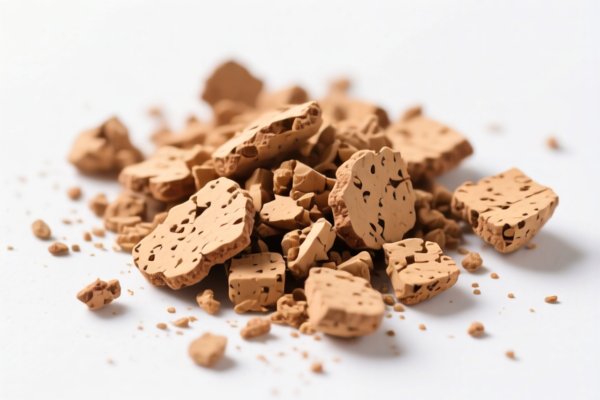

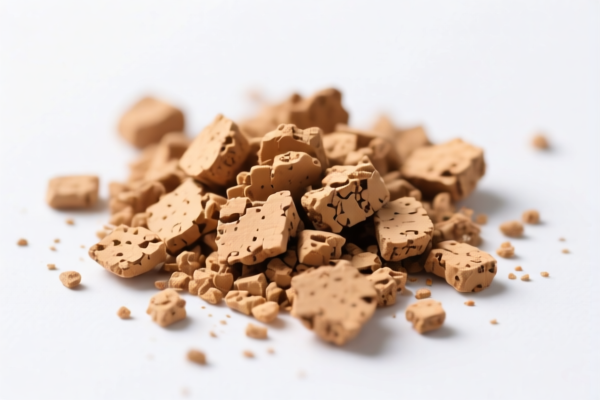
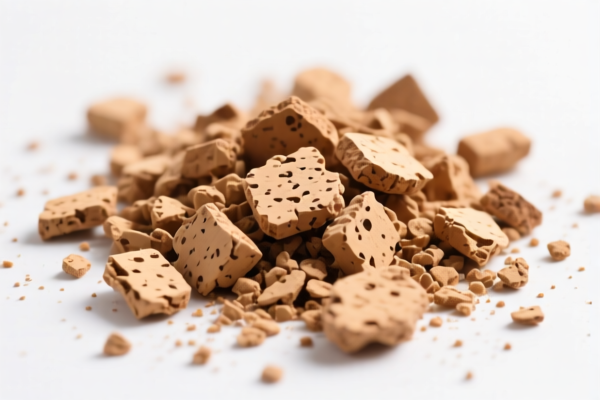
AI Analysis
🌲 Cork Soundproof Board (Cork Insulation & Wall Panels)
🌐 HS Code Reference & Customs Clearance Guide | 2026 Latest Tariff Analysis | Professional Strategy for US Imports
📌 I. Product Definition & Classification: Do You Know "Cork"?
Cork soundproof boards are natural, sustainable materials derived from the bark of the Quercus suber (cork oak). In international trade, they are primarily classified based on their physical form (board, block, piece) and processing state (compressed vs. natural), as well as their intended use (insulation or wall decoration).
Key Distinction:
- Compressed Cork Insulation: Dense, processed cork blocks/boards used strictly for thermal/acoustic insulation.
- Cork Wall Panels/Decor: Cork sheets, tiles, or strips used for interior wall decoration, often retaining a more natural texture.
- Non-Cork Fiber Boards: Boards made from wood waste or vegetable fibers, not pure cork.
⚠️ Critical Classification Point:
- If the product is pure cork and formed into boards, blocks, or pieces, it falls under Chapter 45.
- If it is compressed for insulation, it typically falls under 4504.10.20.00.
- If it is for wall decoration or general board form, it falls under 4504.10.40.00 or 4504.10.50.00.
- If it is NOT pure cork but made from wood/vegetable fiber waste, it falls under 6808.00.00.00.
📦 II. HS Code Classification Details (2026 Official Tariff Alignment)
Based on the provided data, here are the specific HS Codes applicable to "Cork Soundproof Boards":
| HS Code | Product Description | Use Case | Material Form |
|---|---|---|---|
4504.10.50.00 |
Cork Insulation Boards / Wall Panels | General cork boards for insulation or wall decoration, in board form. | Pure Cork, Board |
6808.00.00.00 |
Cork-like Insulation/Wall Boards (Non-Pure Cork) | Boards made from plant fiber/wood waste or composite materials resembling cork. | Wood/Vegetable Fiber Waste, Board/Block |
4504.10.20.00 |
Compressed Cork Insulation | Specifically for thermal or acoustic insulation, compressed cork definition. | Pure Cork, Compressed |
4504.10.40.00 |
Cork Wall Panels (Decorative) | Cork blocks, boards, strips, or sheets for wallpaper or wall decoration. | Pure Cork, Block/Board/Sheet |
4504.10.50.00 |
Cork Wall Panels (General Board) | Boards falling under the general category of cork and cork products. | Pure Cork, Board |
🔍 Important Note:
-4504.10.50.00appears twice in the data with slightly different summaries but the same HS Code and same Tax Rate. This indicates it is the most versatile code for general cork boards.
-6808.00.00.00is for non-cork substitutes (wood/veggie fiber). If your product is 100% cork, do NOT use this code, as it may lead to misclassification.
-4504.10.20.00is for compressed insulation. If your board is not compressed but is for insulation,4504.10.50.00or4504.10.40.00may be more appropriate.
💰 III. 2026 Latest Tariff Rate Breakdown (Including Additional Duties)
✅ Applicable Country: United States (US)
✅ Country of Origin: China (CN)
✅ Effective Date: From November 10, 2025 (and subsequent imports)
All the HS codes listed above carry the same tax structure due to current trade policies (Section 301 & IEEPA).
🎯 Universal Tax Structure for All Listed HS Codes
| Item | Detail |
|---|---|
| Base Tariff | 0.0% (Ad valorem) |
| Section 301 Additional Duty | +25.0% |
| IEEPA Additional Duty (Section 122) | +10.0% |
| Total Tax Rate | 35.0% |
| Tax Calculation | CIF Value × 35% |
| De Minimis Exemption | ❌ Not Eligible (All high-risk goods under 301/IEEPA are excluded) |
| Legal Basis Path | IEEPA:9903.01.25 → USITC:4504.10.xx.xx → FOOTNOTE:301 |
📌 Detailed Explanation:
- "Base Tariff 0%": Cork products generally have a low base duty.
- "Section 301 25%": This is the core US tariff on Chinese goods under the Trade Act of 1974.
- "IEEPA 10%": This is an additional levy under the International Emergency Economic Powers Act, specifically targeting certain Chinese imports.
- Total 35%: This is a significant cost factor. Importers must account for this in their landed cost calculations.
- No De Minimis: Unlike small packages under $800, commercial shipments of cork boards are fully subject to these duties.
🛠️ IV. Customs Clearance Practical Advice (Battle-Tested Tips)
✅ 1. Required Documentation Checklist
| Document | Required? | Purpose |
|---|---|---|
| ✅ Product Specification Sheet | ✔️ | Must clearly state: Material (100% Cork vs. Composite), Thickness, Dimensions, Fire Rating. |
| ✅ Material Composition Proof | ✔️ | Crucial to distinguish between Pure Cork (4504) and Wood Fiber/Composite (6808). |
| ✅ Product Photos | ✔️ | Show texture, edges, and packaging to prove board/block form. |
| ✅ Commercial Invoice | ✔️ | Must accurately describe the goods as "Cork Insulation Board" or "Cork Wall Panel." Avoid vague terms like "Building Material." |
| ✅ Packing List | ✔️ | Detail net/gross weights, dimensions, and number of packages. |
| ✅ Certificate of Origin (CO) | ✔️ | Required to prove origin as China (or other country) for duty assessment. |
✅ 2. Declaration Strategy (Key Mnemonics)
🔥 "Material First, Form Second, Use Clear, Tax Avoided!"
| Scenario | Correct Declaration | Wrong Practice |
|---|---|---|
| 100% Natural Cork Board | 4504.10.50.00 or 4504.10.40.00 |
Calling it "Wood Panel" → Risk of higher scrutiny or wrong HS. |
| Compressed Cork for Insulation | 4504.10.20.00 |
Calling it "General Cork Board" → Potential misclassification if density is high. |
| Cork + Wood Fiber Composite | 6808.00.00.00 |
Calling it "100% Cork" → Fraud Risk! If tested and found to be wood fiber, penalties apply. |
| Cork Tiles for Wall Decor | 4504.10.40.00 |
Calling it "Insulation" → If not primarily for insulation, this is more accurate. |
✅ 3. Special Cases & Pitfalls
| Situation | Handling Advice |
|---|---|
| OEM Custom Sizes | Provide design drawings to prove the "board" or "block" form. |
| Mixed Materials | If the board has a backing (e.g., foil, fabric), ensure the primary material is cork. If backing >50% by value, re-evaluate HS. |
| Fire-Rated Cork | If treated with fire retardants, declare explicitly. Some treatments may affect classification. |
| "Soundproof" Claim | Avoid over-promising in documentation. "Acoustic Insulation Board" is safer than "Soundproof" (which implies 100% silence). |
🌍 V. Global Market Comparison (2026 Overview)
| Country/Region | Recommended HS Code | Tariff (CN Origin) | Certification | Notes |
|---|---|---|---|---|
| 🇺🇸 USA | 4504.10.50.00 / 4504.10.20.00 |
35% (Total) | No specific cert | High duty due to 301/IEEPA. |
| 🇨🇳 China | 4504.10.50.00 |
Low (Import) | - | Domestic production is common. |
| 🇪🇺 EU | 4504.10.50.00 |
~6-12% | CE (if applicable) | No additional punitive tariffs. |
| 🇬🇧 UK | 4504.10.50.00 |
~6-12% | UKCA | Post-Brexit rules apply. |
| 🇨🇦 Canada | 4504.10.50.00 |
0% (if eligible) | - | Check CUSMA/USMCA benefits if applicable. |
📌 Conclusion:
- USA is the most expensive market for Chinese cork boards due to the 35% total tariff.
- EU/UK have moderate tariffs but no punitive additions.
- Diversification Strategy: Consider sourcing from Portugal, Spain, or Morocco (major cork producers) to avoid US Section 301 tariffs if exporting to the US.
📌 VI. Common Mistakes & Pitfalls (Lessons Learned)
❌ Mistake 1: Declaring Composite Boards (Cork + Wood Fiber) as Pure Cork.
👉 Consequence: Customs may reclassify to 6808.00.00.00 or impose penalties for misdeclaration.
✅ Fix: Be honest about material composition. If it's 80% cork, declare accordingly.
❌ Mistake 2: Using "Soundproof" as the primary product name.
👉 Consequence: Customs may demand technical test reports to verify acoustic claims.
✅ Fix: Use "Cork Insulation Board" or "Cork Acoustic Panel" and include test reports if requested.
❌ Mistake 3: Ignoring the IEEPA 10% Surcharge.
👉 Consequence: Underestimating landed cost by 10%, leading to profit erosion.
✅ Fix: Include the full 35% in your pricing model.
❌ Mistake 4: Confusing Compressed vs. Non-Compressed.
👉 Consequence: If compressed, 4504.10.20.00 might be more accurate. Misclassification can lead to delays.
✅ Fix: Check density and processing method. Compressed = 20.xx. Non-compressed = 50.xx or 40.xx.
🎯 VII. Conclusion: Smart Declaration, Lower Costs!
🎯 Remember This Mantra:
🔹 "Cork is 4504, Fiber is 6808. Compressed is 20, Boards are 50. 35% Tax Awaits, So Check Your Data!"
🔹 "HS Code Determines Your Cost. 35% is Steep, But Accurate Declaration Saves You from Fines!"
📌 Pro Tip:
If your cork is sourced from Portugal or Spain, you MAY qualify for zero or lower tariffs under certain trade agreements, avoiding the 35% US surcharge.
Always request a Pre-Ruling (Advance Ruling) from US Customs (CBP) if your product is borderline between 4504 and 6808.
📣 Immediate Action:
📞 Contact your customs broker with Material Safety Data Sheets (MSDS) and Product Specs.
🚀 Optimize Your Supply Chain: Consider non-CN origin cork to mitigate US tariffs.
✨ Professional Clearance Starts with Accurate Classification!
💼 Every Percent Saved is Pure Profit!
Customer Reviews
About HS Code Classification
The Harmonized System (HS) is an internationally standardized nomenclature developed by the World Customs Organization (WCO) to classify traded products. Over 200 countries use the HS system as the basis for customs tariffs, trade statistics, and import/export regulations.
Each HS code follows a hierarchical structure:
- Chapter (2 digits) — Broad category of goods (e.g., Chapter 84: Machinery and Mechanical Appliances)
- Heading (4 digits) — More specific grouping within the chapter
- Subheading (6 digits) — Internationally standardized breakdown, used by all WCO member countries
- National subdivisions (8-10 digits) — Country-specific extensions for further classification, such as US HTSUS 10-digit codes
Correct HS code classification is essential for smooth customs clearance, accurate duty payment, and compliance with trade regulations. Misclassification can lead to customs delays, overpayment of duties, or penalties.
When importing from CN to US, the applicable tariff rates may include:
- Most-Favored-Nation (MFN) rate — The standard duty rate applied to WTO members
- General rate — Applied to countries without trade agreements
- Trade remedy duties — Additional tariffs such as Section 301 (anti-dumping), Section 232 (national security), or countervailing duties
The information provided on this page is for reference purposes only. For official classification, please consult with your local customs authority or a licensed customs broker.