Cork Stopper Non Conical
CN → US| HS Code | Tariff Rate | Origin | Destination | Doc |
|---|---|---|---|---|
| 4503102000 | 35.0% | CN | US | Official Doc |
| 4503106000 | 35.0% | CN | US | Official Doc |
| 4502000000 | 35.0% | CN | US | Official Doc |
| 4504104500 | 35.0% | CN | US | Official Doc |
| 4504104700 | 35.0% | CN | US | Official Doc |
Product Images



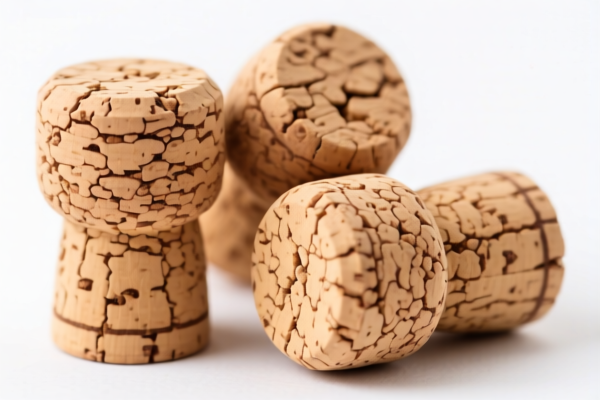
AI Analysis
🍷 Cork Stopper (Non-Conical)
🌐 HS Code Reference & Clearance Guide | 2026 Latest Tariff Analysis | Professional Entry Strategy
📌 I. Product Definition & Classification: Understanding "Non-Conical Cork Stoppers"
Cork stoppers are primary closure systems for wine, spirits, and specialty beverages. While many assume all cork stoppers fall under one code, shape dictates classification.
Non-Conical Cork Stoppers typically refer to: - Cylindrical Stopper (柱状软木塞): Straight-sided, uniform diameter. - Bi-Cone Stopper (双锥软木塞): Tapered from both ends to a middle cylinder (often called "honeycomb" or "composite," but if natural cork, it still follows material rules). - Agglomerated Cork Stopper (粘合软木塞/复合塞): Made from cork granules bound with food-grade adhesive, often with a natural cork disk on ends.
⚠️ Key Distinction:
- Material: Must be natural cork (天然软木) or cork granules (软木颗粒).
- Shape: "Non-conical" excludes single-tapered (conical) wine stoppers that fit into bottle necks directly. Instead, these are often cylindrical or bi-conical shapes used in specific bottling lines or for spirits/liqueurs.
- Classification Logic: The Harmonized System (HS) classifies cork products based on raw material (Chapters 45) and form (stops/plugs).
📦 II. HS Code Classification Details (2026 Latest Tariff对照)
| HS Code | Product Description | Shape/Form | Material | Tax Rate (China→US) |
|---|---|---|---|---|
4503.10.20.00 |
Natural cork articles; corks, plugs, and stoppers (other than stoppers of heading 4502) | Cylindrical/Non-conical | Natural Cork | 35% |
4503.10.60.00 |
Natural cork articles; corks, plugs, and stoppers | Other non-conical forms | Natural Cork | 35% |
4502.00.00.00 |
Natural cork in raw or simply prepared state; corks, plugs, and stoppers of heading 4502 | Cylindrical/Straight | Natural Cork (Raw/Simple Prep) | 35% |
4504.10.45.00 |
Cork agglomerate; corks, plugs, and stoppers | Non-conical/Cylindrical | Agglomerated Cork (Granules) | 35% |
4504.10.47.00 |
Cork agglomerate; corks, plugs, and stoppers | Other Agglomerated Forms | Agglomerated Cork | 35% |
🔍 Critical Note:
- Natural Cork (Chapters 4502 & 4503) vs. Agglomerated Cork (Chapter 4504):
- If the stopper is made from solid natural cork, it falls under 4502 or 4503.
- If it is made from cork granules bound together, it falls under 4504.
- "Non-Conical" Implication: Most standard wine stoppers are slightly tapered. "Non-conical" often implies cylindrical (straight) or bi-conical shapes. Both natural and agglomerated corks can be cylindrical.
- Tax Rate: All listed codes carry a 35% total tax rate for shipments from China to the US.
💰 III. 2026 Latest Tariff Rate Breakdown (Including Additional Duties)
✅ Applicable Country: United States (US)
✅ Origin: China (CN)
✅ Effective Date: November 10, 2025, onward
🎯 1. 4503.10.20.00 & 4503.10.60.00 – Natural Cork Stoppers (Non-Conical)
| Item | Details |
|---|---|
| Base Tariff | 0.0% (Ad Valorem) |
| USITC Additional Duty | +25% (Section 301 Tariff) |
| IEEPA Additional Duty | +10% (China-specific surcharge) |
| Total Effective Tax Rate | 35.0% |
| Tax Calculation | CIF Value × 35% |
| De Minimis Exemption | ❌ Not Eligible (deny_de_minimis) |
| Legal Basis Path | Section 301: 9903.88.01 → IEEPA: 9903.01.24 → HS: 4503.10.20.00 |
📌 Explanation:
- 25% Base Add-on: From the Section 301 trade remedy list for Chinese goods.
- 10% IEEPA Surcharge: Specific surcharge on certain Chinese imports under the International Emergency Economic Powers Act.
- No Base Duty: Natural cork articles have a 0% MFN rate.
- Total 35%: This is a high-cost item for importers. Must be factored into landed cost.
🎯 2. 4502.00.00.00 – Natural Cork (Raw/Simple Preparation)
| Item | Details |
|---|---|
| Base Tariff | 0.0% |
| USITC Additional Duty | +25% |
| IEEPA Additional Duty | +10% |
| Total Effective Tax Rate | 35.0% |
| Legal Basis | Section 301: 9903.88.01 → IEEPA: 9903.01.24 → HS: 4502.00.00.00 |
📌 Note:
- Often used for large cylindrical natural cork blocks or straight-grain cork stoppers.
- Same 35% total rate.
🎯 3. 4504.10.45.00 & 4504.10.47.00 – Agglomerated Cork Stoppers
| Item | Details |
|---|---|
| Base Tariff | 0.0% |
| USITC Additional Duty | +25% |
| IEEPA Additional Duty | +10% |
| Total Effective Tax Rate | 35.0% |
| Legal Basis | Section 301: 9903.88.01 → IEEPA: 9903.01.24 → HS: 4504.10.45.00 / 4504.10.47.00 |
📌 Note:
- Agglomerated cork (cork dust + binder) is cheaper but still subject to the same 35% tariff.
- Common in budget wine markets or spirits closures.
🛠️ IV. Customs Clearance Practical Advice (Avoid Pitfalls)
✅ 1. Documentation Checklist (Mandatory)
| Document | Required | Notes |
|---|---|---|
| ✅ Product Specification Sheet | ✔️ | Must specify: Natural vs. Agglomerated, Shape (Cylindrical/Bi-conical), Diameter, Length, Grade. |
| ✅ Material Declaration | ✔️ | Explicitly state "100% Natural Cork" or "Cork Agglomerate with Food-Grade Binder." |
| ✅ Commercial Invoice | ✔️ | Clearly describe as "Cork Stoppers, Non-Conical, for Wine/Spirits Bottling." |
| ✅ Packing List | ✔️ | Include net/gross weight, number of stoppers per box. |
| ✅ Certificate of Origin (CO) | ✔️ | For potential tariff engineering (e.g., if re-exported, but not for US direct import duty reduction). |
| ✅ Lab Test Report (Food Contact) | ✔️ | Prove compliance with FDA 21 CFR for food contact materials. |
✅ 2. Declaration Tips (Key Mnemonic)
🔥 "Material First, Shape Second, Name Accurate, Tax Clear!"
| Scenario | Correct Declaration | Wrong Practice |
|---|---|---|
| Natural Cork, Cylindrical | 4503.10.20.00 – "Natural Cork Corks, Cylindrical" |
Mislabel as "Agglomerated" → Wrong HS, potential penalty |
| Agglomerated Cork, Bi-Conical | 4504.10.47.00 – "Agglomerated Cork Stoppers" |
Claim "Natural" → Customs audit, fines, seizure |
| Mixed Shipment (Natural + Agglomerated) | Separate Line Items in Invoice | Combine → HS Code ambiguity, clearance delay |
| Cork + Plastic Base | Classify by Dominant Material | If cork is primary closure → 4503/4504; if plastic dominates → 3923 (different tax) |
✅ 3. Special Cases
| Case | Handling Advice |
|---|---|
| Composite Stoppers (Cork Disk + Agglomerated Body) | Typically classified under 4504 if agglomerated is primary material, or 4503 if natural cork is dominant. Provide assembly diagram. |
| Treated Corks (Sulfurized, Wax-Coated) | Still classified under Chapter 45, but declare treatment. Ensure no prohibited substances. |
| Small Sample Shipments | No De Minimis Exemption for China origin. Even <$800, subject to 35% duty. |
🌍 V. Global Market Comparison (2026)
| Country/Region | Recommended HS Code | Base Tariff | Additional Duties (China) | Total Cost Impact |
|---|---|---|---|---|
| 🇺🇸 USA | 4503.10.20.00 / 4504.10.47.00 |
0% | +25% (301) +10% (IEEPA) = 35% | High |
| 🇨🇳 China (Import) | 4503.10.20.00 |
5% | None | Low |
| 🇪🇺 EU | 4503.10.90 |
0% | None (if EUR.1 present) | Low |
| 🇬🇧 UK | 4503.10.90 |
0% | None | Low |
| 🇯🇵 Japan | 4503.10.00 |
0% | None | Low |
📌 Conclusion:
- USA is the most expensive market for cork stoppers from China due to Section 301 + IEEPA.
- EU/UK/Japan have 0% base tariffs and no punitive duties, making them more cost-effective.
- Strategy: Consider non-Chinese sourcing (e.g., Portugal, Spain) for US-bound goods to avoid 35% duty.
📌 VI. Common Mistakes & Pitfalls (Lessons Learned)
❌ Mistake 1: Declaring "Agglomerated" as "Natural" to avoid 25% duty
👉 Consequence: Customs inspection, fines, and 35% duty still applied + penalty.
❌ Mistake 2: Ignoring "Non-Conical" Shape in Description
👉 Consequence: HS Code mismatch. If shape doesn't match code description, entry may be rejected.
❌ Mistake 3: Assuming "De Minimis" ($800) applies
👉 Consequence: False. China-origin goods under $800 are not exempt from Section 301/IEEPA duties.
❌ Mistake 4: Mixing Natural and Agglomerated in One Line Item
👉 Consequence: Customs may reject the entire entry or assess highest duty rate for all items.
✅ Correct Practice:
"Natural Cork Stoppers, Cylindrical, 38mm x 40mm, Sulfurized, FDA Compliant, HS 4503.10.20.00"
OR
"Agglomerated Cork Stoppers, Bi-Conical, 24mm x 45mm, Food-Grade Binder, HS 4504.10.47.00"
🎯 VII. Conclusion: Precision in Classification Saves Money!
🎯 Remember the Mnemonic:
🔹 "Material Defines HS, Shape Refines It, China Origin Adds 35%, De Minimis Is Dead!"
🔹 "Natural vs. Agglomerated: Know the Difference, Avoid the Penalty!"
📌 Pro Tip:
If your cork stoppers are sourced from Portugal or Spain, they may qualify for 0% total duty in the US (subject to trade agreements).
Action:
- Source from Non-China Countries for US-bound orders.
- Apply for Advance Rulings from CBP to confirm HS Code for complex composite stoppers.
- Keep Detailed Material Specs ready for audits.
📣 Immediate Action:
📞 Consult a Licensed Customs Broker
📄 Prepare Material Declarations & Product Specs
🚀 Optimize Landed Cost: 35% Duty is Significant!
✨ Professional Clearance Starts with Accurate Classification!
💼 Every Percent Matters in Global Trade!
Customer Reviews
About HS Code Classification
The Harmonized System (HS) is an internationally standardized nomenclature developed by the World Customs Organization (WCO) to classify traded products. Over 200 countries use the HS system as the basis for customs tariffs, trade statistics, and import/export regulations.
Each HS code follows a hierarchical structure:
- Chapter (2 digits) — Broad category of goods (e.g., Chapter 84: Machinery and Mechanical Appliances)
- Heading (4 digits) — More specific grouping within the chapter
- Subheading (6 digits) — Internationally standardized breakdown, used by all WCO member countries
- National subdivisions (8-10 digits) — Country-specific extensions for further classification, such as US HTSUS 10-digit codes
Correct HS code classification is essential for smooth customs clearance, accurate duty payment, and compliance with trade regulations. Misclassification can lead to customs delays, overpayment of duties, or penalties.
When importing from CN to US, the applicable tariff rates may include:
- Most-Favored-Nation (MFN) rate — The standard duty rate applied to WTO members
- General rate — Applied to countries without trade agreements
- Trade remedy duties — Additional tariffs such as Section 301 (anti-dumping), Section 232 (national security), or countervailing duties
The information provided on this page is for reference purposes only. For official classification, please consult with your local customs authority or a licensed customs broker.