Cork Toys
CN → US| HS Code | Tariff Rate | Origin | Destination | Doc |
|---|---|---|---|---|
| 4502000000 | 35.0% | CN | US | Official Doc |
| 4503906000 | 49.0% | CN | US | Official Doc |
| 4503902000 | 35.0% | CN | US | Official Doc |
| 4501100000 | 35.0% | CN | US | Official Doc |
| 4501904000 | 35.0% | CN | US | Official Doc |
Product Images
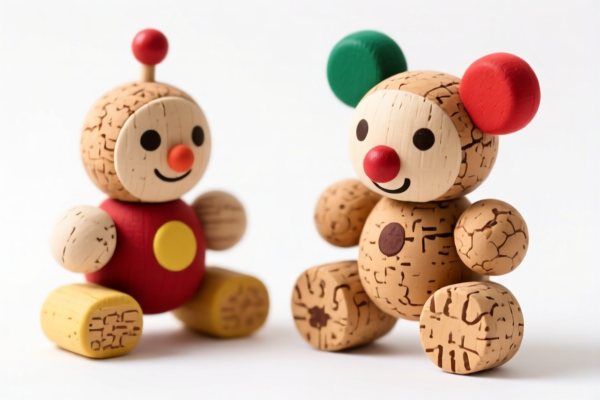
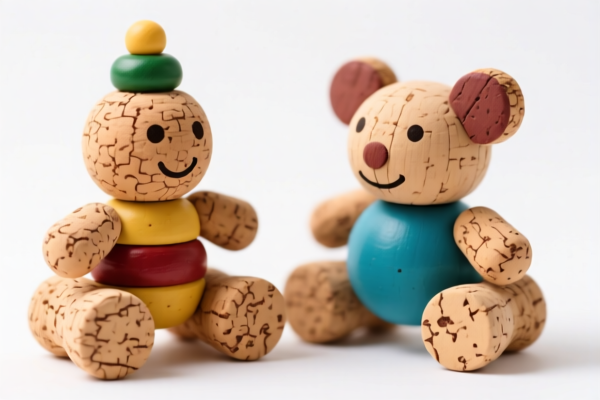
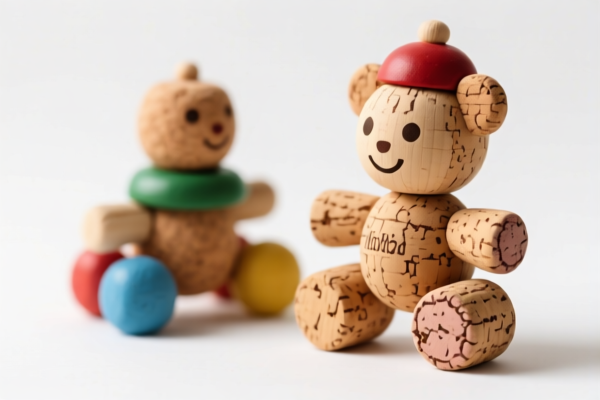
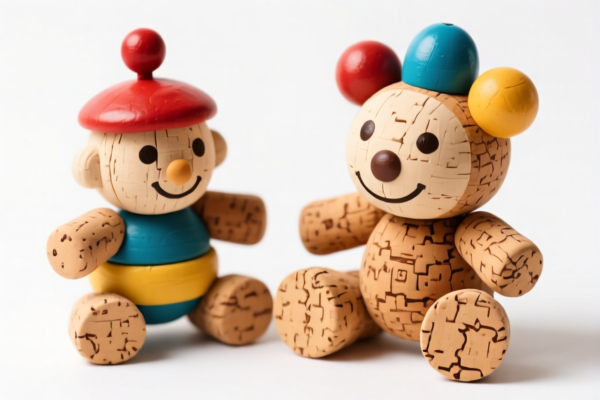
AI Analysis
🍾 Cork Toys (Natural Cork Products)
🌐 HS Code Reference & Customs Clearance Guide | 2026 Latest Tariff Analysis | Professional Entry Strategy
📌 I. Product Definition & Classification: What Exactly is a "Cork Toy"?
Cork toys are children's play items primarily manufactured from natural cork (Quercus suber). In international trade, the classification depends strictly on the degree of processing and the physical form of the material at the time of import.
Cork is unique because its duty rate fluctuates dramatically based on whether it is imported as a raw block, a simple chip, or a finished shaped product.
⚠️ Key Classification Distinctions:
- Raw/Unprocessed Blocks: Solid pieces of natural cork, simply cut or shaped, without complex manufacturing → 4502.00.00.00
- Simple Processing (Chips/Crumbs): Natural cork that has been crushed, granulated, or simply prepared but not made into a specific toy shape yet → 4501.10.00.00 or 4501.90.40.00
- Finished/Secondary Forms: Items cut into thin sheets, pads, or basic shapes (like simple blocks for stacking) that are not complex molded toys → 4503.90.20.00 or 4503.90.60.00
📦 II. HS Code Classification Details (2026 Latest Tariff Authority对照)
| HS Code | Product Description | Applicable Scenario | Processing Level |
|---|---|---|---|
4502.00.00.00 |
Cork Blocks, Natural Cork, in Block Form | Raw cork blocks, large natural chunks, unprocessed or simply trimmed blocks | ❌ Minimal (Raw Block) |
4503.90.60.00 |
Natural Cork Products, Other, in Block Form | Simple shaped cork items, basic blocks not falling under "raw," or other non-sheet forms | ⚠️ Simple Manufacturing |
4503.90.20.00 |
Natural Cork Products, Other, in Thin Sheets or Pads | Cork pads, thin slices, flat pieces used for toy bases or simple shapes | ⚠️ Sheet/Pad Form |
4501.10.00.00 |
Natural Cork, Simply Prepared or in Primary Form | Cork ready for processing, e.g., basic trimming or surface preparation | 🔶 Primary Prep |
4501.90.40.00 |
Natural Cork, Simply Processed or Crushed Form | Cork chips, crumbs, granules, or simple aggregate forms before final shaping | 🔶 Crushed/Simple |
🔍 Critical Reminder:
- If the "toy" is a complex molded item (e.g., a detailed animal shape with painted details), it might technically fall under Chapter 95 (Toys), but DATA only provides Chapter 45 (Cork) codes. Based on the provided data, we assume the import is for cork materials/components or simple shaped cork goods.
- Do not mix raw blocks (4502) with processed products (4503) in the same declaration if their tax treatments differ significantly; clarity prevents delays.
💰 III. 2026 Latest Tariff Rate Breakdown (Including Surtaxes & Policy Add-ons)
✅ Applicable Country: United States (US)
✅ Origin: China (CN)
✅ Effective Date: From November 10, 2025 (and subsequent imports)
🎯 1. 4502.00.00.00 —— Natural Cork, in Block Form (Raw)
| Item | Detail |
|---|---|
| Base Duty Rate | 0.0% (ad valorem) |
| USITC Surtax (Section 301) | +25.0% |
| 122 Clause Surtax | +10.0% |
| Total Tax Rate | 35.0% |
| Tax Calculation | CIF Value × 35% |
| De Minimis Eligibility | ❌ No (deny_de_minimis) |
| Legal Basis Path | USITC:4502.00.00.00 → 301_Section:9903.88.01 → Clause:122 |
📌 Explanation:
- Base Rate 0%: Raw natural cork blocks are often exempt from standard duties to encourage raw material processing in the US.
- 35% Total: The combination of Section 301 (25%) and the specific "122 Clause" (10%) applies to Chinese-origin cork blocks.
- Risk: This is a high tariff for raw material. Importers must account for this in cost models.
🎯 2. 4503.90.60.00 —— Natural Cork Products, Other, Block Form (Simple Processing)
| Item | Detail |
|---|---|
| Base Duty Rate | 14.0% |
| USITC Surtax (Section 301) | +25.0% |
| 122 Clause Surtax | +10.0% |
| Total Tax Rate | 49.0% |
| Tax Calculation | CIF Value × 49% |
| De Minimis Eligibility | ❌ No (deny_de_minimis) |
| Legal Basis Path | USITC:4503.90.60.00 → 301_Section:9903.88.01 → Clause:122 |
📌 Warning:
- This is the highest tax rate in the dataset.
- Why? The base duty is 14% because the product is considered a "manufactured article" rather than a raw block.
- Adding 25% + 10% surtaxes pushes the total to 49%. This is a critical cost driver. Many importers avoid this code if possible by shipping as raw blocks (4502) or simpler forms (4501).
🎯 3. 4503.90.20.00 —— Natural Cork Products, Thin Sheets or Pads
| Item | Detail |
|---|---|
| Base Duty Rate | 0.0% |
| USITC Surtax (Section 301) | +25.0% |
| 122 Clause Surtax | +10.0% |
| Total Tax Rate | 35.0% |
| Tax Calculation | CIF Value × 35% |
| De Minimis Eligibility | ❌ No (deny_de_minimis) |
| Legal Basis Path | USITC:4503.90.20.00 → 301_Section:9903.88.01 → Clause:122 |
📌 Note:
- Like raw blocks, thin sheets/pads have a 0% base duty.
- Total tax is 35%, which is 14 percentage points lower than the "Other Block Form" (4503.90.60.00).
- Strategy: If you can classify your simple toy components as "pads" or "sheets" rather than "other blocks," you save 14% on the base rate.
🎯 4. 4501.10.00.00 —— Natural Cork, Simply Prepared (Primary Form)
| Item | Detail |
|---|---|
| Base Duty Rate | 0.0% |
| USITC Surtax (Section 301) | +25.0% |
| 122 Clause Surtax | +10.0% |
| Total Tax Rate | 35.0% |
| Tax Calculation | CIF Value × 35% |
| De Minimis Eligibility | ❌ No (deny_de_minimis) |
| Legal Basis Path | USITC:4501.10.00.00 → 301_Section:9903.88.01 → Clause:122 |
📌 Interpretation:
- This covers cork that has been "simply prepared" (e.g., trimmed, sanded) but not formed into a final product shape.
- Tax is 35%. Ideal for importing semi-processed cork blanks.
🎯 5. 4501.90.40.00 —— Natural Cork, Crushed/Simple Processed Form
| Item | Detail |
|---|---|
| Base Duty Rate | 0.0% |
| USITC Surtax (Section 301) | +25.0% |
| 122 Clause Surtax | +10.0% |
| Total Tax Rate | 35.0% |
| Tax Calculation | CIF Value × 35% |
| De Minimis Eligibility | ❌ No (deny_de_minimis) |
| Legal Basis Path | USITC:4501.90.40.00 → 301_Section:9903.88.01 → Clause:122 |
📌 Interpretation:
- Includes cork chips, crumbs, and granules.
- Often used for recycled cork products or toy filling materials.
- Tax is 35%.
🛠️ IV. Customs Clearance Practical Advice (Pitfall Avoidance Guide)
✅ 1. Documentation Checklist (Mandatory)
| Document | Required | Explanation |
|---|---|---|
| ✅ Product Description | ✔️ | Must specify "Natural Cork," "Block," "Sheet," or "Chip." Avoid vague terms like "Toy Material." |
| ✅ Material Composition Certificate | ✔️ | Prove it is 100% Natural Cork (not synthetic rubber or composite). Synthetic items may have different HS codes. |
| ✅ Processing Level Declaration | ✔️ | Clearly state: "Simply prepared," "Raw Block," or "Shaped Product." This determines the Base Rate (0% vs 14%). |
| ✅ Commercial Invoice | ✔️ | Must match HS Code exactly. |
| ✅ Packing List | ✔️ | Show weight and dimensions. |
✅ 2. Classification Strategy (Key Tips)
🔥 "Raw & Sheets: 0% Base; Simple Blocks: 14% Base; Avoid the 49% Trap!"
| Scenario | Recommended HS Code | Total Tax | Why? |
|---|---|---|---|
| Importing Raw Cork Blocks | 4502.00.00.00 |
35% | 0% Base + 35% Surtax. Low base rate. |
| Importing Cork Sheets/Pads | 4503.90.20.00 |
35% | 0% Base + 35% Surtax. Low base rate. |
| Importing Cork Chips/Crumbs | 4501.90.40.00 |
35% | 0% Base + 35% Surtax. Low base rate. |
| Importing Simple Shaped Blocks | 4503.90.60.00 |
49% | 14% Base + 35% Surtax. Highest Cost. |
| Importing Simply Prepared Cork | 4501.10.00.00 |
35% | 0% Base + 35% Surtax. Low base rate. |
📌 Strategic Advice:
- If you are importing "cork toys" that are just simple blocks, try to argue they are "Simply Prepared" (4501.10) or "Raw Blocks" (4502) to avoid the 14% Base Duty.
- The 12% difference (35% vs 49%) is significant. Do not let customs classify your raw blocks as "Products" (4503.90.60) unless they are distinctly shaped/finished.
✅ 3. Special Cases & Warnings
| Situation | Handling Advice |
|---|---|
| Composite Cork Toys | If the toy is cork + plastic/rubber, it may NOT be classified under Chapter 45. It might go to Chapter 95 (Toys). Check if cork is the essential character. |
| Painted/Decorated Cork | If heavily painted or decorated, it may be considered a "Finished Product" → 4503.90.60.00 (49%). Keep decorations minimal if possible to stay in lower tax brackets. |
| Cork for Toy Parts | If importing cork pellets for filling, use 4501.90.40.00 (35%). |
| US Customs Ruling | Always request an Advance Ruling if the processing level is ambiguous. A misclassification can lead to penalties. |
🌍 V. Global Market Comparison (2026)
| Country/Region | Recommended HS Code | Base Duty | Total Tax (China Origin) | Remarks |
|---|---|---|---|---|
| 🇺🇸 USA | 4502.00.00.00 |
0% | 35% | Includes 25% Section 301 + 10% 122 Clause |
| 🇺🇸 USA | 4503.90.60.00 |
14% | 49% | Highest rate. Avoid if possible. |
| 🇨🇳 China | 4502.00.00.00 |
~0-5% | Low | No US Surtaxes. |
| 🇪🇺 EU | 4502.00.00.00 |
0% | 0% | No surtaxes on cork from China. |
📌 Conclusion:
- The US is the only market with high additional tariffs (35-49%).
- EU and other markets are much more favorable for cork imports.
- If your supply chain allows, consider shipping to non-US markets first or repacking if the final market is the US, to mitigate costs.
📌 VI. Common Mistakes & Pitfalls (Lessons Learned)
❌ Mistake 1: Classifying Raw Cork Blocks as "Cork Products" (4503.90.60.00)
👉 Consequence: You pay 14% extra base duty. You lose $14 per $100 CIF value.
👉 Fix: Prove it is "natural, unprocessed, or simply cut" → Use 4502.00.00.00.
❌ Mistake 2: Using vague terms like "Cork Toy" in the commercial invoice
👉 Consequence: Customs may choose the highest applicable code (4503.90.60.00) for "products."
👉 Fix: Use precise descriptions: "Natural Cork Blocks, Raw, for Toy Manufacturing."
❌ Mistake 3: Ignoring the 122 Clause (10%)
👉 Consequence: Underpayment of duties, leading to audits and penalties.
👉 Fix: Always include the 10% 122 Clause in your cost calculation for Chinese cork.
🎯 VII. Conclusion: Smart Classification, Lower Costs!
🎯 Key Takeaway:
🔹 "Blocks & Sheets: 0% Base; Finished Blocks: 14% Base."
🔹 "Total Tax: 35% for Raw/Simple, 49% for Shaped Products."
🔹 "Avoid4503.90.60.00unless necessary!"
📌 Pro Tip:
If your "cork toys" are simple shapes, try to classify them as "Simply Prepared" (4501.10.00.00) or "Raw Blocks" (4502.00.00.00) to save 14% on the base duty. The surtaxes (35%) apply to all, but the base rate is the key differentiator.
📣 Immediate Action:
📞 Consult a customs broker to confirm if your specific cork item qualifies as "Raw" or "Simply Prepared."
🚀 Optimize your HS Code to save 14% on every shipment!
✨ Professional Clearance Starts with Precise Classification!
💼 Every percentage point counts in import costs!
Customer Reviews
About HS Code Classification
The Harmonized System (HS) is an internationally standardized nomenclature developed by the World Customs Organization (WCO) to classify traded products. Over 200 countries use the HS system as the basis for customs tariffs, trade statistics, and import/export regulations.
Each HS code follows a hierarchical structure:
- Chapter (2 digits) — Broad category of goods (e.g., Chapter 84: Machinery and Mechanical Appliances)
- Heading (4 digits) — More specific grouping within the chapter
- Subheading (6 digits) — Internationally standardized breakdown, used by all WCO member countries
- National subdivisions (8-10 digits) — Country-specific extensions for further classification, such as US HTSUS 10-digit codes
Correct HS code classification is essential for smooth customs clearance, accurate duty payment, and compliance with trade regulations. Misclassification can lead to customs delays, overpayment of duties, or penalties.
When importing from CN to US, the applicable tariff rates may include:
- Most-Favored-Nation (MFN) rate — The standard duty rate applied to WTO members
- General rate — Applied to countries without trade agreements
- Trade remedy duties — Additional tariffs such as Section 301 (anti-dumping), Section 232 (national security), or countervailing duties
The information provided on this page is for reference purposes only. For official classification, please consult with your local customs authority or a licensed customs broker.