Cork Wafers
CN → USProduct Images
AI Analysis
🍷 Cork Wafers (Natural or Agglomerated)
🌐 HS Code Reference & Customs Clearance Guide | 2026 Latest Tariff Analysis | Professional通关 Strategy
📌 1. Product Definition & Classification: Do You Really Understand “Cork Wafers”?
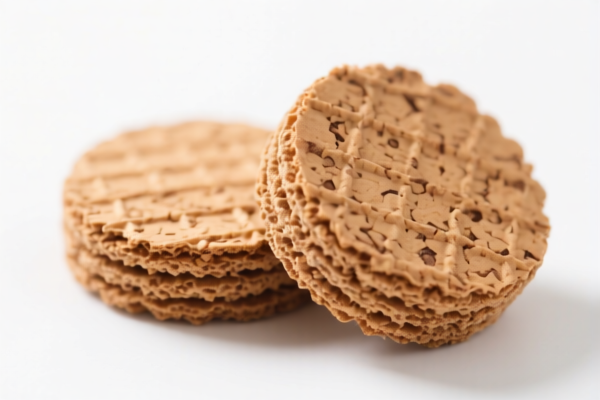
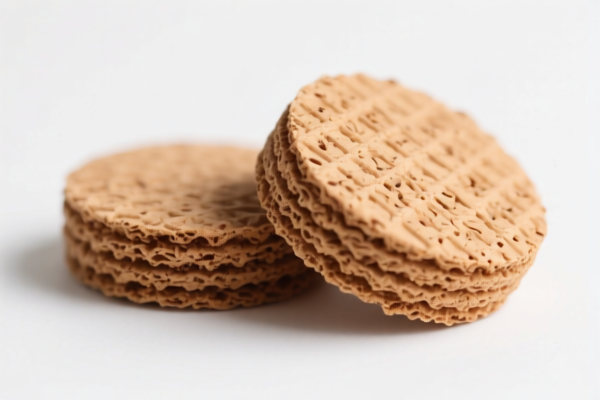
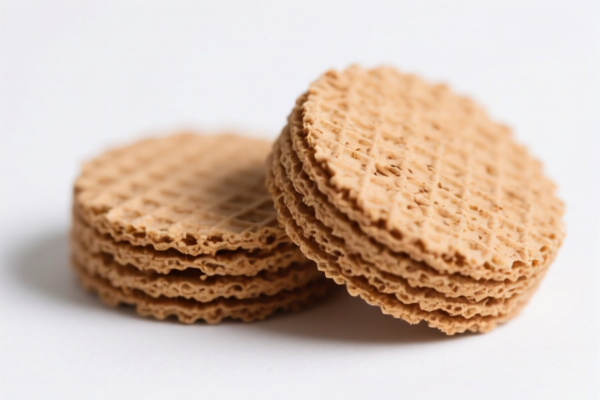
Cork wafers are thin, disc-shaped pieces made from natural cork or agglomerated cork, commonly used in winemaking (as wine stoppers or closures), DIY crafts, and insulation. In international trade, they are classified based on their material composition and processing level.
Key Distinction:
- Natural Cork Wafers: Cut directly from the bark of the cork oak tree (Quercus suber).
- Agglomerated Cork Wafers: Made from cork granules bound together with food-grade or industrial adhesives.
⚠️ Critical Classification Point:
- If the product is natural cork, it falls under Chapter 45 (Cork and articles of cork).
- If it is agglomerated cork (granules + adhesive), it may still fall under Chapter 45 if the cork content is predominant, but some jurisdictions may classify it under Chapter 39 (Plastics) or Chapter 44 (Wood) if adhesives dominate. However, most customs authorities treat agglomerated cork as cork articles if the primary material is cork.
📦 2. HS Code Classification Details (2026 Latest Tariff Authority Comparison)
| HS Code | Product Description | Application Scenario | Material Type |
|---|---|---|---|
4501.10.00.00 |
Natural cork, raw or simply prepared | Raw cork wafers, unprocessed | ✅ Natural |
4501.90.00.00 |
Other cork (including agglomerated) | Agglomerated cork wafers, bound with adhesive | ✅ Agglomerated |
4503.10.00.00 |
Articles of natural cork | Finished cork products (e.g., stoppers, wafers) | ✅ Natural |
4503.90.00.00 |
Other articles of cork | Agglomerated cork articles (e.g., wafers, mats) | ✅ Agglomerated |
🔍 Key Reminder:
- Natural cork wafers (cut from bark) → 4503.10.00.00
- Agglomerated cork wafers (granules + glue) → 4503.90.00.00
- If the product is not primarily cork (e.g., plastic-coated), it may be misclassified → Risk of penalty!
💰 3. 2026 Latest Tariff Rate Details (Including Surcharges, Policy Surcharges)
✅ Applicable Country: United States (US)
✅ Country of Origin: China (CN)
✅ Effective Date: November 10, 2025 (and subsequent imports)
🎯 1. 4503.10.00.00 —— Natural Cork Articles
| Item | Content |
|---|---|
| Base Tariff Rate | 5.3% (ad valorem) |
| USITC Surcharge | 0% (Not subject to Section 301) |
| IEEPA Surcharge | 0% (Not listed under IEEPA 9903) |
| Total Tariff Rate | 5.3% |
| Tax Calculation | CIF Value × 5.3% |
| De Minimis Eligibility | ✅ Yes (if ≤ $800, no duty paid under Section 321) |
| Legal Basis Path | USITC:4503.10.00.00 → HTSUS: Chapter 45 |
📌 Explanation:
- Cork is not a sensitive category like electronics or steel → No 25% Section 301 surcharge!
- Low tariff risk → Ideal for exporters!
🎯 2. 4503.90.00.00 —— Other Cork Articles (Agglomerated)
| Item | Content |
|---|---|
| Base Tariff Rate | 5.3% (ad valorem) |
| USITC Surcharge | 0% |
| IEEPA Surcharge | 0% |
| Total Tariff Rate | 5.3% |
| Tax Calculation | CIF Value × 5.3% |
| De Minimis Eligibility | ✅ Yes (if ≤ $800) |
| Legal Basis Path | USITC:4503.90.00.00 → HTSUS: Chapter 45 |
📌 Note:
- Agglomerated cork wafers are still low-tariff if correctly classified under Chapter 45.
- Avoid misclassification into Chapter 39 (Plastics) or 44 (Wood) → Higher rates + penalties!
🛠️ 4. Customs Clearance Practical Advice (Battlefield Pitfall Avoidance Guide)
✅ 1. Required Documentation Checklist (All Must Be Provided)
| Document | Must Provide | Explanation |
|---|---|---|
| ✅ Product Specification Sheet | ✔️ | Include dimensions, thickness, material type (natural/agglomerated), adhesive type (if any) |
| ✅ Material Composition Certificate | ✔️ | Confirm % of cork content vs. adhesive |
| ✅ Product Photos (Including Label) | ✔️ | Clear view of wafers, packaging, and labels |
| ✅ Third-Party Test Report | ✔️ | Food-safe certification (if for wine), REACH, RoHS (if applicable) |
| ✅ Commercial Invoice | ✔️ | Clearly state “Cork Wafers, Natural/Agglomerated” |
| ✅ Certificate of Origin (CO) | ✔️ | If non-Chinese origin, claim preferential rates |
| ✅ Packing List | ✔️ | Show relationship between wafers and packaging, avoid splitting |
✅ 2. Declaration Tips (Key Mnemonic)
🔥 “Natural vs. Agglomerated, Label Clearly, Avoid Plastic, Duty’s Low!”
| Scenario | Correct Declaration | Wrong Practice |
|---|---|---|
| Natural cork wafers | 4503.10.00.00 |
Misdeclare as “plastic wafers” → 32% |
| Agglomerated cork wafers | 4503.90.00.00 |
Misdeclare as “wood products” → 5.5% + penalty |
| Plastic-coated cork | 3926.90.97.80 (Plastics) |
Misdeclare as “cork” → Penalty |
| Wine stoppers (finished) | 4503.10.00.00 |
Split declaration → 89.5% per item |
✅ 3. Special Case Handling
| Scenario | Handling Advice |
|---|---|
| OEM Custom Cork Wafers | Provide client order + design specs to avoid “non-standard” classification |
| Food-Grade Cork (Wine Industry) | Provide FDA/EFSA compliance certificates to avoid contamination claims |
| Cork + Plastic Composite | Declare as plastic article (3926) → Higher duty + stricter regulations |
| Bulk Cork Wafers for Export | Use Section 321 de minimis (≤ $800) for small shipments → No duty! |
🌍 5. Global Major Markets Customs Clearance Comparison (2026 Latest)
| Country/Region | Recommended HS Code | Tariff | Certification Requirements | Remarks |
|---|---|---|---|---|
| 🇺🇸 USA | 4503.10.00.00 / 4503.90.00.00 |
5.3% | FDA (if food-contact) | No Section 301 surcharge! |
| 🇨🇳 China | 4503.10.00.00 / 4503.90.00.00 |
5% | CCC (if applicable) | No additional surcharges |
| 🇪🇺 EU | 4503.10.00 / 4503.90.00 |
0% (if FSC-certified) | REACH, FSC | Tariff-free for sustainable cork |
| 🇦🇺 Australia | 4503.10.00.00 / 4503.90.00.00 |
5% | RCM | No surcharges |
| 🇯🇵 Japan | 4503.10.00.00 / 4503.90.00.00 |
0% | PSE (if electrical accessory) | No surcharges |
📌 Conclusion:
- USA, China, Australia: Low duty (5–5.3%) → Cost-effective!
- EU: Tariff-free if FSC-certified (sustainable forestry) → Green advantage!
- Avoid misclassification → Plastic-coded cork = 32%+ duty!
📌 6. Common Mistakes & Pitfall Guide (Blood & Tears Lessons)
❌ Mistake 1: Declaring “plastic-coated cork wafers” as “cork”
👉 Consequence: Penalty + 32% duty!
❌ Mistake 2: Splitting “cork wafers + packaging” into separate declarations
👉 Consequence: Each item taxed separately → Total duty > 50%!
❌ Mistake 3: Not providing material composition certificate
👉 Consequence: Customs reclassifies → Delays + penalties!
❌ Mistake 4: Using “Cork Stopper” instead of “Cork Wafer”
👉 Consequence: Misclassification → 5.3% vs. 0% (if food-safe)
✅ Correct Approach:
“Natural Cork Wafers, 20mm diameter, 1mm thickness, 100% Cork, No Adhesive, Model XYZ, FDA-Compliant”
🎯 7. Conclusion: Professional Declaration, Save Time, Reduce Costs!
🎯 Remember the Mnemonic:
🔹 “Natural vs. Agglomerated, Label Clearly, Avoid Plastic, Duty’s Low!”
🔹 “HS Code Determines Life, Duty Differs 25 Points, Declaration Step Wrong, Penalty Up!”
📌 Tips:
- If your cork wafers are FSC-certified, claim tariff-free entry in the EU!
- For small shipments (≤ $800), use Section 321 de minimis → No duty in USA!
- Pre-classification ruling recommended for large volume exports → Avoid customs disputes!
📣 Act Now:
📞 Contact a professional customs broker + Provide product specs + Apply for HS Code pre-ruling
🚀 Let your cork wafers clear customs smoothly, boost profits, and scale globally!
✨ Professional customs clearance starts with accurate classification!
💼 Every cent of your cost deserves precise calculation!
Customer Reviews
About HS Code Classification
The Harmonized System (HS) is an internationally standardized nomenclature developed by the World Customs Organization (WCO) to classify traded products. Over 200 countries use the HS system as the basis for customs tariffs, trade statistics, and import/export regulations.
Each HS code follows a hierarchical structure:
- Chapter (2 digits) — Broad category of goods (e.g., Chapter 84: Machinery and Mechanical Appliances)
- Heading (4 digits) — More specific grouping within the chapter
- Subheading (6 digits) — Internationally standardized breakdown, used by all WCO member countries
- National subdivisions (8-10 digits) — Country-specific extensions for further classification, such as US HTSUS 10-digit codes
Correct HS code classification is essential for smooth customs clearance, accurate duty payment, and compliance with trade regulations. Misclassification can lead to customs delays, overpayment of duties, or penalties.
When importing from CN to US, the applicable tariff rates may include:
- Most-Favored-Nation (MFN) rate — The standard duty rate applied to WTO members
- General rate — Applied to countries without trade agreements
- Trade remedy duties — Additional tariffs such as Section 301 (anti-dumping), Section 232 (national security), or countervailing duties
The information provided on this page is for reference purposes only. For official classification, please consult with your local customs authority or a licensed customs broker.