Cork Wall Decoration Material
CN → US| HS Code | Tariff Rate | Origin | Destination | Doc |
|---|---|---|---|---|
| 4504104000 | 35.0% | CN | US | Official Doc |
| 4503906000 | 49.0% | CN | US | Official Doc |
| 6808000000 | 35.0% | CN | US | Official Doc |
| 4504103000 | 35.0% | CN | US | Official Doc |
| 4504104000 | 35.0% | CN | US | Official Doc |
Product Images
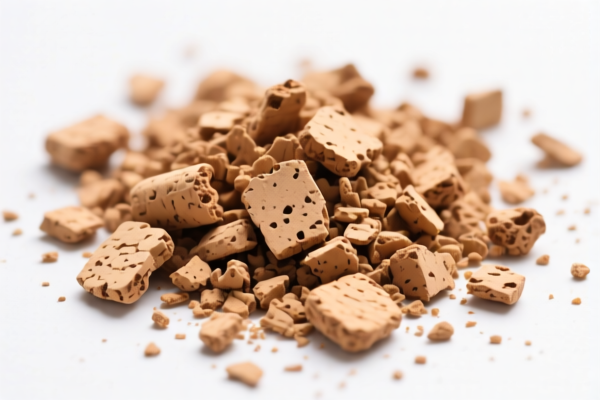
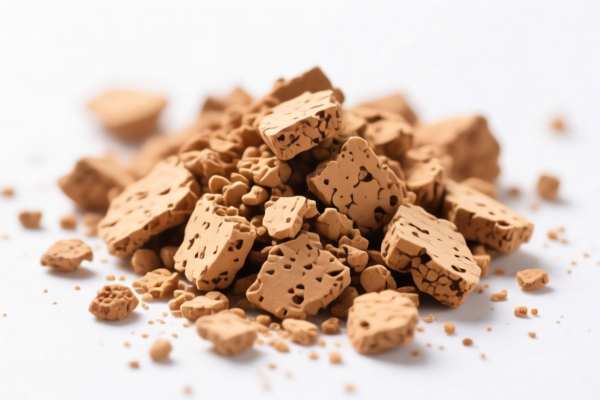
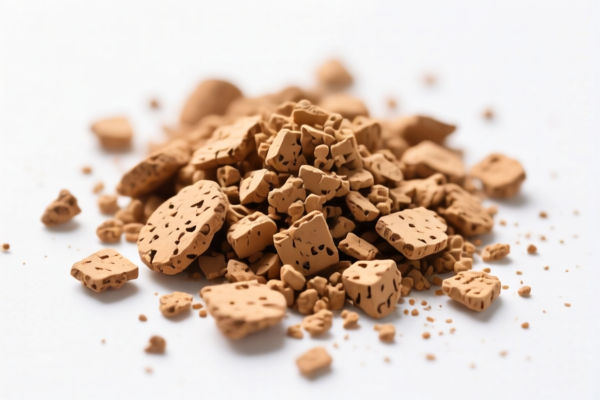
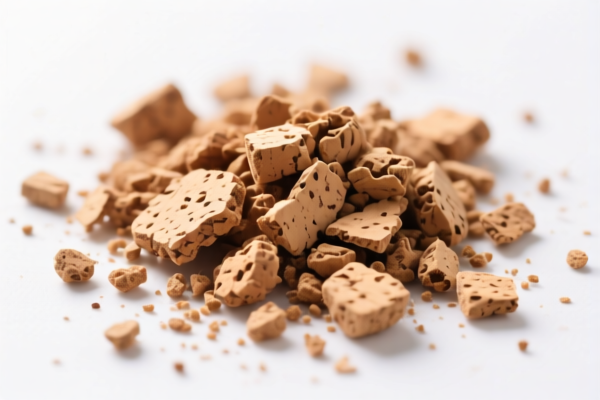
AI Analysis
🌿 Cork Wall Decoration Material (Natural Softclad Panels)
🌐 HS Code Reference & Customs Clearance Guide | 2026 Latest Tariff Analysis | Professional Entry Strategy
📌 I. Product Definition & Classification: Do You Really Understand "Cork Wall Deco"?
Cork Wall Decoration Material, derived from the bark of the cork oak (Quercus suber), is a versatile natural building and interior design material. In international trade, its classification hinges on two key factors:
1. Material Nature: Is it treated as a "wall covering/paper-based product" or a "natural cork article"?
2. Physical Form: Is it a thin sheet/tile (wall贴) or a solid board/panel (construction material)?
⚠️ Key Distinction Point:
- If the product is a thin sheet/tile intended for wall covering, often backed or enhanced with paper/fabric, it leans towards Chapter 48 (Paper products) or specific Cork Wall Covering codes.
- If the product is a solid block/panel used for structural or semi-structural wall finishing, it leans towards Chapter 45 (Natural Cork Articles).
- Misclassification Risk: Declaring a heavy cork board as "wallpaper" or a thin tile as "construction wood" can lead to severe penalty and reclassification.
📦 II. HS Code Classification Details (2026 Latest Tariff Authority Match)
Based on the provided data, here are the 5 valid HS Code options for "Cork Wall Decoration Material," categorized by their logical justification and tax implications.
| HS Code | Product Description & Logic | Applicable Scenario | Primary Basis for Classification |
|---|---|---|---|
4504.10.40.00 |
Wallpaper/Wall Coverings: Cork material supported or reinforced by paper. | Thin cork tiles/stickers applied directly to walls; interior decor. | Form: Wall covering (wall贴) + Material: Natural cork on paper support. |
4503.90.60.00 |
Other Natural Cork Articles: Unprocessed or simply prepared cork articles. | Raw cork planks, cork slabs, or non-paper-backed cork blocks. | Material: Pure natural cork article; not classified as wall covering. |
6808.00.00.00 |
Agglomerated Cork/Mineral-Bound Boards: Boards of agglomerated cork with mineral binder. | Cork composite panels mixed with cement/resin for construction walls. | Material: Mineral binder + Form: Construction board. |
4504.10.30.00 |
Cork for Construction: Cork articles for building purposes (tiles, boards). | Cork insulation boards, heavy-duty cork wall panels for construction. | Use: Building materials (construction grade). |
4504.10.40.00 |
Cork Articles for Wall Covering: Specific subset of cork wall coverings. | Decorative cork wall tiles, similar to 4504.10.40.00 but emphasized on "decorative" aspect. |
Use: Decoration + Material: Cork. |
🔍 Critical Reminder:
-4504.10.40.00appears twice in the source data with slightly different summaries but identical tax rates. It represents the most common classification for decorative cork wall tiles/stickers.
-4503.90.60.00carries the highest tax burden (49%) because it is classified as a general "cork article" rather than a specific wall covering or construction board.
-6808.00.00.00is risky; only use if the cork is agglomerated with mineral binders (like cement). Pure agglomerated cork with organic binders usually falls under 4504.
💰 III. 2026 Latest Tariff Rate Breakdown (Including Surcharges & Policy Add-ons)
✅ Applicable Country: United States (US)
✅ Origin: China (CN)
✅ Effective Date: Post-November 2025 (Current High-Tariff Regime)
🎯 1. 4504.10.40.00 & 4504.10.30.00 & 6808.00.00.00 — The 35% Tier
These three codes share the exact same tax structure based on the provided data. This is the preferred classification for most decorative cork wall products.
| Item | Content |
|---|---|
| Base Duty Rate | 0% (ad valorem) |
| USITC Section 301 Surcharge | +25% (Section 301 Tariffs on Chinese Goods) |
| IEEPA Section 122 Surcharge | +10% (Targeted Chinese Imports, effective 2025+) |
| Total Effective Rate | 35% |
| Tax Calculation | CIF Value × 35% |
| De Minimis Exemption | ❌ Not Eligible (deny_de_minimis) |
| Legal Basis Path | Section 301: 9903.88.01 → IEEPA: 9903.01.25 → USITC: 4504.10.40.00/30.00/6808.00.00.00 |
📌 Explanation:
- Base Duty (0%): The Harmonized Tariff Schedule (HTS) base rate for many cork and certain wall coverings is low or zero.
- Section 301 (25%): This is the standard "trade war" tariff for many Chinese-manufactured goods.
- IEEPA 122 (10%): A newer/additional layer of tariffs targeting specific Chinese imports under the International Emergency Economic Powers Act.
- Total (35%): High but manageable compared to the alternative below.
🎯 2. 4503.90.60.00 — The 49% Tier (Avoid If Possible!)
This code classifies the item as a generic "natural cork article" rather than a specific wall covering or construction board.
| Item | Content |
|---|---|
| Base Duty Rate | 14% (ad valorem) |
| USITC Section 301 Surcharge | +25% |
| IEEPA Section 122 Surcharge | +10% |
| Total Effective Rate | 49% |
| Tax Calculation | CIF Value × 49% |
| De Minimis Exemption | ❌ Not Eligible |
| Legal Basis Path | Section 301: 9903.88.01 → IEEPA: 9903.01.25 → USITC: 4503.90.60.00 |
📌 Warning:
- The 14% base duty makes this code significantly more expensive.
- Customs may apply this if the product lacks paper backing (disqualifying it from 4504) and is not a construction board (disqualifying 4504.30/6808).
- Difference: 14% higher than the other options. Cost impact is substantial.
🛠️ IV. Customs Clearance Practical Advice (Field Pitfall Guide)
✅ 1. Required Documentation Checklist (Non-Negotiable)
| Document | Mandatory? | Description |
|---|---|---|
| ✅ Product Specification Sheet | ✔️ | Must detail: Material composition (e.g., "95% Natural Cork, 5% Polymer Binder"), backing type (e.g., "Paper-backed," "None," "Felt"), and dimensions. |
| ✅ Product Photos (Labeled) | ✔️ | Clear images of the product, edges, and any packaging labels. Show if it's a tile, roll, or board. |
| ✅ Commercial Invoice | ✔️ | Must accurately describe the goods as "Cork Wall Tiles" or "Cork Wall Panels", not generic "Cork." |
| ✅ Packing List | ✔️ | Weight and dimensions. Ensure net weight matches declared value logic. |
| ✅ Material Test Report | ❓ (Recommended) | Proof of natural origin if claiming "Natural Cork" to avoid duty fraud accusations. |
✅ 2. Declaration Tips (Key Mantra)
🔥 “Backed by Paper? Go 4504. Solid Board? Check 4503/6808. Don’t Guess! Tax Saves 14%!”
| Scenario | Correct HS Code | Wrong Approach | Consequence |
|---|---|---|---|
| Thin Cork Sticker/Tile with Paper Backing | 4504.10.40.00 |
Declare as 4503.90.60.00 |
Overpay 14% (35% vs 49%) |
| Solid Cork Block (No Paper, No Mineral Binder) | 4503.90.60.00 |
Declare as 4504.10.40.00 |
Risk of Seizure/Reclassification |
| Cork Cement Board (Construction Use) | 6808.00.00.00 |
Declare as 4503.90.60.00 |
Overpay 14% |
| Agglomerated Cork (Organic Binder) | 4504.10.30.00 or 40.00 |
Declare as 6808.00.00.00 |
Misclassification Penalty |
✅ 3. Special Situations
| Situation | Handling Advice |
|---|---|
| Mixed Shipment (Cork + Wood Frame) | Declare separately. Wood frames may fall under Chapter 44. Do not mix unless the wood is minor and incidental. |
| Pre-glued Cork Wall Tiles | Ensure the glue layer is thin enough that it doesn’t change the "paper-supported" nature. If thick, it might be considered a "composite" requiring different classification. |
| Origin Fraud | Do NOT claim Vietnam/Mexico origin if made in China. The IEEPA 10% + Section 301 25% applies to China-origin goods. Faking origin leads to massive penalties. |
🌍 V. Global Market Comparison (2026 Latest)
| Country/Region | Recommended HS Code | Est. Total Duty (China Origin) | Certification Required | Notes |
|---|---|---|---|---|
| 🇺🇸 USA | 4504.10.40.00 |
35% (Base 0% + 25% + 10%) | No special cert | Highest compliance risk due to 301/IEEPA. |
| 🇨🇳 China | 4504.10.40.00 |
~5-10% | N/A | Domestic consumption tax applies if relevant. |
| 🇪🇺 EU | 4504.10.40.00 |
0% | FSC Certification (Recommended) | No Section 301 equivalent. Green trade favors cork. |
| 🇬🇧 UK | 4504.10.40.00 |
0% | FSC Certification | Post-Brexit tariffs aligned with EU for many goods. |
| 🇨🇦 Canada | 4504.10.40.00 |
0% (CUSMA) | N/A | Preferential duty under USMCA if manufactured in US/Canada. |
📌 Conclusion:
- USA is the most expensive market for Chinese cork decor due to the 35% blended tariff.
- EU/UK are favorable markets with 0% duty, making them ideal for export if you can navigate ESG/FSC requirements.
📌 VI. Common Errors & Pitfalls (Lessons Learned)
❌ Error 1: Declaring "Cork Wall Tiles" as "Wallpaper" (Chapter 48)
👉 Consequence: Customs may reject if the product is too thick (>2mm) or lacks paper backing entirely. Reclassification to 4504 or 4503 occurs.
❌ Error 2: Using 4503.90.60.00 for Paper-Backed Tiles
👉 Consequence: Paying 49% instead of 35%. A waste of 14% profit margin on every shipment.
❌ Error 3: Omitting "Paper-Backed" in Description
👉 Consequence: Customs inspector assumes it's a solid block (4503.90.60.00) → 49% Tax.
👉 Fix: Always state: "Cork Wall Tiles, Paper-Backed, for Interior Decoration."
✅ Correct Description Example:
"Decorative Cork Wall Tiles, Natural Cork on Paper Backing, Cut to Size, for Interior Wall Covering, Model CT-2026, HS 4504.10.40.00"
🎯 VII. Conclusion: Precise Classification, Maximum Savings!
🎯 Remember the Mantra:
🔹 "Paper-backed? 4504.10.40.00. Tax 35%. No paper? 4503.90.60.00. Tax 49%."
🔹 "Don't guess, specify the backing. Save 14% on every container!"
📌 Pro Tip:
If your cork wall decor is FSC-Certified (sustainable sourcing), highlight this in your commercial invoice. While it doesn't reduce US tariffs, it facilitates smoother customs clearance in the EU/UK/Canada and enhances brand value.
📣 Immediate Action:
📞 Contact your broker with a photo and spec sheet.
📝 Specify "Paper-Backed" if applicable to ensure HS 4504.10.40.00 (35%) over4503.90.60.00(49%).
🚀 Save costs, clear customs, and boost your cork decor export profits!
✨ Professional Customs, Starts with Accurate Classification!
💼 Every Percent Saved is Pure Profit!
Customer Reviews
About HS Code Classification
The Harmonized System (HS) is an internationally standardized nomenclature developed by the World Customs Organization (WCO) to classify traded products. Over 200 countries use the HS system as the basis for customs tariffs, trade statistics, and import/export regulations.
Each HS code follows a hierarchical structure:
- Chapter (2 digits) — Broad category of goods (e.g., Chapter 84: Machinery and Mechanical Appliances)
- Heading (4 digits) — More specific grouping within the chapter
- Subheading (6 digits) — Internationally standardized breakdown, used by all WCO member countries
- National subdivisions (8-10 digits) — Country-specific extensions for further classification, such as US HTSUS 10-digit codes
Correct HS code classification is essential for smooth customs clearance, accurate duty payment, and compliance with trade regulations. Misclassification can lead to customs delays, overpayment of duties, or penalties.
When importing from CN to US, the applicable tariff rates may include:
- Most-Favored-Nation (MFN) rate — The standard duty rate applied to WTO members
- General rate — Applied to countries without trade agreements
- Trade remedy duties — Additional tariffs such as Section 301 (anti-dumping), Section 232 (national security), or countervailing duties
The information provided on this page is for reference purposes only. For official classification, please consult with your local customs authority or a licensed customs broker.