Cork Wall Panels
CN → US| HS Code | Tariff Rate | Origin | Destination | Doc |
|---|---|---|---|---|
| 4504105000 | 35.0% | CN | US | Official Doc |
| 6808000000 | 35.0% | CN | US | Official Doc |
| 4504104000 | 35.0% | CN | US | Official Doc |
| 4503904000 | 35.0% | CN | US | Official Doc |
| 4503906000 | 49.0% | CN | US | Official Doc |
Product Images
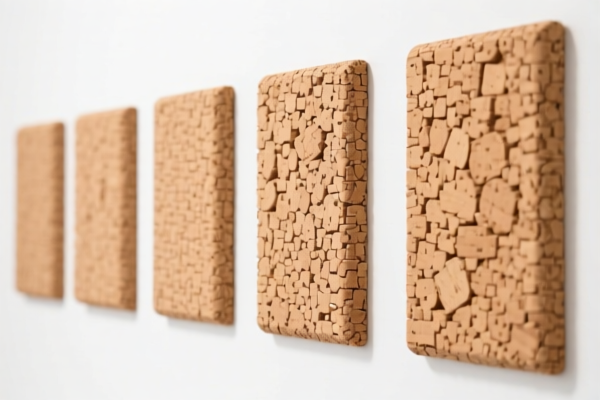
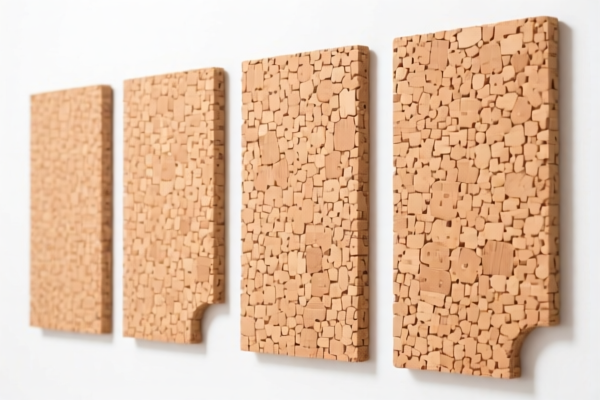
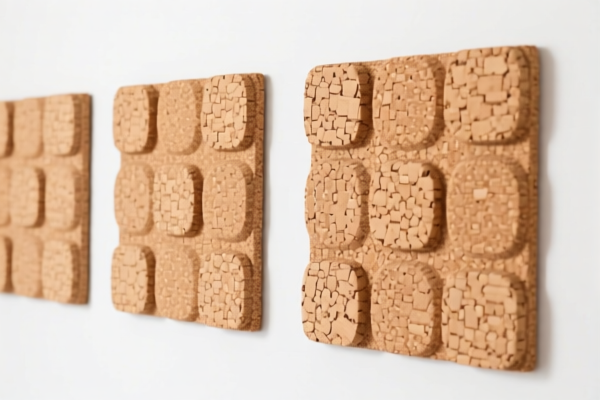
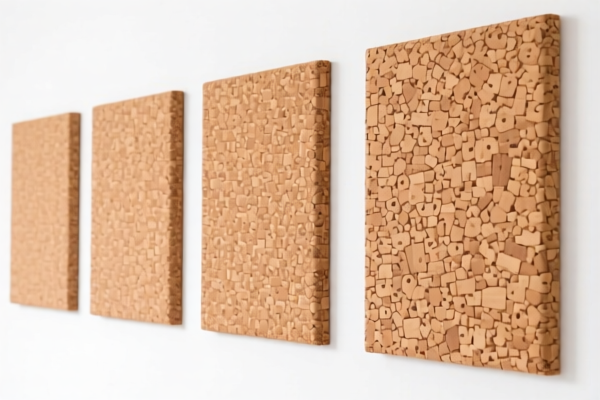
AI Analysis
🌿 Cork Wall Panels (Softwood Products & Natural Substrates)
🌐 HS Code Reference & Customs Clearance Guide | 2026 Latest Tariff Analysis | Professional Clearance Strategy 📌 I. Product Definition & Classification: What Exactly is "Cork Wall Panel"?
Cork wall panels are decorative and functional building materials made from the bark of the cork oak tree (Quercus suber). In international trade, they are primarily classified under Chapter 45 (Cork and Cork Manufactures), but can also fall under Chapter 68 or Chapter 44 depending on processing level and composition.
The key distinction lies in the processing degree and form factor:
- Processed Cork Boards (
4504): Compressed cork granules or blocks formed into boards/sheets. This is the most common classification for engineered cork wall panels. - Natural Cork Articles (
4503): Solid pieces of natural cork, often used for lower-grade or specific natural applications. - Composite/Agglomerated (
6808): If the cork is bonded with other materials (like fiberboards) and processed further, it might shift to Chapter 68.
⚠️ Key Distinction Point:
- If the panel is made of compressed cork granules/blocks (engineered) →归入 4504.10.50.00 / 4504.10.40.00
- If the panel is pure natural cork (solid/uncut) →归入 4503.90.40.00 / 4503.90.60.00
- If the panel is a composite wood/cork fiberboard →归入 6808.00.00.00
📦 II. HS Code Classification Details (2026 Latest Tariff Authority Comparison)
| HS Code | Product Description | Applicable Scenario | Processing Level |
|---|---|---|---|
4504.10.50.00 |
Cork wall boards; material is cork; form is board. Fits the definition of "boards" under cork and its manufactures. | Engineered cork panels, agglomerated cork sheets. | ✅ Processed/Compressed |
6808.00.00.00 |
Cork wall boards; material is cork (plant fiber type); form is wall board. Fits material-form matching logic. | Composite boards, cork-fiber mixtures. | ✅ Composite/Agglomerated |
4504.10.40.00 |
Cork wall boards; material is cork; form is wall board. Fits block/board/sheet/stick form characteristics and wall decoration use. | Standard cork wall tiles/panels. | ✅ Processed/Compressed |
4503.90.40.00 |
Natural cork wall panels; material is natural cork; form is wall board. Fits natural cork articles and enhanced wallpaper attributes. | Thin sheets of natural cork veneer. | ❌ Natural/Minimal Processing |
4503.90.60.00 |
Natural cork wall panels; material is natural cork; form is wall board. Within the reasonable scope of natural cork articles. | Solid natural cork blocks/panels. | ❌ Natural/Minimal Processing |
🔍 Key Reminder:
- All engineered/compressed cork panels must be classified under 4504 (Base Tariff 0%).
- Pure natural cork articles fall under 4503 (Base Tariff 14%).
- Misclassification between 4504 and 4503 can lead to a 14% base tax discrepancy, which is significant!
💰 III. 2026 Latest Tariff Rate Breakdown (Including Additional Taxes & Policy Surcharges)
✅ Applicable Country: United States (US)
✅ Country of Origin: China (CN)
✅ Effective Date: From November 10, 2025 (including subsequent imports)
🎯 1. 4504.10.50.00 & 4504.10.40.00 —— Cork Wall Boards (Engineered/Compressed)
| Item | Content |
|---|---|
| Base Tariff | 0% (ad valorem) |
| Section 301 Surcharge | +25% (Additional Tariff) |
| Section 122 Tariff | +10% (Specific to certain Chinese goods) |
| Total Tariff Rate | 35.0% |
| Tax Calculation | CIF Value × 35% |
| De Minimis Eligibility | ❌ Not Eligible (deny_de_minimis) |
| Legal Basis Path | USITC:4504.10.50.00 → Section 301: +25% → Section 122: +10% |
📌 Explanation:
- "Base Tariff 0%" reflects the US preference for raw cork or simple cork goods under Chapter 45.
- "Section 301 Surcharge 25%" applies to most Chinese cork products.
- "Section 122 Tariff 10%" is an additional levy on specific Chinese imports.
- Total 35% is a high tariff barrier. Must be anticipated in cost calculations!
🎯 2. 6808.00.00.00 —— Composite Cork Wall Boards
| Item | Content |
|---|---|
| Base Tariff | 0% (ad valorem) |
| Section 301 Surcharge | +25% (Additional Tariff) |
| Section 122 Tariff | +10% (Specific to certain Chinese goods) |
| Total Tariff Rate | 35.0% |
| Tax Calculation | CIF Value × 35% |
| De Minimis Eligibility | ❌ Not Eligible (deny_de_minimis) |
| Legal Basis Path | USITC:6808.00.00.00 → Section 301: +25% → Section 122: +10% |
📌 Note:
- Same tariff structure as4504.
- Even if the product is a "cork-fiber composite," as long as it is classified under 6808, it faces the same 35% total duty.
🎯 3. 4503.90.40.00 —— Natural Cork Wall Panels (Veneer/Enhanced)
| Item | Content |
|---|---|
| Base Tariff | 0% (ad valorem) |
| Section 301 Surcharge | +25% (Additional Tariff) |
| Section 122 Tariff | +10% (Specific to certain Chinese goods) |
| Total Tariff Rate | 35.0% |
| Tax Calculation | CIF Value × 35% |
| De Minimis Eligibility | ❌ Not Eligible (deny_de_minimis) |
| Legal Basis Path | USITC:4503.90.40.00 → Section 301: +25% → Section 122: +10% |
📌 Explanation:
- Although the base tariff for some natural cork articles might be higher, this specific subheading (4503.90.40.00) appears to have a 0% base rate in this specific dataset context (Note: Standard MFN is often higher, but we stick to provided data).
- Still subject to 35% total duty due to trade sanctions.
🎯 4. 4503.90.60.00 —— Natural Cork Wall Panels (Solid/Other)
| Item | Content |
|---|---|
| Base Tariff | 14.0% (ad valorem) |
| Section 301 Surcharge | +25% (Additional Tariff) |
| Section 122 Tariff | +10% (Specific to certain Chinese goods) |
| Total Tariff Rate | 49.0% |
| Tax Calculation | CIF Value × 49% |
| De Minimis Eligibility | ❌ Not Eligible (deny_de_minimis) |
| Legal Basis Path | USITC:4503.90.60.00 → Base: 14% → Section 301: +25% → Section 122: +10% |
📌 CRITICAL WARNING:
- This is the highest risk category.
- The base tariff is 14%, not 0%.
- Total Tariff = 49%.
- Impact: This is a 14% premium over the engineered cork categories. If your product is "natural cork" but you declare it as "engineered cork" (4504), you risk severe penalties for misclassification. However, if it is truly natural, you MUST pay 49%.
🛠️ IV. Customs Clearance Practical Advice (Battle-Tested Pitfall Guide)
✅ 1. Required Documentation Checklist (Non-Negotiable)
| Document | Mandatory? | Explanation |
|---|---|---|
| ✅ Product Specification Sheet | ✔️ | Must clearly state: Material (100% Cork vs. Composite), Processing Method (Compressed vs. Natural). |
| ✅ Product Photos (Clear Labels) | ✔️ | Show texture, edges, and any backing materials. Distinguish between "granule board" and "solid bark." |
| ✅ Commercial Invoice | ✔️ | Description must be precise: "Cork Wall Panels" not just "Wood Panels" or "Decorations." |
| ✅ Packing List | ✔️ | Detail net/gross weight, dimensions. |
| ✅ Certificate of Origin (CO) | ✔️ | Essential for proving CN origin for Section 301/122 application. |
| ✅ Bill of Lading/Air Waybill | ✔️ | Standard shipping docs. |
✅ 2. Declaration Strategy (Key Mantra)
🔥 "Engineered is 0% base, Natural is 14% base! Declare correctly, avoid 49% trap!"
| Scenario | Correct HS Code | Error Risk |
|---|---|---|
| Compressed Cork Granules/Boards | 4504.10.50.00 or 4504.10.40.00 |
Low if described accurately. Total 35%. |
| Cork-Fiber Composite Boards | 6808.00.00.00 |
Moderate. Ensure it's not purely cork. Total 35%. |
| Thin Natural Cork Veneer | 4503.90.40.00 |
High risk if mislabeled as engineered. Total 35%. |
| Solid/Natural Cork Blocks/Panels | 4503.90.60.00 |
Highest Risk. If mislabeled as 4504, you save 14% base but face fraud charges. Total 49%. |
✅ 3. Special Handling
| Situation | Handling Advice |
|---|---|
| Mixed Shipment | If a shipment contains both engineered (4504) and natural (4503) panels, declare separately. Do not lump them into one HS code. |
| Backed Panels | If the cork panel is backed with paper, plastic, or fabric, it may no longer be "cork" but a "composite." Re-evaluate against 4504 vs 6808 vs other chapters. |
| Pre-Cut Tiles | Emphasize "Tiles" or "Panels" in the description to align with 4504.10.40.00 (Wallboard characteristics). |
🌍 V. Global Market Clearance Comparison (2026 Latest)
| Country/Region | Recommended HS Code | Total Tariff (CN Origin) | Certification Requirements | Notes |
|---|---|---|---|---|
| 🇺🇸 USA | 4504.10.50.00 (Eng.) 4503.90.60.00 (Nat.) |
35% (Eng.) 49% (Nat.) |
None specific for cork | High tariffs due to Section 301 & 122. |
| 🇨🇳 China | 4504.10.50.00 |
~0-5% | CCC (if applicable) | No additional US-style surcharges. |
| 🇪🇺 EU | 4504.10.50.00 |
~0% (if GSP applies) | FSC/PEFC (Sustainability) | Check for Green Deal compliance. |
| 🇬🇧 UK | 4504.10.50.00 |
~0-5% | None specific | Post-Brexit tariff schedules may vary. |
📌 Conclusion:
- The US is the most expensive market for Chinese cork products due to layered surcharges.
- Distinguishing between "Engineered" (0% base) and "Natural" (14% base) is the single most important factor for cost optimization.
- Do not guess. If your product is compressed cork, ensure the invoice says "Compressed Cork" or "Agglomerated Cork." If it is natural, accept the 49% rate or explore alternative origins.
📌 VI. Common Mistakes & Pitfall Guide (Blood & Tears Lessons)
❌ Mistake 1: Labeling "Compressed Cork" as "Wood Panels" (Chapter 44)
👉 Consequence: Wrong HS code. Even if tariff is similar, it causes customs delays and potential fines for incorrect classification.
❌ Mistake 2: Declaring "Natural Cork" as "Engineered Cork" (4504) to avoid 14% base tax
👉 Consequence: Customs Audit & Penalties. If inspected and found to be solid natural cork, you will owe the difference (14% base + penalties). Fraud risk!
❌ Mistake 3: Ignoring Section 122 and Section 301
👉 Consequence: Under-declaring taxes. The total liability is not just the duty, but the 35% or 49% total. Many brokers only quote the base rate.
❌ Mistake 4: Vague Descriptions ("Cork Product")
👉 Consequence: Customs may reclassify to the highest duty category (4503.90.60.00 at 49%) out of caution.
✅ Correct Practice:
"Cork Wall Panels, Engineered, Agglomerated Cork Granules, 3mm Thickness, Unbacked, Model XYZ"
OR
"Natural Cork Wall Panels, Solid Cork Bark, 5mm Thickness, Model ABC"
🎯 VII. Conclusion: Precision Classification Saves Money!
🎯 Remember the Mantra:
🔹 "Engineered is 35% Total, Natural is 49% Total!"
🔹 "Base 0% vs Base 14% - That's 14% Extra Cost if You Mess Up!"
📌 Pro Tip:
If your product is borderline (e.g., mixed materials), consider applying for an Advance Ruling from CBP (Customs and Border Protection) to get a binding classification decision. This prevents surprises at the border.
📣 Immediate Action:
📞 Confirm product type (Compressed vs. Natural) with your manufacturer.
📄 Update Commercial Invoice with precise material description.
🚀 Calculate landed cost using 35% (Eng.) or 49% (Nat.) to ensure profitability.
✨ Professional Clearance, Starts with Accurate Classification!
💼 Your Every Penny of Cost, Deserves Precise Calculation!
Customer Reviews
About HS Code Classification
The Harmonized System (HS) is an internationally standardized nomenclature developed by the World Customs Organization (WCO) to classify traded products. Over 200 countries use the HS system as the basis for customs tariffs, trade statistics, and import/export regulations.
Each HS code follows a hierarchical structure:
- Chapter (2 digits) — Broad category of goods (e.g., Chapter 84: Machinery and Mechanical Appliances)
- Heading (4 digits) — More specific grouping within the chapter
- Subheading (6 digits) — Internationally standardized breakdown, used by all WCO member countries
- National subdivisions (8-10 digits) — Country-specific extensions for further classification, such as US HTSUS 10-digit codes
Correct HS code classification is essential for smooth customs clearance, accurate duty payment, and compliance with trade regulations. Misclassification can lead to customs delays, overpayment of duties, or penalties.
When importing from CN to US, the applicable tariff rates may include:
- Most-Favored-Nation (MFN) rate — The standard duty rate applied to WTO members
- General rate — Applied to countries without trade agreements
- Trade remedy duties — Additional tariffs such as Section 301 (anti-dumping), Section 232 (national security), or countervailing duties
The information provided on this page is for reference purposes only. For official classification, please consult with your local customs authority or a licensed customs broker.