Cork backed table
CN → US| HS Code | Tariff Rate | Origin | Destination | Doc |
|---|---|---|---|---|
| 4503906000 | 49.0% | CN | US | Official Doc |
| 4504105000 | 35.0% | CN | US | Official Doc |
| 4504900000 | 35.0% | CN | US | Official Doc |
| 4503904000 | 35.0% | CN | US | Official Doc |
| 4503906000 | 49.0% | CN | US | Official Doc |
Product Images
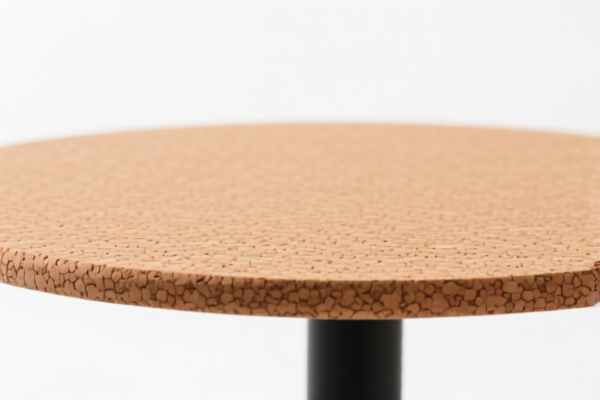
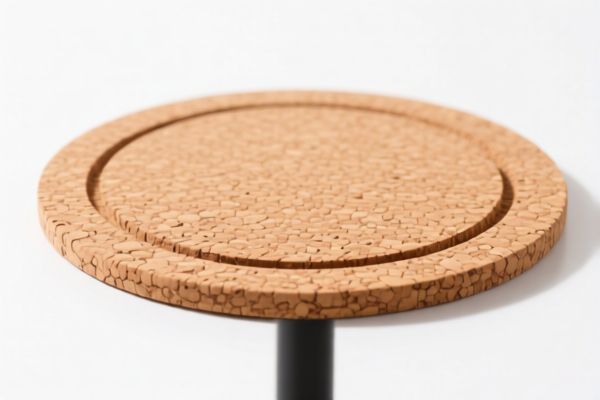
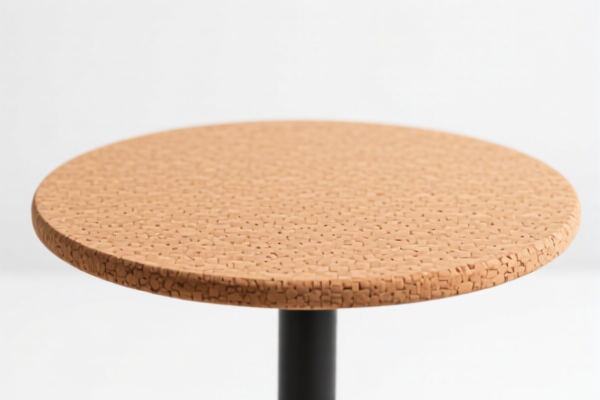
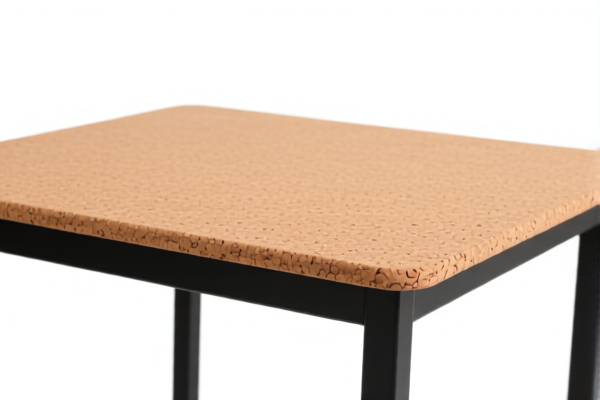
AI Analysis
🍷 Cork-Backed Table (Cork Table Mats / Cork Backing for Tables)
🌐 HS Code Reference & Customs Clearance Guide | 2026 Latest Tariff Analysis | Professional Clearance Strategy for US Imports from China
📌 I. Product Definition & Classification: Do You Really Understand "Cork Products"?
A "Cork-backed table" typically refers to table mats, coasters, or protective pads made entirely of natural cork or agglomerated cork. In international trade, these fall under Chapter 45 (Cork and Articles of Cork).
The classification depends heavily on the physical form and processing level of the cork:
- Raw/Agglomerated Sheets/Planks/Strips: If the product is a simple sheet, strip, or block of agglomerated cork, not further worked than roughed or sanded.
- Finished Goods: If the cork is cut into specific shapes (e.g., square mats, circular coasters, intricate designs) or combined with other materials (though purely cork items stay in Ch. 45).
⚠️ Key Distinction Point: - If it is a simple block/strip/sheet of agglomerated cork → Likely 4504.10 or 4504.90. - If it is a finished article (like a table mat, coaster, or placemat) shaped for specific use → Likely 4503.90.
📦 II. HS Code Classification Details (2026 Latest Tariff Authority Comparison)
Based on the provided data, here are the applicable HS Codes for cork-backed table items:
| HS Code | Product Description | Application Scenario | Tax Rate (Total) |
|---|---|---|---|
4503.90.60.00 |
Articles of cork (e.g., Table Mats, Placemats) | Natural cork products, shaped into specific forms like mats, coasters, or placemats. | 49.0% |
4504.10.50.00 |
Agglomerated Cork Articles (e.g., Cork Board/Strips/Planks for Mats) | Agglomerated cork sheets or strips used to make table mats; fits "combined cork articles" description. | 35.0% |
4504.90.00.00 |
Other Articles of Agglomerated Cork | Other cork articles not specified elsewhere, such as generic cork backing or unshaped cork sheets. | 35.0% |
4503.90.40.00 |
Other Articles of Cork (e.g., Wall Coverings/Mats Extension) | Natural cork products, such as wall hangings or extended mat types; fits natural cork material. | 35.0% |
🔍 Key Reminder: - "Finished Articles" (4503.90.60.00): If the product is explicitly marketed and shaped as a table mat, coaster, or placemat, it is highly likely to be classified here. This category has a higher base tariff (14%). - "Semi-finished/Agglomerated Articles" (4504.10.50.00 / 4504.90.00.00): If the product is a sheet, strip, or block of agglomerated cork, even if intended for table use, it may fall here. These have a 0% base tariff. - Misclassification Risk: Declaring a finished mat as a "cork sheet" to lower taxes can lead to customs audits, penalties, and back-taxes.
💰 III. 2026 Latest Tariff Rate Breakdown (Including Additional Taxes & Policy Surcharges)
✅ Applicable Country: United States (US)
✅ Origin: China (CN)
✅ Effective Date: From November 10, 2025 (including subsequent imports)
🎯 1. 4503.90.60.00 — Articles of Cork (e.g., Table Mats)
| Item | Content |
|---|---|
| Base Tariff | 14.0% (ad valorem) |
| Section 301 Tariff (USITC) | +25.0% |
| IEEPA Tariff (Section 122/China-Specific) | +10.0% |
| Total Tariff Rate | 49.0% |
| Tax Calculation | CIF Value × 49% |
| De Minimis Exemption | ❌ Not Eligible (deny_de_minimis) |
| Legal Basis Path | IEEPA:9903.01.25 → USITC:4503.90.60.00 → FOOTNOTE:9903.88.01 |
📌 Explanation: - "Base Tariff 14%": Standard MFN rate for cork articles. - "Section 301 Tariff 25%": Additional tariff imposed under the US Trade Act of 1974, Section 301, against Chinese goods. - "IEEPA 10%": Additional tariff under the International Emergency Economic Powers Act, targeting specific Chinese imports. - Total 49%: This is a high tariff rate. Importers must account for this in pricing strategies.
🎯 2. 4504.10.50.00 — Agglomerated Cork Articles (Sheets/Strips)
| Item | Content |
|---|---|
| Base Tariff | 0.0% |
| Section 301 Tariff (USITC) | +25.0% |
| IEEPA Tariff (Section 122/China-Specific) | +10.0% |
| Total Tariff Rate | 35.0% |
| Tax Calculation | CIF Value × 35% |
| De Minimis Exemption | ❌ Not Eligible (deny_de_minimis) |
| Legal Basis Path | IEEPA:9903.01.25 → USITC:4504.10.50.00 → FOOTNOTE:9903.88.01 |
📌 Note: - If your product can be reasonably classified as an agglomerated cork sheet or strip rather than a "finished article," you can save 14% in base tariff. - However, Section 301 (25%) and IEEPA (10%) still apply, so the total is 35%, not 0%.
🎯 3. 4504.90.00.00 — Other Articles of Agglomerated Cork
| Item | Content |
|---|---|
| Base Tariff | 0.0% |
| Section 301 Tariff (USITC) | +25.0% |
| IEEPA Tariff (Section 122/China-Specific) | +10.0% |
| Total Tariff Rate | 35.0% |
| Tax Calculation | CIF Value × 35% |
| De Minimis Exemption | ❌ Not Eligible (deny_de_minimis) |
| Legal Basis Path | IEEPA:9903.01.25 → USITC:4504.90.00.00 → FOOTNOTE:9903.88.01 |
📌 Note: - Similar to
4504.10.50.00, this category has a 0% base tariff. - Applies to agglomerated cork products not elsewhere specified.
🎯 4. 4503.90.40.00 — Other Articles of Natural Cork (e.g., Wall Coverings/Mats)
| Item | Content |
|---|---|
| Base Tariff | 0.0% |
| Section 301 Tariff (USITC) | +25.0% |
| IEEPA Tariff (Section 122/China-Specific) | +10.0% |
| Total Tariff Rate | 35.0% |
| Tax Calculation | CIF Value × 35% |
| De Minimis Exemption | ❌ Not Eligible (deny_de_minimis) |
| Legal Basis Path | IEEPA:9903.01.25 → USITC:4503.90.40.00 → FOOTNOTE:9903.88.01 |
📌 Note: - This code applies to natural cork articles (not agglomerated) that are not specific mats/coasters. - If your product is natural cork and fits this description, you can benefit from the 0% base tariff.
🛠️ IV. Customs Clearance Practical Advice (Real-World Pitfall Avoidance Guide)
✅ 1. Required Documentation Checklist (No Exceptions)
| Document | Required | Description |
|---|---|---|
| ✅ Product Specification Sheet | ✔️ | Must include dimensions, material composition (100% natural cork vs. agglomerated), thickness, and intended use. |
| ✅ Product Photos | ✔️ | Clear images showing the product's shape, texture, and any packaging. Distinguish between sheets and finished mats. |
| ✅ Commercial Invoice | ✔️ | Must clearly state "Cork Table Mats" or "Cork Backing" and Origin: China. |
| ✅ Packing List | ✔️ | Detailing quantity, weight, and dimensions per package. |
| ✅ Certificate of Origin (CO) | ✔️ | To prove origin as China (critical for Section 301 application). |
| ✅ Declaration of Agglomeration | ✔️ | If claiming 4504, provide documentation proving the cork is agglomerated (recycled cork granules bound together), not solid natural cork. |
✅ 2. Declaration Tips (Key Mantra)
🔥 "Shape Defines Code, Origin Defines Tax! If it's a mat, it's 49%. If it's a sheet, it's 35%!"
| Scenario | Correct Declaration | Incorrect Practice |
|---|---|---|
| Finished Table Mats/Coasters | 4503.90.60.00 |
Misdeclare as "Cork Sheets" → Risk of 14% base tax + penalties |
| Agglomerated Cork Sheets/Strips | 4504.10.50.00 |
Misdeclare as "Finished Articles" → Pay 14% base tax unnecessarily |
| Natural Cork Mats (Not Coasters) | 4503.90.40.00 |
Misdeclare as "Agglomerated" → Incorrect HS Code |
| Cork Backing for Tables | 4504.90.00.00 |
Misdeclare as "Finished Articles" → Higher tax |
✅ 3. Special Case Handling
| Situation | Handling Advice |
|---|---|
| OEM Custom Designs | Provide design drawings to justify classification as "Finished Articles" (4503.90.60.00). |
| Mixed Materials | If the cork is combined with fabric or rubber backing, consult customs for the "essential character" rule. Pure cork stays in Ch. 45. |
| Small Orders (De Minimis) | ❌ No Exemption: All these codes are subject to deny_de_minimis. Even small shipments are taxed. |
| Agglomerated vs. Natural | Crucial distinction. Agglomerated (Ch. 45.04) often has 0% base rate. Natural (Ch. 45.03) has 14% base rate for finished articles. Provide lab tests if questioned. |
🌍 V. Global Market Customs Comparison (2026 Latest)
| Country/Region | Recommended HS Code | Tariff (China Origin) | Certification Requirements | Notes |
|---|---|---|---|---|
| 🇺🇸 USA | 4503.90.60.00 (Mats) / 4504.10.50.00 (Sheets) |
35% - 49% | No specific certification, but strict origin verification | High tariff burden. Plan pricing accordingly. |
| 🇨🇳 China | 4503.90.60.00 |
0% - 14% | GB Standards (if applicable) | No additional Section 301 tariffs. |
| 🇪🇺 EU | 4503.90.90 |
0% - 4% | REACH Compliance | No major additional tariffs. |
| 🇬🇧 UK | 4503.90.90 |
0% - 4% | UKCA Marking (if applicable) | Post-Brexit rules apply. |
📌 Conclusion: - The US is the only market with significant additional tariffs (25% + 10%) on Chinese cork products. - Total tariffs range from 35% to 49%. - Importers must carefully choose the HS Code based on whether the product is a "finished article" or "semi-finished sheet" to optimize costs.
📌 VI. Common Errors & Pitfall Guide (Lessons Learned)
❌ Error 1: Declaring finished table mats as "cork sheets" to avoid the 14% base tariff. 👉 Consequence: Customs may reject the classification, levy the 14% base tariff + penalties + 14% base tax difference.
❌ Error 2: Not providing proof of agglomeration for 4504 codes.
👉 Consequence: Customs defaults to natural cork classification (4503), resulting in higher base tariffs.
❌ Error 3: Assuming De Minimis Exemption applies to small shipments. 👉 Consequence: All shipments are taxed. No exemption.
✅ Correct Practice:
"Cork Table Mats, Agglomerated Cork, Rectangular, 12x12 inch, for Protective Table Use, Model XYZ, Origin: China"
🎯 VII. Conclusion: Professional Declaration, Save Costs!
🎯 Remember the Mantra:
🔹 "Finished Mats = 49%. Semi-Finished Sheets = 35%. Choose Wisely!"
🔹 "Agglomerated = 0% Base. Natural = 14% Base. Tax Laws Don't Care!"
📌 Tips:
- If your cork product is agglomerated, ensure your documentation explicitly states "Agglomerated Cork" to qualify for
4504.10.50.00or4504.90.00.00.- If it is a finished mat, accept the 49% rate or consider alternative materials to avoid high tariffs.
- Pre-clearance Ruling: Consider applying for an Advance Ruling with US Customs if your product design is unique.
📣 Immediate Action:
📞 Contact a professional customs broker + Provide product photos + Apply for HS Code Advance Ruling
🚀 Let your cork products pass smoothly, clear efficiently, and maximize profits!
✨ Professional Customs Clearance Starts with Precise Classification!
💼 Every Cent of Your Cost Deserves to Be Calculated Precisely!
Customer Reviews
About HS Code Classification
The Harmonized System (HS) is an internationally standardized nomenclature developed by the World Customs Organization (WCO) to classify traded products. Over 200 countries use the HS system as the basis for customs tariffs, trade statistics, and import/export regulations.
Each HS code follows a hierarchical structure:
- Chapter (2 digits) — Broad category of goods (e.g., Chapter 84: Machinery and Mechanical Appliances)
- Heading (4 digits) — More specific grouping within the chapter
- Subheading (6 digits) — Internationally standardized breakdown, used by all WCO member countries
- National subdivisions (8-10 digits) — Country-specific extensions for further classification, such as US HTSUS 10-digit codes
Correct HS code classification is essential for smooth customs clearance, accurate duty payment, and compliance with trade regulations. Misclassification can lead to customs delays, overpayment of duties, or penalties.
When importing from CN to US, the applicable tariff rates may include:
- Most-Favored-Nation (MFN) rate — The standard duty rate applied to WTO members
- General rate — Applied to countries without trade agreements
- Trade remedy duties — Additional tariffs such as Section 301 (anti-dumping), Section 232 (national security), or countervailing duties
The information provided on this page is for reference purposes only. For official classification, please consult with your local customs authority or a licensed customs broker.