Cork coasters set
CN → US| HS Code | Tariff Rate | Origin | Destination | Doc |
|---|---|---|---|---|
| 4504105000 | 35.0% | CN | US | Official Doc |
| 4503906000 | 49.0% | CN | US | Official Doc |
| 4503904000 | 35.0% | CN | US | Official Doc |
| 4420110010 | 13.2% | CN | US | Official Doc |
| 4420110090 | 13.2% | CN | US | Official Doc |
Product Images
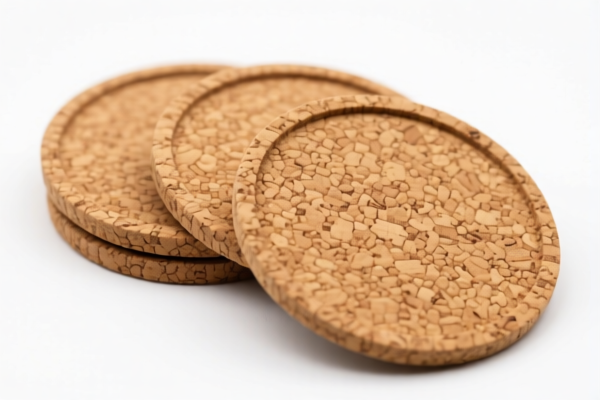
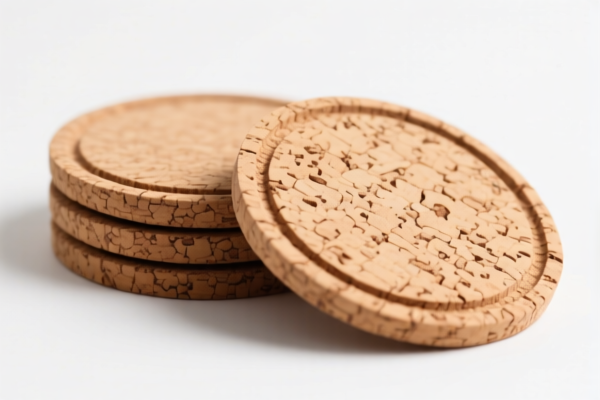
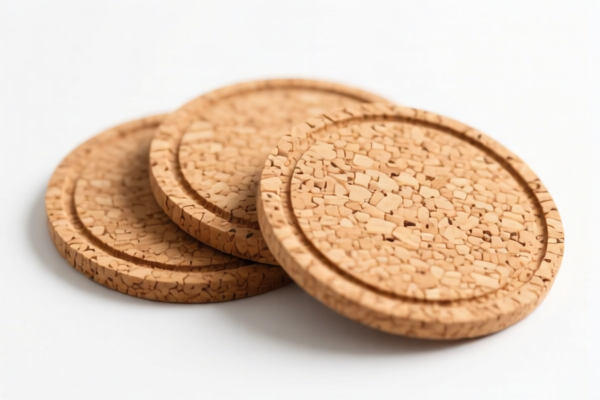
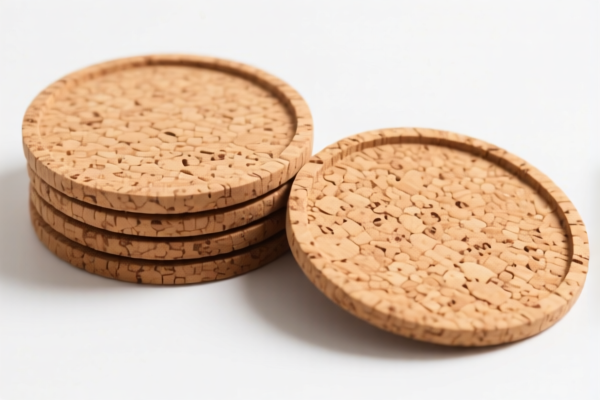
AI Analysis
🍷 Cork Coasters Set: The Ultimate Guide to HS Classification, Tariffs & Smooth Customs Clearance (2026 Edition)
🌐 HS Code Reference & Customs Strategy | Latest 2026 Tariff Breakdown | Professional Clearance Protocol
📌 Product Definition: What is a "Cork Coaster Set"?
A Cork Coaster Set is a non-woven or semi-woven product made from natural cork (bark of the Quercus suber tree). These items are designed to protect furniture surfaces from heat, condensation, and scratches.
In international trade, their classification is highly sensitive because: 1. They sit at the intersection of Wood Products (Chapter 44) and Cork Products (Chapter 45). 2. Form factor matters: Are they distinct "Placemats" (often higher tax) or generic "Coasters" (often lower tax)? 3. Material specificity: Natural cork vs. reconstituted cork can shift the HS Code entirely.
⚠️ Critical Distinction:
- Strict "Placemat" classification (often 4504) can attract 35% - 49% total tax (US + Section 301 + 122).
- Generic "Coaster" classification (often 4420) can drop taxes to ~13.2% by leveraging "Other Articles" loopholes.
- Misclassification risks: Declaring a coaster as a placemat (or vice versa) can lead to audits, seized cargo, or massive retroactive fines.
📦 II. HS Code Classification Details (2026 Tariff Database)
Based on your specific dataset, here is the authoritative breakdown of the five most relevant HS Codes for Cork Coasters, ranked by total tax impact.
| HS Code | Product Description (Summary) | Material/Form Logic | Total Tax Rate (US + Add-Ons) |
|---|---|---|---|
4420.11.00.10 |
Cork Coasters (Kitchenware) | Based on "Other Articles" logic. Treated as tableware/kitchen accessories. | 13.2% |
4420.11.00.90 |
Wooden Cork Coasters (General) | "Other Furniture" logic. Assumes wood/bamboo mix or generic wood category. | 13.2% |
4504.10.50.00 |
Cork Placemats / Sheets | Classified as "Other Cork Products" (Planks/Sheets). High risk if marketed as table mats. | 35.0% |
4503.90.40.00 |
Cork Wall/Pad Extensions | "Other Cork Products" (Sub-category). Often applied to "Pad" items with no material conflict. | 35.0% |
4503.90.60.00 |
Generic Cork Products | The "Catch-all" category. Natural cork, processed form. Highest tax bracket for specific cork. | 49.0% |
🔍 Key Insight:
The4420series (Wood/Cork other articles) offers the lowest duty (13.2%), but requires proving the item is a "coaster" (kitchenware) and not a "placemat" (decorative sheet). The4503/4504series (Pure Cork) is penalized heavily (35%–49%) due to the 10% Section 301/122 tariffs叠加 (layered on top of base rates).
💰 III. 2026 Tariff Rate Breakdown & Policy Mechanics
✅ Applicable Market: United States (US)
✅ Origin: China (CN)
✅ Effective Date: 2025–2026 (Current Trade War Dynamics)
🎯 Scenario A: The "Low-Tax" Winner (4420.11.00.10 / .90)
Best for: Standard round/rectangular cork coasters sold in sets.
| Component | Rate | Legal Basis | Explanation |
|---|---|---|---|
| Base Duty | 3.2% | Standard MFN Rate | Low tariff for "Other articles of wood". |
| Section 301 (Add-on) | 0.0% | USITC Footnote | Crucial Win: This category is exempt from the 25% punitive tariff for wood products. |
| Section 122 (China Specific) | 10.0% | IEEPA Footnote | Specific "122" tariff applies to certain wood/cork items. |
| TOTAL DUTY | 13.2% | Low Risk | Strategy: Use this if the product is clearly a "Coaster" and not a "Placemat". |
🎯 Scenario B: The "High-Tax" Placemat (4504.10.50.00 / 4503.90.40.00)
Best for: Large, rectangular cork mats intended as table runners or placemats.
| Component | Rate | Legal Basis | Explanation |
|---|---|---|---|
| Base Duty | 0.0% | Specific Sub-category | Often duty-free base rate. |
| Section 301 (Add-on) | 25.0% | USITC Footnote | The Trap: High punitive tariff applied to "Other Cork Products". |
| Section 122 (China Specific) | 10.0% | IEEPA Footnote | Additional punitive tax. |
| TOTAL DUTY | 35.0% | High Risk | Avoid this code for small coasters; it kills your margin. |
🎯 Scenario C: The "Generic Catch-All" (4503.90.60.00)
Best for: Irregular shapes, unclassified cork items, or mixed materials.
| Component | Rate | Legal Basis | Explanation |
|---|---|---|---|
| Base Duty | 14.0% | Catch-all Base | Higher starting point. |
| Section 301 (Add-on) | 25.0% | USITC Footnote | Full punitive tariff applied. |
| Section 122 (China Specific) | 10.0% | IEEPA Footnote | Additional punitive tax. |
| TOTAL DUTY | 49.0% | Extreme Risk | Last Resort only. Avoid if possible. |
📌 Tax Calculation Example:
If your Cork Coaster Set CIF Value = $1,000: - Using4420: Duty = $1,000 × 13.2% = $132 - Using4503/4504: Duty = $1,000 × 49% = $490 (or 35% = $350)
Savings: $158 to $358 per $1,000 shipment!
🛠️ IV. Customs Clearance Action Plan (Real-World Strategy)
✅ 1. Preparation Checklist (Do Not Ship Without These)
| Document | Requirement | Why It Matters |
|---|---|---|
| ✅ Product Spec Sheet | ✔️ Mandatory | Must explicitly state: "Set of 4/6/8 Cork Coasters", "For use under beverage containers". Avoid terms like "Placemat" or "Table Runner". |
| ✅ Dimensional Proof | ✔️ Mandatory | Provide photos showing size (e.g., 3.5" x 3.5"). Large sheets (>12") trigger 4504 classification. |
| ✅ Material Declaration | ✔️ Mandatory | "100% Natural Cork". If mixed with wood/rubber, it might fall under 4420. |
| ✅ Photos (Lifestyle) | ✔️ Strongly Recommended | Show the item in use under a glass on a table, not laid flat as a large sheet. |
| ✅ Commercial Invoice | ✔️ Mandatory | Title: "Cork Coaster Set". Value: FOB/CIF. No mention of "Placemat". |
| ✅ Packaging Info | ✔️ Mandatory | Ensure packaging doesn't visually imply "Placemat" (e.g., long rectangular boxes). |
✅ 2. Declaration Tactics (The "Golden Rules")
🔥 Rule #1: "Small is Safe, Large is Taxed"
If the item is a coaster (<5 inches), fight for4420.11.00.10(13.2%).
If it looks like a placemat (>8 inches), you are stuck with4504(35%+).
| Situation | Correct HS Code | Incorrect HS Code | Consequence of Error |
|---|---|---|---|
| Standard Coasters (4-6 pcs) | 4420.11.00.10 (13.2%) |
4504.10.50.00 (35.0%) |
Overpaying 21.8% on every box. |
| Large Cork Mat / Runner | 4504.10.50.00 (35.0%) |
4420... (13.2%) |
Under-declaration → Audit + Penalties |
| Mixed Wood/Cork Coaster | 4420.11.00.90 (13.2%) |
4503... (49.0%) |
Overpaying 35.8% |
✅ 3. Special Scenarios & Solutions
| Scenario | Strategy |
|---|---|
| "Cork Placemats" vs. "Coasters" | If you sell a "Placemat" but it's small, rebrand it as a "Serving Mat" or "Trivet". If it's large, declare as Placemat (4504) but accept the 35% tax. Do not lie. |
| Set Packaging | If the set includes coasters AND a stand/holder, declare the main value item. If the stand is wood, 4420 is safer. |
| Section 122 Exemptions | Note: As of 2026, few exemptions exist for China-origin cork/wood products. Do not rely on "de minimis" for commercial shipments (val >$800). |
| Origin Marking | Ensure the bottom of each coaster is laser-engraved "Made in China". Mislabeling as "Made in Vietnam" is fraud. |
🌍 V. Market Comparison: 2026 Global Tariff Landscape
| Destination | Recommended HS Code | Est. Total Duty | Key Compliance |
|---|---|---|---|
| 🇺🇸 USA | 4420.11.00.10 |
13.2% (Best) | Avoid 4504 (35%+) |
| 🇪🇺 EU | 4504.10.50.00 |
~0% (Base) | No Section 301, but strict "Cork" definition. |
| 🇨🇦 Canada | 4503.90.00 |
~10-15% | Similar to US, check CFTA exemptions. |
| 🇦🇺 Australia | 4504.10.00 |
5% | Low duty, but strict quarantine rules. |
📌 Conclusion:
The US is the ONLY major market imposing the 35-49% penalty on cork products.
For US exports, maximize the use of4420by strictly defining the product as a "Coaster" (kitchenware) and avoiding "Placemat" terminology.
📌 VI. Common Pitfalls & Avoidance Guide
❌ Pitfall 1: The "Placemat" Trap
You sell a 10x14" cork sheet. You declare it as 4420 (13.2%).
👉 Result: Customs seizes shipment. They classify it as 4504 (35%). You pay 2x the duty + storage fees.
✅ Fix: Declare as 4504 if size is large. Or, cut to coaster size (<6").
❌ Pitfall 2: "Cork" vs. "Wood" Confusion
You declare 4420 (Wood) but the material is pure cork.
👉 Result: If the item is clearly cork, 4420 is risky. Customs may force 4503 (49%).
✅ Fix: Ensure the product description matches the primary material. If it's mixed, 4420 is safer.
❌ Pitfall 3: Missing "Set" Definition
You declare 5 coasters as 5 separate items.
👉 Result: Each item is taxed. If they are a set, declare as "Set of 5" to avoid confusion.
✅ Fix: Use clear commercial invoice descriptions: "Set of 5 Cork Coasters".
🎯 VII. Final Verdict: Strategic Recommendation
🚀 Action Plan for 2026 Exporters:
- Product Design: Keep coasters small (<4-5 inches) to naturally avoid "Placemat" classification.
- Documentation: Use "Cork Coaster Set" or "Beverage Coaster" in all documents. NEVER use "Placemat" unless it is a large mat.
- HS Code Selection: Target
4420.11.00.10or4420.11.00.90for the 13.2% rate.- Cost Calculation: Budget for 13.2% US import duty, not the 35-49% "Cork" rates.
- Pre-Verification: If unsure, file an Advance Ruling (CBP Ruling) for your specific product design.
📌 Pro Tip:
"If you can sell it as a 'Trivet' or 'Hot Pad' (under
4420), you save 21.8% compared to a 'Cork Placemat'.
Small is Smart. Clear is Cheap."
✨ Your Cork Business, Optimized for Global Trade!
💼 Don't let a 35% tariff kill your margin. Classify Right, Ship Smooth.
Customer Reviews
About HS Code Classification
The Harmonized System (HS) is an internationally standardized nomenclature developed by the World Customs Organization (WCO) to classify traded products. Over 200 countries use the HS system as the basis for customs tariffs, trade statistics, and import/export regulations.
Each HS code follows a hierarchical structure:
- Chapter (2 digits) — Broad category of goods (e.g., Chapter 84: Machinery and Mechanical Appliances)
- Heading (4 digits) — More specific grouping within the chapter
- Subheading (6 digits) — Internationally standardized breakdown, used by all WCO member countries
- National subdivisions (8-10 digits) — Country-specific extensions for further classification, such as US HTSUS 10-digit codes
Correct HS code classification is essential for smooth customs clearance, accurate duty payment, and compliance with trade regulations. Misclassification can lead to customs delays, overpayment of duties, or penalties.
When importing from CN to US, the applicable tariff rates may include:
- Most-Favored-Nation (MFN) rate — The standard duty rate applied to WTO members
- General rate — Applied to countries without trade agreements
- Trade remedy duties — Additional tariffs such as Section 301 (anti-dumping), Section 232 (national security), or countervailing duties
The information provided on this page is for reference purposes only. For official classification, please consult with your local customs authority or a licensed customs broker.