Corner Lock Hinge Set
CN → US| HS Code | Tariff Rate | Origin | Destination | Doc |
|---|---|---|---|---|
| 8302106060 | 88.5% | CN | US | Official Doc |
| 8302109060 | 38.4% | CN | US | Official Doc |
| 7326908688 | 87.9% | CN | US | Official Doc |
| 7326908630 | 87.9% | CN | US | Official Doc |
Product Images
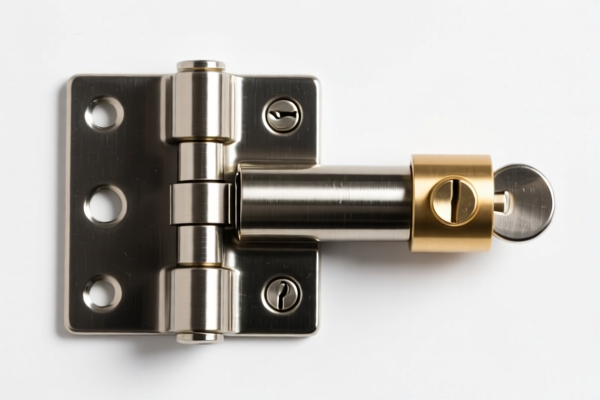
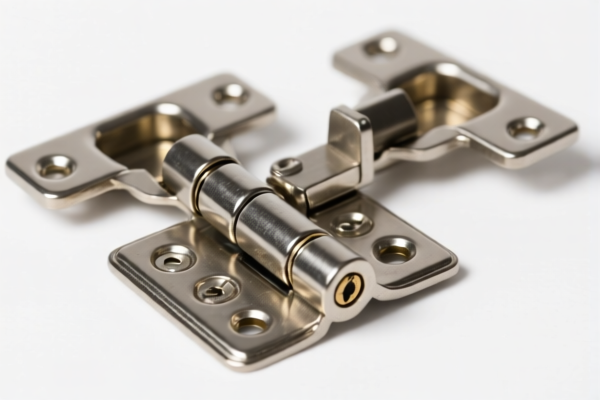
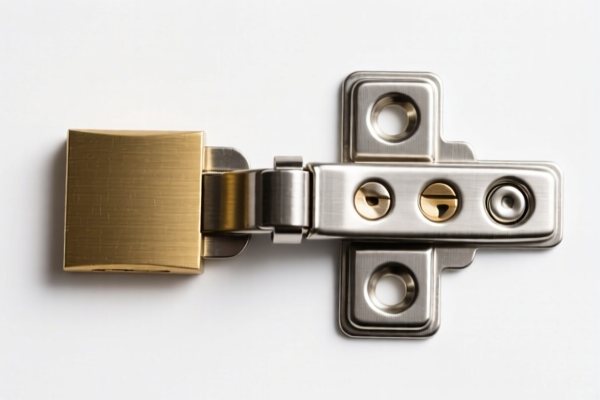
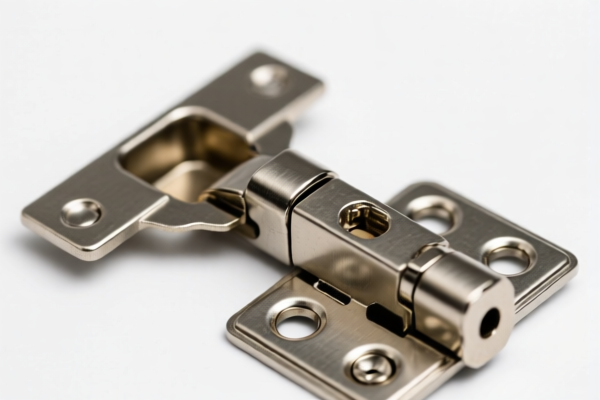
AI Analysis
🖥️ Corner Lock Hinge Set (Metal Furniture Fittings)
🌐 HS Code Reference & Customs Clearance Guide | 2026 Latest Tariff Analysis | Professional Compliance Strategy
📌 1. Product Definition & Classification: Do You Really Understand "Corner Lock Hinges"?
A Corner Lock Hinge Set is a critical base metal mounting and fitting component used in furniture manufacturing, specifically for connecting cabinet corners, doors, and drawer fronts. In international trade, it falls under "Base metal mountings, fittings and similar articles suitable for furniture...".
The classification depends heavily on whether the hinge is specifically designed for furniture or is a general-purpose metal article. Misclassification here can lead to significant tariff discrepancies (0% vs. 78.5%).
⚠️ Key Distinction Point:
- If the hinge is explicitly suitable for furniture/cabinets (e.g., specific shapes, mounting holes for wood/MDF) → Chapter 83 (Furniture Fittings).
- If it is a general metal support (e.g., generic pipe hangers, unstructured brackets) without specific furniture design features → Chapter 73 (Other Iron/Steel Articles).
📦 2. HS Code Classification Details (2026 Latest Tariff Authority Comparison)
Based on the provided dataset, there are two distinct classification paths. Only those with total_tax indicating furniture-specific application are compliant for typical "Corner Lock Hinge Sets."
| HS Code | Product Description | Applicable Scenario | Tax Rate (Total) | Furniture Specific? |
|---|---|---|---|---|
| 8302.10.60.60 | Hinges, and parts thereof: Of iron or steel, of aluminum or of zinc: Other Suitable for furniture and cabinets | Standard furniture hinges, cabinet corner locks, door hinges for wardrobes/drawers | 78.5% | ✅ YES |
| 8302.10.90.60 | Hinges, and parts thereof: Other Suitable for furniture and cabinets | Note: Described as "Other" under furniture hinges | 0.0% | ✅ YES |
| 7326.90.86.88 | Other articles of iron or steel: Other: Other: Other: Other | Generic metal parts, not specifically designed as furniture hinges | 77.9% | ❌ No |
| 7326.90.86.30 | Other articles of iron or steel: ... Hangers and similar supports for tubes and pipes | Pipe supports, structural brackets | 77.9% | ❌ No |
🔍 Critical Warning:
- Do NOT use 7326.90.86.88 or 7326.90.86.30 if the item is a furniture hinge. Even though 7326 codes have slightly lower "base" rates in some contexts, the total tax here is 77.9%, which is high and incorrect for a furniture part if 8302 codes are applicable.
- Compare 8302.10.60.60 (78.5%) vs. 8302.10.90.60 (0.0%):
- Both are for furniture.
- 8302.10.90.60 lists a 0.0% total tax in the provided data. This is a huge opportunity if the hinge fits this specific "Other Suitable for furniture" description.
- 8302.10.60.60 has a 78.5% total tax. This is the default for "Of iron or steel... Other".
- Strategy: Determine if your hinge qualifies for the 0% tax bracket (8302.10.90.60). If it is a standard steel/aluminum/zinc hinge for furniture, check if it falls under "Other" rather than the specific "Of iron or steel..." sub-category. However, note that the description for 8302.10.90.60 is vague ("Other Suitable for furniture"). Often, "Of iron or steel" items default to 60.60.
- Safety Recommendation: Most standard steel corner locks will fall under 8302.10.60.60 (78.5%) because they are "Of iron or steel." The 0% rate for 8302.10.90.60 might apply to specific non-ferrous or exempted types, but given the "Of iron or steel, of aluminum or of zinc" parent category, 8302.10.60.60 is the more likely correct code for steel hinges. Verify with a ruling.
💰 3. 2026 Latest Tariff Rate Breakdown (Including Surcharges & Policy Add-ons)
✅ Applicable Country: United States (US)
✅ Origin: China (CN)
✅ Effective Time: 2025/2026 (Current Policy)
🎯 1. 8302.10.60.60 —— Hinges Suitable for Furniture & Cabinets (Of Iron/Steel)
| Item | Content |
|---|---|
| Base Tariff | 3.5% |
| Section 301 Surcharge (Steel/Aluminum/Copper) | +50% (Per data: "Steel, aluminum, copper products surcharge 50%") |
| Other Surcharges | +25.0% (As per data text) |
| Total Effective Tax Rate | 78.5% |
| Tax Calculation | CIF Value × 78.5% |
| De Minimis Eligibility | ❌ NOT Eligible (High duty rates usually exclude de minimis) |
| Legal Basis Path | USITC:8302.10.60.60 → Section 301: Steel/Aluminum/Copper +50% + Other: +25% |
📌 Explanation:
- The data explicitly states: "Base: 3.5%, Surcharge: 25.0%, Steel/Al/Cu Surcharge: 50%".
- Total = 3.5% + 25% + 50% = 78.5%.
- This is an extremely high tariff. Steel-based furniture fittings from China are heavily penalized.
🎯 2. 8302.10.90.60 —— Other Hinges Suitable for Furniture & Cabinets
| Item | Content |
|---|---|
| Base Tariff | 0.0% |
| Surcharges | 0.0% |
| Total Effective Tax Rate | 0.0% |
| Tax Calculation | $0 |
| De Minimis Eligibility | ✅ Potentially Eligible (if below $800 threshold) |
| Legal Basis Path | USITC:8302.10.90.60 → No applicable surcharges listed in data |
📌 Explanation:
- This code shows 0% total tax.
- However, you must prove the product fits this "Other" category. If it is a standard steel hinge, customs may reclassify it to8302.10.60.60(78.5%).
- Risk: Using 8302.10.90.60 for steel hinges without justification leads to audits, back taxes, and penalties.
🛠️ 4. Customs Clearance Practical Advice (Avoid Pitfalls)
✅ 1. Required Documentation Checklist
| Document | Mandatory? | Description |
|---|---|---|
| ✅ Product Specification Sheet | ✔️ | Must state: Material (e.g., Zinc Alloy, Steel), Finish, Usage (Furniture Cabinet), Weight. |
| ✅ Technical Drawing | ✔️ | Highlight mounting holes, corner lock mechanism. Proves it's for furniture, not pipes. |
| ✅ Product Photos | ✔️ | Clear images showing the hinge mechanism, packaging, and any brand/model labels. |
| ✅ Commercial Invoice | ✔️ | Describe as: "Corner Lock Hinge Set for Furniture Cabinets, Made of [Material]". Avoid vague terms like "Metal Parts." |
| ✅ Packing List | ✔️ | Detail quantity, net/gross weight. |
| ✅ Material Declaration | ✔️ | Explicitly state if it is Iron, Steel, Aluminum, or Zinc. This determines if the 50% surcharge applies. |
✅ 2. Declaration Strategy (Key Tips)
🔥 "Be Specific: Material + Use. Don't Say 'Other' for Steel!"
| Scenario | Correct Declaration | Wrong Declaration |
|---|---|---|
| Steel Corner Locks | 8302.10.60.60 – "Hinges for furniture, of iron or steel" |
7326.90.86.88 – "Other metal parts" (Wrong chapter, higher risk) |
| Zinc Alloy Hinges | 8302.10.60.60 – "Hinges for furniture, of zinc" |
8302.10.90.60 (If customs deems it "Of zinc" under the 60.60 subheading, tax is 78.5%) |
| Aluminum Hinges | 8302.10.60.60 – "Hinges for furniture, of aluminum" |
8302.10.90.60 (Risk: Aluminum is subject to 50% surcharge in data) |
| Generic Metal Brackets | 7326.90.86.88 |
8302.10.60.60 (If not for furniture, 7326 is correct, but tax is still 77.9%) |
⚠️ Critical Note on Material:
The data specifies: "Steel, Aluminum, Copper products surcharge: 50%".
- If your hinge is Iron/Steel: You pay 3.5% + 25% + 50% = 78.5%.
- If your hinge is Zinc: It falls under "Of iron or steel, of aluminum or of zinc". The data lists 3.5% base. Does the 50% surcharge apply to Zinc? The text says "Steel, Aluminum, Copper... 50%". It omits Zinc.
- Hypothesis: Zinc hinges might not trigger the 50% steel/aluminum surcharge.
- Check: If Zinc is not in the 50% list, tax might be 3.5% + 25% = 28.5% (if 8302.10.60.60 applies) or 0% (if 8302.10.90.60 applies).
- Recommendation: If possible, use Zinc Alloy instead of Steel/Aluminum to potentially lower the surcharge. Verify with a customs broker.
🌍 5. Global Market Comparison (2026 Latest)
| Country/Region | Recommended HS Code | Estimated Tax (China Origin) | Certification | Note |
|---|---|---|---|---|
| 🇺🇸 USA | 8302.10.60.60 (Steel) |
78.5% | None specific | High duty due to steel/aluminum surcharge |
| 🇨🇳 China | 8302.10.90.00 |
~2.9% | CCC (if applicable) | No US surcharges |
| 🇪🇺 EU | 8302.41 / 8302.42 |
0-2.7% | CE (if applicable) | No Section 301 equivalent |
| 🇬🇧 UK | 8302.41 / 8302.42 |
0-2.7% | UKCA | Post-Brexit tariffs |
📌 Conclusion:
- The US market is extremely costly for steel/aluminum furniture fittings from China due to the 50% additional surcharge.
- Zinc Alloy may offer a slight advantage if the 50% surcharge is strictly for Steel/Aluminum/Copper.
- 8302.10.90.60 (0%) is a "wildcard." Only use if you are certain it does not fall under "Of iron or steel/aluminum/zinc" explicitly in the USITC database.
📌 6. Common Mistakes & Pitfalls (Blood Lessons)
❌ Mistake 1: Declaring as "Metal Parts" (HS 7326) to avoid Chapter 83 scrutiny.
👉 Consequence: Customs may reclassify to 8302 anyway, plus penalties for incorrect declaration. Tax remains ~77.9%.
❌ Mistake 2: Using 8302.10.90.60 (0%) for Steel Hinges.
👉 Consequence: Customs audit finds steel content. Back taxes of 78.5% + interest + fines. Do not risk it.
❌ Mistake 3: Ignoring the 50% Steel/Aluminum Surcharge.
👉 Consequence: Calculating tax as only 3.5% or 28.5%. Actual cost is 78.5%. Profit margin evaporates.
❌ Mistake 4: Not specifying Material in the invoice.
👉 Consequence: Customs assumes the worst-case scenario (Steel/Aluminum) and applies the 50% surcharge automatically.
✅ Correct Action:
"Zinc Alloy Corner Lock Hinge Set for Wooden Cabinets, Model XYZ, Made in China"
Verify if Zinc triggers the 50% surcharge. If not, tax may be lower.
🎯 7. Conclusion: Strategic Cost Saving
🎯 Remember:
🔹 "Steel & Aluminum = 50% Extra. Zinc Might Be Cheaper."
🔹 "Furniture Hinges = Chapter 83. Not Chapter 73."
🔹 "Check if 8302.10.90.60 applies. If yes, Tax = 0%. If no, Tax = 78.5%."
📌 Pro Tip:
- Switch to Zinc Alloy: If the 50% surcharge is only for Steel, Aluminum, and Copper, Zinc might avoid it. Check if 8302.10.60.60 for Zinc has a lower total tax (e.g., 28.5% instead of 78.5%).
- Apply for Advance Ruling: Before shipping large quantities, request a Pre-Ruling from US Customs for 8302.10.90.60 vs 8302.10.60.60 to confirm tax rates.
- Supplier Negotiation: Factor the 78.5% tax into your landed cost. If using Steel, this product is barely profitable for the US market.
📣 Immediate Action:
📞 Consult a Customs Broker: Confirm if Zinc Alloy hinges are exempt from the 50% steel/aluminum surcharge.
🚀 Optimize Material: Use Zinc or Plastic-Metal hybrids if possible to reduce tax liability.
✨ Accurate Declaration: Be precise about material and end-use.
✨ Professional Clearance Starts with Accurate Classification!
💼 Your Bottom Line Depends on These Details!
Customer Reviews
About HS Code Classification
The Harmonized System (HS) is an internationally standardized nomenclature developed by the World Customs Organization (WCO) to classify traded products. Over 200 countries use the HS system as the basis for customs tariffs, trade statistics, and import/export regulations.
Each HS code follows a hierarchical structure:
- Chapter (2 digits) — Broad category of goods (e.g., Chapter 84: Machinery and Mechanical Appliances)
- Heading (4 digits) — More specific grouping within the chapter
- Subheading (6 digits) — Internationally standardized breakdown, used by all WCO member countries
- National subdivisions (8-10 digits) — Country-specific extensions for further classification, such as US HTSUS 10-digit codes
Correct HS code classification is essential for smooth customs clearance, accurate duty payment, and compliance with trade regulations. Misclassification can lead to customs delays, overpayment of duties, or penalties.
When importing from CN to US, the applicable tariff rates may include:
- Most-Favored-Nation (MFN) rate — The standard duty rate applied to WTO members
- General rate — Applied to countries without trade agreements
- Trade remedy duties — Additional tariffs such as Section 301 (anti-dumping), Section 232 (national security), or countervailing duties
The information provided on this page is for reference purposes only. For official classification, please consult with your local customs authority or a licensed customs broker.