Corrosion resistant Rubber Plug
CN → US| HS Code | Tariff Rate | Origin | Destination | Doc |
|---|---|---|---|---|
| 4016991500 | 20.2% | CN | US | Official Doc |
| 4016935050 | 37.5% | CN | US | Official Doc |
| 4016990300 | 38.0% | CN | US | Official Doc |
Product Images
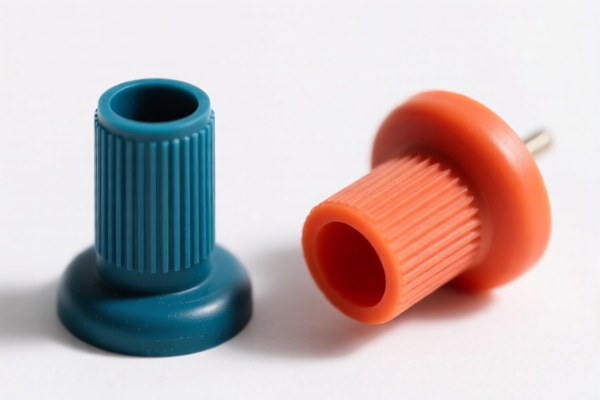
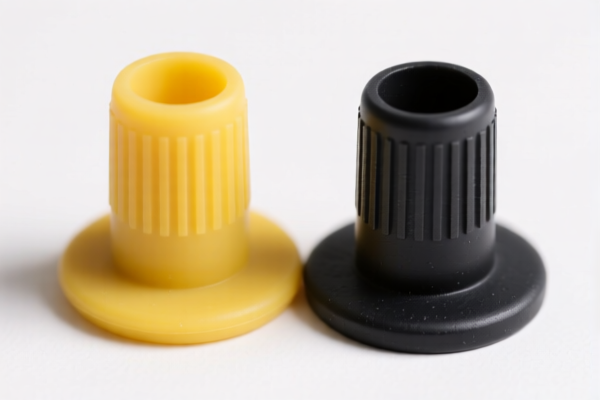
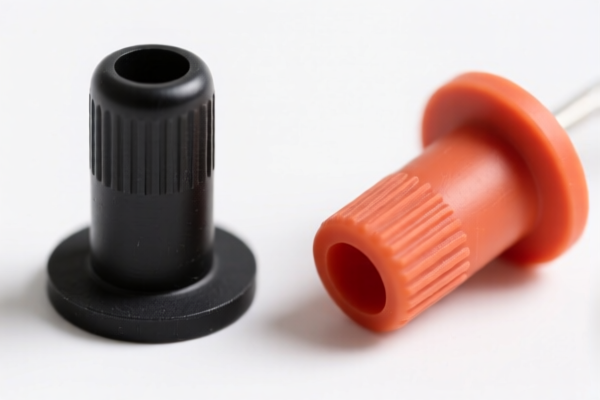
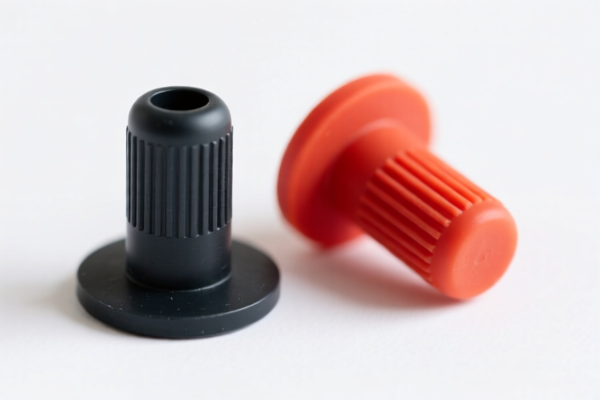
AI Analysis
🛡️ Corrosion Resistant Rubber Plug
🌐 HS Code Reference & Customs Clearance Guide | 2026 Latest Tariff Analysis | Professional-Level Clearance Strategy
📌 I. Product Definition & Classification: What Exactly is a "Rubber Plug"?
A "Corrosion Resistant Rubber Plug" is a specialized sealing component made from synthetic or natural rubber (often compounded with additives for chemical/acid resistance). It is used to block, seal, or close holes in pipes, tanks, containers, or machinery.
In international trade, these are classified under Chapter 40 (Rubber and Articles Thereof). However, the specific HS Code depends heavily on material structure (solid rubber vs. sponge) and exact application (general seal vs. bottle cap vs. specialized machinery part).
⚠️ Key Classification Logic:
- If it is a solid rubber plug for general sealing/packing → Likely 4016.93 or 4016.99;
- If it functions specifically as a bottle cap/closure → Likely 4016.99.03;
- If it is a specialized plug/stopper for industrial tanks → Likely 4016.99.15 or 4016.99.03.
📦 II. HS Code Classification Details (2026 Latest Tariff Authority Comparison)
Based on the provided data, here are the three most likely HS Codes for "Corrosion Resistant Rubber Plugs":
| HS Code | Product Description | Application Scenario | Material/Feature Match |
|---|---|---|---|
4016.99.15.00 |
Other rubber articles, including plugs/stoppers | Industrial plugs, tank stoppers, general sealing plugs | ✅ Matches "Plug/Stopper" + Rubber |
4016.93.50.50 |
Other vulcanized rubber, cellular rubber (e.g., sponge) | Sealing parts, gaskets, if the rubber is cellular/sponge type | ✅ Matches "Sealing" + Rubber (Cellular) |
4016.99.03.00 |
Other rubber articles, specifically bottle caps/closures | Bottle caps, container closures, packaging seals | ✅ Matches "Cap/Closure" + Rubber |
🔍 Critical Distinction:
- Is it a bottle cap? → Use4016.99.03.00.
- Is it a mechanical plug/stopper? → Use4016.99.15.00(if non-cellular) or4016.93.50.50(if cellular/sponge).
- "Corrosion Resistant": This is a material property, not a primary classifier. It confirms the use of specific rubber compounds (e.g., EPDM, NBR, Viton) but does not change the HS Code chapter. It may affect quality standards but not tariff classification directly.
💰 III. 2026 Latest Tariff Rate Breakdown (Including Additional Taxes & Policy Surcharges)
✅ Applicable Country: USA (US)
✅ Country of Origin: China (CN)
✅ Effective Date: November 10, 2025 (and onwards)
🎯 1. 4016.99.15.00 – Other Rubber Articles (Plugs/Stopplers)
| Item | Details |
|---|---|
| Base Tariff | 2.7% (ad valorem) |
| Section 301 Additional Tariff | +7.5% |
| Section 122 Tariff | +10% |
| Total Tariff Rate | 20.2% |
| Tax Calculation | CIF Value × 20.2% |
| De Minimis Exemption? | ❌ NO (Deny De Minimis) |
| Legal Path | Base: 4016.99.15 → Sec301: 7.5% → Sec122: 10% |
📌 Explanation:
- This code applies to solid rubber plugs used in industrial or general contexts.
- The 20.2% rate is relatively moderate compared to other rubber seals.
- Section 122 is a specific surcharge for certain rubber imports from China.
🎯 2. 4016.93.50.50 – Other Vulcanized Rubber Articles (Cellular/Sponge)
| Item | Details |
|---|---|
| Base Tariff | 2.5% (ad valorem) |
| Section 301 Additional Tariff | +25.0% |
| Section 122 Tariff | +10% |
| Total Tariff Rate | 37.5% |
| Tax Calculation | CIF Value × 37.5% |
| De Minimis Exemption? | ❌ NO (Deny De Minimis) |
| Legal Path | Base: 4016.93.50 → Sec301: 25% → Sec122: 10% |
📌 Explanation:
- This code applies if the rubber plug is cellular (sponge-like) or made of other vulcanized rubber not specifically listed elsewhere.
- High Tariff Warning: The 37.5% rate is significantly higher due to the 25% Section 301 surcharge.
- Only use this code if the product is cellular/sponge rubber. Solid rubber plugs should not be classified here.
🎯 3. 4016.99.03.00 – Other Rubber Articles (Bottle Caps/Closures)
| Item | Details |
|---|---|
| Base Tariff | 3.0% (ad valorem) |
| Section 301 Additional Tariff | +25.0% |
| Section 122 Tariff | +10% |
| Total Tariff Rate | 38.0% |
| Tax Calculation | CIF Value × 38.0% |
| De Minimis Exemption? | ❌ NO (Deny De Minimis) |
| Legal Path | Base: 4016.99.03 → Sec301: 25% → Sec122: 10% |
📌 Explanation:
- This code is specifically for bottle caps, closures, and packing seals.
- Highest Tariff: At 38.0%, this is the most expensive classification.
- Critical Check: If your "plug" is used as a bottle cap, you must use this code. Misclassifying a bottle cap as a general plug (4016.99.15) can lead to customs penalties.
🛠️ IV. Customs Clearance Practical Advice (Avoiding Pitfalls)
✅ 1. Preparation Checklist (Mandatory)
| Document | Required | Notes |
|---|---|---|
| ✅ Product Specification Sheet | ✔️ | Must specify Rubber Type (e.g., EPDM, NBR, Silicone), Hardness (Shore A), and Chemical Resistance |
| ✅ Product Photos | ✔️ | Clear images showing shape, dimensions, and any markings |
| ✅ Commercial Invoice | ✔️ | Must clearly state: "Rubber Plug, Corrosion Resistant, HS Code: [XXXX.XX.XX.XX]" |
| ✅ Packing List | ✔️ | Detail quantity, weight, and packaging type |
| ✅ Certificate of Origin (CO) | ✔️ | If applicable, for potential tariff reduction (though limited for China-origin goods) |
| ✅ Material Safety Data Sheet (MSDS) | ✔️ | May be requested by US CBP for chemical-resistant rubber |
✅ 2. Classification Strategy (Key Mantra)
🔥 "Identify Function First, Then Material: Cap vs. Plug vs. Seal!"
| Scenario | Correct HS Code | Incorrect Code | Consequence |
|---|---|---|---|
| Bottle Cap / Container Closure | 4016.99.03.00 (38.0%) |
4016.99.15.00 (20.2%) |
Under-declaration → Penalties + Back Taxes |
| Solid Industrial Plug / Stopper | 4016.99.15.00 (20.2%) |
4016.93.50.50 (37.5%) |
Over-declaration → Higher Taxes |
| Sponge Rubber Gasket / Seal | 4016.93.50.50 (37.5%) |
4016.99.15.00 (20.2%) |
Misclassification → Audit Risk |
📌 Key Reminder:
- "Corrosion Resistant" is not an HS Code trigger. Do not try to find a special code for "acid-resistant rubber." It is still a rubber article (Chapter 40).
- Shape matters: If it looks like a cap (threads, flange for sealing a bottle), use 4016.99.03. If it looks like a plug (conical, cylindrical, for plugging a hole), use 4016.99.15.
✅ 3. Special Cases
| Case | Advice |
|---|---|
| OEM Custom Plugs | Provide CAD drawings or samples to CBP if unsure about classification. |
| Set of Plugs + Tools | Declare as Set if sold together, but rubber components are still classified under Chapter 40. |
| High Chemical Resistance (e.g., PTFE Liner) | If the plug is not primarily rubber (e.g., metal core with rubber lining), consult customs broker. May fall under Chapter 73 or 84. |
🌍 V. Global Market Comparison (2026 Latest)
| Country/Region | Recommended HS Code | Tariff (China Origin) | Notes |
|---|---|---|---|
| 🇺🇸 USA | 4016.99.15.00 (Plug) |
20.2% | Best Rate for general plugs |
| 🇪🇺 EU | 4016.93.50 / 4016.99 |
Varies (0-6.5%) | No Section 301/122 surcharges |
| 🇨🇳 China | 4016.99.15 |
2.5% - 5% | Low base tariff |
| 🇬🇧 UK | 4016.99 |
Varies | Post-Brexit tariffs may apply |
📌 Conclusion:
- The USA has the highest effective tariff due to Section 301 and Section 122 surcharges.
- EU/UK/China tariffs are significantly lower, but US market entry requires careful cost calculation.
- Strategy: If targeting the US, ensure correct classification to avoid paying 38% when 20.2% is applicable.
📌 VI. Common Errors & Pitfalls (Lessons Learned)
❌ Error 1: Classifying a Bottle Cap as a General Plug
👉 Result: Pay 20.2% instead of 38.0%.
👉 Consequence: CBP Audit → Back taxes + Penalties (often 2x-3x the difference).
❌ Error 2: Claiming "Corrosion Resistant" reduces tariff
👉 Result: No tariff reduction. Customs ignores chemical properties for HS classification.
👉 Consequence: Delays in clearance.
❌ Error 3: Using 4016.93.50.50 for Solid Rubber
👉 Result: Pay 37.5% instead of 20.2%.
👉 Consequence: Overpayment of taxes.
✅ Correct Practice:
"Rubber Plug, Solid, Corrosion Resistant, For Industrial Use, HS Code: 4016.99.15.00"
"Rubber Bottle Cap, Corrosion Resistant, For Chemical Containers, HS Code: 4016.99.03.00"
🎯 VII. Conclusion: Precision Classification Saves Money!
🎯 Remember the Mantra:
🔹 "Cap is 38%, Plug is 20%, Sponge is 37.5%!"
🔹 "Function dictates Code, Chemicals don't change it!"
📌 Pro Tip:
If your product is high-volume, consider Advance Ruling with US CBP to secure the 20.2% rate for 4016.99.15.00 if it qualifies as a plug.
For US imports, factor in the 20.2%-38.0% tariff in your pricing strategy.
📣 Immediate Action:
📞 Contact a Customs Broker + Provide Product Photos + Verify Classification
🚀 Clear Customs Smoothly, Avoid Penalties, Protect Profit Margins!
✨ Professional Clearance, Starts with Precise Classification!
💼 Every Cent of Tariff is Counted, Every Code is Critical!
Customer Reviews
About HS Code Classification
The Harmonized System (HS) is an internationally standardized nomenclature developed by the World Customs Organization (WCO) to classify traded products. Over 200 countries use the HS system as the basis for customs tariffs, trade statistics, and import/export regulations.
Each HS code follows a hierarchical structure:
- Chapter (2 digits) — Broad category of goods (e.g., Chapter 84: Machinery and Mechanical Appliances)
- Heading (4 digits) — More specific grouping within the chapter
- Subheading (6 digits) — Internationally standardized breakdown, used by all WCO member countries
- National subdivisions (8-10 digits) — Country-specific extensions for further classification, such as US HTSUS 10-digit codes
Correct HS code classification is essential for smooth customs clearance, accurate duty payment, and compliance with trade regulations. Misclassification can lead to customs delays, overpayment of duties, or penalties.
When importing from CN to US, the applicable tariff rates may include:
- Most-Favored-Nation (MFN) rate — The standard duty rate applied to WTO members
- General rate — Applied to countries without trade agreements
- Trade remedy duties — Additional tariffs such as Section 301 (anti-dumping), Section 232 (national security), or countervailing duties
The information provided on this page is for reference purposes only. For official classification, please consult with your local customs authority or a licensed customs broker.