Corrosion resistant plastic pipe fittings
CN → US| HS Code | Tariff Rate | Origin | Destination | Doc |
|---|---|---|---|---|
| 3917400080 | 40.3% | CN | US | Official Doc |
| 3917400095 | 40.3% | CN | US | Official Doc |
| 3926305000 | 22.8% | CN | US | Official Doc |
| 3926909989 | 22.8% | CN | US | Official Doc |
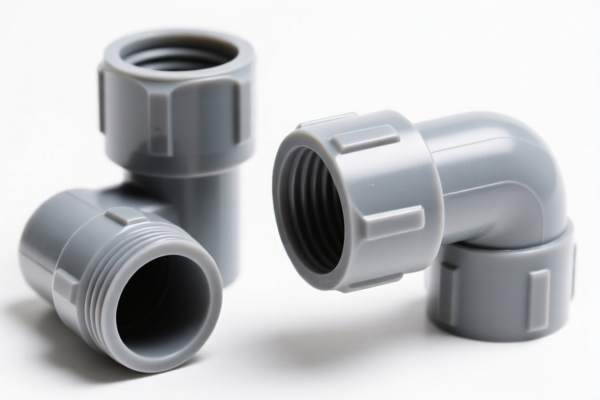
Product Images



AI Analysis
Here is the comprehensive HS Code Classification Guide & Clearance Strategy for Corrosion Resistant Plastic Pipe Fittings, strictly based on the provided data.
🌊 Corrosion Resistant Plastic Pipe Fittings: The Ultimate HS Code & Tax Guide (2026 Edition)
🚨 WARNING: This product faces multiple layers of tariffs in the US market due to its classification as "Plastic Articles." 🎯 Target Market: United States (US) | 🇨🇳 Origin: China (CN) | ⚠️ Risk: High (40.3% vs 22.8%)
📦 I. Product Definition: What Are We Shipping?
Corrosion Resistant Plastic Pipe Fittings are specialized components used in industrial, agricultural, and plumbing systems to connect, change direction, or control the flow of fluids in corrosive environments.
- Key Material: All Plastics (Polyethylene, PVC, PP, etc.).
- Primary Function: Pipe joining, branching, or sealing.
- Critical Distinction:
- Are they dedicated pipe fittings (specifically shaped for pipes)?
- Or are they general plastic components (used as connectors but not specific to a pipe standard)?
This distinction determines whether you pay the 40.3% tariff (High Risk) or the 22.8% tariff (Moderate Risk).
📋 II. HS Code Classification & Tax Breakdown (2026 Data)
Below are the 4 specific classifications derived from your data, including the tax composition.
🚀 Scenario A: High-Category Pipe Fittings (40.3% Total Tax)
Use this if the items are strictly defined as "Pipe Accessories" under specific regulations.
| HS Code | Product Summary | Tax Composition (Total: 40.3%) |
|---|---|---|
| 3917.40.00.80 | Dedicated Pipe Fittings: Corrosion-resistant, plastic material. Classified under "Other pipe accessories." |
• Base Tariff: 5.3% • Section 301 (Add-on): 25.0% • Section 122 Clause: 10.0% (Sum: 40.3%) |
| 3917.40.00.95 | Shape-Specific Pipe Fittings: Corrosion-resistant, plastic material. Classified as "Fittings" meeting specific accessory criteria. |
• Base Tariff: 5.3% • Section 301 (Add-on): 25.0% • Section 122 Clause: 10.0% (Sum: 40.3%) |
💡 Why this rate? These fall under Heading 3917 (Tubes, Pipes & Hose). The US applies the highest "Section 301" trade war tariffs to plastic piping products from China.
🛠️ Scenario B: General Plastic Components (22.8% Total Tax)
Use this if the items are "Connectors" or "Fittings" but fall under broader "Other Plastic Articles" categories.
| HS Code | Product Summary | Tax Composition (Total: 22.8%) |
|---|---|---|
| 3926.30.50.00 | Plastic Connectors: Corrosion-resistant, plastic material. Usage: Connection parts. Classified under "Other Plastic Articles." |
• Base Tariff: 5.3% • Section 301 (Add-on): 7.5% • Section 122 Clause: 10.0% (Sum: 22.8%) |
| 3926.90.99.89 | General Plastic Fittings: Corrosion-resistant, plastic material. Classification: "Other Parts/Accessories." |
• Base Tariff: 5.3% • Section 301 (Add-on): 7.5% • Section 122 Clause: 10.0% (Sum: 22.8%) |
💡 Why this rate? These fall under Heading 3926 (Other articles of plastics). The Section 301 add-on is lower (7.5% vs 25%), resulting in a 17.5% tax savings compared to Scenario A.
🧮 III. Tax Clause Deep Dive: What Do These Numbers Mean?
To understand the 40.3% vs 22.8% difference, we must decode the three components:
1. 🏛️ Base Tariff (5.3%)
- Source: US Schedule B / Harmonized Tariff Schedule (HTSUS).
- Meaning: The standard "Most Favored Nation" (MFN) rate for plastic articles. This is relatively low for plastics.
2. ⚔️ Section 301 Tariff (The "Trade War" Tax)
- Source: USTR (United States Trade Representative) Decisions.
- Difference:
- For Pipe Fittings (3917): 25.0% → The US views these as strategic industrial inputs heavily reliant on Chinese manufacturing.
- For General Plastic Parts (3926): 7.5% → Classified as less critical or general consumer/industrial goods.
- Impact: This is the biggest cost driver. A $10,000 shipment costs $2,500 extra in tax under 3917, but only $750 under 3926.
3. 📜 Section 122 Clause Tariff (10.0%)
- Source: Executive Order 13936 (often linked to supply chain restrictions).
- Meaning: An additional punitive tax applied to specific Chinese plastic products regardless of their sub-category.
- Note: This applies to ALL four HS codes listed above. You cannot avoid this 10% layer.
🚢 IV. Clearance & Logistics Strategy: How to Save Money?
✅ Strategy 1: Optimize HS Code Classification (The 17.5% Savings)
- The Goal: Move from 3917.40.xx (40.3%) to 3926.xx (22.8%).
- Action:
- Review product specs. If the fitting is a custom connector not strictly defined as a "pipe fitting" under Heading 3917, argue for 3926.30.50.00.
- Example: If it is a "plastic coupling" rather than a "pipe elbow," it might qualify for the 3926 category.
- Warning: Misclassification is illegal. Only use 3926 if the product truly fits the definition of "Other Plastic Articles" in the HTSUS.
✅ Strategy 2: Prepare Documentation for "Plastic Fittings"
If you must use 3917 (the higher tax), ensure you have: * Material Certs: Proof of "Corrosion Resistant" material (e.g., HDPE, PVDF). * Technical Drawings: Show the specific thread or socket size to prove it is a "Pipe Accessory." * Usage Statement: "For use in chemical piping systems" (to justify the corrosion resistance).
✅ Strategy 3: Avoid "De Minimis" Traps
- ❌ Do NOT try to ship small quantities via "De Minimis" (under $800) to avoid taxes if you are an exporter.
- Note: Data indicates
deny_de_minimisis likely for these specific codes due to Section 301 rules. Small shipments will still be scrutinized or subject to the full tax upon entry.
🛑 V. Common Pitfalls (Don't Get Stuck!)
| ❌ Mistake | ⚠️ Consequence |
|---|---|
| Declaring "Plastic Fittings" generically | Customs may classify under the worst-case scenario (3917) = 40.3%. |
| Confusing "Pipe Fittings" with "Pipe Valves" | Valves (8481) have different tax rules. If misdeclared, goods may be seized. |
| Ignoring the 10% Section 122 Clause | Assuming the 25% tax includes everything. You still owe the extra 10%. |
| Using "Other" codes blindly | 3926.90.99.89 is a "catch-all." If the product is specifically a pipe fitting, Customs will reject it and force 3917. |
📝 VI. Professional Summary & Recommendation
📊 The Bottom Line: * Worst Case (3917.40.00): Pay 40.3% (5.3% Base + 25% 301 + 10% 122). * Best Case (3926.30.50/99.89): Pay 22.8% (5.3% Base + 7.5% 301 + 10% 122).
🚀 Recommendation: 1. Analyze Product Specs: Does the item strictly fit the definition of "Pipe Fitting" (3917) or can it be argued as a "Plastic Connector" (3926)? 2. Consult a Broker: Submit a Binding Ruling Request (CBP Ruling) for your specific sample to lock in the 22.8% rate if eligible. 3. Factor in Taxes: Never price your products without adding the Section 122 (10%) + Section 301 layers to your cost model. 4. Document Everything: Keep clear specs on "Corrosion Resistance" to justify the product type, but ensure the classification matches the physical reality.
🔥 Final Tip: In US Customs, the difference between 25% and 7.5% Section 301 tax can make or break your profit margin on plastic goods. Precision in HS Code selection is non-negotiable.
Customer Reviews
About HS Code Classification
The Harmonized System (HS) is an internationally standardized nomenclature developed by the World Customs Organization (WCO) to classify traded products. Over 200 countries use the HS system as the basis for customs tariffs, trade statistics, and import/export regulations.
Each HS code follows a hierarchical structure:
- Chapter (2 digits) — Broad category of goods (e.g., Chapter 84: Machinery and Mechanical Appliances)
- Heading (4 digits) — More specific grouping within the chapter
- Subheading (6 digits) — Internationally standardized breakdown, used by all WCO member countries
- National subdivisions (8-10 digits) — Country-specific extensions for further classification, such as US HTSUS 10-digit codes
Correct HS code classification is essential for smooth customs clearance, accurate duty payment, and compliance with trade regulations. Misclassification can lead to customs delays, overpayment of duties, or penalties.
When importing from CN to US, the applicable tariff rates may include:
- Most-Favored-Nation (MFN) rate — The standard duty rate applied to WTO members
- General rate — Applied to countries without trade agreements
- Trade remedy duties — Additional tariffs such as Section 301 (anti-dumping), Section 232 (national security), or countervailing duties
The information provided on this page is for reference purposes only. For official classification, please consult with your local customs authority or a licensed customs broker.