Corrugated Cardboard
CN → US| HS Code | Tariff Rate | Origin | Destination | Doc |
|---|---|---|---|---|
| 4819100020 | 35.0% | CN | US | Official Doc |
| 4819100040 | 35.0% | CN | US | Official Doc |
| 4808100000 | 35.0% | CN | US | Official Doc |
| 4805121000 | 35.0% | CN | US | Official Doc |
| 4805192000 | 35.0% | CN | US | Official Doc |
Product Images
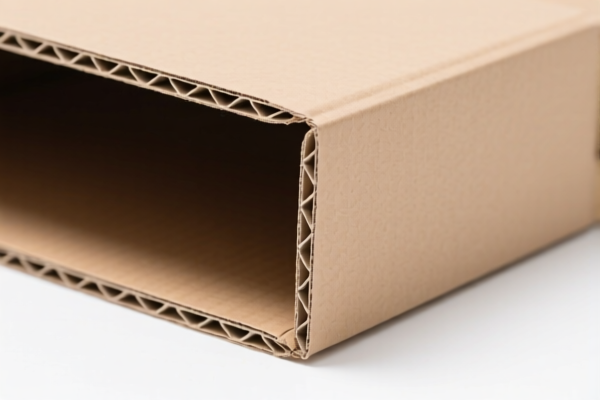
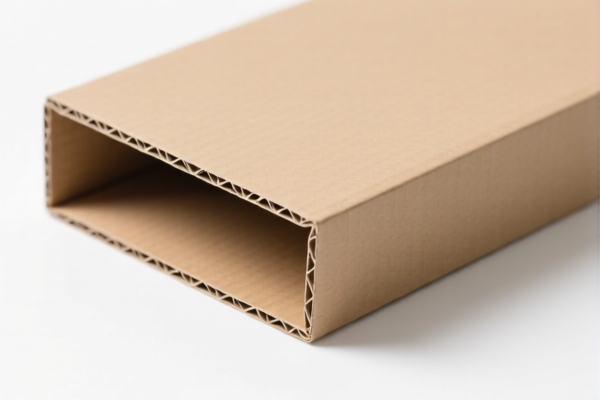
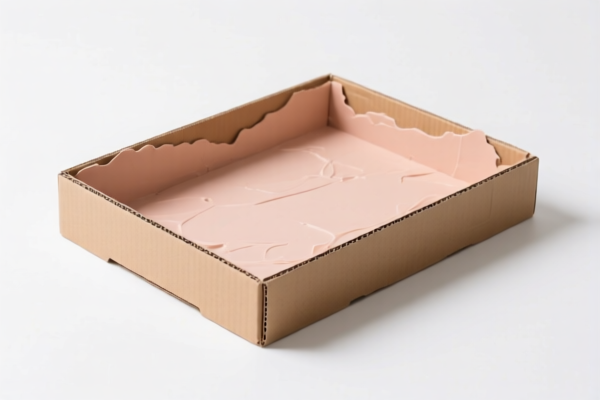
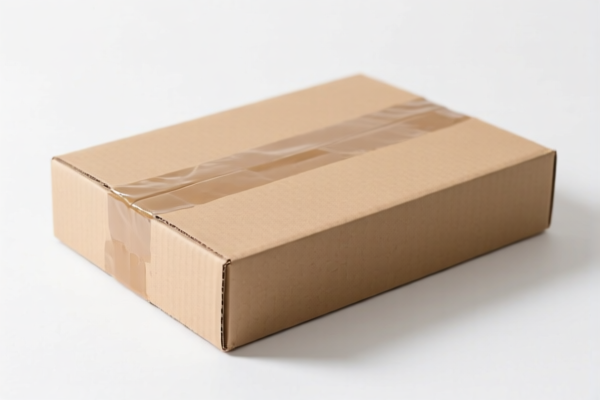
AI Analysis
📦 Corrugated Cardboard (瓦楞纸板)
🌐 HS Code Reference & Customs Clearance Guide | 2026 Latest Tariff Analysis | Professional Compliance Strategy
📌 I. Product Definition & Classification: What Exactly is "Corrugated Cardboard"?
Corrugated cardboard is one of the most critical packaging materials in global supply chains. In international trade, it is broadly categorized by its form (sheets, rolls, or containers) and its structural integrity (just the liner/fluting vs. a finished box).
Key Distinction:
- Raw Material/Sheets (4808/4805/4819.10 - Subcategories): These refer to the material itself—corrugated sheets, rolls, or boards before being converted into final boxes.
- Finished Containers (4819.10): Specifically refers to corrugated paper or fiberboard made up into containers (boxes).
⚠️ Critical Classification Point:
- If the item is a flat sheet, roll, or stack of corrugated board → It may fall under 4808.10 or 4805.19.
- If the item is a folded box, crate, or finished container → It falls under 4819.10.
- Note: All HS codes provided in the data share the same high tariff structure due to US-China trade policies.
📦 II. HS Code Classification Matrix (2026 Latest Authorized List)
| HS Code | Product Description | Application Scenario | Key Feature |
|---|---|---|---|
4819.10.00.20 |
Corrugated board packaging material | Packaged goods, shipping boxes | Container/Box category; pre-formed packaging |
4819.10.00.40 |
Corrugated board packaging material | General packaging containers | Container category; meets classification for containers made of corrugated board |
4808.10.00.00 |
Corrugated paper and paperboard | Raw material supplier, converting plants | Wave-shaped paper/board; raw sheet form |
4805.12.10.00 |
Paperboard | Industrial packaging base, stiffeners | Paperboard category; specific form description under same class |
4805.19.20.00 |
Paperboard | Rolls or sheets for conversion | Roll/Sheet form; meets paperboard material requirements |
🔍 Important Reminder:
- All five HS codes listed above carry the exact same tax rate (35.0% total).
- The difference lies in the physical form: Are you importing raw corrugated sheets (4808), paperboard rolls (4805), or finished corrugated containers (4819)?
- Misclassification Risk: Declaring a finished box as "raw paperboard" (4805) to seek a lower rate is illegal and will result in penalties, as the physical description must match the HS code.
💰 III. 2026 Tariff Rate Breakdown (Including Additional Duties)
✅ Applicable Country: United States (US)
✅ Country of Origin: China (CN)
✅ Effective Date: November 10, 2025 onwards
🎯 Unified Tax Structure for All Listed HS Codes
| Item | Content |
|---|---|
| Base Tariff Rate | 0.0% (Ad Valorem) |
| Section 301 Additional Tariff | +25.0% (USITC Footnote) |
| Section 122 Clause Tariff | +10.0% (Specific China-targeted provision) |
| Total Effective Tax Rate | 35.0% |
| Tax Calculation | CIF Value × 35% |
| De Minimis Exemption Eligible? | ❌ NO (Denied for this category) |
| Legal Basis Path | USITC:4819.10.00.20 / 4808.10.00.00 / 4805.12.10.00 / 4805.19.20.00 → FOOTNOTE:301 + SECTION:122 |
📌 Explanation:
- The 25% is the standard Section 301 tariff on Chinese-origin paper products.
- The 10% is an additional levy under "Section 122" (often related to specific trade remedies or national security provisions for certain Chinese imports).
- Total: 35%. This is a high-cost category. Profit margins must be carefully calculated.
- No De Minimis: Small shipments (under $800) do not enjoy tax-free entry for these HS codes when originating from China.
🛠️ IV. Customs Clearance Practical Advice (Pitfall Avoidance Guide)
✅ 1. Required Documentation Checklist
| Document | Mandatory? | Explanation |
|---|---|---|
| ✅ Product Specification Sheet | ✔️ | Must specify: Liner type, fluting type, weight per square meter (GSM), corrugation type (B, C, E, BC, etc.) |
| ✅ Commercial Invoice | ✔️ | Must clearly state "Corrugated Board" or "Corrugated Cardboard Containers" and HS Code |
| ✅ Packing List | ✔️ | Detail weight, dimensions, and number of pieces/rolls/sheets |
| ✅ Country of Origin Certificate | ✔️ | Crucial for confirming China origin and applying correct tariff |
| ✅ Product Photos | ✔️ | Show cross-section (to prove corrugation) and any finished form (if container) |
| ✅ Fumigation Certificate | ✔️ | If wooden pallets are used, ISPM 15 compliance is required |
⚠️ Note: For
4819.10codes (containers), customs may ask for proof that it is a "container" and not just "folded paper." Provide images showing structural integrity.
✅ 2. Declaration Strategy (Key Tips)
| Scenario | Correct Declaration | Common Mistake |
|---|---|---|
| Importing Raw Corrugated Sheets/Rolls | Use 4808.10.00.00 or 4805.19.20.00 |
Declaring as "Finished Boxes" → May trigger unnecessary inspection for container specs |
| Importing Finished Boxes/Crates | Use 4819.10.00.20 or 4819.10.00.40 |
Declaring as "Paperboard" → Will be rejected due to mismatched physical form |
| Mixed Shipment (Sheets + Boxes) | Split Line Items | Combined declaration → Risk of misclassification penalty |
🔥 Golden Rule:
"Form Dictates Code: Rolls/Sheets = 4808/4805, Boxes/Containers = 4819.10"
✅ 3. Special Cases & Optimization
| Situation | Recommendation |
|---|---|
| Non-China Origin | If corrugated board is from Vietnam, India, or EU, the 25%+10% may be waived. Provide valid COO. |
| Recycled Material | If >90% post-consumer waste, ensure documentation reflects this, as some subheadings may differ in duty (though still likely 35% if from China). |
| Customs Pre-Ruling | For large-volume importers, apply for Advance Ruling to confirm HS code and tax liability before shipment. |
🌍 V. Global Market Comparison (2026)
| Country/Region | Recommended HS Code | Tariff (China Origin) | Remarks |
|---|---|---|---|
| 🇺🇸 USA | 4819.10 / 4808 / 4805 |
35.0% (0% base + 25% Sec301 + 10% Sec122) | High barrier. Verify exact form. |
| 🇨🇳 China | 4819.10 |
0%~5% | Domestic trade or export to non-US markets. |
| 🇪🇺 EU | 4819.10 |
~5-7% | No Section 301/122. Standard EU tariff. |
| 🇲🇽 Mexico | 4819.10 |
0% (under USMCA if qualified) | Check rules of origin carefully. |
📌 Conclusion:
- US Importers Face the Highest Cost: 35% is significant.
- Supply Chain Diversification: Consider sourcing corrugated packaging from non-China countries (e.g., Vietnam, Thailand) to avoid the 35% hit.
📌 VI. Common Errors & Pitfalls (Lessons Learned)
❌ Error 1: Declaring "Corrugated Boxes" as "Paperboard" (4805)
👉 Consequence: Customs may classify it as a container (4819) with higher scrutiny, or reject the declaration due to mismatched physical description.
❌ Error 2: Ignoring the "Section 122" 10% surcharge
👉 Consequence: Underpayment of duty → Back taxes + Penalties + Release Delay.
❌ Error 3: Claiming De Minimis for small shipments of corrugated board from China
👉 Consequence: Denied. All shipments from China under these HS codes are subject to 35% tax, regardless of value.
❌ Error 4: Missing Fumigation Certification for wooden packaging
👉 Consequence: Shipment held at port for re-palletizing or fumigation → Demurrage charges.
✅ Correct Declaration Example:
"Corrugated Cardboard Sheets, Unprinted, 3-Ply BC Flute, 1200x1000mm, for Packaging Conversion"
HS Code:4808.10.00.00
Tax: 35.0%
🎯 VII. Conclusion: Professional Compliance, Cost Efficiency
🎯 Remember:
🔹 "35% is the floor for China-origin corrugated board to the US."
🔹 "Form matters: Sheets ≠ Boxes. Declare accurately."
🔹 "No De Minimis: Every shipment pays."
📌 Pro Tip:
If your corrugated packaging is sourced from non-China countries, you may qualify for 0%~5% tariffs.
For US importers, consider supply chain relocation or tariff engineering (e.g., importing flat sheets and converting locally if feasible) to mitigate the 35% impact.
📣 Immediate Action:
📞 Consult a Licensed Customs Broker
📄 Prepare Detailed Product Specs
🌐 Apply for Advance Ruling if importing high volumes
✨ Accurate Classification Saves Money!
💼 Don't Let 35% Erode Your Margins!
Customer Reviews
About HS Code Classification
The Harmonized System (HS) is an internationally standardized nomenclature developed by the World Customs Organization (WCO) to classify traded products. Over 200 countries use the HS system as the basis for customs tariffs, trade statistics, and import/export regulations.
Each HS code follows a hierarchical structure:
- Chapter (2 digits) — Broad category of goods (e.g., Chapter 84: Machinery and Mechanical Appliances)
- Heading (4 digits) — More specific grouping within the chapter
- Subheading (6 digits) — Internationally standardized breakdown, used by all WCO member countries
- National subdivisions (8-10 digits) — Country-specific extensions for further classification, such as US HTSUS 10-digit codes
Correct HS code classification is essential for smooth customs clearance, accurate duty payment, and compliance with trade regulations. Misclassification can lead to customs delays, overpayment of duties, or penalties.
When importing from CN to US, the applicable tariff rates may include:
- Most-Favored-Nation (MFN) rate — The standard duty rate applied to WTO members
- General rate — Applied to countries without trade agreements
- Trade remedy duties — Additional tariffs such as Section 301 (anti-dumping), Section 232 (national security), or countervailing duties
The information provided on this page is for reference purposes only. For official classification, please consult with your local customs authority or a licensed customs broker.