Cosmetic Bag
CN → US| HS Code | Tariff Rate | Origin | Destination | Doc |
|---|---|---|---|---|
| 4202329300 | 52.6% | CN | US | Official Doc |
| 4205006000 | 39.9% | CN | US | Official Doc |
| 4202329900 | 52.6% | CN | US | Official Doc |
| 4205008000 | 35.0% | CN | US | Official Doc |
| 9603302000 | 20.1% | CN | US | Official Doc |
Product Images
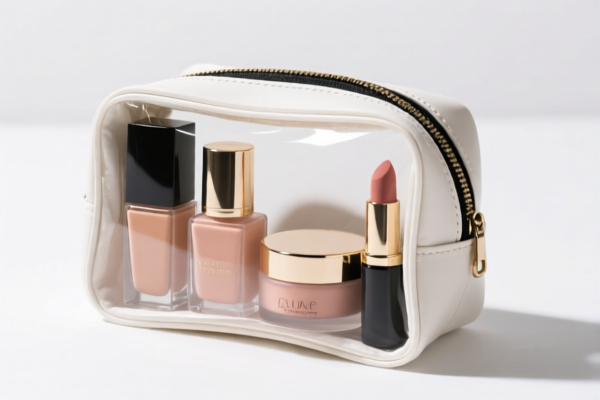
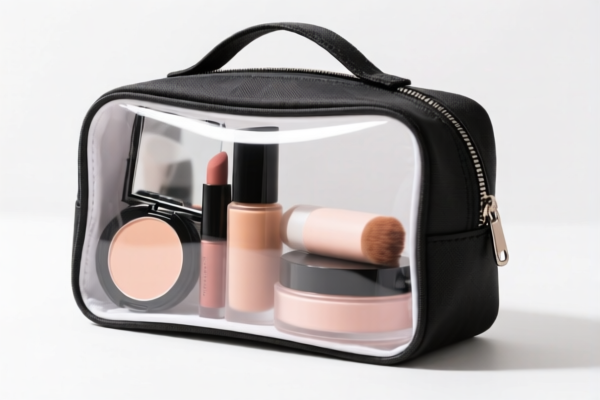
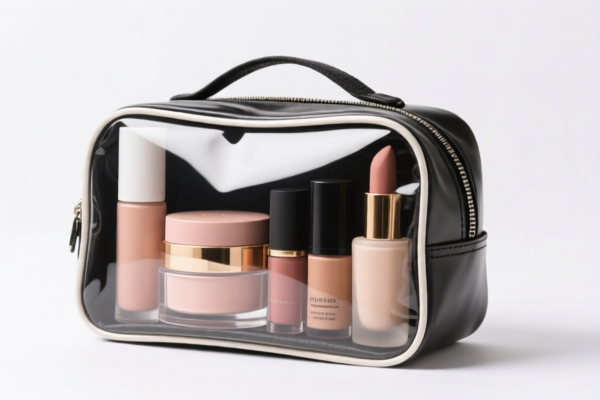
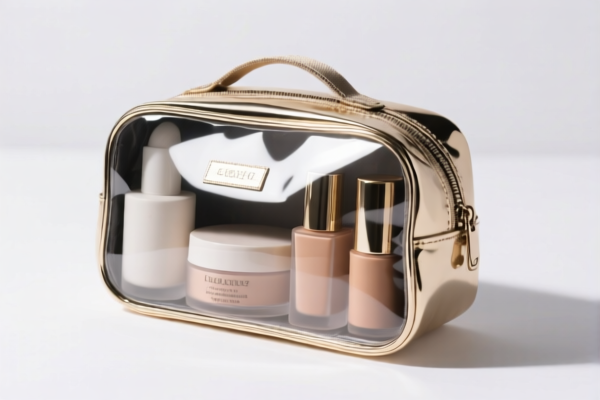
AI Analysis
👜 Cosmetic Bags & Toiletry Cases (Personal Toiletry Cases)
🌐 HS Code Reference & Customs Clearance Guide | 2026 Latest Tariff Analysis | Professional Clearance Strategy
📌 1. Product Definition and Classification: Do You Really Understand "Cosmetic Bags"?
A Cosmetic Bag is a portable container used to store personal care items, makeup, toiletries, or small accessories. In international trade, its classification depends heavily on two factors:
1. Outer Surface Material (Textile, Leather, Plastic, etc.)
2. Specific Use/Shape (Is it a general pouch, a wallet, or a specialized tool holder?)
⚠️ Key Distinction Point:
- If the outer surface is Textile/Synthetic Fabric and used for carrying general items → Likely 4202.32 (Textile Bags).
- If the outer surface is Leather/Synthetic Leather → Likely 4205 (Other Leather Articles) or 4202 (Leather Bags).
- If it contains Bristles/Brushes as the primary feature → Might fall under 9603 (Brooms/Brushes), though rare for pure bags.
📦 2. HS Code Classification Details (2026 Latest Tariff Authority Comparison)
| HS Code | Product Description | Application Scenario | Outer Material |
|---|---|---|---|
4202.32.99.00 |
Articles of apparel and clothing accessories, not elsewhere specified or included: Other: With outer surface of textile materials: Other | General cosmetic pouches, vanity cases, toiletry bags made of fabric/canvas. | ✅ Textile |
4202.32.93.00 |
Articles of apparel and clothing accessories: With outer surface of textile materials: Other: Other | Similar to above, specific sub-category for textile-based personal containers. | ✅ Textile |
4205.00.80.00 |
Other articles of leather or composition leather | Leather or synthetic leather cosmetic cases, wallets, or pouches that don't fit specific bag definitions. | ✅ Leather/Synthetic |
4205.00.60.00 |
Other articles of leather or composition leather: Other | Reptile skin leather goods or other specific leather articles for personal use. | ✅ Leather/Reptile |
9603.30.20.00 |
Brooms, brushes...: Paint brushes... and other brushes for applying cosmetics: Cosmetic brushes | Note: If the item is primarily a brush rather than a bag, or a case specifically for holding brushes. | ⚠️ Tool/Brush |
🔍 Important Reminder:
- Most standard cosmetic bags fall under 4202.32 if they are fabric-based.
- Leather cosmetic cases often fall under 4205 if they are not classified as "bags with handles/straps" under Chapter 42 Headings 42.02.
- Do not misclassify a fabric bag as leather just because of lining! The outer surface dictates the chapter.
💰 3. 2026 Latest Tariff Rate Breakdown (Including Additional Duties)
✅ Applicable Country: United States (US)
✅ Origin: China (CN)
✅ Effective Date: From November 10, 2025 (including subsequent imports)
🎯 1. 4202.32.99.00 & 4202.32.93.00 —— Textile Cosmetic Bags
| Item | Detail |
|---|---|
| Base Tariff Rate | 17.6% |
| Section 301 Additional Duty | +25.0% |
| IEEPA Additional Duty (122 Clause) | +10.0% |
| Total Tax Rate | 52.6% |
| Tax Calculation | CIF Value × 52.6% |
| De Minimis Exemption Available? | ❌ NO (deny_de_minimis) |
| Legal Basis Path | USITC:4202.32.99.00 → FOOTNOTE:301 → IEEPA:9903 |
📌 Explanation:
- Textile-based personal care containers are subject to high base duties (17.6%) plus Section 301 tariffs (25%) and IEEPA surcharges (10%).
- Total burden: 52.6%. This is extremely high for low-value items.
- Critical: Do not attempt to ship under $800 (De Minimis) if flagged, as these items are explicitly excluded from the $800 exemption for Chinese origin.
🎯 2. 4205.00.80.00 & 4205.00.60.00 —— Leather Cosmetic Cases
| Item | Detail |
|---|---|
| Base Tariff Rate | 0.0% (for 80) / 4.9% (for 60) |
| Section 301 Additional Duty | +25.0% |
| IEEPA Additional Duty (122 Clause) | +10.0% |
| Total Tax Rate | 35.0% (for 80) / 39.9% (for 60) |
| Tax Calculation | CIF Value × Total Rate |
| De Minimis Exemption Available? | ❌ NO |
| Legal Basis Path | USITC:4205.00 → FOOTNOTE:301 → IEEPA:9903 |
📌 Explanation:
- Leather articles often have lower or zero base tariffs (especially under 4205.00.80.00 "Other"), making the total tax rate lower (35-40%) compared to textile bags (52.6%).
- However: You must prove the material is truly leather or composition leather. If it's PVC or fabric, you cannot use this code.
🎯 3. 9603.30.20.00 —— Cosmetic Brush Cases/Brushes
| Item | Detail |
|---|---|
| Base Tariff Rate | 2.6% |
| Section 301 Additional Duty | +7.5% |
| IEEPA Additional Duty (122 Clause) | +10.0% |
| Total Tax Rate | 20.1% |
| Tax Calculation | CIF Value × 20.1% |
| De Minimis Exemption Available? | ❌ NO |
| Legal Basis Path | USITC:9603.30.20.00 → FOOTNOTE:301 → IEEPA:9903 |
📌 Explanation:
- If the product is primarily makeup brushes or a case specifically defined as a holder for brooms/brushes, the tariff is significantly lower (20.1%).
- Risk: Customs may reject this classification if the item is a general-purpose bag. It must be clearly a "brush holder" or "brush" to qualify.
🛠️ 4. Customs Clearance Practical Advice (Battle-Tested Pitfall Avoidance)
✅ 1. Document Preparation Checklist (Non-Negotiable)
| Document | Required? | Explanation |
|---|---|---|
| ✅ Product Specification Sheet | ✔️ | Must clearly state Outer Surface Material (e.g., "100% Polyester," "PU Leather"). |
| ✅ Material Composition Label | ✔️ | Photo of the interior/exterior material label is crucial for material verification. |
| ✅ Commercial Invoice | ✔️ | Describe item as "Cosmetic Bag, Textile Outer Surface" or "Leather Cosmetic Case." Avoid vague terms like "Gift Set." |
| ✅ Product Photos | ✔️ | Show closure type (zipper, snap), handles/straps, and interior compartments. |
| ✅ Certificate of Origin (CO) | ✔️ | Required for origin verification. |
✅ 2. Declaration Tips (Critical Rules)
🔥 "Material is King, Shape is Queen!"
| Scenario | Correct Declaration | Wrong Action |
|---|---|---|
| Fabric Cosmetic Bag | 4202.32.99.00 |
Mislabeling as "Leather" → Customs audit + Penalties |
| PU/Artificial Leather Bag | 4205.00.80.00 |
Calling it "Fabric" → Higher tax (52.6% vs 35%) |
| Bag with Brushes Inside | Bag (4202) |
Classifying whole set as 9603 → Risk of rejection if bag is main component |
| Small Pouch (No Zipper) | Check 4205 or 4202 |
Using 9603 → Rejected (not a brush) |
✅ 3. Special Case Handling
| Scenario | Recommendation |
|---|---|
| Mixed Material Bags | Use the dominant outer surface material. If fabric >50%, use 4202. If leather >50%, use 4205. |
| OEM Private Label | Ensure supplier provides material test reports to prove "Leather" vs "Synthetic Leather." |
| Gift Sets (Bag + Products) | Declare the bag separately if possible, or declare the whole set under the bag's HS code if the bag is the essential character. |
| De Minimis Evasion Attempts | Do Not Split Shipments. US Customs monitors repetitive low-value shipments from China. These items are not eligible for the $800 exemption. |
🌍 5. Global Market Customs Comparison (2026 Latest)
| Country/Region | Recommended HS Code | Est. Total Tariff (China Origin) | Key Certification/Notes |
|---|---|---|---|
| 🇺🇸 USA | 4202.32.99.00 (Textile) |
52.6% | No De Minimis. High risk of audit. |
| 🇪🇺 EU | 4202.32.90 |
~4-6% | VAT applies (19-27%). No 301 tariffs. |
| 🇨🇳 China | 4202.32.99 |
~10-15% | Import VAT 13%. |
| 🇯🇵 Japan | 4202.32.00 |
~10% | Consumption Tax 10%. |
📌 Conclusion:
- USA is the most expensive market for cosmetic bags due to Section 301 + IEEPA tariffs.
- EU/Asia are much more tariff-friendly. Consider supply chain diversification (e.g., Vietnam, Thailand) for US-bound goods to avoid high duties.
📌 6. Common Mistakes & Pitfalls (Lessons Learned the Hard Way)
❌ Mistake 1: Calling a Fabric Bag a "Leather Case"
👉 Consequence: Customs requests material proof → Delay in clearance → Potential fines for misdeclaration.
❌ Mistake 2: Using De Minimis ($800) for Textile Bags from China
👉 Consequence: Package seized, taxed retroactively at 52.6% + penalties. This exemption does NOT apply.
❌ Mistake 3: Vague Description "Makeup Organizer"
👉 Consequence: Customs cannot determine HS Code → Inspection hold for weeks.
❌ Mistake 4: Ignoring the Outer Surface
👉 Consequence: Misclassification. E.g., a bag with a leather trim but fabric body is still Fabric.
✅ Correct Action:
"Cosmetic Toiletry Bag, Outer Surface: 100% Nylon, Interior: Polyester Lining, Zipper Closure, Model XYZ, Made in China"
🎯 7. Conclusion: Precise Classification Saves Money!
🎯 Remember the Golden Rules:
🔹 "Fabric = 52.6% Tax. Leather = 35-40% Tax. Brushes = 20.1% Tax."
🔹 "No De Minimis for China-origin bags in the US!"
🔹 "Material Definition is Key: Outer Surface Wins!"
📌 Pro Tip:
If you are shipping large volumes to the US, consider:
1. Supply Chain Shift: Source from Vietnam/Mexico to bypass US-China tariffs.
2. Advance Ruling: Request a Binding Ruling from US CBP if your material composition is complex.
3. Duty Drawback: If you re-export goods, look into duty drawback programs.
📣 Immediate Action:
📞 Consult a licensed customs broker for your specific product material reports.
🚀 Get your HS Code right before production to avoid massive tax liabilities!
✨ Professional clearance starts with accurate classification!
💼 Your bottom line depends on this 6-digit number!
Customer Reviews
About HS Code Classification
The Harmonized System (HS) is an internationally standardized nomenclature developed by the World Customs Organization (WCO) to classify traded products. Over 200 countries use the HS system as the basis for customs tariffs, trade statistics, and import/export regulations.
Each HS code follows a hierarchical structure:
- Chapter (2 digits) — Broad category of goods (e.g., Chapter 84: Machinery and Mechanical Appliances)
- Heading (4 digits) — More specific grouping within the chapter
- Subheading (6 digits) — Internationally standardized breakdown, used by all WCO member countries
- National subdivisions (8-10 digits) — Country-specific extensions for further classification, such as US HTSUS 10-digit codes
Correct HS code classification is essential for smooth customs clearance, accurate duty payment, and compliance with trade regulations. Misclassification can lead to customs delays, overpayment of duties, or penalties.
When importing from CN to US, the applicable tariff rates may include:
- Most-Favored-Nation (MFN) rate — The standard duty rate applied to WTO members
- General rate — Applied to countries without trade agreements
- Trade remedy duties — Additional tariffs such as Section 301 (anti-dumping), Section 232 (national security), or countervailing duties
The information provided on this page is for reference purposes only. For official classification, please consult with your local customs authority or a licensed customs broker.