Cosmetic Filter Paper
CN → US| HS Code | Tariff Rate | Origin | Destination | Doc |
|---|---|---|---|---|
| 5601210090 | 38.6% | CN | US | Official Doc |
| 5601210010 | 38.6% | CN | US | Official Doc |
| 4818200040 | 35.0% | CN | US | Official Doc |
| 4818900080 | 17.5% | CN | US | Official Doc |
| 3926909989 | 22.8% | CN | US | Official Doc |
Product Images
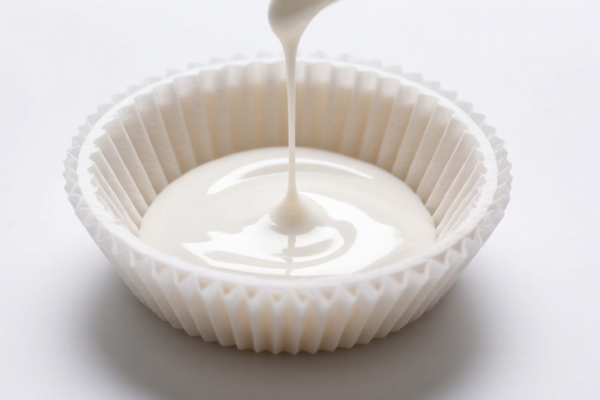
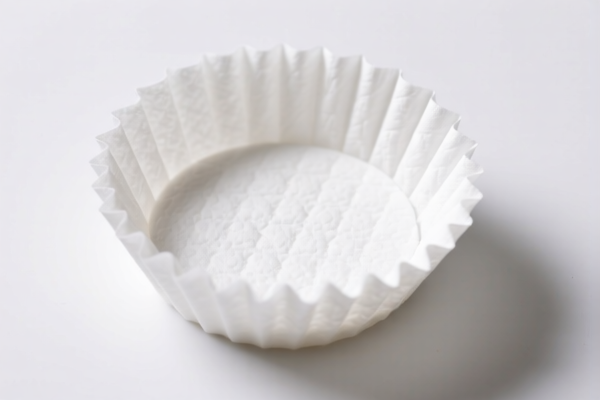
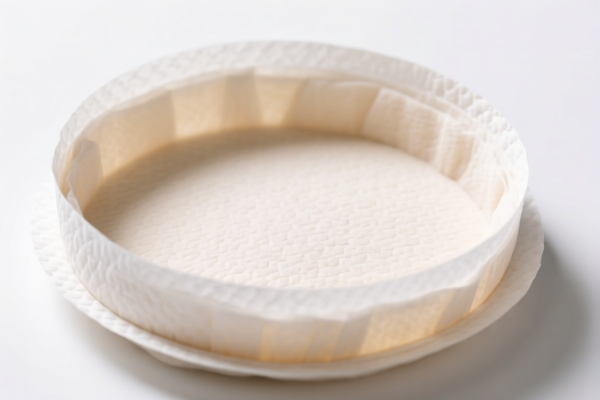
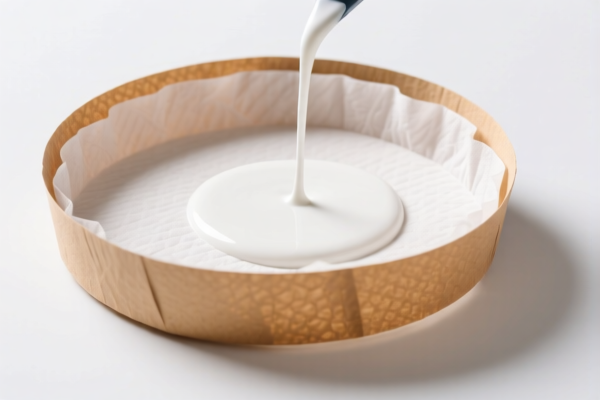
AI Analysis
💄 Cosmetic Filter Paper: The Unsung Hero of Modern Skincare
🌐 HS Code Reference & Customs Clearance Guide | 2026 Latest Tariff Analysis | Professional Entry Strategy
📌 I. Product Definition & Classification: Do You Really Know "Cosmetic Filter Paper"?
Cosmetic Filter Paper, often referred to as "blotting paper" or "absorbent paper sheets," is a critical raw material or finished product in the personal care industry. It is used to absorb excess oil, sweat, or moisture from the skin or packaging. In international trade, its classification depends strictly on its material composition, fiber content, and final form.
Two Main Categories:
-
Cotton-Based Filter Paper: Made primarily from cotton fibers, often with a衬垫 (padded) structure for enhanced absorption and softness.
→ Typically classified under Chapter 56 (Nonwovens, Felt, etc.) or Chapter 48 (Paper) depending on fiber ratio and processing. -
Cellulose/Fiber-Based Filter Paper: Made from wood pulp, viscose, or other cellulose fibers, often in sheet or block form.
→ Typically classified under Chapter 48 (Paper and paperboard) if primarily cellulose-based.
⚠️ Key Distinction Point:
- If the product is >50% cotton and has a padded/nonwoven structure → Chapter 56
- If the product is primarily cellulose/wood pulp and in sheet/block form → Chapter 48
- If it contains plastic/synthetic fibers mixed in → Chapter 39 or Chapter 48 depending on dominant material
📦 II. HS Code Classification Matrix (2026 Latest Tariff Authority Comparison)
| HS Code | Product Description | Material Basis | Form/Structure | Primary Use |
|---|---|---|---|---|
5601.21.00.90 |
Cotton-based filter paper, padded material, not elsewhere specified | Cotton (>50%) | Padded/Nonwoven | Facial cleansing, oil absorption |
5601.21.00.10 |
Cotton-based filter paper, made of cotton fibers, in sheet/block form | Cotton | Sheet/Block | Personal care, cosmetic applications |
4818.20.00.40 |
Paper/fiber-based filter paper, for facial cleansing | Cellulose/Paper | Sheet | Facial wipes, cleansing pads |
4818.90.00.80 |
Cellulose fiber products, for hygiene/personal care | Wood Pulp/Viscose | Sheet/Pad | Sanitary pads, cosmetic filters |
3926.90.99.89 |
Plastic/synthetic fiber mixed filter paper, not elsewhere specified | Plastic/Synthetic Blend | Various | Industrial or mixed-use filters |
🔍 Critical Reminder:
- Cotton-dominant products go to 5601; Cellulose-dominant go to 4818; Plastic-mixed may go to 3926.
- Misclassification can lead to 25–38% tariff penalties.
- Always verify fiber content % and physical structure (padded vs. flat sheet).
💰 III. 2026 Latest Tariff Rate Breakdown (Including Additional Duties & Policy Surcharges)
✅ Applicable Country: United States (US)
✅ Country of Origin: China (CN)
✅ Effective Date: From November 10, 2025 (and subsequent imports)
🎯 1. 5601.21.00.90 —— Cotton-Based Filter Paper, Padded (Not Elsewhere Specified)
| Item | Details |
|---|---|
| Base Duty Rate | 3.6% (ad valorem) |
| USITC Surcharge | +25% (under USITC Footnote 9903.88.01, Section 301) |
| IEEPA Surcharge | +10% (for Chinese/Hong Kong goods, under IEEPA) |
| Total Tax Rate | 38.6% |
| Calculation Method | CIF Value × 38.6% |
| De Minimis Exemption? | ❌ No (deny_de_minimis) |
| Legal Authority Path | IEEPA:9903.01.25 → USITC:5601.21.00.90 → FOOTNOTE:9903.88.01 |
📌 Explanation:
- 3.6% base is standard for cotton nonwovens.
- +25% USITC is a Section 301 surcharge on Chinese goods.
- +10% IEEPA is an emergency economic surcharge on Chinese imports.
- Total 38.6% is high; requires precise documentation to avoid penalties.
🎯 2. 5601.21.00.10 —— Cotton-Based Filter Paper, Sheet/Block Form
| Item | Details |
|---|---|
| Base Duty Rate | 3.6% |
| USITC Surcharge | +25% |
| IEEPA Surcharge | +10% |
| Total Tax Rate | 38.6% |
| Calculation Method | CIF Value × 38.6% |
| De Minimis Exemption? | ❌ No |
| Legal Authority Path | IEEPA:9903.01.25 → USITC:5601.21.00.10 → FOOTNOTE:9903.88.01 |
📌 Note:
- Same tax rate as5601.21.00.90due to identical material base (cotton).
- Applies to all cotton-based filter papers regardless of sheet/block form.
🎯 3. 4818.20.00.40 —— Paper/Fiber-Based Filter Paper, Facial Cleansing
| Item | Details |
|---|---|
| Base Duty Rate | 0.0% |
| USITC Surcharge | +25% |
| IEEPA Surcharge | +10% |
| Total Tax Rate | 35.0% |
| Calculation Method | CIF Value × 35.0% |
| De Minimis Exemption? | ❌ No |
| Legal Authority Path | IEEPA:9903.01.25 → USITC:4818.20.00.40 → FOOTNOTE:9903.88.01 |
📌 Explanation:
- 0% base for paper/cellulose products.
- +25% USITC and +10% IEEPA still apply.
- Total 35.0% is slightly lower than cotton-based (38.6%) due to zero base duty.
🎯 4. 4818.90.00.80 —— Cellulose Fiber Products, Hygiene/Personal Care
| Item | Details |
|---|---|
| Base Duty Rate | 0.0% |
| USITC Surcharge | +7.5% |
| IEEPA Surcharge | +10% |
| Total Tax Rate | 17.5% |
| Calculation Method | CIF Value × 17.5% |
| De Minimis Exemption? | ❌ No |
| Legal Authority Path | IEEPA:9903.01.25 → USITC:4818.90.00.80 → FOOTNOTE:9903.88.01 |
📌 Critical Note:
- Only 7.5% USITC surcharge applies here (not 25%).
- This is a lower-tier surcharge for certain cellulose hygiene products.
- Total 17.5% is significantly cheaper → optimal for cost-sensitive shipments.
🎯 5. 3926.90.99.89 —— Plastic/Synthetic Fiber Mixed Filter Paper
| Item | Details |
|---|---|
| Base Duty Rate | 5.3% |
| USITC Surcharge | +7.5% |
| IEEPA Surcharge | +10% |
| Total Tax Rate | 22.8% |
| Calculation Method | CIF Value × 22.8% |
| De Minimis Exemption? | ❌ No |
| Legal Authority Path | IEEPA:9903.01.25 → USITC:3926.90.99.89 → FOOTNOTE:9903.88.01 |
📌 Explanation:
- Plastic/synthetic blends have higher base duty (5.3%).
- 7.5% USITC surcharge applies (same as cellulose hygiene products).
- Total 22.8% is moderate; suitable for mixed-material products.
🛠️ IV. Customs Clearance Practical Advice (Battle-Tested Pitfall Avoidance)
✅ 1. Required Documentation Checklist (All Mandatory)
| Document | Required? | Purpose |
|---|---|---|
| ✅ Product Spec Sheet | ✔️ | Details fiber content, dimensions, absorption rate |
| ✅ Fiber Composition Report | ✔️ | Critical: Must specify % cotton vs. cellulose vs. plastic |
| ✅ Product Photos (Front/Back/Label) | ✔️ | Show packaging, usage, and branding |
| ✅ Third-Party Test Report | ✔️ | CE, RoHS, FDA (if for cosmetic contact) |
| ✅ Commercial Invoice | ✔️ | Clearly state "Cosmetic Filter Paper" with HS Code |
| ✅ Packing List | ✔️ | Detail quantities, weights, and dimensions |
| ✅ Certificate of Origin (CO) | ✔️ | If non-Chinese origin, may qualify for lower rates |
🔥 Golden Rule:
"Fiber % defines the HS Code, HS Code defines the tariff, tariff defines the profit!"
✅ 2. Declaration Best Practices (Key Mnemonic)
🔥 "Cotton 56, Cellulose 48, Plastic 39; Check % first, declare right!"
| Scenario | Correct HS Code | Incorrect Declaration | Consequence |
|---|---|---|---|
| >50% Cotton, Padded | 5601.21.00.90 or .10 |
Declared as Paper | 38.6% vs 35%/17.5% → Overpayment |
| Primarily Wood Pulp, Sheet | 4818.20.00.40 |
Declared as Cotton | 35.0% vs 38.6% → Minor overpayment |
| Hygiene Cellulose Pads | 4818.90.00.80 |
Declared as Cotton | 17.5% vs 38.6% → HUGE SAVINGS if correct |
| Plastic-Blend Filters | 3926.90.99.89 |
Declared as Paper | 22.8% vs 35% → Significant overpayment |
✅ 3. Special Cases Handling
| Scenario | Recommendation |
|---|---|
| OEM Cosmetic Filters | Provide client contract + design specs to prove end-use |
| Pre-Moistened Filters | Declare as "wet wipes" if >50% water → May fall under Chapter 34 or Chapter 48 depending on base |
| Export to Non-China Origin | If made in Vietnam/Thailand → Apply for IEEPA Exemption → 0–5% total |
| Mixed Material (Cotton + Plastic) | Declare based on dominant material (>50%); provide lab report |
🌍 V. Global Market Comparison (2026 Latest)
| Country/Region | Recommended HS Code | Total Tax Rate (China Origin) | Certification Required | Notes |
|---|---|---|---|---|
| 🇺🇸 USA | 4818.90.00.80 (Optimal) |
17.5% | FDA, CE, RoHS | 5601 = 38.6%; 4818.20 = 35% |
| 🇨🇳 China | 4818.90.00.80 |
7.5% | CCC, RoHS | No additional surcharges |
| 🇪🇺 EU | 4818.90.00.80 |
0% | CE, REACH | No tariffs for cosmetics filters |
| 🇬🇧 UK | 4818.90.00.80 |
0% | UKCA, REACH | Post-Brexit zero tariff for cosmetics |
| 🇯🇵 Japan | 4818.90.00.80 |
0% | PSE, FSC | No surcharges |
📌 Conclusion:
- USA is the most expensive market due to 25%+10% surcharges.
- EU, UK, Japan, China offer 0–7.5% → Optimize supply chain for non-US markets if possible.
- Cellulose hygiene-grade (4818.90.00.80) is the most cost-effective for US imports (17.5% vs 38.6%).
📌 VI. Common Mistakes & Pitfall Guide (Lessons from the Field)
❌ Mistake 1: Declaring cotton filters as "paper" to avoid 25% USITC
👉 Consequence: Customs audits → Fines + Retrospective Tariff + Delay
❌ Mistake 2: Not providing fiber composition report
👉 Consequence: Customs assigns worst-case HS Code → 38.6% instead of 17.5%
❌ Mistake 3: Mixing "wet" and "dry" filters in one shipment without declaration
👉 Consequence: Wet filters may fall under Chapter 34 (Soaps/Cleansers) → Different tariff & regulations
❌ Mistake 4: Ignoring IEEPA 10% surcharge in cost calculation
👉 Consequence: Unexpected profit erosion → Price competitiveness lost
✅ Correct Approach:
"Cosmetic Filter Paper, 100% Viscose, Sheet Form, for Facial Cleansing, CE/RoHS Certified, Made in China"
🎯 VII. Conclusion: Precision Classification = Maximum Profit
🎯 Remember the Mantra:
🔹 "Cotton 56, Cellulose 48, Plastic 39; Check fiber %, save 20%!"
🔹 "IEEPA 10% + USITC 7.5–25% = Profit Killer if misclassified!"
📌 Pro Tip:
If your cosmetic filter paper is produced in Vietnam, Thailand, or Malaysia, apply for IEEPA Exemption → Total tax drops to 0–5%.
Recommend Advance Ruling Application to U.S. CBP for binding classification and risk mitigation.
📣 Immediate Action Required:
📞 Engage a licensed customs broker + Provide fiber test report + File for HS Code Advance Ruling
🚀 Ensure smooth customs clearance, maximize margins, and scale global sales!
✨ Professional clearance starts with precise classification!
💼 Every percentage point saved is profit earned!
Customer Reviews
About HS Code Classification
The Harmonized System (HS) is an internationally standardized nomenclature developed by the World Customs Organization (WCO) to classify traded products. Over 200 countries use the HS system as the basis for customs tariffs, trade statistics, and import/export regulations.
Each HS code follows a hierarchical structure:
- Chapter (2 digits) — Broad category of goods (e.g., Chapter 84: Machinery and Mechanical Appliances)
- Heading (4 digits) — More specific grouping within the chapter
- Subheading (6 digits) — Internationally standardized breakdown, used by all WCO member countries
- National subdivisions (8-10 digits) — Country-specific extensions for further classification, such as US HTSUS 10-digit codes
Correct HS code classification is essential for smooth customs clearance, accurate duty payment, and compliance with trade regulations. Misclassification can lead to customs delays, overpayment of duties, or penalties.
When importing from CN to US, the applicable tariff rates may include:
- Most-Favored-Nation (MFN) rate — The standard duty rate applied to WTO members
- General rate — Applied to countries without trade agreements
- Trade remedy duties — Additional tariffs such as Section 301 (anti-dumping), Section 232 (national security), or countervailing duties
The information provided on this page is for reference purposes only. For official classification, please consult with your local customs authority or a licensed customs broker.