Cosmetic Grade Cotton Linter Pulp
CN → USProduct Images
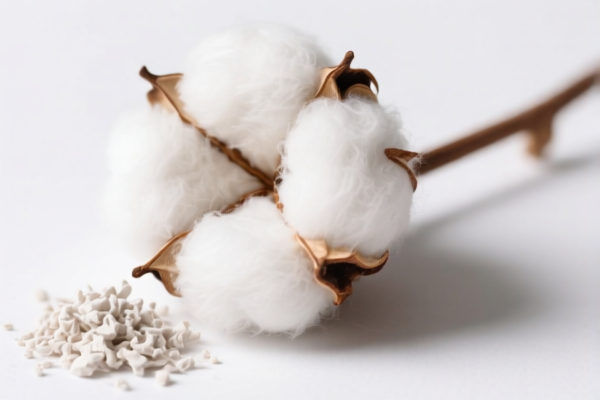
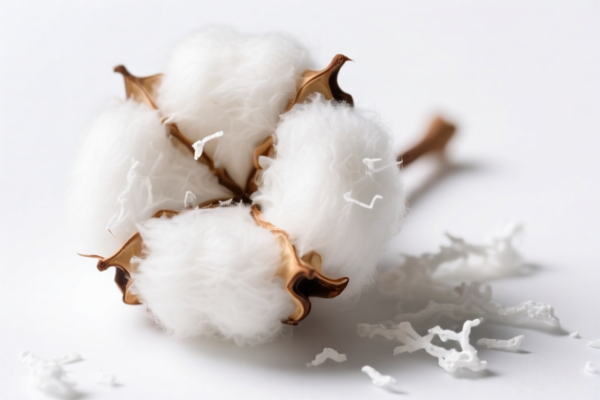
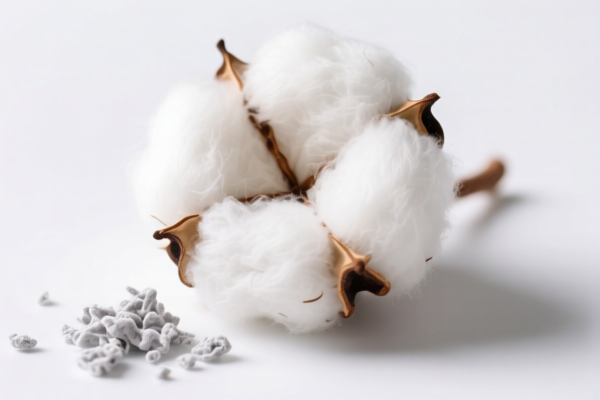
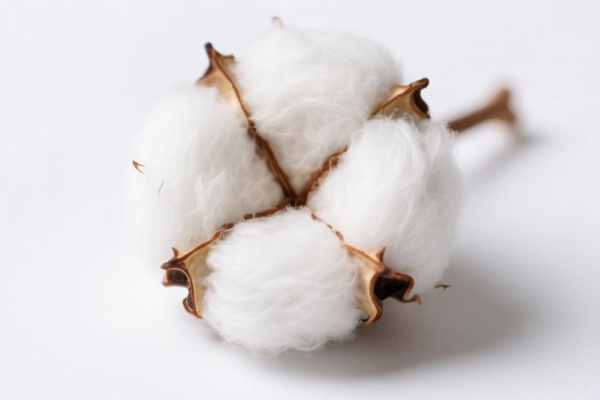
AI Analysis
🌿 Cosmetic Grade Cotton Linter Pulp (High-Purity Cellulose)
🌐 HS Code Reference & Customs Clearance Guide | 2026 Latest Tariff Analysis | Professional Compliance Strategy
📌 I. Product Definition & Classification: What Exactly is "Cotton Linter"?
Cotton Linter Pulp is the fine, short cotton fibers remaining on the cottonseed after the primary ginning process. When processed to Cosmetic Grade, it refers to highly purified, bleached, and standardized cellulose fibers used as a binder, thickener, bulking agent, or texture modifier in personal care products (e.g., facial masks, creams, powders, and toothpaste).
In international trade, it is NOT classified as raw agricultural cotton (Chapter 52) nor as simple textile waste. It is a chemically processed cellulose product.
⚠️ Critical Distinction:
- If the product is raw, unbleached, or merely cleaned linters → Likely Chapter 52 (Cotton Waste/Linters).
- If the product is bleached, purified, and standardized for industrial/cosmetic use → It is a Cellulose Pulp → Chapter 47 or Chapter 35 (depending on further processing).
- Cosmetic Grade implies high purity, low ash, and specific viscosity, pushing it towards Subheading 4706 (Chemical wood pulp) or 3505 (Dextrins/Modified Starches/Cellulose derivatives) if heavily modified. However, pure linter pulp usually falls under 4706.20.
📦 II. HS Code Classification Details (2026 Authoritative Tariff Table)
| HS Code | Product Description | Applicability | Key Characteristics |
|---|---|---|---|
| 4706.20.90.00 | Pulp obtained from other vegetable fibers (e.g., cotton linters), other | Primary Recommendation | Bleached or unbleached cotton linter pulp; high purity; cosmetic/pharmaceutical grade. |
| 4706.10.00.00 | Chemical pulp of wood fibers, dissolving grade | Alternative if processed extensively | If the linter is chemically dissolved to form a precursor for rayon or other cellulose ethers. |
| 3505.10.00.00 | Dextrins and other modified starches; glues based on starches | Incorrect for Pure Pulp | Only if mixed with starch or heavily modified into a glue-like binder. |
| 3824.99.99.90 | Prepared binders for foundry molds... other chemical products | Rare Case | If mixed with other proprietary cosmetic binders (not pure linter). |
| 9619.00.00.00 | Sanitary towels and tampons, napkins and napkin liners for babies and similar articles | Incorrect | Only for finished hygiene products, not raw pulp. |
🔍 Key Reminder:
- 4706.20.90.00 is the most accurate code for pure, processed cotton linter pulp intended for non-textile uses (cosmetics, pharma, food).
- Do NOT classify under 5203 (Cotton Waste) if the product is bleached and purified to cosmetic standards, as customs may view it as a chemical product rather than a textile waste.
- If the product is hydroxyethyl cellulose (HEC) or other derivatives, it falls under 3906 or 3824, not 4706.
💰 III. 2026 Latest Tariff Rate Breakdown (Including Additional Taxes)
✅ Destination: United States (US)
✅ Origin: China (CN)
✅ Effective Date: Post-November 2025 (Current 2026 Rates)
🎯 1. 4706.20.90.00 —— Pulp from Other Vegetable Fibers (Cotton Linter)
| Item | Content |
|---|---|
| Base Tariff Rate | 3.7% (Ad Valorem) |
| USITC Additional Duty (Section 301) | +7.5% (Footnote 9903.88.01 applies to many chemical/vegetable fiber products) |
| IEEPA Additional Duty (China-Specific) | +10% (Effective Nov 2025, applies to most Chinese-origin goods not on exemption lists) |
| Total Tariff Rate | 21.2% |
| Tax Calculation | CIF Value × 21.2% |
| De Minimis Exemption | ❌ Not Applicable (Value usually exceeds $800) |
| Legal Basis Path | IEEPA:9903.01.25 → USITC:4706.20.90.00 → FOOTNOTE:9903.88.01 |
📌 Explanation:
- Base 3.7%: Standard MFN rate for vegetable fiber pulp.
- Section 301 (7.5%): Applies to many chemical and fiber-processing products from China.
- IEEPA (10%): Broad-based tariff on Chinese goods to address trade imbalances.
- Total 21.2%: Significantly higher than the base rate. This is a cost-sensitive product.
🎯 2. Alternative: 3505.10.00.00 (If Modified/Blended)
| Item | Content |
|---|---|
| Base Tariff Rate | 5.6% |
| USITC Additional Duty | +7.5% |
| IEEPA Additional Duty | +10% |
| Total Tariff Rate | 23.1% |
📌 Note: If the linter pulp is chemically modified (e.g., carboxymethyl cellulose), it may fall here. The tariff is slightly higher, but classification is stricter.
🛠️ IV. Customs Clearance Practical Advice (Avoid Pitfalls)
✅ 1. Required Documentation Checklist (Non-Negotiable)
| Document | Required | Notes |
|---|---|---|
| ✅ Certificate of Origin (CO) | ✔️ | Must explicitly state "China". |
| ✅ Material Safety Data Sheet (MSDS) | ✔️ | To prove non-hazardous nature. |
| ✅ Product Specification Sheet | ✔️ | Must include: Purity %, Ash Content, Viscosity, Bleaching Method, Intended Use: Cosmetics/Pharma. |
| ✅ Processing Flowchart | ✔️ | Crucial to prove it is pulp (4706) and not waste (5203). Show ginning → cleaning → bleaching → drying. |
| ✅ Commercial Invoice | ✔️ | Describe as "Cotton Linter Pulp, Cosmetic Grade, Bleached Cellulose Fibers" – DO NOT use "Cotton Waste". |
| ✅ FDA Prior Notice | ✔️ | Required for food/cosmetic-related imports in the US. |
✅ 2. Classification Strategy (Key Keywords)
🔥 Golden Rule: "Purified Pulp = 4706; Raw Waste = 5203. Choose 4706 for Cost & Compliance."
| Scenario | Correct HS Code | Risk of Wrong Code |
|---|---|---|
| Bleached, purified linter for cosmetics | 4706.20.90.00 |
✅ Safe. 21.2% total. |
| Raw, unbleached linter from gin | 5203.00.00.00 |
⚠️ Higher scrutiny. May be seen as waste. 21.2% total. |
| Hydroxyethyl Cellulose (HEC) | 3906.90.90.00 |
❌ Wrong. This is a polymer, not pulp. Different tariff. |
| Cotton waste used for cleaning rags | 5203.00.00.00 |
⚠️ Not for cosmetics. If used for cosmetics, customs may reject under 5203. |
📌 Why 4706 is Better:
- Clearer definition as an industrial/chemical feedstock.
- Easier to justify high purity and cosmetic grade.
- Less likely to be confused with textile waste or agricultural by-products.
✅ 3. Special Cases
| Case | Handling Advice |
|---|---|
| OEM Private Label | Provide client authorization if brand is restricted. |
| Mixed with Other Binders | If >50% linter pulp, still 4706. If >50% synthetic binder, may be 3824. |
| Samples for Testing | Declare as "Samples, No Commercial Value" but still subject to duty if value exceeds $800 cumulative. |
| FDA Registration | Ensure the facility where linter is processed is FDA-registered if it involves direct cosmetic ingredient mixing. |
🌍 V. Global Market Comparison (2026 Latest)
| Country/Region | Recommended HS Code | Tariff | Certification | Notes |
|---|---|---|---|---|
| 🇺🇸 USA | 4706.20.90.00 |
21.2% | FDA + MSDS | High tariffs due to Section 301 + IEEPA. |
| 🇨🇳 China | 4706.20.00.00 |
6.5% | None | Import duty is lower, but focus is on export. |
| 🇪🇺 EU | 4706.20.00.00 |
0% | REACH | No duties if REACH compliant. Best market for cost efficiency. |
| 🇯🇵 Japan | 4706.20.00.00 |
3.2% | JIS | Low tariffs, high quality standards. |
| 🇮🇳 India | 4706.20.00.00 |
7.5% | BIS | Moderate tariffs, strict testing. |
📌 Conclusion:
- EU is the most tariff-friendly market for cosmetic linter pulp (0% duty).
- USA is the most expensive due to combined Section 301 and IEEPA tariffs.
- Strategy: Consider exporting to EU for final cosmetic manufacturing to avoid US tariffs, or use Chinese suppliers for domestic consumption.
📌 VI. Common Mistakes & Pitfalls (Lessons Learned)
❌ Mistake 1: Classifying as 5203.00.00.00 (Cotton Waste)
👉 Consequence: Customs may deem it "waste," requiring stricter environmental permits, or misclassify as textile, leading to re-evaluation and penalties.
❌ Mistake 2: Omitting "Bleached" or "Purified" in Description
👉 Consequence: Customs may assume it is raw agricultural product, leading to phytosanitary inspection delays and potential rejection.
❌ Mistake 3: Confusing with "Cellulose Ethers" (e.g., HEC)
👉 Consequence: Wrong HS code (3906 vs 4706). If misclassified, you may face additional audits and back-tariffs.
❌ Mistake 4: Not Providing MSDS
👉 Consequence: Held at customs until safety data is provided, causing storage fees and delays.
✅ Correct Practice:
"Cotton Linter Pulp, Cosmetic Grade, Bleached, Purified Cellulose Fibers, Low Ash Content, Used in Cosmetic Formulations"
🎯 VII. Conclusion: Professional Classification Saves Money!
🎯 Remember the Rule:
🔹 "Purified Pulp = 4706; Raw Waste = 5203. Choose 4706 for Cosmetics."
🔹 "US Tariff = 21.2%; EU Tariff = 0%. Plan your supply chain wisely."
🔹 "Always include MSDS and Spec Sheet to avoid delays."
📌 Pro Tip:
If your linter pulp is not bleached but merely cleaned, ensure you have proof of non-hazardous status to avoid phytosanitary issues. For US imports, consider supply chain diversification (e.g., sourcing from Vietnam or India if possible) to mitigate the 21.2% tariff.
📣 Immediate Action:
📞 Consult a Customs Broker for Pre-Ruling on
4706.20.90.00
📄 Prepare MSDS and Specification Sheet
🚀 Optimize your HS Code for cost and compliance!
✨ Precise Classification for Smooth Customs Clearance!
💼 Every Percent of Tariff Counts!
Customer Reviews
About HS Code Classification
The Harmonized System (HS) is an internationally standardized nomenclature developed by the World Customs Organization (WCO) to classify traded products. Over 200 countries use the HS system as the basis for customs tariffs, trade statistics, and import/export regulations.
Each HS code follows a hierarchical structure:
- Chapter (2 digits) — Broad category of goods (e.g., Chapter 84: Machinery and Mechanical Appliances)
- Heading (4 digits) — More specific grouping within the chapter
- Subheading (6 digits) — Internationally standardized breakdown, used by all WCO member countries
- National subdivisions (8-10 digits) — Country-specific extensions for further classification, such as US HTSUS 10-digit codes
Correct HS code classification is essential for smooth customs clearance, accurate duty payment, and compliance with trade regulations. Misclassification can lead to customs delays, overpayment of duties, or penalties.
When importing from CN to US, the applicable tariff rates may include:
- Most-Favored-Nation (MFN) rate — The standard duty rate applied to WTO members
- General rate — Applied to countries without trade agreements
- Trade remedy duties — Additional tariffs such as Section 301 (anti-dumping), Section 232 (national security), or countervailing duties
The information provided on this page is for reference purposes only. For official classification, please consult with your local customs authority or a licensed customs broker.