Cosmetic Storage Box
CN → US| HS Code | Tariff Rate | Origin | Destination | Doc |
|---|---|---|---|---|
| 3926901000 | 20.9% | CN | US | Official Doc |
| 3926909989 | 22.8% | CN | US | Official Doc |
| 4202929315 | 52.6% | CN | US | Official Doc |
| 4202926010 | 41.3% | CN | US | Official Doc |
| 4420908000 | 38.2% | CN | US | Official Doc |
Product Images


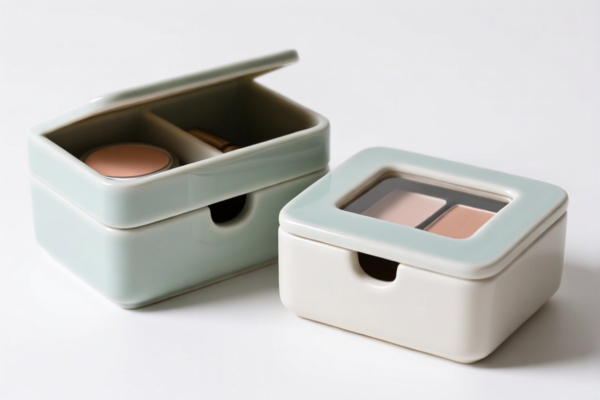
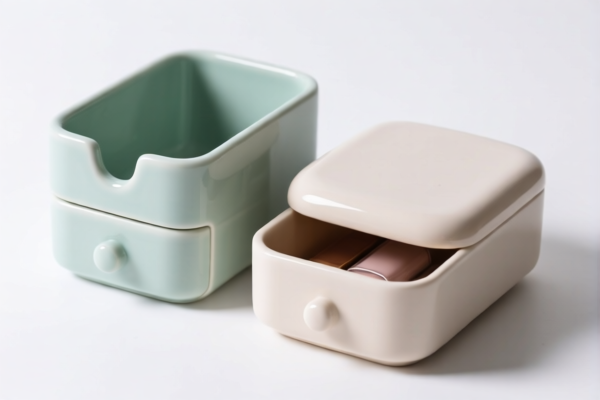
AI Analysis
✨ Cosmetic Storage Box (The Ultimate Beauty Organizer Guide)
🌐 HS Code Reference & Customs Clearance Guide | 2026 Duty Breakdown | Strategic Export Strategy
📌 I. Product Definition & Classification: Do You Really Know Your "Cosmetic Box"?
Cosmetic storage boxes are the backbone of beauty organization, ranging from everyday makeup organizers to luxury jewelry cases. In international trade, their classification depends critically on the primary material, structure, and intended use.
The Three Main Categories: 1. Plastic Organizers: Hard-shell, stackable, or modular plastic cases for general makeup. 2. Textile/Outer-Lined Cases: Cases where the outer surface is fabric/textile (even if the interior is plastic or hard). 3. Specialty Containers: Wooden boxes or luxury cases specifically designed for jewelry or high-end accessories.
⚠️ Critical Differentiation Point:
- Material Dictates Duty: A plastic box is taxed at ~21%, but a fabric-covered box jumps to ~52%!
- Use Case Matters: Is it for "general storage" (Chapter 39/42) or specifically for "Jewelry" (Chapter 42)?
- Packaging: If it's a "set" with brushes inside, the box usually defines the classification.
📦 II. HS Code Classification Matrix (2026 Customs Tariff Authority)
| HS Code | Product Description | Best For | Material Key |
|---|---|---|---|
3926.90.10.00 |
Plastic Storage Boxes (Other plastic articles) | General makeup, toiletries, travel cases | 100% Plastic (Rigid or flexible) |
3926.90.99.89 |
Other Plastic Articles | Generic plastic containers with no specific shape conflict | Plastic (Less specific form) |
4202.92.93.15 |
Containers with Outer Textile Surface | Fabric-covered cases, canvas travel kits, soft bags | Outer Layer = Fabric/Textile |
4202.92.60.10 |
Jewelry Boxes & Similar Containers | Luxury cases for rings, necklaces, watches | Any material (Specific use for Jewelry) |
4420.90.80.00 |
Wooden Containers | Premium wooden makeup organizers, carved boxes | 100% Wood |
🔍 Smart Tip:
- If the box is Plastic + Plastic, use3926.90.10.00(Lowest duty).
- If you add a Fabric Cover, you jump to4202.92.93.15(Highest duty).
- If it's for Jewelry (even if plastic),4202.92.60.10may apply (High duty).
💰 III. 2026 Tariff Rate Deep Dive (US Imports from China)
✅ Destination: United States (US)
✅ Origin: China (CN)
✅ Context: Includes Base Tariff + Section 301 (Added Tariff) + "122 Clause" (Section 301/321 variations)
🎯 1. 3926.90.10.00 — Plastic Storage Box (The Winner)
The most cost-effective choice for standard plastic organizers.
| Component | Rate | Details |
|---|---|---|
| Base Duty | 3.4% | Standard Most-Favored-Nation (MFN) rate |
| Section 301 Added Duty | 7.5% | "Additional" tariffs on Chinese goods |
| "122 Clause" Duty | 10.0% | Specific trade remedial tariff |
| 💥 TOTAL DUTY | 20.9% | (Base + Added + Clause) |
| De Minimis | ❌ No | Cannot use Section 321 (low value exemption) |
📌 Strategy: Stick to solid plastic. Avoid fabric overlays to keep duty under 21%.
🎯 2. 3926.90.99.89 — Other Plastic Articles
Used for generic plastic containers without a specific "storage box" shape.
| Component | Rate | Details |
|---|---|---|
| Base Duty | 5.3% | Slightly higher base rate |
| Section 301 Added Duty | 7.5% | Same trade war tariff |
| "122 Clause" Duty | 10.0% | Same remedial tariff |
| 💥 TOTAL DUTY | 22.8% | ~2% higher than 3926.90.10.00 |
⚠️ Warning: Only use this if the product doesn't fit the "Storage Box" definition. Otherwise, risk customs audit.
🎯 3. 4202.92.93.15 — Textile Outer Surface (The "Trap" Category)
The highest duty risk. Common mistake: Adding a fabric lining or cover.
| Component | Rate | Details |
|---|---|---|
| Base Duty | 17.6% | Much higher base rate for textiles |
| Section 301 Added Duty | 25.0% | Massive penalty tariff |
| "122 Clause" Duty | 10.0% | Remedial tariff |
| 💥 TOTAL DUTY | 52.6% | DOUBLING your tax compared to plastic! |
🛑 CRITICAL ALERT: Do NOT declare a fabric-covered box as plastic. If the outer surface is textile, 52.6% is unavoidable.
🎯 4. 4202.92.60.10 — Jewelry Boxes
For premium cases specifically shaped for jewelry.
| Component | Rate | Details |
|---|---|---|
| Base Duty | 6.3% | Moderate base rate |
| Section 301 Added Duty | 25.0% | High penalty tariff |
| "122 Clause" Duty | 10.0% | Remedial tariff |
| 💥 TOTAL DUTY | 41.3% | Double the cost of standard plastic |
📌 Note: Even if the box is plastic, if you market it as a "Jewelry Box" (with velvet interior, ring slots), this classification applies.
🎯 5. 4420.90.80.00 — Wooden Containers
For high-end, eco-friendly wooden organizers.
| Component | Rate | Details |
|---|---|---|
| Base Duty | 3.2% | Low base rate |
| Section 301 Added Duty | 25.0% | Heavy penalty tariff |
| "122 Clause" Duty | 10.0% | Remedial tariff |
| 💥 TOTAL DUTY | 38.2% | Significantly higher than plastic |
📌 Insight: Wood looks premium but costs 3x more in duty than basic plastic.
🛠️ IV. Customs Clearance Strategy: The "Save the Margin" Checklist
✅ 1. Material Declaration (The Golden Rule)
Never guess the material!
- Plastic Only? → Declare 3926.90.10.00 (20.9%).
- Fabric Exterior? → Declare 4202.92.93.15 (52.6%).
- Wood? → Declare 4420.90.80.00 (38.2%).
- Jewelry Specific? → Declare 4202.92.60.10 (41.3%).
🚨 Risk: Misdeclaring a fabric box as plastic to pay 20.9% instead of 52.6% = Audit + Seizure.
✅ 2. Product Description Template (Copy & Paste)
Correct:
"Plastic Cosmetic Storage Box, 12-compartment, no outer textile layer, for makeup organization, Model X-200, Pure PP Material."
Incorrect:
"Makeup Case" (Too vague) or "Fabric Case" (If it's plastic).
✅ 3. Documentation Requirements
| Document | Why It's Needed |
|---|---|
| Material Composition Certificate | Proves it is 100% plastic vs. fabric/wood. |
| Photographs (Exterior & Interior) | Shows no fabric lining or velvet interior. |
| Bill of Materials (BOM) | Confirms no wood or textile components. |
| Intended Use Statement | "General storage" vs. "Jewelry storage". |
🌍 V. Market Comparison: Where to Sell?
| Market | Recommended HS Code | Total Duty (China Origin) | Strategy |
|---|---|---|---|
| 🇺🇸 USA | 3926.90.10.00 |
20.9% | Best ROI for plastic boxes. Avoid fabric/jewelry categories. |
| 🇨🇳 China | 3926.90.10.00 |
0%~8% | Low barrier to entry. |
| 🇪🇺 EU | 3926.90.10.00 |
4.7% | Very competitive. |
| 🇬🇧 UK | 3926.90.10.00 |
4.7% | Stable market. |
💡 Conclusion: The US is the highest duty market. To succeed, you MUST keep the product as pure plastic (
3926.90.10.00) to save 30%+ in taxes compared to fabric or jewelry boxes.
🎯 VI. Common Pitfalls & How to Avoid Them
❌ Mistake 1: Calling a fabric-lined box "Plastic Storage Box".
👉 Result: 52.6% Duty vs. Expected 20.9%. Loss of 31.7%!
❌ Mistake 2: Marketing a generic box as a "Jewelry Box" to sound premium.
👉 Result: Duty jumps to 41.3%.
❌ Mistake 3: Using wooden accents (handles, lids) on a plastic box.
👉 Result: Customs may reclassify to Wooden Container (38.2%) due to "essential character".
✅ Pro Tip:
"Plastic is King, Fabric is Enemy, Wood is Luxury Tax."
Keep the design simple, the material pure, and the description accurate.
🚀 VII. Final Action Plan
- Audit Your Design: Is there any fabric? Any wood? Any jewelry-specific slots?
- Select HS Code: If 100% plastic →
3926.90.10.00. - Calculate Landed Cost: Use the 20.9% rate for your P&L.
- Apply for Pre-Ruling: If unsure, file a CBP Binding Ruling request (TSA) for peace of mind.
📢 Call to Action:
Don't let duty kill your margin!
Choose3926.90.10.00→ Pay 20.9% → Keep your profit.
Avoid4202categories → Avoid 50%+ taxes!
✨ Customs Success = Accurate Classification!
💼 Your Cosmetic Box, Your Rules, Your Margin.
Customer Reviews
About HS Code Classification
The Harmonized System (HS) is an internationally standardized nomenclature developed by the World Customs Organization (WCO) to classify traded products. Over 200 countries use the HS system as the basis for customs tariffs, trade statistics, and import/export regulations.
Each HS code follows a hierarchical structure:
- Chapter (2 digits) — Broad category of goods (e.g., Chapter 84: Machinery and Mechanical Appliances)
- Heading (4 digits) — More specific grouping within the chapter
- Subheading (6 digits) — Internationally standardized breakdown, used by all WCO member countries
- National subdivisions (8-10 digits) — Country-specific extensions for further classification, such as US HTSUS 10-digit codes
Correct HS code classification is essential for smooth customs clearance, accurate duty payment, and compliance with trade regulations. Misclassification can lead to customs delays, overpayment of duties, or penalties.
When importing from CN to US, the applicable tariff rates may include:
- Most-Favored-Nation (MFN) rate — The standard duty rate applied to WTO members
- General rate — Applied to countries without trade agreements
- Trade remedy duties — Additional tariffs such as Section 301 (anti-dumping), Section 232 (national security), or countervailing duties
The information provided on this page is for reference purposes only. For official classification, please consult with your local customs authority or a licensed customs broker.