Cotton Anti theft Backpack
CN → US| HS Code | Tariff Rate | Origin | Destination | Doc |
|---|---|---|---|---|
| 4202923120 | 52.6% | CN | US | Official Doc |
| 4202926091 | 41.3% | CN | US | Official Doc |
| 6117809510 | 32.1% | CN | US | Official Doc |
| 6117909080 | 32.1% | CN | US | Official Doc |
| 3926909989 | 22.8% | CN | US | Official Doc |
| 3926903300 | 16.5% | CN | US | Official Doc |
Product Images
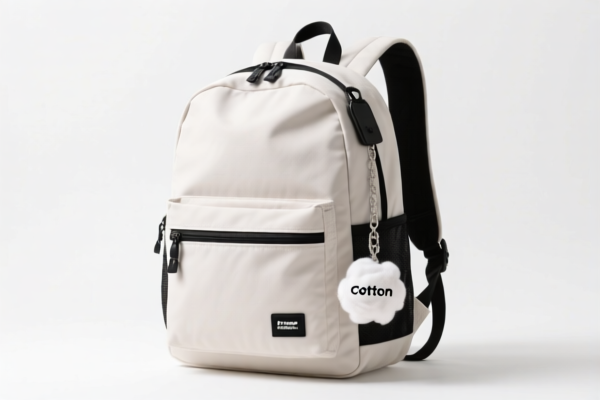
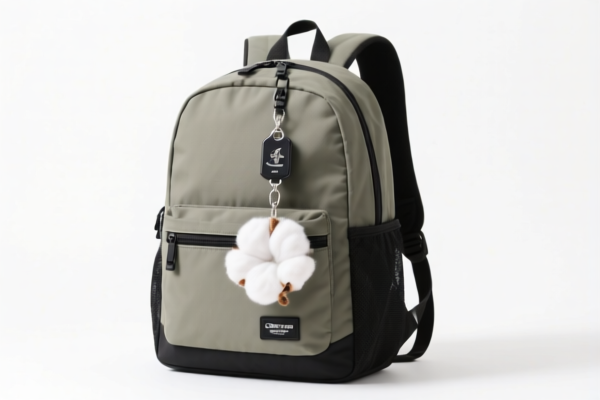
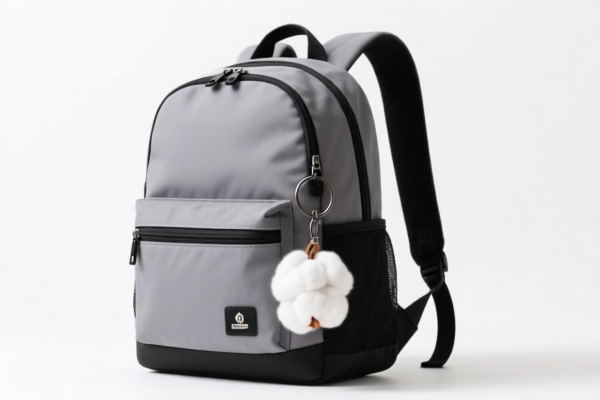
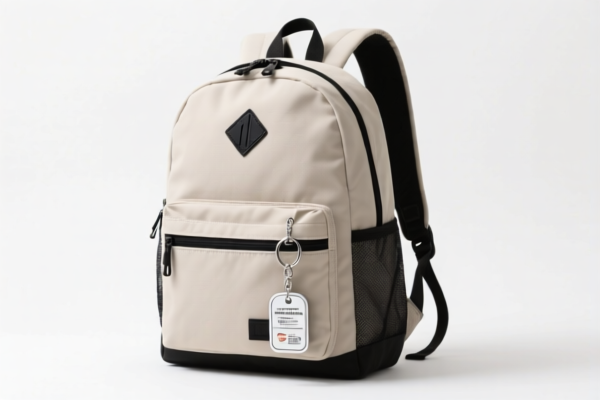
AI Analysis
🎒 Cotton Anti-theft Backpacks
🌐 HS Code Reference & Customs Clearance Guide | 2026 Latest Tariff Analysis | Professional Clearance Strategy
📌 I. Product Definition & Classification: Do You Truly Understand "Anti-theft Backpacks"?
A cotton anti-theft backpack is not merely a bag; it is a specialized accessory combining textile materials (cotton) with security features (hidden zippers, RFID-blocking pockets, slash-proof panels, or locking mechanisms). In international trade, the classification depends strictly on: 1. Material Composition: Is it primarily cotton? 2. Construction: Is it a complete backpack or just parts/accessories? 3. Specific Features: Does it qualify as a "knitted/crocheted accessory" or a "manufactured bag"?
⚠️ Critical Distinction:
- If the product is a complete backpack with an outer surface of textile materials (like cotton), it generally falls under Heading 4202.
- If the product is a knitted/crocheted component or a simple accessory (not a full backpack structure), it may fall under Heading 6117.
- ⚠️ Warning: Do NOT confuse "cotton" with "plastic." Even if the bag has plastic zippers or coatings, the outer material determines the primary heading.
📦 II. HS Code Classification Details (2026 Latest Tariff Authoritative Comparison)
Based on the provided data, here are the applicable HS Codes for cotton anti-theft backpacks and related items:
| HS Code | Product Description | Applicability to "Cotton Anti-theft Backpack" | Material Focus |
|---|---|---|---|
4202.92.31.20 |
Travel, sports and similar bags: Of man-made fibers Backpacks | ⚠️ Caution: This code specifies "Of man-made fibers" (e.g., polyester, nylon). If your backpack is 100% Cotton, this code is INCORRECT. Use only if the outer surface is synthetic. | Synthetic/Man-made |
4202.92.60.91 |
Other: Of cotton Other (Under Trunks, suitcases, backpacks...) | ✅ Best Match: This code covers backpacks/travel bags with an outer surface of textile materials, specifically categorized under "Of cotton". This is the most accurate code for a Cotton Backpack. | Cotton (Textile) |
6117.80.95.10 |
Other made up clothing accessories... Of cotton | ❌ Unlikely: This applies to accessories (scarves, belts, loose straps) or parts, not a structured backpack. Only use if selling replacement straps or knitted patches, not the bag itself. | Knitted/Crocheted |
6117.90.90.80 |
Parts of garments or clothing accessories: Of cotton | ❌ Unlikely: Only applies to parts (e.g., just the zipper tape, just the webbing) or knitted parts, not a finished backpack. | Parts |
3926.90.99.89 |
Other articles of plastics... Other | ❌ Incorrect: This is for plastic articles. Unless the backpack is made entirely of plastic sheets (not cotton), do not use this. | Plastic |
3926.90.33.00 |
Handbags (Plastic articles) | ❌ Incorrect: Specifically for Handbags made of plastic. Not applicable to cotton backpacks. | Plastic Handbags |
🔍 Key Insight:
- For a Cotton Anti-theft Backpack, the correct HS Code is likely4202.92.60.91.
- If the backpack is made of Nylon/Polyester (man-made fibers), use4202.92.31.20.
- Never use Heading 6117 for a full backpack unless it is a knitted/crocheted item (which is rare for anti-theft bags due to durability requirements).
💰 III. 2026 Latest Tariff Rate Breakdown (Including Additional Duties & Policies)
✅ Applicable Country: United States (US)
✅ Origin: China (CN)
✅ Effective Date: Post-November 2025 (Based on data provided)
🎯 1. 4202.92.60.91 —— Cotton Backpacks/Travel Bags
| Item | Content |
|---|---|
| Base Tariff | 0.0% |
| Additional Tariff (Section 301) | 0.0% |
| IEEPA Additional Tariff | 0.0% |
| Total Tariff Rate | 0.0% |
| Tax Calculation | CIF Value × 0% = $0 |
| De Minimis Eligibility | ✅ Yes (If under $800, often exempt from formal entry; if over, still 0% tariff) |
| Legal Basis Path | HTSUS:4202.92.60.91 → USITC:0.0% |
📌 Explanation:
- 0% Total Tax: This is a highly favorable classification. Cotton bags/backpacks currently enjoy zero base and zero additional tariffs from China to the US.
- Strategic Advantage: Compared to plastic goods (12.8%) or certain electronics, cotton textiles are cost-efficient for US import.
- Anti-Dumping/Countervailing Duties (AD/CVD): Currently NONE for this specific HS Code. However, always verify if "cotton" content triggers any specific textile quotas (unlikely for bags).
🎯 2. 4202.92.31.20 —— Man-made Fiber Backpacks (For Comparison)
| Item | Content |
|---|---|
| Base Tariff | 0.0% |
| Additional Tariff (Section 301) | 0.0% |
| IEEPA Additional Tariff | 0.0% |
| Total Tariff Rate | 0.0% |
| De Minimis Eligibility | ✅ Yes |
📌 Note: Both cotton and man-made fiber backpacks currently have 0% tariff. The choice between
4202.92.60.91and4202.92.31.20depends only on the material, not the tax.
⚠️ What If You Misclassify?
| Scenario | Misclassified As | Resulting Tax | Risk |
|---|---|---|---|
Cotton Backpack → Plastic Article (3926.90.99.89) |
3926.90.99.89 |
12.8% | High: Overpayment of 12.8%. Customs may penalize for misdeclaration. |
Cotton Backpack → Knitted Accessory (6117.80.95.10) |
6117.80.95.10 |
0.0% | Medium: While tax is 0%, the description "knitted accessory" may not match a structured backpack, leading to customs delay or seizure for inaccurate documentation. |
🛠️ IV. Customs Clearance Practical Advice (Battle-Tested Pitfall Avoidance)
✅ 1. Preparation Checklist (Non-negotiable)
| Document | Required? | Explanation |
|---|---|---|
| ✅ Product Spec Sheet | ✔️ | Must explicitly state: "Outer Material: 100% Cotton" (or blend %). If "Anti-theft" features exist (e.g., hidden zippers), describe them but emphasize material. |
| ✅ Composition Label | ✔️ | Photo of the interior label showing "Made of Cotton" or fiber content. |
| ✅ Commercial Invoice | ✔️ | Description must match HS Code: "Cotton Backpack, Anti-theft Design, for Travel/School". Avoid vague terms like "Bag" alone. |
| ✅ Packing List | ✔️ | Clear weight and dimensions. |
| ✅ Certifications | ✔️ | If "Anti-theft" includes electronic components (e.g., USB ports), include FCC Certification. |
✅ 2. Declaration Tips (Key Mantra)
🔥 “Material Defines Code, Description Must Match, No Plastic Unless It’s Plastic!”
| Situation | Correct Declaration | Wrong Practice |
|---|---|---|
| 100% Cotton Outer | 4202.92.60.91 - Cotton Backpack |
Use 3926.90.99.89 (Plastic) → 12.8% Tax! |
| Polyester/Nylon Outer | 4202.92.31.20 - Man-made Fiber Backpack |
Use 4202.92.60.91 (Cotton) → Misclassification Risk |
| Knitted/Crocheted Backpack | 6117.80.95.10 - Knitted Accessory |
Use 4202.92... (Manufactured Bag) → Incorrect Heading |
| Backpack Parts (Straps) | 6117.90.90.80 - Parts of Accessories |
Declare as "Full Backpack" → Tax Discrepancy |
✅ 3. Special Cases for "Anti-Theft" Features
| Feature | Impact on HS Code | Clearance Advice |
|---|---|---|
| Hidden Zippers/Pockets | No change | Describe in invoice as "Anti-theft design with hidden compartments" to justify functionality, but material remains key. |
| RFID Blocking Liner | No change | If the liner is a thin metallic film, ensure the outer surface is still cotton/textile. If the entire bag is plastic-coated fabric, it may still be 4202. |
| Built-in Lock | No change | Still classified as a bag. Ensure the lock is described as an accessory in the invoice. |
| USB Charging Port | No change (Primary purpose is bag) | Classify as bag. However, declare the USB module separately if it can be sold independently. If integrated, it’s still a bag. |
🌍 V. Global Market Customs Comparison (2026 Latest)
| Country/Region | Recommended HS Code | Tariff (China Origin) | Certification Required | Notes |
|---|---|---|---|---|
| 🇺🇸 USA | 4202.92.60.91 (Cotton) |
0.0% | None (unless USB/Electronics → FCC) | Most favorable for cotton bags. |
| 🇪🇺 EU | 4202.92.60 (General) |
4.0% (approx) | CE (if electronic parts) | VAT applies (19-27%). |
| 🇨🇳 China | 4202.92.60 |
5.0% (Import) | CCC (if electronic) | Import tax applies. |
| 🇬🇧 UK | 4202.92.60 |
12.0% | UKCA | Post-Brexit rules apply. |
| 🇦🇺 Australia | 4202.92.60 |
5.0% | None | GST 10% applies. |
📌 Conclusion:
- USA is the best market for cotton backpacks due to 0% tariff.
- Ensure your commercial invoice clearly states "Cotton" to justify4202.92.60.91.
- For man-made fiber backpacks, the tariff is also 0%, so material choice is a brand/marketing decision, not a tax-driven one.
📌 VI. Common Errors & Pitfall Avoidance (Lessons from the Field)
❌ Error 1: Declaring a Cotton Backpack as a "Plastic Article" (3926.90.99.89)
👉 Consequence: You pay 12.8% tax unnecessarily. That’s $12.80 extra per $100!
👉 Fix: Check the outer surface material. If it’s cotton, use 4202.92.60.91.
❌ Error 2: Declaring a Structured Backpack as a "Knitted Accessory" (6117.80.95.10)
👉 Consequence: Customs may suspect misdeclaration because backpacks are usually "manufactured," not "knitted." This can lead to inspections and delays.
👉 Fix: Only use Heading 6117 for knitted/crocheted items (e.g., a knitted tote bag). Standard anti-theft backpacks are Heading 4202.
❌ Error 3: Ignoring Electronic Components in Anti-Theft Bags
👉 Consequence: If the bag has a USB port or battery, and you don’t declare it properly, it may be held by FCC/Customs.
👉 Fix: Include FCC ID and battery safety data (if applicable) in the documentation.
✅ Correct Declaration Example:
"COTTON ANTI-THEFT BACKPACK, Outer Material: 100% Cotton, Hidden Zipper Pockets, RFID Blocking Interior, No Electronic Components, Model XYZ"
HS Code:4202.92.60.91
🎯 VII. Conclusion: Smart Classification, Zero Tax, Smooth Clearance!
🎯 Remember the Mantra:
🔹 "Cotton Outer = 4202.92.60.91 → 0% Tax!"
🔹 "Man-made Fiber = 4202.92.31.20 → 0% Tax!"
🔹 "Plastic Coating? Still 4202 if Outer is Textile!"
🔹 "Knitted Only? Then 6117!"
📌 Pro Tip:
If your backpack is 100% Cotton, you are in a tax-zero zone for the US market. Leverage this for competitive pricing. For man-made fibers, the tax is also 0%, so focus on durability and style.
📣 Immediate Action:
📞 Verify Material Composition: Ensure your supplier provides a certificate of origin and material content.
📄 Update Commercial Invoice: Use the exact HS Code4202.92.60.91and describe the cotton material prominently.
🚀 Ship with Confidence: 0% Tariff means maximum profit!
✨ Professional Clearance Starts with Precise Classification!
💼 Your Every Penny Deserves to Be Counted Accurately!
Customer Reviews
About HS Code Classification
The Harmonized System (HS) is an internationally standardized nomenclature developed by the World Customs Organization (WCO) to classify traded products. Over 200 countries use the HS system as the basis for customs tariffs, trade statistics, and import/export regulations.
Each HS code follows a hierarchical structure:
- Chapter (2 digits) — Broad category of goods (e.g., Chapter 84: Machinery and Mechanical Appliances)
- Heading (4 digits) — More specific grouping within the chapter
- Subheading (6 digits) — Internationally standardized breakdown, used by all WCO member countries
- National subdivisions (8-10 digits) — Country-specific extensions for further classification, such as US HTSUS 10-digit codes
Correct HS code classification is essential for smooth customs clearance, accurate duty payment, and compliance with trade regulations. Misclassification can lead to customs delays, overpayment of duties, or penalties.
When importing from CN to US, the applicable tariff rates may include:
- Most-Favored-Nation (MFN) rate — The standard duty rate applied to WTO members
- General rate — Applied to countries without trade agreements
- Trade remedy duties — Additional tariffs such as Section 301 (anti-dumping), Section 232 (national security), or countervailing duties
The information provided on this page is for reference purposes only. For official classification, please consult with your local customs authority or a licensed customs broker.