Cotton Blend Woven Fabric Unbleached or Bleached Thin Household Textile
CN → US| HS Code | Tariff Rate | Origin | Destination | Doc |
|---|---|---|---|---|
| 5208198090 | 45.5% | CN | US | Official Doc |
| 5208212040 | 43.4% | CN | US | Official Doc |
| 5210216090 | 46.4% | CN | US | Official Doc |
| 5208112040 | 42.0% | CN | US | Official Doc |
Product Images
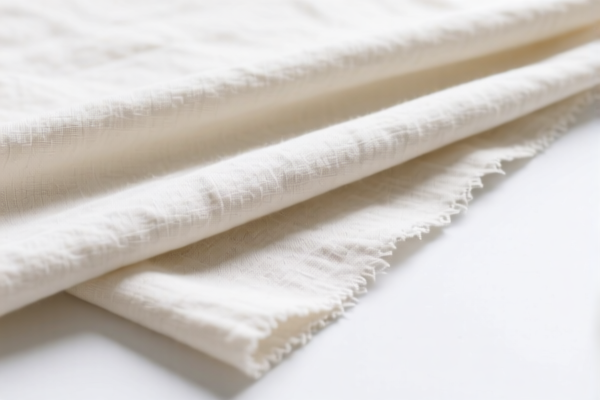
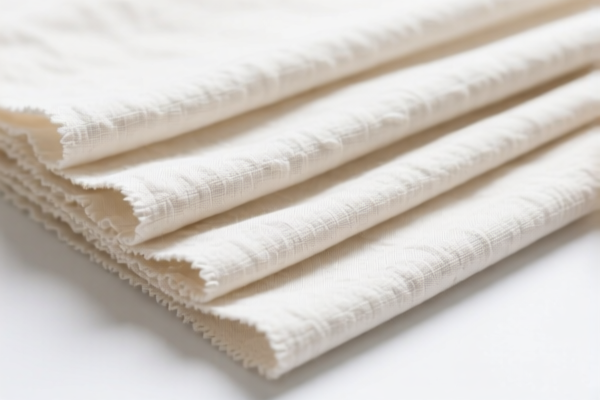
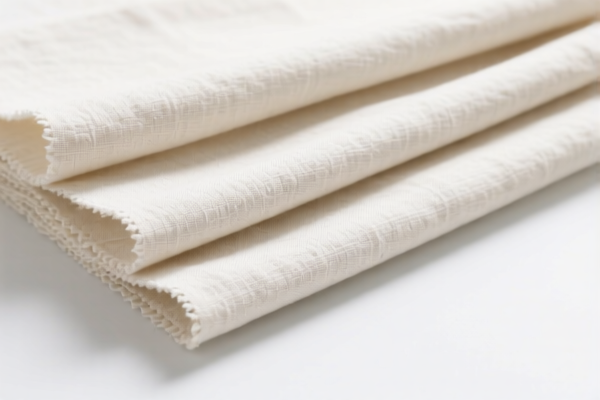
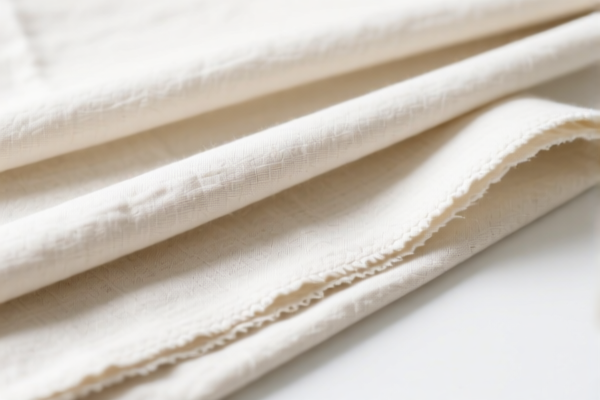
AI Analysis
🧵 Cotton Blend Woven Fabric (Unbleached/Bleached) – Household & Apparel Use
🌐 HS Code Reference & Customs Clearance Guide | 2026 Latest Tariff Full Analysis | Professional Entry Strategy
📌 1. Product Definition and Classification: What Exactly Is "Cotton Blend Woven Fabric"?
Cotton blend woven fabric refers to textiles made from a combination of cotton fibers and other fibers (such as polyester, viscose, or nylon), woven on a loom. In international trade, these fabrics are categorized based on their bleaching status, weight/thickness, and intended application.
For thin fabrics (typically lightweight, <200g/m²), the primary distinction lies in their end-use: * Household Textiles: Fabrics used for bed linens, curtains, tablecloths, upholstery, or towels. * Apparel: Fabrics specifically woven or finished for clothing garments.
⚠️ Key Distinction:
- If the fabric is thin, unbleached/bleached, and intended for household use, it generally falls under 5208.19.
- If the same fabric is intended for clothing, the classification depends on the specific cotton content and weave structure, often falling under 5208.21 or 5210.21.
- Crucial Note: Misclassifying apparel fabric as household fabric (or vice versa) can lead to significant tariff differences due to varying duty rates.
📦 2. HS Code Classification Details (2026 Latest Tariff Authority Mapping)
The following HS Codes are derived strictly from the provided data <DATA>. All items are Cotton Blend Woven Fabrics (Unbleached or Bleached), Thin Type.
| HS Code | Product Description | Application Scenario | Total Tax Rate |
|---|---|---|---|
5208.19.80.90 |
Cotton blend woven fabric (unbleached/bleached), thin type, for household textiles | Bedding, curtains, home decor fabrics | 45.5% |
5208.21.20.40 |
Cotton blend woven fabric (unbleached/bleached), thin type, for apparel | Clothing, shirts, dresses | 43.4% |
5210.21.60.90 |
Cotton blend woven fabric (unbleached/bleached), thin type, for apparel | Alternative classification for apparel fabrics (different weave/content mix) | 46.4% |
5208.11.20.40 |
Cotton blend woven fabric (unbleached/bleached), thin type, for apparel | Specific apparel classification (likely higher cotton content or specific weave) | 42.0% |
🔍 Important Reminder:
- "Thin" Definition: Ensure the fabric weight meets the customs definition of "thin" (usually under 200g/m²). Heavy fabrics fall under different subheadings (e.g., 5208.3x or 5208.5x).
- Unbleached vs. Bleached: Both5208and5210series cover unbleached and bleached fabrics. However, the specific HS code depends on the cotton content percentage and the weave structure (plain, twill, etc.).
- Use-Specific: The destination of the fabric (household vs. apparel) significantly impacts the final tariff rate.
💰 3. 2026 Latest Tariff Rate Breakdown (Including Additional Duties, Policy Surcharges)
✅ Applicable Country: United States (US)
✅ Country of Origin: China (CN)
✅ Effective Date: Ongoing (as per current trade policies)
🎯 1. 5208.19.80.90 —— Cotton Blend Woven Fabric (Thin, Household Use)
| Item | Detail |
|---|---|
| Base Duty Rate | 10.5% |
| Section 301 Additional Duty | +25.0% |
| Section 122 Tariff | +10.0% |
| Total Effective Rate | 45.5% |
| Tax Calculation | CIF Value × 45.5% |
| De Minimis Eligibility | ❌ Not Eligible (Subject to high tariffs) |
| Legal Basis Path | USITC:5208.19.80.90 → Section 301 Footnote → Section 122 |
📌 Explanation:
- "Base Duty (10.5%)": The standard Most Favored Nation (MFN) rate for cotton fabrics.
- "Section 301 Duty (25%)": Imposed on Chinese goods under US Trade Act Section 301.
- "Section 122 Duty (10%)": A recent or specific surcharge applied to certain textile imports.
- Total 45.5%: This is a very high tariff, making cost control critical.
🎯 2. 5208.21.20.40 —— Cotton Blend Woven Fabric (Thin, Apparel Use)
| Item | Detail |
|---|---|
| Base Duty Rate | 8.4% |
| Section 301 Additional Duty | +25.0% |
| Section 122 Tariff | +10.0% |
| Total Effective Rate | 43.4% |
| Tax Calculation | CIF Value × 43.4% |
| De Minimis Eligibility | ❌ Not Eligible |
| Legal Basis Path | USITC:5208.21.20.40 → Section 301 Footnote → Section 122 |
📌 Note:
- Lower base duty (8.4%) compared to household fabrics (10.5%).
- Total savings of 2.1% compared to the household classification.
🎯 3. 5210.21.60.90 —— Cotton Blend Woven Fabric (Thin, Apparel Use)
| Item | Detail |
|---|---|
| Base Duty Rate | 11.4% |
| Section 301 Additional Duty | +25.0% |
| Section 122 Tariff | +10.0% |
| Total Effective Rate | 46.4% |
| Tax Calculation | CIF Value × 46.4% |
| De Minimis Eligibility | ❌ Not Eligible |
| Legal Basis Path | USITC:5210.21.60.90 → Section 301 Footnote → Section 122 |
📌 Caution:
- This is the highest tariff rate in the provided dataset (46.4%).
- Likely applies to specific cotton blends or weave structures under the 5210 heading (Woven fabrics of cotton containing <85% by weight of cotton).
🎯 4. 5208.11.20.40 —— Cotton Blend Woven Fabric (Thin, Apparel Use)
| Item | Detail |
|---|---|
| Base Duty Rate | 7.0% |
| Section 301 Additional Duty | +25.0% |
| > Section 122 Tariff | +10.0% |
| Total Effective Rate | 42.0% |
| Tax Calculation | CIF Value × 42.0% |
| De Minimis Eligibility | ❌ Not Eligible |
| Legal Basis Path | USITC:5208.11.20.40 → Section 301 Footnote → Section 122 |
📌 Optimal Choice:
- This code offers the lowest total tariff (42.0%) among all listed options.
- Base duty is only 7.0%.
- Strategy: If your product fits the technical description for5208.11.20.40(likely higher cotton content or specific plain weave), this is the most cost-effective classification.
🛠️ 4. Customs Clearance Practical Advice (Battle-Tested Pitfall Guide)
✅ 1. Preparation Checklist (Mandatory)
| Document | Required | Explanation |
|---|---|---|
| ✅ Product Specification Sheet | ✔️ | Must include: Fiber content (% cotton, % polyester, etc.), weight (g/m²), width, weave type (plain, twill, etc.). |
| ✅ Fabric Composition Certificate | ✔️ | Third-party lab test result proving fiber ratios. Critical for distinguishing between 5208 (≥85% cotton) and 5210 (<85% cotton). |
| ✅ Product Photos | ✔️ | Clear images of the fabric texture, selvage edges, and any labels. |
| ✅ Commercial Invoice | ✔️ | Must explicitly state "Cotton Blend Woven Fabric, Unbleached/Bleached, Thin Type" and intended use (Household vs. Apparel). |
| ✅ Packing List | ✔️ | Detail roll lengths, weights, and dimensions. |
| ✅ Proof of Use (if applicable) | ✔️ | For household vs. apparel classification, provide end-use declarations or contracts. |
✅ 2. Classification Strategy (Key Mantra)
🔥 "Check Cotton % First, Then Use, Then Tariff Drops!"
| Scenario | Correct HS Code | Wrong Action | Result |
|---|---|---|---|
| Cotton ≥85%, Thin, Household | 5208.19.80.90 |
Misclassify as Apparel | +2.1% Tax Increase |
| Cotton ≥85%, Thin, Apparel | 5208.21.20.40 or 5208.11.20.40 |
Misclassify as Household | +2.1% Tax Increase |
| Cotton <85%, Thin, Apparel | 5210.21.60.90 |
Misclassify under 5208 | High Risk of Audit + Back Duties |
| Any Blend, Thin, Apparel | 5208.11.20.40 (if eligible) |
Default to 5210 | +4.4% Tax Increase |
📌 Critical Tip:
- 5208 covers fabrics with ≥85% cotton.
- 5210 covers fabrics with <85% cotton.
- Verify your fiber composition immediately. If your blend is 60% cotton / 40% polyester, you must use the 5210 heading, not 5208. Misclassification here is a common customs violation.
✅ 3. Special Cases Handling
| Situation | Handling Advice |
|---|---|
| OEM Custom Fabric | Provide the buyer’s specification sheet. If the buyer specifies "for dresses," use Apparel codes. |
| Fabric with Prints | If the fabric is printed, ensure the HS code still matches. Sometimes printed fabrics have different subheadings. |
| Mixed Use | If the fabric can be used for both, classify based on actual intent at the time of import. If for household, use 5208.19.80.90. |
| Small Samples | Even samples are subject to duties. Do not declare as "gift" to evade taxes if value exceeds de minimis thresholds for textiles (often low). |
🌍 5. Global Market Comparison (2026 Latest)
| Country/Region | Recommended HS Code | Tariff (China Origin) | Certification | Note |
|---|---|---|---|---|
| 🇺🇸 USA | 5208.11.20.40 (Lowest) |
42.0% | None Specific | High tariffs due to Sec 301 & 122. |
| 🇨🇳 China | 5208.11.20.40 |
~7-10% | None | Base rate only. |
| 🇪🇺 EU | 5208.11 |
~0-8% | REACH, OEKO-TEX | No Section 301/122 equivalents. |
| 🇬🇧 UK | 5208.11 |
~0-8% | UKCA, REACH | Post-Brexit rules apply. |
| 🇦🇺 Australia | 5208.11 |
~5-10% | None | No high additional tariffs. |
📌 Conclusion:
- USA is the most expensive market for Chinese cotton fabrics due to Section 301 (25%) and Section 122 (10%) surcharges.
- Total tariffs range from 42.0% to 46.4%.
- Optimization: Aim for5208.11.20.40(42.0%) if your product qualifies. Avoid5210codes unless necessary due to lower cotton content.
📌 6. Common Mistakes & Pitfalls (Lessons Learned)
❌ Mistake 1: Assuming all "Cotton Fabric" is the same.
👉 Consequence: Using 5210 (46.4%) instead of 5208 (42-43%) unnecessarily increases costs.
Fix: Verify cotton content ≥85% for 5208 codes.
❌ Mistake 2: Ignoring the "Thin" specification.
👉 Consequence: Heavy fabrics (<200g/m²) fall under different HS codes with different rates. Misdeclaration leads to audits.
Fix: Measure and declare gram weight (gsm) accurately.
❌ Mistake 3: Declaring "Apparel" fabric as "Household" to avoid scrutiny.
👉 Consequence: If Customs finds the fabric is for clothes (e.g., patterned, finished edges), they may reclassify and impose penalties.
Fix: Match the actual end-use in documentation.
❌ Mistake 4: Overlooking Section 122 Tariffs.
👉 Consequence: Budgeting only for 10.5% + 25% = 35.5%, but facing 45.5%.
Fix: Include 10% Section 122 in all cost calculations for US imports.
✅ Correct Practice:
"100% Cotton Plain Weave Fabric, Unbleached, 150gsm, For Bed Sheets, Certified OEKO-TEX"
🎯 7. Conclusion: Professional Classification Saves Money!
🎯 Remember the Mantra:
🔹 "Cotton >85%? Use 5208. <85%? Use 5210."
🔹 "Household vs. Apparel? Check the Use."
🔹 "Target 5208.11.20.40 for 42.0% Total Duty."
🔹 "Add 35% Fixed Surcharges (25% + 10%) to Base Rate."
📌 Pro Tip:
- If your fabric has exactly 85% cotton, you are on the boundary. Ensure lab tests confirm ≥85% to qualify for the lower-tariff 5208 codes.
- Apply for an Advance Ruling from US Customs (CBP) if your product is complex. This provides legal certainty for your classification.
📣 Immediate Action:
📞 Contact your Customs Broker with the Fiber Composition Report and Fabric Specification.
🚀 Select5208.11.20.40if eligible to minimize costs at 42.0% total duty.
✨ Precision in Classification, Profit in Clearance!
💼 Every percentage point saved is pure profit!
Customer Reviews
About HS Code Classification
The Harmonized System (HS) is an internationally standardized nomenclature developed by the World Customs Organization (WCO) to classify traded products. Over 200 countries use the HS system as the basis for customs tariffs, trade statistics, and import/export regulations.
Each HS code follows a hierarchical structure:
- Chapter (2 digits) — Broad category of goods (e.g., Chapter 84: Machinery and Mechanical Appliances)
- Heading (4 digits) — More specific grouping within the chapter
- Subheading (6 digits) — Internationally standardized breakdown, used by all WCO member countries
- National subdivisions (8-10 digits) — Country-specific extensions for further classification, such as US HTSUS 10-digit codes
Correct HS code classification is essential for smooth customs clearance, accurate duty payment, and compliance with trade regulations. Misclassification can lead to customs delays, overpayment of duties, or penalties.
When importing from CN to US, the applicable tariff rates may include:
- Most-Favored-Nation (MFN) rate — The standard duty rate applied to WTO members
- General rate — Applied to countries without trade agreements
- Trade remedy duties — Additional tariffs such as Section 301 (anti-dumping), Section 232 (national security), or countervailing duties
The information provided on this page is for reference purposes only. For official classification, please consult with your local customs authority or a licensed customs broker.