Cotton Blended Woven Fabrics
CN → US| HS Code | Tariff Rate | Origin | Destination | Doc |
|---|---|---|---|---|
| 5211190090 | 42.7% | CN | US | Official Doc |
| 5513110060 | 49.9% | CN | US | Official Doc |
| 5514210020 | 49.9% | CN | US | Official Doc |
| 5513190090 | 24.9% | CN | US | Official Doc |
| 5211110035 | 42.7% | CN | US | Official Doc |
Product Images

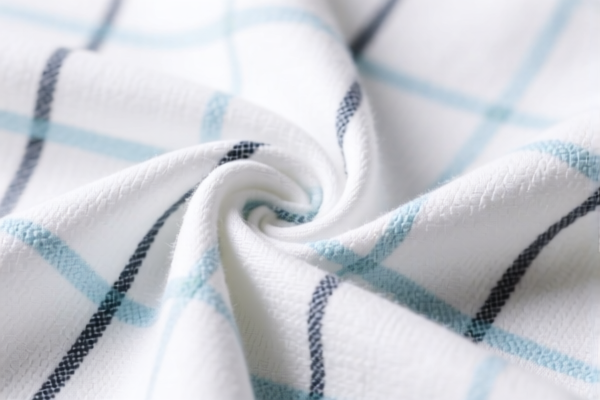
AI Analysis
🌾 Cotton Blended Woven Fabrics
🌐 HS Code Reference & Customs Clearance Guide | 2026 Latest Tariff Breakdown | Pro-Level Import Strategy
📌 One: Product Definition & Classification – What Exactly Is “Cotton Blended Woven Fabric”?
Cotton blended woven fabrics are textile materials where cotton is mixed with other fibers (natural or synthetic) and woven into a fabric structure. These fabrics are widely used in apparel, home textiles, and industrial applications due to their balanced performance, cost-effectiveness, and enhanced durability.
⚠️ Critical Distinction: - If cotton content < 85% → may fall under 5211.19.00.90 / 5211.11.00.35 - If synthetic fiber content < 85%, especially polyester/nylon, and primarily blended with cotton → use 5513.11.00.60 / 5513.19.00.90 / 5514.21.00.20 - Must meet woven fabric criteria (i.e., interlaced warp and weft yarns) — not knitted or non-woven
📦 Two: HS Code Classification Details (2026 Official Tariff Matrix)
| HS Code | Product Description | Key Conditions | Tax Rate | Notes |
|---|---|---|---|---|
5211.19.00.90 |
Cotton blended woven fabrics, cotton content < 85%, conforms to woven structure | - Cotton < 85% - Woven, not knitted - No specific weight or weave specified |
42.7% | Common for cotton-polyester blends |
5211.11.00.35 |
Cotton blended woven fabrics, cotton content < 85%, machine-woven | - Cotton < 85% - Specifically machine-woven (not handwoven) - Woven fabric form |
42.7% | Same as above, more specific to manufacturing method |
5513.11.00.60 |
Cotton blended woven fabrics, synthetic fiber content < 85%, primarily or solely blended with cotton | - Synthetic fibers < 85% - Cotton is dominant or primary partner - Woven structure |
49.9% | Higher tax due to synthetic content |
5513.19.00.90 |
Cotton blended woven fabrics, synthetic short fibers < 85%, primarily or solely blended with cotton | - Synthetic short fibers (not filament) - Cotton is main component - Woven |
24.9% | Lower rate due to no 25% USITC tariff |
5514.21.00.20 |
Cotton blended woven fabrics, meets material & form requirements, no specified weight or weave | - Cotton blend - Woven - No detailed weight or construction info |
49.9% | High-risk category – requires clear documentation |
🔍 Key Insight:
- "Cotton content < 85%" triggers higher tariffs (42.7%)
- "Synthetic fiber content < 85%" can trigger up to 49.9% if synthetic is significant
- Synthetic short fibers with low content may avoid the 25% USITC tariff, leading to only 24.9% total
💰 Three: 2026 Tariff Breakdown (Detailed Tax Clauses & Legal Basis)
✅ Applicable Country: United States (US)
✅ Origin: China (CN)
✅ Effective Date: November 10, 2025 (and onward)
🎯 1. 5211.19.00.90 & 5211.11.00.35 — Cotton < 85%, Woven
| Item | Detail |
|---|---|
| Base Duty | 7.7% (ad valorem) |
| Section 301 (USITC) Additional Tariff | +25.0% |
| Section 122 (IEEPA) Emergency Tariff | +10.0% |
| Total Effective Duty | 42.7% |
| Tax Calculation | CIF Value × 42.7% |
| De Minimis Exemption | ❌ Not available (denied under US law) |
| Legal Basis Path | IEEPA:9903.01.25 → IEEPA:9903.01.24 → USITC:5211.19.00.90 → FOOTNOTE:9903.88.01 |
📌 Explanation: - USITC 25% = Section 301 Tariff under U.S. Trade Act (China-related trade actions) - IEEPA 10% = International Emergency Economic Powers Act — applies to goods from China/Hong Kong - Total: 42.7% — extremely high, especially for bulk shipments
🎯 2. 5513.11.00.60 & 5514.21.00.20 — Synthetic Fiber < 85%, Cotton-Primary Blend
| Item | Detail |
|---|---|
| Base Duty | 14.9% |
| Section 301 (USITC) Additional Tariff | +25.0% |
| Section 122 (IEEPA) Emergency Tariff | +10.0% |
| Total Effective Duty | 49.9% |
| Tax Calculation | CIF × 49.9% |
| De Minimis Exemption | ❌ Not available |
| Legal Basis Path | IEEPA:9903.01.25 → IEEPA:9903.01.24 → USITC:5513.11.00.60 → FOOTNOTE:9903.88.01 |
📌 Important Note:
- Even if cotton is dominant, if synthetic fiber content is high enough, the tariff jumps to 49.9% - No de minimis relief — even small shipments face full duty
🎯 3. 5513.19.00.90 — Synthetic Short Fibers < 85%, Cotton-Primary Blend
| Item | Detail |
|---|---|
| Base Duty | 14.9% |
| Section 301 (USITC) Additional Tariff | 0.0% |
| Section 122 (IEEPA) Emergency Tariff | +10.0% |
| Total Effective Duty | 24.9% |
| Tax Calculation | CIF × 24.9% |
| De Minimis Exemption | ❌ Not available |
| Legal Basis Path | IEEPA:9903.01.25 → IEEPA:9903.01.24 → USITC:5513.19.00.90 → FOOTNOTE:9903.88.01 |
📌 Critical Advantage:
- No 25% USITC tariff applies if synthetic fibers are short (not filament)
- This is a key loophole for importers using cotton-polyester short staple blends
- Only 24.9% total — 15% lower than other synthetic blends
🛠️ Four: Customs Clearance Best Practices (Pro Tips to Avoid Penalties)
✅ 1. Essential Documentation (MUST-HAVE)
| Document | Required? | Why It Matters |
|---|---|---|
| ✅ Product Specification Sheet | ✔️ | Must state fiber composition, cotton %, synthetic type, weave type |
| ✅ Fabric Sample (with label) | ✔️ | Proves actual content; avoid misclassification |
| ✅ Weave Diagram / Technical Drawing | ✔️ | Confirms woven structure vs. knitted/non-woven |
| ✅ Commercial Invoice | ✔️ | Must clearly state: "Cotton Blended Woven Fabric, [HS Code]" |
| ✅ Certificate of Origin (CO) | ✔️ | Required for tariff eligibility; use China or non-China origin |
| ✅ Test Report (e.g., AATCC, ISO) | ✔️ | Verifies fiber content & fabric type |
| ✅ Packing List | ✔️ | Shows weight, quantity, and packaging |
✅ 2.申报技巧(Key Rules of Thumb)
🔥 "Cotton %, Synthetic Type, Weave Form — Get It Right or Pay 50%!"
| Scenario | Correct HS Code | Wrong Code | Risk |
|---|---|---|---|
| Cotton 70%, polyester 30%, woven | 5211.19.00.90 |
5513.11.00.60 |
Higher tax |
| Cotton 80%, polyester 20%, short staple, woven | 5513.19.00.90 |
5513.11.00.60 |
Save 25% tax |
| Cotton 85%, polyester 15%, woven | 5211.19.00.90 |
5211.11.00.35 |
Same tax, but more precise |
| Cotton 75%, nylon 25%, filament yarn | 5513.11.00.60 |
5514.21.00.20 |
Higher risk |
📌 Pro Tip:
- Label the fabric with fiber content and weave type on the roll or tag — critical for customs inspection
✅ 3. Special Cases & Risk Mitigation
| Situation | Recommended Action |
|---|---|
| Unknown fiber % | Request lab test (AATCC 20) before shipment |
| Mixed synthetic types | Declare short fibers if applicable — may avoid 25% tariff |
| Handwoven vs. Machine-woven | Use 5211.11.00.35 only for machine-woven; otherwise, risk reclassification |
| Custom blends (e.g., cotton + TENCEL™) | Confirm if TENCEL™ is cellulosic — may affect classification |
| Re-export or transshipment | Ensure origin is properly documented — US may apply tariffs even if not final destination |
🌍 Five: Global Customs Comparison (2026 Update)
| Country/Region | Recommended HS Code | Tariff | Certification | Notes |
|---|---|---|---|---|
| 🇺🇸 United States | 5211.19.00.90 / 5513.19.00.90 |
24.9% – 49.9% | None (but documentation required) | High risk — no de minimis |
| 🇨🇳 China | 5211.19.00.90 |
5% | CCC, RoHS | No extra tariffs |
| 🇪🇺 European Union | 5211.19.00.90 |
0% (if origin EU/China) | CE, REACH | No 301/IEEPA tariffs |
| 🇦🇺 Australia | 5211.19.00.90 |
5% | RCM | No additional duties |
| 🇯🇵 Japan | 5211.19.00.90 |
0% | PSE | No extra tariffs |
📌 Conclusion:
- U.S. is the only market with 25%+附加 tariffs on cotton blends - China-origin fabrics face the highest effective duty - Use short synthetic fibers to cut tax from 49.9% to 24.9%
📌 Six: Common Mistakes & How to Avoid Them (Real-World Risks)
❌ Mistake 1: Classifying a cotton-polyester short staple blend as 5513.11.00.60
👉 Result: Pay 49.9% instead of 24.9% → $100k+ extra cost on a 100,000 kg shipment
❌ Mistake 2: Not declaring weave type or fiber composition
👉 Result: Customs reclassifies the goods → delay, penalties, or seizure
❌ Mistake 3: Using “blended fabric” as the only description
👉 Result: No HS code match → customs holds shipment
❌ Mistake 4: Assuming “cotton > 85%” is safe
👉 Result: If cotton is 85% or more, it may fall under 5211.19.00.90 but still taxed at 42.7% — no relief
✅ Correct Approach:
"Cotton Blended Woven Fabric, 70% Cotton, 30% Polyester (Short Staple), Machine-Woven, 150gsm, 120x60 T/C, AATCC 20 Certified, HS Code: 5513.19.00.90"
🎯 Seven: Final Verdict – Win the Tariff Game!
🎯 Golden Rules:
🔹 "Cotton < 85%? → 42.7% tax"
🔹 "Synthetic < 85%? → 49.9% tax — unless short staple!"
🔹 "Short synthetic fibers? → Only 24.9% — big win!"
🔹 "No de minimis in U.S. — always declare full value"
📌 Pro Tip:
If your fabric uses cotton + recycled polyester short staple, apply for HS Code pre-ruling with U.S. Customs.
Many importers save 15–20% in duty by proving short fiber status.
📣 Take Action Now:
📞 Contact a licensed customs broker + submit fabric sample + test report
🚀 Apply for HS Code pre-determination (Pre-Ruling)
💡 Optimize your blend — use short synthetic fibers to cut duty in half
✨ Smart Classification = Smart Savings!
💼 Your next shipment could be 25% cheaper — if you get the HS Code right!
Customer Reviews
About HS Code Classification
The Harmonized System (HS) is an internationally standardized nomenclature developed by the World Customs Organization (WCO) to classify traded products. Over 200 countries use the HS system as the basis for customs tariffs, trade statistics, and import/export regulations.
Each HS code follows a hierarchical structure:
- Chapter (2 digits) — Broad category of goods (e.g., Chapter 84: Machinery and Mechanical Appliances)
- Heading (4 digits) — More specific grouping within the chapter
- Subheading (6 digits) — Internationally standardized breakdown, used by all WCO member countries
- National subdivisions (8-10 digits) — Country-specific extensions for further classification, such as US HTSUS 10-digit codes
Correct HS code classification is essential for smooth customs clearance, accurate duty payment, and compliance with trade regulations. Misclassification can lead to customs delays, overpayment of duties, or penalties.
When importing from CN to US, the applicable tariff rates may include:
- Most-Favored-Nation (MFN) rate — The standard duty rate applied to WTO members
- General rate — Applied to countries without trade agreements
- Trade remedy duties — Additional tariffs such as Section 301 (anti-dumping), Section 232 (national security), or countervailing duties
The information provided on this page is for reference purposes only. For official classification, please consult with your local customs authority or a licensed customs broker.