Cotton Braided Ethnic Style Handbags
CN → US| HS Code | Tariff Rate | Origin | Destination | Doc |
|---|---|---|---|---|
| 4202224020 | 42.4% | CN | US | Official Doc |
| 4202228980 | 52.6% | CN | US | Official Doc |
| 4602192920 | 40.3% | CN | US | Official Doc |
| 4602112100 | 41.2% | CN | US | Official Doc |
Product Images
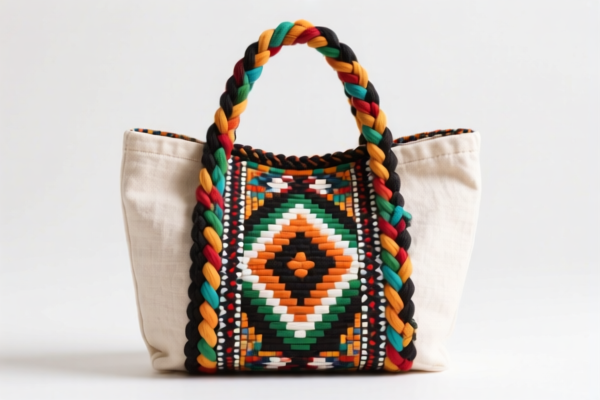
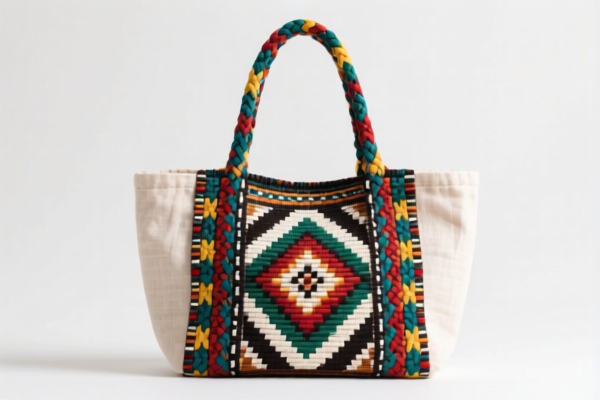
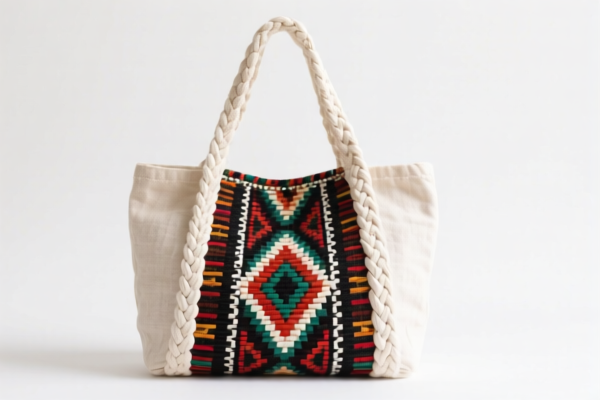
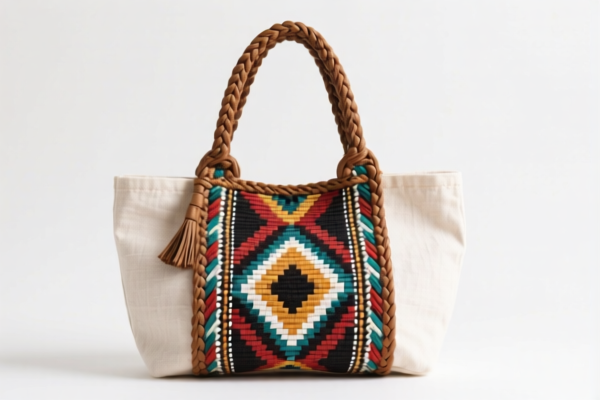
AI Analysis
👜 Cotton Braided Ethnic Style Handbags (编织手提包,匹配形态与编织材料)
🌐 HS Code Reference & Customs Clearance Guide | 2026 Latest Tariff Analysis | Professional Clearance Strategy
📌 I. Product Definition & Classification: Do You Really Understand "Ethnic Handbags"?
Cotton braided ethnic handbags are accessories characterized by their handmade, artisanal, or bohemian aesthetic, primarily constructed from cotton yarns or blends. In international trade, the classification hinges not just on the material (cotton) but on the structure and manufacturing process.
Key Distinction:
- Textile Bags (Chapter 42): Handbags made of textile materials (including braided cotton) that retain their shape due to structure or lining.
- Woven Plant Materials (Chapter 46): Handbags made of plaited materials such as straw, bamboo, rattan, etc.
- Other Textile Bags (Chapter 42): General textile bags not specified elsewhere.
⚠️ Critical Identification Point:
- If the bag is braided cotton (textile material) and retains its shape through structure/lining → Chapter 42.
- If the bag is made of bamboo, rattan, or straw (plant material) → Chapter 46.
- Do not confuse "cotton braid" (textile) with "plant fiber braid" (Chapter 46).
📦 II. HS Code Classification Details (2026 Latest Tariff Authority Mapping)
| HS Code | Product Description | Applicable Scenario | Material Type |
|---|---|---|---|
4202.22.40.20 |
Woven handbags, matching form and braided materials | Cotton braided, polyester-cotton blend braided, synthetic fiber braided | ✅ Textile (Braided) |
4202.22.89.80 |
Other handbags, matching form and textile materials | Non-braided cotton bags, leather-textile mix, other textile crafts | ✅ Textile (Non-Braided or Other) |
4602.19.29.20 |
Woven handbags, matching form and plant material weaving | Bags made of palm leaves, grass, generic plant fibers | ✅ Plant Fiber |
4602.11.21.00 |
Woven handbags, matching form and bamboo/rattan/plant materials | Traditional bamboo, rattan, willow baskets/handbags | ✅ Plant Fiber (Bamboo/Rattan) |
🔍 Key Reminder:
- Cotton braided bags fall under4202.22.40.20(if specifically "braided" textile) or4202.22.89.80(if other textile).
- Plant-based braided bags (bamboo, rattan) fall under Chapter 46.
- Misclassification Risk: Declaring a cotton bag as "bamboo" to avoid tariffs is fraud. Customs will inspect material composition.
💰 III. 2026 Latest Tariff Rate Details (Including Surcharges, Policy Add-ons)
✅ Applicable Country: United States (US)
✅ Country of Origin: China (CN)
✅ Effective Date: November 10, 2025 (and subsequent imports)
🎯 1. 4202.22.40.20 —— Woven Handbags, Braided Textile Material (Cotton Braided)
| Item | Content |
|---|---|
| Base Tariff | 7.4% (Ad Valorem) |
| Section 301 Surcharge | +25.0% (USITC Footnote 9903.88.01) |
| Section 122 Surcharge | +10.0% (Under IEEPA, targeting China/HK products) |
| Total Tax Rate | 42.4% |
| Tax Calculation | CIF Value × 42.4% |
| De Minimis Exemption | ❌ NOT Applicable (deny_de_minimis) |
| Legal Basis Path | IEEPA:9903.01.25 → IEEPA:9903.01.24 → USITC:4202.22.40.20 → FOOTNOTE:9903.88.01 |
📌 Explanation:
- "Base 7.4%": Standard Most Favored Nation (MFN) rate for textile handbags.
- "Section 301 +25%": Trade war tariffs imposed under US Trade Act Section 301.
- "Section 122 +10%": Additional tariff under Section 122 of the Trade Expansion Act (232 procedure) or IEEPA provisions for national security/economic interests.
- Total 42.4% is very high, significantly impacting profit margins.
🎯 2. 4202.22.89.80 —— Other Handbags, Textile Material
| Item | Content |
|---|---|
| Base Tariff | 17.6% (Ad Valorem) |
| Section 301 Surcharge | +25.0% |
| Section 122 Surcharge | +10.0% |
| Total Tax Rate | 52.6% |
| Tax Calculation | CIF Value × 52.6% |
| De Minimis Exemption | ❌ NOT Applicable (deny_de_minimis) |
| Legal Basis Path | IEEPA:9903.01.25 → IEEPA:9903.01.24 → USITC:4202.22.89.80 → FOOTNOTE:9903.88.01 |
📌 Note:
- If the bag is not classified as "braided" (e.g., woven but not plaited, or mixed material not meeting "braided" criteria), it may fall here.
- Total 52.6% is extremely high. Avoid this code unless necessary.
🎯 3. 4602.19.29.20 —— Woven Handbags, Plant Material (Generic)
| Item | Content |
|---|---|
| Base Tariff | 5.3% (Ad Valorem) |
| Section 301 Surcharge | +25.0% |
| Section 122 Surcharge | +10.0% |
| Total Tax Rate | 40.3% |
| Tax Calculation | CIF Value × 40.3% |
| De Minimis Exemption | ❌ NOT Applicable (deny_de_minimis) |
| Legal Basis Path | IEEPA:9903.01.25 → IEEPA:9903.01.24 → USITC:4602.19.29.20 → FOOTNOTE:9903.88.01 |
📌 Explanation:
- Applies to handbags made of generic plant fibers (e.g., palm, grass) that are not bamboo/rattan.
- Still subject to heavy surcharges.
🎯 4. 4602.11.21.00 —— Woven Handbags, Bamboo/Rattan
| Item | Content |
|---|---|
| Base Tariff | 6.2% (Ad Valorem) |
| Section 301 Surcharge | +25.0% |
| Section 122 Surcharge | +10.0% |
| Total Tax Rate | 41.2% |
| Tax Calculation | CIF Value × 41.2% |
| De Minimis Exemption | ❌ NOT Applicable (deny_de_minimis) |
| Legal Basis Path | IEEPA:9903.01.25 → IEEPA:9903.01.24 → USITC:4602.11.21.00 → FOOTNOTE:9903.88.01 |
📌 Explanation:
- Applies to traditional bamboo, rattan, or willow handbags.
- Base rate is lower (6.2%) but still subject to 35% in surcharges.
🛠️ IV. Customs Clearance Practical Advice (Real-World Pitfall Avoidance)
✅ 1. Documentation Checklist (Missing Items Cause Delays)
| Document | Required | Description |
|---|---|---|
| ✅ Product Specification Sheet | ✔️ | Include material composition (e.g., "100% Cotton Braided"), dimensions, weight. |
| ✅ Material Test Report | ✔️ | Crucial: Lab test proving material is Cotton (not bamboo/plant) to justify Chapter 42. |
| ✅ Product Photos (Including Label) | ✔️ | Clear shots of the bag, inside lining, and brand label. |
| ✅ Commercial Invoice | ✔️ | Must state: "Handbag, Braided Cotton, Ethnic Style, CN Origin". |
| ✅ Packing List | ✔️ | Detail contents to avoid "unknown goods" flags. |
| ✅ Cert of Origin (CO) | ✔️ | Proves Chinese origin (triggers surcharges). |
✅ 2. Declaration Tips (Key Mantras)
🔥 "Material Determines Chapter, Braided Determines Subheading!"
| Scenario | Correct Declaration | Incorrect Action |
|---|---|---|
| Cotton Braided Bag | 4202.22.40.20 (42.4%) |
Declare as "Bamboo Bag" (4602...) → Fraud/Confiscation |
| Bamboo/Rattan Bag | 4602.11.21.00 (41.2%) |
Declare as "Cotton" → Wrong HS Code, Delay |
| Mixed Material Bag | 4202.22.89.80 (52.6%) |
Try to split components → Higher Tax |
| Non-Braided Textile Bag | 4202.22.89.80 (52.6%) |
Use 4202.22.40.20 → Incorrect Classification |
✅ 3. Special Case Handling
| Situation | Recommendation |
|---|---|
| Cotton vs. Plant Fiber | Provide lab test report for material. Customs will test if in doubt. |
| Small Quantity (De Minimis) | ❌ No Benefit: All these codes are deny_de_minimis. Even small shipments pay 42-52%. |
| OEM Custom Bags | Provide design drawings and material specs to avoid "generic" classification. |
| Lined Bags | If lined with leather or plastic, still classified under textile/plant if that's the primary structure. |
🌍 V. Global Market Comparison (2026 Latest)
| Country/Region | Recommended HS Code | Tariff (China Origin) | Certification | Remarks |
|---|---|---|---|---|
| 🇺🇸 USA | 4202.22.40.20 |
42.4% | None Specific | High surcharges; no de minimis |
| 🇨🇳 China | 4202.22.40.20 |
5% - 10% | None | No surcharges |
| 🇪🇺 EU | 4202.22.40.20 |
0% - 4% | REACH (if plastic lining) | Low tariffs; CE if applicable |
| 🇬🇧 UK | 4202.22.40.20 |
0% - 4% | UKCA | Post-Brexit rules apply |
| 🇨🇦 Canada | 4202.22.40.20 |
0% - 6% | None | Low tariffs |
📌 Conclusion:
- USA is the most expensive market for these goods due to Section 301 + Section 122 tariffs.
- Diversify Supply Chain: Consider producing in Vietnam, Thailand, or India to avoid China-specific surcharges (if rules of origin are met).
📌 VI. Common Mistakes & Pitfalls (Lessons Learned)
❌ Mistake 1: Declaring Cotton Braided bags as Bamboo/Rattan (4602...) to get lower base rates.
👉 Consequence: Customs inspection reveals cotton → Penalties, Seizure, Back Taxes.
❌ Mistake 2: Assuming De Minimis ($800) exemption applies.
👉 Consequence: These codes are explicitly denied de minimis. Every shipment pays tax.
❌ Mistake 3: Using vague descriptions like "Bag" or "Accessory."
👉 Consequence: Customs assigns highest duty rate or delays clearance for inspection.
❌ Mistake 4: Not providing material proof.
👉 Consequence: Customs assumes worst-case scenario or misclassifies → Audits.
✅ Correct Action:
"Cotton Braided Handbag, Ethnic Style, 100% Cotton Yarn, Lined with Polyester, HS 4202.22.40.20"
🎯 VII. Conclusion: Precision Saves Money!
🎯 Remember the Mantra:
🔹 "Cotton = Chapter 42, Plant = Chapter 46, No De Minimis!"
🔹 "42.4% is the Floor, 52.6% is the Ceiling, Don't Get Caught in Between!"
📌 Pro Tip:
If your handbags are originally produced in Vietnam, Mexico, or India, you may avoid Section 301/122 surcharges, reducing total tax to ~7-17%.
Recommendation: Apply for Pre-Ruling (Advance Ruling) if unsure about material classification.
📣 Immediate Action:
📞 Consult a licensed customs broker + Provide Material Test Report + Apply for HS Code Pre-Ruling
🚀 Ensure smooth clearance, avoid penalties, and protect your profit margins!
✨ Professional Clearance Starts with Accurate Classification!
💼 Every Percentage Point Saved is Pure Profit!
Customer Reviews
About HS Code Classification
The Harmonized System (HS) is an internationally standardized nomenclature developed by the World Customs Organization (WCO) to classify traded products. Over 200 countries use the HS system as the basis for customs tariffs, trade statistics, and import/export regulations.
Each HS code follows a hierarchical structure:
- Chapter (2 digits) — Broad category of goods (e.g., Chapter 84: Machinery and Mechanical Appliances)
- Heading (4 digits) — More specific grouping within the chapter
- Subheading (6 digits) — Internationally standardized breakdown, used by all WCO member countries
- National subdivisions (8-10 digits) — Country-specific extensions for further classification, such as US HTSUS 10-digit codes
Correct HS code classification is essential for smooth customs clearance, accurate duty payment, and compliance with trade regulations. Misclassification can lead to customs delays, overpayment of duties, or penalties.
When importing from CN to US, the applicable tariff rates may include:
- Most-Favored-Nation (MFN) rate — The standard duty rate applied to WTO members
- General rate — Applied to countries without trade agreements
- Trade remedy duties — Additional tariffs such as Section 301 (anti-dumping), Section 232 (national security), or countervailing duties
The information provided on this page is for reference purposes only. For official classification, please consult with your local customs authority or a licensed customs broker.