Cotton Cosmetic Box
CN → US| HS Code | Tariff Rate | Origin | Destination | Doc |
|---|---|---|---|---|
| 4202926010 | 41.3% | CN | US | Official Doc |
| 4202926091 | 41.3% | CN | US | Official Doc |
| 6307909891 | 24.5% | CN | US | Official Doc |
Product Images
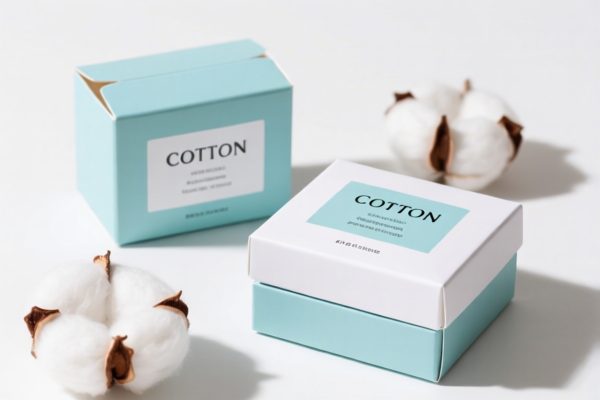
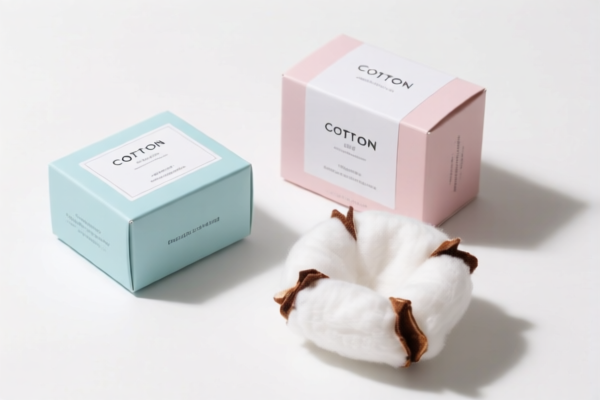
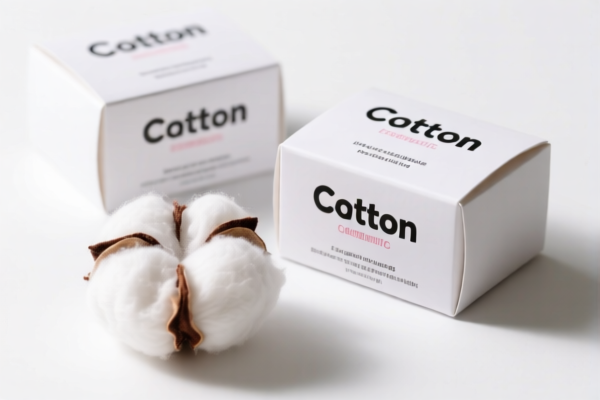
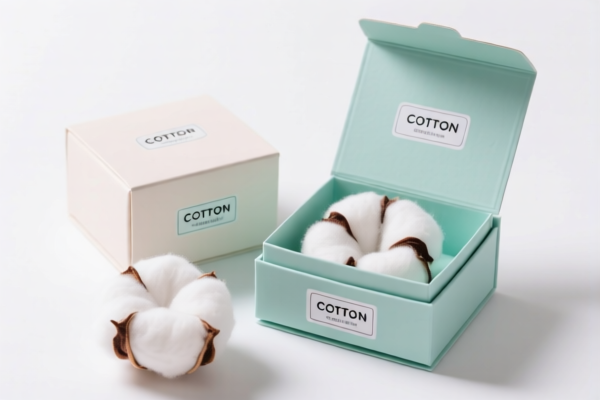
AI Analysis
🧵 Cotton Cosmetic Box (Cotton Jewelry/Cosmetic Organizer)
🌐 HS Code Reference & Customs Clearance Guide | 2026 Latest Tariff Analysis | Professional Strategy for US Imports
📌 I. Product Definition & Classification: Do You Really Understand "Cotton Boxes"?
A Cotton Cosmetic Box (often used for jewelry, watches, or small beauty accessories) is typically a soft-sided or semi-structured container made primarily of cotton fabric. In international trade, the classification depends heavily on whether the item is considered a "jewelry case" or a "general textile container."
Key Distinction Points: * Jewelry/Watch Cases (Heading 4202): If the box is specifically designed to hold jewelry, watches, or similar personal items, and has a structure typical of cases (even if soft), it may fall under 4202.92. * General Textile Containers (Heading 6307): If the box is a simple fabric pouch, storage bag, or general-purpose container without the specific "case" structure of jewelry boxes, it is often classified as an "other made-up textile articles."
⚠️ Critical Clarification:
- If the product is a structured box (even if fabric-covered) primarily used for jewelry/accessories → HS 4202.92.60
- If the product is a simple fabric box/bag for general storage → HS 6307.90.98
📦 II. HS Code Classification Details (Based on Provided Data)
According to the provided dataset (<DATA>), the following HS codes apply to 100% Cotton cosmetic/jewelry boxes:
| HS Code | Product Description | Usage/Category | Material |
|---|---|---|---|
4202.92.60.10 |
Cotton Cosmetic/Jewelry Box | Jewelry boxes and similar containers | 100% Cotton |
4202.92.60.91 |
Cotton Cosmetic Box | Other containers (miscellaneous) | 100% Cotton |
6307.90.98.91 |
Cotton Storage Box | Other made-up textile articles | 100% Cotton |
🔍 Important Note:
- HS 4202.92.60.10 is the most common and accurate code for structured jewelry/cosmetic boxes made of textile materials.
- HS 6307.90.98.91 is a "catch-all" for textile products not elsewhere specified, often used for simpler fabric containers or those not meeting the "case" definition of 4202.
- Both categories are subject to significant additional tariffs when imported into the US from China.
💰 III. 2026 Latest Tariff Rate Breakdown (Including Additional Taxes & Policy Surcharges)
✅ Target Market: United States (US)
✅ Origin: China (CN)
✅ Effective Date: Tariffs apply to imports from China as per Section 301 and Section 122 measures.
🎯 1. 4202.92.60.10 & 4202.92.60.91 — Cotton Jewelry/Cosmetic Boxes (Textile Cases)
| Item | Content |
|---|---|
| Base Tariff | 6.3% (Most Favored Nation rate) |
| Section 301 Additional Tariff | 25.0% |
| Section 122 Tariff | 10.0% |
| Total Tax Rate | 41.3% |
| Tax Calculation | CIF Value × 41.3% |
| De Minimis Exemption? | ❌ NO (Cannot use $800 de minimis exemption for these HS codes under current Section 122/301 rules for China) |
| Legal Basis Path | USITC:4202.92.60.10 → Section 301: Footnote 9903.88.01 → Section 122: 10% surcharge |
📌 Explanation:
- The 25% is the standard Section 301 tariff on most Chinese textile goods.
- The 10% is an additional Section 122 tariff (or similar punitive measure) applied to specific consumer goods from China.
- Base 6.3% + 25% + 10% = 41.3% Total Duty.
- This is a high-duty category. Clearance is strictly monitored.
🎯 2. 6307.90.98.91 — Other Cotton Storage Boxes (General Textile Articles)
| Item | Content |
|---|---|
| Base Tariff | 7.0% |
| Section 301 Additional Tariff | 7.5% |
| Section 122 Tariff | 10.0% |
| Total Tax Rate | 24.5% |
| Tax Calculation | CIF Value × 24.5% |
| De Minimis Exemption? | ❌ NO (Same restrictions as above) |
| Legal Basis Path | USITC:6307.90.98.91 → Section 301: Footnote 9903.88.01 → Section 122: 10% surcharge |
📌 Explanation:
- While the Section 301 rate is lower (7.5% vs 25%) for general textile articles compared to jewelry cases, the 10% Section 122 tariff still applies.
- Total: 24.5%.
- Strategy Tip: If your product can be legally classified under6307instead of4202, you may save ~16.8% in duties. However, this must be justifiable based on product structure and use. Misclassification can lead to penalties.
🛠️ IV. Customs Clearance Practical Advice (Avoiding Pitfalls)
✅ 1. Documentation Checklist (Must-Have)
| Document | Required? | Notes |
|---|---|---|
| ✅ Commercial Invoice | ✔️ | Must clearly state "Cotton Cosmetic Box" or "Jewelry Case" |
| ✅ Packing List | ✔️ | Detail contents (e.g., "100 pcs Cotton Jewelry Box") |
| ✅ Product Photos | ✔️ | Show structure, lining, and material (cotton) |
| ✅ Material Composition Statement | ✔️ | Confirm "100% Cotton" to match HS code |
| ✅ Country of Origin Certificate | ✔️ | Essential for tariff calculation |
| ✅ Labeling | ✔️ | "Made in China" must be visible on product/packaging |
✅ 2. Classification Strategy & Declaration Tips
🔥 "Classify for Cost, But Justify for Compliance!"
| Scenario | Recommended HS Code | Reasoning |
|---|---|---|
| Structured box with compartments for rings/watches | 4202.92.60.10 |
Meets definition of "jewelry box" under HTSUS |
| Simple fabric pouch or soft bag | 6307.90.98.91 |
Not a structured "case," falls under general textile |
| Mixed materials (e.g., cotton + plastic liner) | 4202.92.60.10 |
If textile is the primary material, still often 4202 |
⚠️ Warning:
- Do NOT misdeclare a4202product as6307to save 16.8%. Customs may request proof of non-structure, and if found guilty, face back-dated duties + penalties.
- Ensure the Section 122 tariff is accounted for in your pricing model.
✅ 3. Special Considerations
| Issue | Solution |
|---|---|
| High Duty Impact | Factor 41.3% (for 4202) or 24.5% (for 6307) into your landed cost. |
| De Minimis Rule | Do not rely on $800 exemption. These HS codes are explicitly targeted under Section 122/301 for China-origin goods. |
| Pre-Ruling | Consider applying for an International Trade Commission (USITC) Pre-Ruling if your product is borderline between 4202 and 6307. |
🌍 V. Global Market Comparison (2026)
| Country/Region | Recommended HS Code | Total Duty (China Origin) | Notes |
|---|---|---|---|
| 🇺🇸 USA | 4202.92.60.10 / 6307.90.98.91 |
41.3% or 24.5% | High tariffs due to Section 301 & 122 |
| 🇨🇳 China | Same | ~5-7% | No additional punitive tariffs |
| 🇪🇺 EU | 4202.92 / 6307.99 |
~12-16% | No Section 301/122 equivalents |
| 🇨🇦 Canada | 4202.92 / 6307.90 |
~12-16% | No Section 301/122 equivalents |
📌 Conclusion:
- The US market is significantly more expensive for cotton cosmetic boxes due to trade restrictions.
- Alternative Strategy: Consider sourcing from Vietnam, Thailand, or Mexico to avoid Section 301/122 tariffs (but ensure substantial transformation rules are met).
📌 VI. Common Mistakes & Pitfalls (Learn from Others' Errors)
❌ Mistake 1: Using "De Minimis" ($800) for direct-to-consumer shipments of cotton boxes from China.
👉 Result: Goods seized, duties backdated, and penalties applied. Section 122 specifically blocks de minimis for these categories.
❌ Mistake 2: Declaring a structured jewelry box as a "General Storage Bag" to avoid 25% tariff.
👉 Result: Customs audit reveals structure → Refund duties + 20% penalty.
❌ Mistake 3: Ignoring the 10% Section 122 tariff.
👉 Result: Underpaid duties → Customs holds shipment for payment + interest.
✅ Best Practice:
Accurate Description: "100% Cotton Structured Jewelry Box, Soft-Lined, with Compartments, for Cosmetic/Jewelry Storage"
HS Code:4202.92.60.10
Declared Value: CIF (Cost + Insurance + Freight)
🎯 VII. Conclusion: Professional Clearance, Cost Control, Efficiency!
🎯 Key Takeaways:
🔹 HS Code Matters:
4202vs6307can mean a 16.8% difference in duty (41.3% vs 24.5%).
🔹 No De Minimis: Do not use $800 exemption for these goods from China.
🔹 Tariff Reality: Budget for 24.5%–41.3% total duty in the US.
🔹 Documentation: Keep photos, composition statements, and invoices ready for audits.
📌 Pro Tip:
If your business volume is high, consider:
1. Pre-Ruling: Get official USITC classification ruling.
2. Supply Chain Diversification: Move production to non-China origins (e.g., Vietnam) to avoid Section 301/122 tariffs.
3. Value-Added Processing: Ensure significant transformation occurs in third countries to change origin status.
📣 Action Now:
📞 Consult a licensed customs broker for Pre-Ruling Application.
📊 Calculate Landed Cost including 24.5%–41.3% duty.
🚀 Ensure Compliance to avoid seizures and penalties.
✨ Accurate Classification Saves Money!
💼 Every dollar in duty impacts your profit margin!
Customer Reviews
About HS Code Classification
The Harmonized System (HS) is an internationally standardized nomenclature developed by the World Customs Organization (WCO) to classify traded products. Over 200 countries use the HS system as the basis for customs tariffs, trade statistics, and import/export regulations.
Each HS code follows a hierarchical structure:
- Chapter (2 digits) — Broad category of goods (e.g., Chapter 84: Machinery and Mechanical Appliances)
- Heading (4 digits) — More specific grouping within the chapter
- Subheading (6 digits) — Internationally standardized breakdown, used by all WCO member countries
- National subdivisions (8-10 digits) — Country-specific extensions for further classification, such as US HTSUS 10-digit codes
Correct HS code classification is essential for smooth customs clearance, accurate duty payment, and compliance with trade regulations. Misclassification can lead to customs delays, overpayment of duties, or penalties.
When importing from CN to US, the applicable tariff rates may include:
- Most-Favored-Nation (MFN) rate — The standard duty rate applied to WTO members
- General rate — Applied to countries without trade agreements
- Trade remedy duties — Additional tariffs such as Section 301 (anti-dumping), Section 232 (national security), or countervailing duties
The information provided on this page is for reference purposes only. For official classification, please consult with your local customs authority or a licensed customs broker.