Cotton Cosmetic Storage Box
CN → US| HS Code | Tariff Rate | Origin | Destination | Doc |
|---|---|---|---|---|
| 4202926010 | 41.3% | CN | US | Official Doc |
| 4202926091 | 41.3% | CN | US | Official Doc |
| 6307908940 | 17.0% | CN | US | Official Doc |
| 6307909891 | 24.5% | CN | US | Official Doc |
| 4202926010 | 41.3% | CN | US | Official Doc |
Product Images
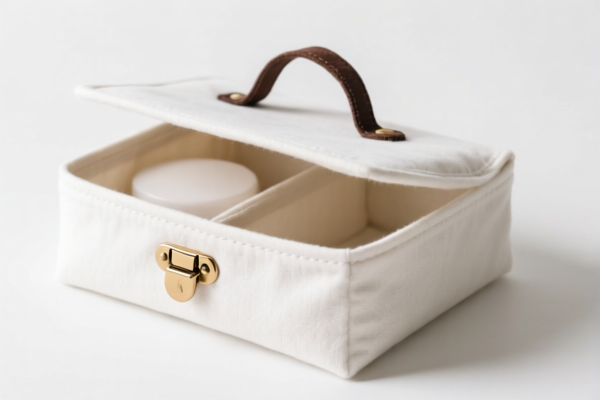


AI Analysis
🌟 Cotton Cosmetic Storage Box (Pure Cotton Jewelry/Cosmetic Organizer)
🌐 HS Code Reference & Customs Clearance Guide | 2024/2025 Latest Tariff Analysis | Professional Clearance Strategy
📌 I. Product Definition & Classification: Do You Really Know What "Cotton Storage" Is?
A "Cotton Cosmetic Storage Box" is a generic term often used by sellers, but in international trade and customs classification, it is highly ambiguous. The correct HS Code depends entirely on three critical factors: 1. Is it for Jewelry/Retail? (Specific Use) 2. Is it a Bag/Pouch or a Rigid Box? (Form/Structure) 3. Is it Retail-Packed? (Sales Format)
⚠️ Critical Distinction:
- If it is a rigid box for jewelry, it likely falls under Chapter 42.
- If it is a flexible pouch/bag for tools or general storage, it might fall under Chapter 63 or Chapter 42.
- Tax rates vary drastically (17% vs. 41.3%) based on this classification!
📦 II. HS Code Classification Details (Based on Provided Data)
Based on the specific data provided in <DATA>, there are four potential HS Codes. Here is the breakdown:
| HS Code | Product Description (from Data) | Key Characteristics | Tax Rate |
|---|---|---|---|
| 4202.92.60.10 | Cotton Jewelry Storage Box (Pure cotton, use: jewelry box & similar containers) | Rigid/semi-rigid box; specifically for jewelry; Retail-ready? | 41.3% |
| 4202.92.60.91 | Cotton Jewelry Storage Box (Pure cotton, use: other containers, non-retail jewelry boxes) | Rigid/semi-rigid box; for storage; Non-retail (B2B bulk) | 41.3% |
| 6307.90.89.40 | Cotton Tool Storage Pouch (Cotton material, form: storage pouch) | Flexible bag/pouch; generic storage (e.g., for tools); Not a box | 17.0% |
| 4202.92.60.91 | Cotton Tool Storage Pouch (Cotton material, form: container/bag, use: storage, textile material container) | Flexible bag/pouch; classified as Textile Container under Ch. 42 | 41.3% |
🔍 Important Note:
- HS Code4202.92.60.10and4202.92.60.91share the same total tax rate (41.3%).
- HS Code6307.90.89.40has a significantly lower tax rate (17.0%).
- Why the difference?6307is for "Other Made-Up Articles," while4202is for "Articles of Apparel Accessories." Customs often view rigid/semi-rigid containers as Chapter 42, while flexible bags might be Chapter 63. However, if the "pouch" is deemed a "textile container" under Ch. 42, it jumps to 41.3%.
💰 III. 2024/2025 Tariff Rate Breakdown (Detailed Tax Clauses)
✅ Applicable Market: USA (US)
✅ Origin: China (CN)
✅ Effective Time: 2024/2025 (Current Trade War Context)
🎯 1. HS Code 4202.92.60.10 & 4202.92.60.91
Product: Cotton Jewelry/Cosmetic Boxes (Chapter 42)
| Item | Content |
|---|---|
| Basic Tariff (MFN) | 6.3% |
| Section 301 Tariff (Additional) | 25.0% |
| Section 122 Tariff | 10.0% |
| Total Tax Rate | 41.3% |
| Tax Calculation | CIF Value × 41.3% |
| De Minimis Exemption? | ❌ NO (Section 301 & 122 tariffs generally deny de minimis exemption for Chinese goods under $800) |
📌 Explanation:
- 6.3% Basic Tariff: Standard Most Favored Nation (MFN) rate for textile-based containers.
- 25.0% Section 301 Tariff: Imposed under US Trade Law Section 301 on Chinese goods.
- 10% Section 122 Tariff: Additional tariff under Section 122 (often applied to specific categories or as a national security measure).
- Total: 41.3% is a very high tax burden. Must be factored into pricing!
🎯 2. HS Code 6307.90.89.40
Product: Cotton Tool Storage Pouch (Chapter 63)
| Item | Content |
|---|---|
| Basic Tariff (MFN) | 7.0% |
| Section 301 Tariff (Additional) | 0.0% |
| Section 122 Tariff | 10.0% |
| Total Tax Rate | 17.0% |
| Tax Calculation | CIF Value × 17.0% |
| De Minimis Exemption? | ❓ Check Specifics: While Section 301 is 0%, Section 122 may still apply. De minimis rules are complex; consult a broker. |
📌 Explanation:
- 7.0% Basic Tariff: Standard MFN rate for other made-up textile articles.
- 0% Section 301: This is critical! This HS Code is exempt from the 25% Section 301 tariff.
- 10% Section 122 Tariff: Still applies.
- Total: 17.0% is significantly cheaper than the 41.3% rate.
- Strategy: If the product can be classified as a "Tool Storage Pouch" rather than a "Jewelry Box," you save 24.3% in taxes!
🛠️ IV. Customs Clearance Practical Advice (Real-World Pitfalls)
✅ 1. Preparation Checklist (Must-Have Documents)
| Document | Required? | Notes |
|---|---|---|
| ✅ Product Spec Sheet | ✔️ | Must specify: Material (100% Cotton), Use (Jewelry/Tools/Cosmetics), Form (Box/Pouch) |
| ✅ Product Photos | ✔️ | Clear shots of the item, including any rigid structure vs. flexible pouch |
| ✅ Commercial Invoice | ✔️ | Crucial: Description must match HS Code logic (e.g., "Jewelry Box" vs. "Storage Pouch") |
| ✅ Packing List | ✔️ | Show contents to prove it's not a mixed shipment |
| ✅ Origin Certificate | ✔️ | Proof of Chinese origin (triggers Section 301/122) |
✅ 2. Classification Strategy (Key Tip)
🔥 "Box = 4202 (41.3%) | Pouch = 6307 (17%) | But Be Careful!"
| Scenario | Recommended HS Code | Risk |
|---|---|---|
| Rigid/ Semi-rigid Jewelry Box | 4202.92.60.10 / .91 |
Low risk, but high tax (41.3%) |
| Soft Pouch for Jewelry | 4202.92.60.91 |
High risk: Customs may still classify as "Textile Container" → 41.3% |
| Soft Pouch for Tools | 6307.90.89.40 |
Low tax (17%), but must prove it's for "tools" or "general storage," not jewelry |
| Cosmetic Bag (Makeup Pouch) | 4202.92.60.91 |
Likely 41.3%, as cosmetic bags are often treated like jewelry pouches |
📌 Warning:
- If you declare a "Cotton Cosmetic Pouch" as6307.90.89.40(Tool Pouch), customs may challenge it if the product looks like a makeup bag.
- Best Practice: If it’s for cosmetics/jewelry, accept the 41.3% rate under4202.92.60.10/.91to avoid misclassification penalties.
✅ 3. Special Cases
| Case | Advice |
|---|---|
| Retail vs. Non-Retail | 4202.92.60.10 is for retail. 4202.92.60.91 is for non-retail (B2B). If selling directly to consumers online, use .10. |
| Material Blend | If the box has plastic zippers, metal clasps, or lining, it’s still likely Chapter 42, but ensure cotton is the essential character. |
| Section 122 Impact | Remember, 10% Section 122 applies to all these codes. It’s unavoidable for Chinese-origin goods in these categories. |
🌍 V. Global Market Comparison (2024/2025)
| Country | HS Code | Base Tariff | Section 301/Additional | Total Tax | Notes |
|---|---|---|---|---|---|
| 🇺🇸 USA | 4202.92.60.10 |
6.3% | 35.0% (25%+10%) | 41.3% | High tax, no de minimis |
| 🇺🇸 USA | 6307.90.89.40 |
7.0% | 10.0% (122 only) | 17.0% | Lower tax, but classification risk |
| 🇨🇳 China | 4202.92.60.10 |
~6-10% | None | ~6-10% | Low import tax for Chinese domestic |
| 🇪🇺 EU | 4202.92.60 |
~4-6% | None | ~4-6% | No Section 301 in EU |
| 🇬🇧 UK | 4202.92.60 |
~4-6% | None | ~4-6% | Post-Brexit rules apply |
📌 Conclusion:
- USA is the most expensive market due to Section 301 and 122 tariffs.
- EU/UK/China have much lower tariffs.
- If targeting the US, optimize classification where possible, but do not misrepresent the product.
📌 VI. Common Mistakes & Pitfalls (Lessons Learned)
❌ Mistake 1: Declaring a "Jewelry Box" as a "Tool Pouch" to get 17% tax
👉 Consequence: Customs audit, penalty, and back-tariff (41.3% - 17% = 24.3% + fees)
❌ Mistake 2: Ignoring Section 122 Tariff
👉 Consequence: Underpayment by 10%, leading to seizure or fines
❌ Mistake 3: Assuming "De Minimis" ($800 exemption) applies
👉 Consequence: NO! Section 301 and 122 tariffs block de minimis exemption for Chinese goods. Even small packages are taxed!
❌ Mistake 4: Vague Description ("Cotton Box")
👉 Consequence: Customs delays, requests for more info, potential misclassification
✅ Correct Approach:
"100% Cotton Jewelry Storage Box, Rigid, Retail Packaging, Model XYZ, Made in China"
- Use4202.92.60.10
- Prepare for 41.3% tax
- Factor into price!
🎯 VII. Conclusion: Professional Clearance Saves Money!
🎯 Key Takeaway:
🔹 "Jewelry/Cosmetic Box = 41.3% Tax"
🔹 "Tool Pouch = 17.0% Tax (if correctly classified)"
🔹 "No De Minimis for Chinese Goods under Section 301/122"
📌 Action Plan:
1. Audit your product: Is it a box or a pouch? Is it for jewelry or tools?
2. Choose the right HS Code: Be honest but strategic.
3. Budget for taxes: Include 41.3% (or 17.0%) in your landed cost calculation.
4. Document everything: Keep photos, specs, and invoices ready for customs.
📣 Immediate Action:
📞 Contact your customs broker to confirm the HS Code for your specific product.
🚀 Plan your pricing with the correct tax rate to avoid margin erosion.
✨ Clear Classification, Clear Profits!
💼 Every percent of tax saved is pure profit!
Customer Reviews
About HS Code Classification
The Harmonized System (HS) is an internationally standardized nomenclature developed by the World Customs Organization (WCO) to classify traded products. Over 200 countries use the HS system as the basis for customs tariffs, trade statistics, and import/export regulations.
Each HS code follows a hierarchical structure:
- Chapter (2 digits) — Broad category of goods (e.g., Chapter 84: Machinery and Mechanical Appliances)
- Heading (4 digits) — More specific grouping within the chapter
- Subheading (6 digits) — Internationally standardized breakdown, used by all WCO member countries
- National subdivisions (8-10 digits) — Country-specific extensions for further classification, such as US HTSUS 10-digit codes
Correct HS code classification is essential for smooth customs clearance, accurate duty payment, and compliance with trade regulations. Misclassification can lead to customs delays, overpayment of duties, or penalties.
When importing from CN to US, the applicable tariff rates may include:
- Most-Favored-Nation (MFN) rate — The standard duty rate applied to WTO members
- General rate — Applied to countries without trade agreements
- Trade remedy duties — Additional tariffs such as Section 301 (anti-dumping), Section 232 (national security), or countervailing duties
The information provided on this page is for reference purposes only. For official classification, please consult with your local customs authority or a licensed customs broker.