Cotton Durable Travel Bag
CN → US| HS Code | Tariff Rate | Origin | Destination | Doc |
|---|---|---|---|---|
| 3926909989 | 22.8% | CN | US | Official Doc |
| 6307909891 | 24.5% | CN | US | Official Doc |
| 9503000071 | 10.0% | CN | US | Official Doc |
| 9503000073 | 10.0% | CN | US | Official Doc |
| 6305200000 | 23.7% | CN | US | Official Doc |
Product Images
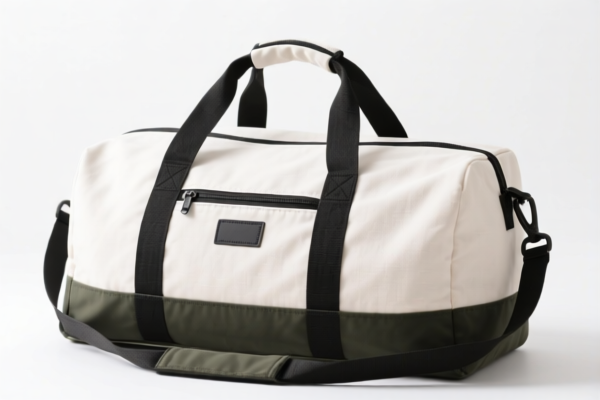
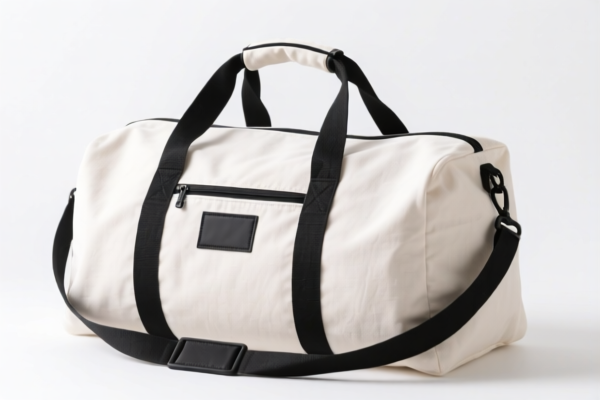
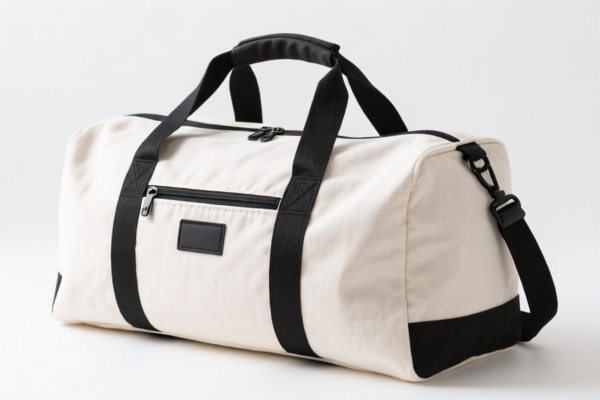
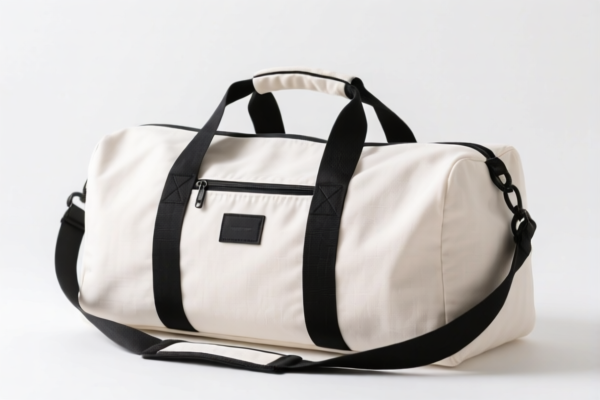
AI Analysis
🎒 Cotton Durable Travel Bag (Cotton Durable Travel Bag)
🌐 HS Code Reference & Customs Clearance Guide | 2026 Latest Tariff Analysis | Professional Clearance Strategy 📌 I. Product Definition & Classification: What is a "Cotton Durable Travel Bag"?
A "Cotton Durable Travel Bag" is a finished consumer good, typically used for carrying personal items during travel or daily use. In international trade, classification depends heavily on two factors: 1. Material: Primarily Cotton (Textile). 2. Function/Shape: A Bag/Backpack (Article of Apparel or Accessory).
There is often confusion between classifying such items as Textiles (Chapter 63) or Plastics/Other Materials (Chapter 39), or even Toys/Accessories (Chapter 95). The correct classification determines the tariff burden significantly.
⚠️ Key Distinction Points: - If the bag is primarily cotton fabric and used for carrying goods → Chapter 63 (Other Made-Up Textile Articles). - If the bag is made of plastic film/textile composite and used for packaging/goods transport → Chapter 39 (Plastics Articles). - If the bag is a toy or has specific entertainment features → Chapter 95 (Toys).
📦 II. HS Code Classification Details (Based on Provided Data)
| HS Code | Product Description | Applicability Scenario | Material/Shape Match |
|---|---|---|---|
3926.90.99.89 |
Other articles of plastics and other materials (Niche/Residual) | Bags made of mixed materials where plastic/non-fiber dominates or is not specified as textile. | Match: "Other articles" residual category. Assumes non-metallic fiber (cotton) fits here if not purely textile classified. |
6307.90.98.91 |
Other made-up articles of textiles (Backpacks/Bags) | Cotton backpacks, travel bags, finished textile products. | Match: "Backpack" (Finished product), "Cotton" (Textile). Fits "Other made-up articles". |
9503.00.00.71 |
Toys; reduced-size models; puzzles (Bag/Student Use) | Bags classified as student supplies or toys due to design/usage. | Match: Shape (Bag) + Use (Student/Children). Cotton fits common textile inference. |
9503.00.00.73 |
Other toys and accessories (Niche) | Bags with toy-like features or specific "Other" category under Toys. | Match: Shape (Backpack/Finished Consumer Good) + Material (Cotton). No conflict with "Other" category. |
6305.20.00.00 |
Sacks and bags, for packaging, of polyethylene or polypropylene | Bags used for packaging/carrying goods, made of cotton (textile equivalent in residual logic). | Match: Material (Cotton), Form (Bag), Use (Packaging/Carrying). |
🔍 Key Reminder: -
6307.90.98.91is the most logical fit for a Cotton Backpack as a finished textile article. -3926.90.99.89and6305.20.00.00carry higher base tariffs due to misclassification risks or specific "packaging" vs "consumer bag" distinctions. -9503.xxxxcodes offer the lowest base tax (0%) but are risky if the item is not explicitly a toy/student supply.
💰 III. 2026 Latest Tariff Rate Details (Including Surcharges & Policy Add-ons)
✅ Applicable Country: United States (US) ✅ Origin: China (CN) ✅ Effective Time: Post-2025 (Includes Section 301 & IEEPA tariffs)
🎯 1. 3926.90.99.89 —— Articles of Plastics/Other Materials (High Risk Classification)
| Item | Content |
|---|---|
| Base Tariff | 5.3% |
| Section 301 Surcharge | 7.5% |
| Section 122 Tariff | 10% |
| Total Tariff | 22.8% |
| Calculation | CIF Value × 22.8% |
| De Minimis Exemption | ❌ No (Not eligible for $800 de minimis due to origin/tariff structure) |
| Legal Path | USITC:3926.90.99.89 → 301:7.5% → 122:10% |
📌 Explanation: - This classification treats the bag as a "plastic/other material" article, not a textile. - Total 22.8% is moderate but higher than the textile "toys" classification. - Risk: If the bag is clearly cotton, CBP may reclassify it to
6307, leading to discrepancies.
🎯 2. 6307.90.98.91 —— Other Made-Up Textile Articles (Most Likely Correct)
| Item | Content |
|---|---|
| Base Tariff | 7.0% |
| Section 301 Surcharge | 7.5% |
| Section 122 Tariff | 10% |
| Total Tariff | 24.5% |
| Calculation | CIF Value × 24.5% |
| De Minimis Exemption | ❌ No |
| Legal Path | USITC:6307.90.98.91 → 301:7.5% → 122:10% |
📌 Explanation: - This is the standard "Backpack/Bag" classification for textiles. - Total 24.5% is the highest among the options due to a higher base rate (7.0%). - Advantage: Technically accurate for cotton bags. Must be precise with material declarations.
🎯 3. 9503.00.00.71 & 9503.00.00.73 —— Toys/Student Supplies (Lowest Tax, Highest Risk)
| Item | Content |
|---|---|
| Base Tariff | 0.0% |
| Section 301 Surcharge | 0.0% |
| Section 122 Tariff | 10% |
| Total Tariff | 10.0% |
| Calculation | CIF Value × 10.0% |
| De Minimis Exemption | ❌ No (Due to 122 Tariff) |
| Legal Path | USITC:9503.00.00.71/73 → 122:10% |
📌 Explanation: - Total 10.0% is the lowest tariff. - Critical Condition: The bag must be demonstrably a toy or student supply (e.g., cartoon character, specific educational use, small size). - Risk: If declared as a general travel bag but classified as
9503, CBP may audit and reclassify to6307or3926, leading to penalties and back taxes.
🎯 4. 6305.20.00.00 —— Sacks/Bags for Packaging
| Item | Content |
|---|---|
| Base Tariff | 6.2% |
| Section 301 Surcharge | 7.5% |
| Section 122 Tariff | 10% |
| Total Tariff | 23.7% |
| Calculation | CIF Value × 23.7% |
| De Minimis Exemption | ❌ No |
| Legal Path | USITC:6305.20.00.00 → 301:7.5% → 122:10% |
📌 Explanation: - This code is for "packaging" bags. If your "Travel Bag" is marketed as a reusable shopping bag or packaging, this might apply. - Total 23.7% is similar to
3926. - Mismatch Risk: A "Durable Travel Bag" is usually for personal use, not packaging. Misclassification here is risky.
🛠️ IV. Customs Clearance Practical Advice (Operational Pitfall Guide)
✅ 1. Preparation Checklist (Essential Documents)
| Document | Required | Note |
|---|---|---|
| ✅ Product Spec Sheet | ✔️ | Material composition (e.g., 100% Cotton, Polyester lining), Dimensions, Zipper type. |
| ✅ Product Photos | ✔️ | Clear images of the bag, label, stitching, and any logos. |
| ✅ Commercial Invoice | ✔️ | Must accurately describe the item as "Cotton Backpack" or "Travel Bag," not "Toy" unless it is one. |
| ✅ Packing List | ✔️ | Quantity, Weight, Country of Origin (China). |
| ✅ Third-Party Test Report | ✔️ | Proof of material (Cotton) if challenged. |
✅ 2. Declaration Strategy (Key Tips)
🔥 "Classify by Function, Declare by Material, Avoid 'Toy' Traps unless True."
| Scenario | Correct Declaration | Risk of Misclassification |
|---|---|---|
| Standard Cotton Backpack | 6307.90.98.91 (24.5%) |
Low. Most accurate. |
| Bag with Cartoon Character (Child Use) | 9503.00.00.71 (10.0%) |
Medium. Must prove "Toy/Student" nature. CBP may deny if it looks like a regular bag. |
| Bag made of Plastic-Coated Cotton | 3926.90.99.89 (22.8%) |
High. If plastic coating is significant, this may be correct. |
| Reusable Shopping Bag | 6305.20.00.00 (23.7%) |
Medium. Only if marketed as packaging/reusable grocery bag. |
📌 Critical Advice: - Do NOT classify a regular adult cotton bag as
9503(Toy) to save tax. CBP uses AI and physical inspections. If the bag is clearly a travel bag (zippers, straps, size), they will reclassify it, resulting in penalties + back taxes + interest. - Do NOT use6305(Packaging) for a personal travel bag. The usage description must match "Packaging."
✅ 3. Special Circumstances
| Situation | Handling Advice |
|---|---|
| OEM Custom Bags | Provide design proofs. If the design is unique, it reinforces 6307 (Made-up article) rather than generic packaging. |
| Mixed Materials | If the bag is 80% Cotton, 20% Plastic, the primary material determines classification. Cotton → 6307. |
| Section 122 Tariff Impact | All these codes incur a 10% Section 122 tariff (if applicable under current US-China trade rules). Factor this into cost. |
🌍 V. Global Market Comparison (2026)
| Country/Region | Recommended HS Code | Tariff | Notes |
|---|---|---|---|
| 🇺🇸 USA | 6307.90.98.91 |
24.5% | Includes 301 + 122 tariffs. Highest risk of audit. |
| 🇪🇺 EU | 6307.90.98 |
~6-10% | No Section 122. Lower base duty. |
| 🇨🇳 China | 6307.90.98 |
~7% | Import duty for foreign bags. |
| 🇬🇧 UK | 6307.90.98 |
~6-10% | Post-Brexit tariffs similar to EU but independent. |
📌 Conclusion: - USA has the most complex tariff structure due to Section 301 and Section 122. - Accuracy is Key: Over-classifying to
9503(Toy) to save 14.5% (from 24.5% to 10.0%) is risky. The penalty risk often outweighs the savings.
📌 VI. Common Errors & Pitfalls (Lessons Learned)
❌ Error 1: Declaring a cotton backpack as a "Toy" (9503) to get 10% tax.
👉 Consequence: CBP rejects entry, reclassifies to 6307, charges 24.5% + penalty. Loss: 14.5% + fines.
❌ Error 2: Declaring a cotton bag as "Plastic Article" (3926) to avoid textile regulations.
👉 Consequence: Material mismatch leads to seizure or reclassification to 6307. Loss: Delay + Storage fees.
❌ Error 3: Ignoring Section 122 Tariff. 👉 Consequence: All codes in the data include a 10% surcharge. Assuming 0% base means 0% total is wrong. Total tax is always Base + 301 + 122.
✅ Correct Approach:
"Cotton Travel Backpack, Adult Use, Zipper Closure, Model XYZ" - HS Code:
6307.90.98.91- Total Tax: 24.5% - Safety: High. Compliant with CBP standards.
🎯 VII. Conclusion: Professional Declaration, Cost Optimization & Risk Management
🎯 Remember the Mantra:
🔹 "Material Determines Chapter, Function Determines Heading." 🔹 "Cotton Bag → Chapter 63. Toy Bag → Chapter 95. Don't Lie to CBP." 🔹 "Section 122 is 10% Everywhere. Factor it in!"
📌 Pro Tip:
If your cotton bag has special features (e.g., solar panel, GPS tracker, interactive toy), it might qualify for different codes or exemptions. However, for a standard Cotton Durable Travel Bag, 6307.90.98.91 is the safest and most accurate classification, despite the higher tariff.
📣 Immediate Action:
📞 Consult a licensed customs broker. 📄 Prepare material test reports for cotton content. 🚀 Ensure your invoice description matches the HS Code classification exactly.
✨ Professional Clearance Starts with Accurate Classification! 💼 Your Profit Margin Depends on Precise Tariff Calculation!
Customer Reviews
About HS Code Classification
The Harmonized System (HS) is an internationally standardized nomenclature developed by the World Customs Organization (WCO) to classify traded products. Over 200 countries use the HS system as the basis for customs tariffs, trade statistics, and import/export regulations.
Each HS code follows a hierarchical structure:
- Chapter (2 digits) — Broad category of goods (e.g., Chapter 84: Machinery and Mechanical Appliances)
- Heading (4 digits) — More specific grouping within the chapter
- Subheading (6 digits) — Internationally standardized breakdown, used by all WCO member countries
- National subdivisions (8-10 digits) — Country-specific extensions for further classification, such as US HTSUS 10-digit codes
Correct HS code classification is essential for smooth customs clearance, accurate duty payment, and compliance with trade regulations. Misclassification can lead to customs delays, overpayment of duties, or penalties.
When importing from CN to US, the applicable tariff rates may include:
- Most-Favored-Nation (MFN) rate — The standard duty rate applied to WTO members
- General rate — Applied to countries without trade agreements
- Trade remedy duties — Additional tariffs such as Section 301 (anti-dumping), Section 232 (national security), or countervailing duties
The information provided on this page is for reference purposes only. For official classification, please consult with your local customs authority or a licensed customs broker.