Cotton Fabric Composite Plastic Sheets
CN → US| HS Code | Tariff Rate | Origin | Destination | Doc |
|---|---|---|---|---|
| 5911900080 | 38.8% | CN | US | Official Doc |
| 3921902100 | 41.5% | CN | US | Official Doc |
| 3921902900 | 39.4% | CN | US | Official Doc |
| 3920992000 | 39.2% | CN | US | Official Doc |
| 3921904090 | 39.2% | CN | US | Official Doc |
Product Images
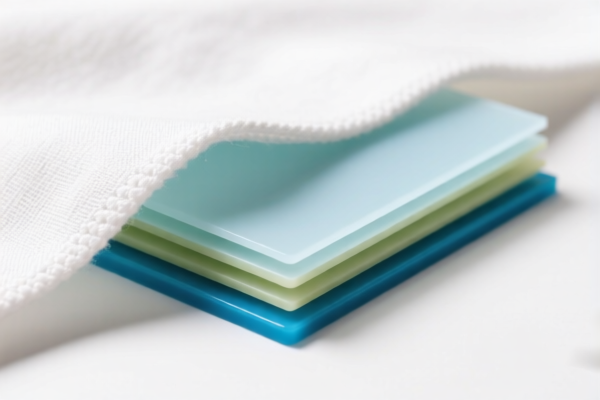

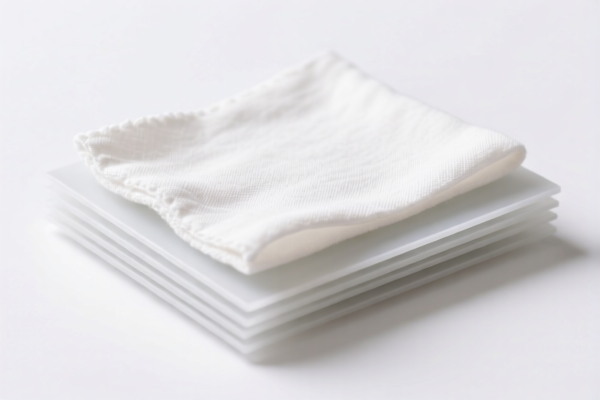
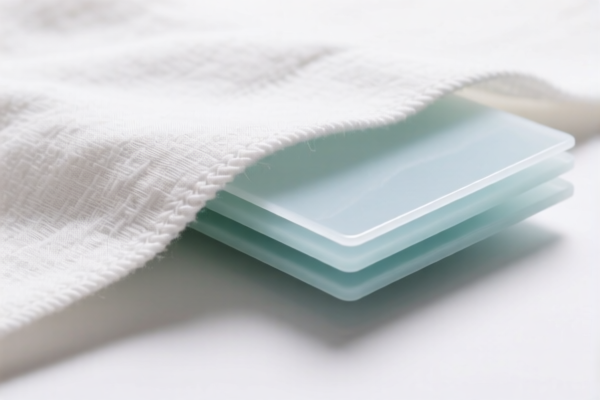
AI Analysis
🧵 Cotton Fabric Composite Plastic Sheets: HS Code Classification & U.S. Customs Clearance Guide (2026)
🌐 HS Code Reference & Customs Clearance Guide | 2026 Latest Tariff Analysis | Professional Clearance Strategy 📌 1. Product Definition & Classification: What exactly are "Cotton Fabric Composite Plastic Sheets"?
Cotton Fabric Composite Plastic Sheets are hybrid materials combining natural textile fibers (cotton) with synthetic polymer layers (plastic/resin). In international trade, they are typically categorized based on their primary material, structure, and intended technical application.
⚠️ Key Classification Divergence Point:
- If the product is primarily a textile composite for technical/industrial use (e.g., filtration, insulation, reinforcement) → It falls under Chapter 59 (Textile Articles).
- If the product is primarily a plastic sheet/board with a cotton backing or layer (e.g., for packaging, construction, or general industrial use) → It falls under Chapter 39 (Plastics and Articles Thereof).
The classification depends heavily on whether the cotton is the functional core or merely a decorative/structural backing for the plastic.
📦 2. HS Code Classification Details (2026 Latest Tariff Authority)
Based on the provided data, here are the four likely HS Code classifications for this product, depending on its specific composition and use:
| HS Code | Product Description | Application Scenario | Key Differentiator |
|---|---|---|---|
| 5911.90.00.80 | Cotton Textile Composite Board Material: Cotton; Form: Composite Board; Category: Technical Textile Products |
Industrial filtration, acoustic insulation, or technical textile reinforcement where cotton is the primary functional material. | ✅ Textile First: Classified as a "technical textile product." |
| 3921.90.21.00 | Cotton-Containing Composite Board Material: Cotton + Plastic; Form: Board; Category: Plastic & Textile Combination |
Plastic sheets with significant cotton content or lamination, where the plastic matrix is dominant but cotton is a key component. | ⚖️ Hybrid/Plastic Dominant: Classified under plastics due to higher plastic volume or specific laminate structure. |
| 3921.90.29.00 | Cotton-Textile & Plastic Composite Board Material: Cotton + Plastic; Form: Sheet/Film/Board |
Generic plastic-textile composite sheets that do not fit specific sub-categories; often used for general industrial or consumer goods. | ⚖️ Other Plastics: A catch-all for plastic-textile composites not specified elsewhere in Ch. 39. |
| 3920.99.20.00 / 3921.90.40.90 | Plastic Composite Board Material: Plastic; Form: Composite Board |
Primarily plastic-based composite boards where cotton may be a minor filler, backing, or non-functional layer. | ❌ Plastic First: Classified as plastic because the plastic layer provides the primary mechanical properties or is the bulk of the material. |
🔍 Critical Reminder:
- 5911.90.00.80 has the lowest base tariff (3.8%) but includes additional duties.
- 3921.90.xxxxxx and 3920.99.xxxxxx have higher base tariffs (4.2%–6.5%).
- Do not misclassify a cotton-heavy technical textile as a plastic sheet to avoid "undervaluation" penalties. Customs will examine the layer composition, bonding method, and primary function.
💰 3. 2026 Latest Tariff Rate Breakdown (Including Additional Duties & Policy Surcharges)
✅ Applicable Country: United States (US)
✅ Country of Origin: China (CN)
✅ Effective Date: 2025年11月10日起 (Including subsequent imports)
🎯 1. 5911.90.00.80 —— Cotton Textile Composite Board (Technical Textile)
| Item | Detail |
|---|---|
| Base Tariff | 3.8% (Ad Valorem) |
| Section 301 Additional Tariff | +25.0% (USITC Footnote for Chinese-origin goods) |
| Section 122 Tariff | +10.0% (Specific surcharge on Chinese textile/composite goods) |
| Total Tariff Rate | 38.8% |
| Tax Calculation | CIF Value × 38.8% |
| De Minimis Eligibility | ❌ No (High tariff rate exceeds de minimis thresholds for most carriers) |
| Legal Authority Path | HTSUS:5911.90.00.80 → USITC:301_Tariff → IEEPA:122_Surcharge |
📌 Explanation:
- This classification benefits from the lowest base rate (3.8%) among the options.
- However, it is still subject to Section 301 (25%) and Section 122 (10%) surcharges, totaling 35% in additional duties.
- Total burden: 38.8%. This is the most favorable option if the product can be legitimately classified as a technical textile.
🎯 2. 3921.90.21.00 —— Cotton-Containing Composite Board (Plastic Dominant)
| Item | Detail |
|---|---|
| Base Tariff | 6.5% |
| Section 301 Additional Tariff | +25.0% |
| Section 122 Tariff | +10.0% |
| Total Tariff Rate | 41.5% |
| Tax Calculation | CIF Value × 41.5% |
| De Minimis Eligibility | ❌ No |
| Legal Authority Path | HTSUS:3921.90.21.00 → USITC:301_Tariff → IEEPA:122_Surcharge |
📌 Note:
- Higher base tariff (6.5%) compared to textile classification.
- Total rate is 2.7% higher than the textile classification.
- Suitable if the plastic layer is significantly thicker or provides the primary structural integrity.
🎯 3. 3921.90.29.00 —— Cotton-Textile & Plastic Composite Board (Other Plastics)
| Item | Detail |
|---|---|
| Base Tariff | 4.4% |
| Section 301 Additional Tariff | +25.0% |
| Section 122 Tariff | +10.0% |
| Total Tariff Rate | 39.4% |
| Tax Calculation | CIF Value × 39.4% |
| De Minimis Eligibility | ❌ No |
| Legal Authority Path | HTSUS:3921.90.29.00 → USITC:301_Tariff → IEEPA:122_Surcharge |
📌 Note:
- Middle-ground option. Base tariff is 4.4%.
- Total rate is 0.6% higher than the textile classification (5911) but lower than 3921.21.
🎯 4. 3920.99.20.00 / 3921.90.40.90 —— Plastic Composite Board (Generic Plastic)
| Item | Detail |
|---|---|
| Base Tariff | 4.2% |
| Section 301 Additional Tariff | +25.0% |
| Section 122 Tariff | +10.0% |
| Total Tariff Rate | 39.2% |
| Tax Calculation | CIF Value × 39.2% |
| De Minimis Eligibility | ❌ No |
| Legal Authority Path | HTSUS:3920.99.20.00 / 3921.90.40.90 → USITC:301_Tariff → IEEPA:122_Surcharge |
📌 Note:
- These two codes have identical total tariffs (39.2%).
- Best used if the product is a generic plastic composite with minimal or non-functional cotton content.
🛠️ 4. Practical Customs Clearance Advice (Pitfall Avoidance Guide)
✅ 1. Required Documentation Checklist (Non-Negotiable)
| Document | Must Provide | Purpose |
|---|---|---|
| ✅ Product Specification Sheet | ✔️ | Detail the layer structure (e.g., "3mm plastic core + 2mm cotton backing"). |
| ✅ Material Composition Breakdown | ✔️ | Percentage by weight of cotton vs. plastic. Critical for Chapter 59 vs. 39 decision. |
| ✅ Product Photos (Cross-Section) | ✔️ | Show the bonding interface between cotton and plastic. |
| ✅ Certificate of Origin (CO) | ✔️ | Confirm Chinese origin to apply correct Section 301/122 rates. |
| ✅ Commercial Invoice | ✔️ | Describe item accurately (e.g., "Technical Textile Composite Board" vs. "Plastic Sheet"). |
| ✅ Third-Party Test Report | ✔️ | If claiming textile classification, provide tensile strength/fluidity tests proving textile function. |
✅ 2. Declaration Strategy (Key Mantra)
🔥 "Function Defines Chapter, Composition Determines Code!"
| Scenario | Correct Declaration | Risk if Incorrect |
|---|---|---|
| Primary Use: Filtration/Insulation | Declare as 5911.90.00.80 (Textile) | Misclassifying as plastic (3921) → Pay 2.7% more tax unnecessarily. |
| Primary Use: Packaging/Structural Board | Declare as 3921.90.21.00 or 3920.99.20.00 (Plastic) | Misclassifying as textile → Risk of audit for undervaluation & false declaration. |
| Ambiguous Hybrid | Provide Expert Opinion or Advance Ruling | Guessing → Customs delay, potential penalties, and higher assessed rates. |
✅ 3. Special Case Handling
| Situation | Handling Advice |
|---|---|
| Laminated Product (Cotton + Plastic) | If cotton is < 50% by weight and plastic provides primary function → Lean towards 3921/3920. |
| Cotton as Backing for Plastic Film | If cotton is merely a carrier for plastic coating → Classify as Plastic (3921/3920). |
| Technical Textile (e.g., Filter Cloth) | Even if coated with plastic → Classify as Textile (5911). Provide proof of filtration capacity. |
| Pre-Import Advance Ruling | Highly Recommended. Submit product samples and specs to CBP for a binding ruling before shipment. |
🌍 5. Global Market Comparison (2026 Update)
| Country/Region | Recommended HS Code | Base Tariff | Additional Duties (China Origin) | Total Estimated Rate | Notes |
|---|---|---|---|---|---|
| 🇺🇸 USA | 5911.90.00.80 |
3.8% | +35% (301+122) | 38.8% | Lowest total rate if textile classification is valid. |
| 🇺🇸 USA | 3921.90.21.00 |
6.5% | +35% (301+122) | 41.5% | Higher base rate makes it less favorable. |
| 🇨🇳 China | 5911.90.00.80 |
3.8% | None | 3.8% | Export from China: Low duty. |
| 🇪🇺 EU | 5911.90.90 |
~6.5% | None (if origin China) | ~6.5% | EU has no Section 301/122 equivalent. |
| 🇦🇺 Australia | 5911.90.00 |
5.0% | None (GSP may apply) | ~5.0% | Check GSP eligibility for Chinese goods. |
📌 Conclusion:
- For US Imports: The Section 301 (25%) and Section 122 (10%) surcharges are the dominant cost drivers.
- Strategy: Legitimately classify as 5911.90.00.80 to save 2.7% vs. the next best plastic classification.
- Warning: Do not force a textile classification if the product is primarily plastic. CBP conducts rigorous audits on Chapter 59 vs. Chapter 39 boundaries.
📌 6. Common Errors & Pitfalls (Lessons Learned)
❌ Error 1: Declaring a plastic-heavy composite as "Textile" to save 2.7%.
👉 Consequence: CBP rejects classification, reclassifies as 3921, and imposes penalties + back taxes.
❌ Error 2: Failing to disclose cotton content in the commercial invoice.
👉 Consequence: Customs may suspect undisclosed textile content, leading to detention and investigation.
❌ Error 3: Assuming all "composite" goods fall under one HS Code.
👉 Consequence: Misclassification due to ignoring layer structure and primary function.
❌ Error 4: Not applying for an Advance Ruling for ambiguous hybrids.
👉 Consequence: Uncertainty in clearance, potential delays at the port, and storage fees.
✅ Best Practice:
"Provide a layer-by-layer breakdown, weight percentage, and technical function proof. If in doubt, apply for an Advance Ruling."
🎯 7. Conclusion: Professional Classification Saves Money
🎯 Key Takeaways:
🔹 "Textile vs. Plastic" hinges on primary function and composition.
🔹 5911.90.00.80 is the cheapest option (38.8%) for US imports.
🔹 3921/3920 codes are more expensive (39.2%–41.5%) but risk lower if misapplied.
🔹 Section 301 + Section 122 = 35% Additional Tax. Always budget for this.
📌 Pro Tip:
If your product is primarily plastic, consider if duty drawbacks or manufacturing exemptions apply. If it is primarily textile, ensure you have test reports to prove its technical textile nature (e.g., filtration efficiency, acoustic rating).
📣 Immediate Action Items:
📞 Consult a Customs Broker to analyze your specific product structure.
📄 Gather Product Specs (Layer breakdown, weight %, function).
🚀 Apply for CBP Advance Ruling to lock in the 38.8% rate with 5911.90.00.80 if applicable.
✨ Professional Clearance, Starting with Accurate Classification!
💼 Every Percentage Point Saved is Pure Profit!
Customer Reviews
About HS Code Classification
The Harmonized System (HS) is an internationally standardized nomenclature developed by the World Customs Organization (WCO) to classify traded products. Over 200 countries use the HS system as the basis for customs tariffs, trade statistics, and import/export regulations.
Each HS code follows a hierarchical structure:
- Chapter (2 digits) — Broad category of goods (e.g., Chapter 84: Machinery and Mechanical Appliances)
- Heading (4 digits) — More specific grouping within the chapter
- Subheading (6 digits) — Internationally standardized breakdown, used by all WCO member countries
- National subdivisions (8-10 digits) — Country-specific extensions for further classification, such as US HTSUS 10-digit codes
Correct HS code classification is essential for smooth customs clearance, accurate duty payment, and compliance with trade regulations. Misclassification can lead to customs delays, overpayment of duties, or penalties.
When importing from CN to US, the applicable tariff rates may include:
- Most-Favored-Nation (MFN) rate — The standard duty rate applied to WTO members
- General rate — Applied to countries without trade agreements
- Trade remedy duties — Additional tariffs such as Section 301 (anti-dumping), Section 232 (national security), or countervailing duties
The information provided on this page is for reference purposes only. For official classification, please consult with your local customs authority or a licensed customs broker.