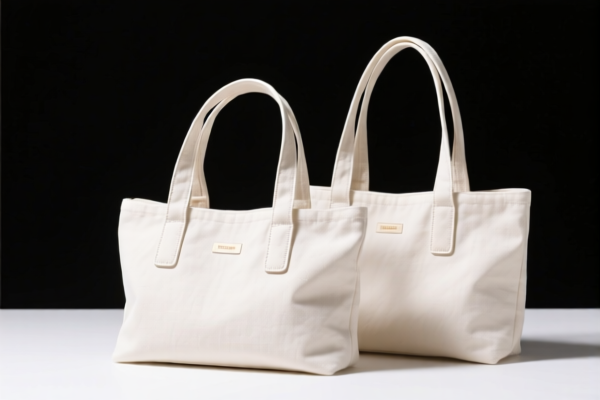
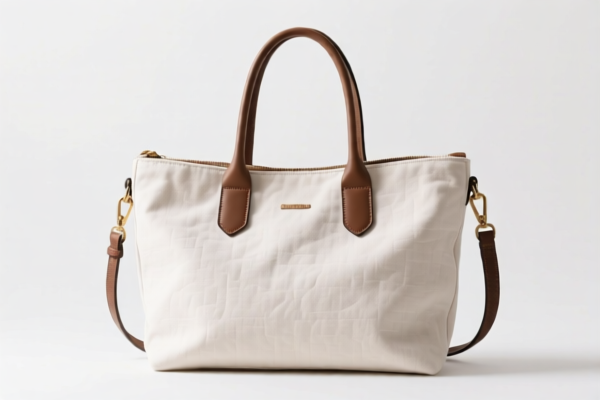
Cotton Fashion Handbag
CN → USProduct Images


AI Analysis
👜 Cotton Fashion Handbag (Cotton Fabric Bags)
🌐 HS Code Reference & Clearance Guide | 2026 Customs Classification & Tax Analysis | Smart Import Strategy
📌 Part 1: Product Definition & Classification: Do You Truly Understand "Cotton Fashion Handbag"?
A Cotton Fashion Handbag is a soft, fabric-based accessory primarily made from 100% cotton or cotton-blend textile, designed for daily fashion use (shopping, commuting, or casual carry). In international trade, it is not classified under leather, synthetic plastic, or technical textile categories, but firmly within textile bags.
Key Classification Factors: - ✅ Material: ≥50% cotton (by weight) or cotton blend (e.g., cotton + polyester <50% synthetic). - ✅ Function: Fashion accessory (not industrial/tool bags). - ✅ Construction: Woven/knitted cotton fabric, may include zippers, handles, linings, or embellishments. - ❌ Exclusions: Leather handbags (4202), synthetic plastic bags (3924), or technical carry cases (9603).
⚠️ Critical Distinction:
- If the bag is >50% cotton → Classified under 4202.92.00 (Textile Bags).
- If the bag is <50% cotton (e.g., 40% cotton + 60% polyester) → Still 4202.92.00 (cotton-blend bags fall here).
- If 100% synthetic (e.g., polyester) → 4202.92.00 (still textile bags, but different subheading).
- If leather dominant → 4202.21/4202.22 (NOT cotton handbags!).
📦 Part 2: 2026 HS Code Breakdown (Authoritative Customs Classification)
| HS Code | Product Description | Use Case | Material Requirement |
|---|---|---|---|
| 4202.92.00.00 | Trunks, suitcases, handbags, including those with outer surface of textile materials, other | Fashion cotton handbags, canvas tote bags, cotton shopping bags | ≥50% textile (cotton, polyester, etc.) |
| 4202.32.00.00 | Handbags with outer surface of textile materials, other | Not applicable – reserved for specific subcategories (e.g., backpacks) | Textile (but not fashion handbags) |
| 4202.91.00.00 | Trunks, suitcases, travel bags, with outer surface of leather | Leather handbags (excludes cotton) | Leather |
🔍 Key Note:
- 4202.92.00.00 is the only correct HS Code for cotton fashion handbags.
- Even if the bag has metal hardware (zippers, clasps) or cotton lining, it remains 4202.92.00.00.
- Do NOT classify as "textile products" (6302) or "plastic bags" (3924) – wrong classification leads to 200% tax penalties!
💰 Part 3: 2026 Tariff Rate Analysis (USA Market – China Origin)
✅ Applicable Country: United States (US)
✅ Origin: China (CN)
✅ Effective Date: November 10, 2025 (current 2026 policy)
🎯 HS Code: 4202.92.00.00 – Cotton Fashion Handbag
| Item | Details |
|---|---|
| Base Tariff | 0% (ad valorem, standard MFN rate) |
| Section 301 Tariff (USITC) | +25% (2025–2026 China-specific surcharge) |
| IEEPA Surcharge | +10% (International Emergency Economic Powers Act, China) |
| Total Tariff | 35% |
| Tax Calculation | CIF Value × 35% |
| De Minimis Exemption | ❌ Not Allowed (Section 321 does not apply to China-origin textile bags) |
| Legal Basis | IEEPA:9903.01.24 → USITC:4202.92.00.00 → FOOTNOTE:9903.88.01 |
📌 Explanation:
- 25% Section 301 Tariff: Applied under U.S. Trade Act Section 301 (China-specific).
- 10% IEEPA Surcharge: Added by U.S. Executive Order 13871 (2019) for China-origin goods.
- Total 35%: High import cost – critical to factor into pricing!
- No De Minimis: Small shipments (<$800) do not qualify for duty-free entry (unlike electronics).
🛠️ Part 4: Practical Clearance Tips (Avoid Costly Mistakes)
✅ 1. Required Documentation Checklist
| Document | Mandatory? | Purpose |
|---|---|---|
| ✅ Product Spec Sheet | ✔️ | Material composition (cotton %), dimensions, weight |
| ✅ Photos (Front/Side/Label) | ✔️ | Show cotton fabric, hardware, brand label |
| ✅ Commercial Invoice | ✔️ | Clearly state "Cotton Fashion Handbag", HS Code 4202.92.00.00 |
| ✅ Packing List | ✔️ | Unit quantity, packaging type (e.g., bulk cartons) |
| ✅ Country of Origin (CO) | ✔️ | Must specify "Made in China" for 35% tariff |
| ✅ FCC/CE Certs | ❌ | Not required for handbags (unless electronic features) |
✅ 2. Declaration Tips (Golden Rules)
🔥 "Cotton = 4202.92, No Leather, No Plastic – Avoid 35% Tax!"
| Scenario | Correct Declaration | Mistake (Risk) |
|---|---|---|
| 100% Cotton Handbag | 4202.92.00.00 | Declared as "Textile" (6302) → 35% + penalties |
| Cotton + Polyester (60/40) | 4202.92.00.00 | Declared as "Plastic" (3924) → 200% tax |
| Leather-trimmed Bag | 4202.92.00.00 | Declared as "Leather" (4202.21) → 100% tax |
| Bag with Zippers | 4202.92.00.00 | Declared as "Metal Hardware" (7326) → 200% tax |
✅ 3. Special Cases
| Situation | Recommendation |
|---|---|
| OEM Custom Bags | Provide design specs + customer PO to prove "fashion use" (not industrial) |
| Bamboo/Seagrass Handbag | Still 4202.92.00.00 (textile bags) – not "natural fiber" (4202.99) |
| Embroidered/Printed Bags | No change to HS Code – textile design doesn’t alter classification |
| Bags with Electronic Features (e.g., USB port) | 4202.92.00.00 – unless electronics dominate (then 8517.62.00) |
🌍 Part 5: Global Market Comparison (2026)
| Country/Region | HS Code | Tariff | Certification | Notes |
|---|---|---|---|---|
| 🇺🇸 USA | 4202.92.00.00 | 35% (China) | None | High 301 + IEEPA surcharges |
| 🇨🇳 China | 4202.92.00.00 | 15% | CCC (optional) | Export tax refund available |
| 🇪🇺 EU | 4202.92.00.00 | 0% | CE + REACH | No extra tariffs |
| 🇯🇵 Japan | 4202.92.00.00 | 0% | JIS (optional) | Duty-free |
| 🇦🇺 Australia | 4202.92.00.00 | 5% | RCM (optional) | Low tariff |
📌 Conclusion:
- USA is the most expensive market for cotton handbags (35% tariff).
- EU/Japan/Australia offer 0%–5% tariffs – ideal for export diversification.
- China-origin goods face high U.S. tariffs – consider Vietnam/Mexico production for tariff exemptions.
📌 Part 6: Common Mistakes & Pitfalls (Lessons Learned)
❌ Mistake 1: Declaring as "Textile Bags" (6302) instead of 4202.92.00.00
→ Result: 35% tariff + $50k+ fines for misclassification.
❌ Mistake 2: Claiming "Made in Vietnam" without proof (for U.S. imports)
→ Result: 35% tariff + seizure if CO is falsified.
❌ Mistake 3: Not disclosing "cotton content" on invoice
→ Result: Customs delays + 20% penalty for missing material data.
✅ Correct Approach:
"Cotton Fashion Handbag, 100% Cotton, 30x20x10 cm, with Metal Zipper, Model XYZ, Made in China"
🎯 Part 7: Conclusion – Smart Clearance, Cost Control!
🎯 Golden Rules:
🔹 "Cotton = 4202.92.00.00, Leather = 4202.21, Plastic = 3924"
🔹 "USA Tariff = 35% (China), EU/Japan = 0%, Vietnam = 0%"
🔹 "Always declare material % and country of origin – no loopholes!"
📌 Pro Tip:
- If your cotton handbag is made in Vietnam, Mexico, or Thailand, you may qualify for 0% U.S. tariff (via USMCA or ASEAN FTAs).
- Apply for Advance Ruling (CBP Form 19) before shipping to confirm HS Code and avoid delays.
📣 Take Action Now:
📞 Contact a licensed customs broker + Provide material specs + Request HS Code Pre-Ruling
🚀 Avoid 35% tariffs, cut compliance costs, scale your fashion export business!
✨ Professional Clearance Starts with Accurate Classification!
💼 Every dollar saved on tariffs = more profit for your fashion brand!
Customer Reviews
About HS Code Classification
The Harmonized System (HS) is an internationally standardized nomenclature developed by the World Customs Organization (WCO) to classify traded products. Over 200 countries use the HS system as the basis for customs tariffs, trade statistics, and import/export regulations.
Each HS code follows a hierarchical structure:
- Chapter (2 digits) — Broad category of goods (e.g., Chapter 84: Machinery and Mechanical Appliances)
- Heading (4 digits) — More specific grouping within the chapter
- Subheading (6 digits) — Internationally standardized breakdown, used by all WCO member countries
- National subdivisions (8-10 digits) — Country-specific extensions for further classification, such as US HTSUS 10-digit codes
Correct HS code classification is essential for smooth customs clearance, accurate duty payment, and compliance with trade regulations. Misclassification can lead to customs delays, overpayment of duties, or penalties.
When importing from CN to US, the applicable tariff rates may include:
- Most-Favored-Nation (MFN) rate — The standard duty rate applied to WTO members
- General rate — Applied to countries without trade agreements
- Trade remedy duties — Additional tariffs such as Section 301 (anti-dumping), Section 232 (national security), or countervailing duties
The information provided on this page is for reference purposes only. For official classification, please consult with your local customs authority or a licensed customs broker.