Cotton Handbag (Large Capacity)
CN → US| HS Code | Tariff Rate | Origin | Destination | Doc |
|---|---|---|---|---|
| 6305200000 | 23.7% | CN | US | Official Doc |
| 4202224500 | 41.3% | CN | US | Official Doc |
| 6305900000 | 23.7% | CN | US | Official Doc |
| 4202228930 | 52.6% | CN | US | Official Doc |
| 4202224020 | 42.4% | CN | US | Official Doc |
Product Images
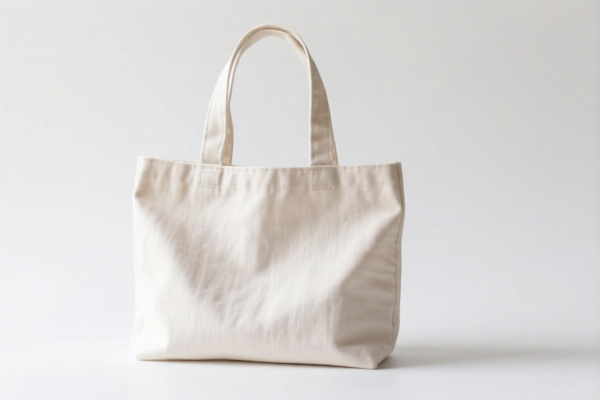
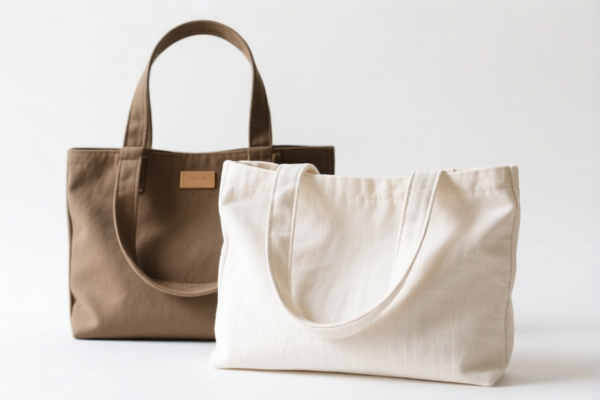
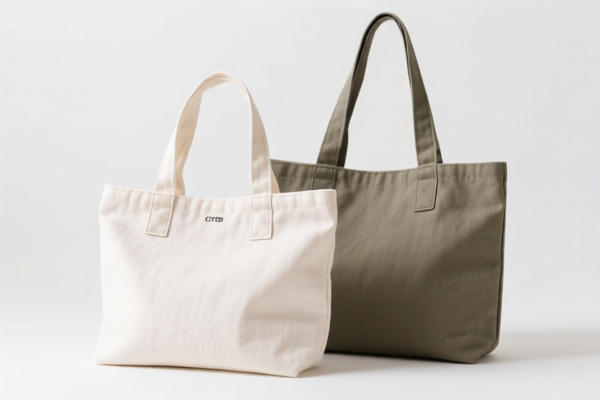
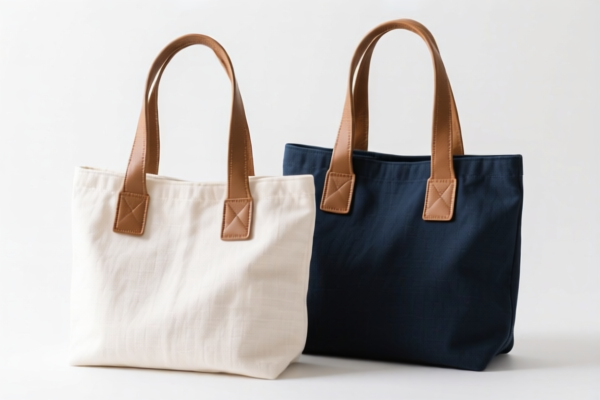
AI Analysis
👜 Cotton Handbag (Large Capacity)
🌐 HS Code Reference & Customs Clearance Guide | 2026 Latest Tariff Analysis | Professional-Level Strategy
📌 I. Product Definition & Classification: What Exactly Is a "Cotton Handbag"?
Cotton handbags are versatile fashion accessories and practical carriers. In international trade, they are not simply "bags." Their classification depends strictly on material composition, structure, and intended use. The key distinction lies between:
1. Textile Bags (Chapter 63):
- Simple pouches, shopping bags, or soft-sided carriers made primarily of woven cotton fabric, without complex leather-like structures or stiffened frames.
- Typically classified under 6305.20.00.00 (if strictly textile bags) or 6305.90.00.00 (if other textile materials).
2. Travel Goods / Handbags (Chapter 42):
- Structured bags with handles, often featuring leather trim, stiffeners, or complex hardware. Even if the main body is cotton, if it fits the definition of a "handbag" with specific structural characteristics, it may fall under 4202.22.4x or 4202.22.89.
⚠️ Critical Distinction Point:
- If the bag is a simple textile pouch/shopper → HS 6305.20.00.00 / 6305.90.00.00 (Lower Tax)
- If the bag is a structured handbag (with handles, lining, shape-retaining features) → HS 4202.22.45.00 / 4202.22.89.30 / 4202.22.40.20 (Higher Tax)
📦 II. HS Code Classification Details (2026 Latest Tariff Authority Comparison)
Based on the provided data, here are the five possible HS Codes for your "Cotton Handbag (Large Capacity)" and why each applies:
| HS Code | Product Description | Applicability & Justification | Estimated Total Tax |
|---|---|---|---|
6305.20.00.00 |
Cotton Bags, Compliant with Cotton Bag/Package Classification | Applies if the item is considered a textile bag (e.g., tote, shopping bag) made of cotton, without complex structural features of a handbag. | 23.7% |
6305.90.00.00 |
Cotton Handbag, Belongs to Bags Made of Other Textile Materials | Used if the bag is classified as a general textile bag under Chapter 63, but the specific cotton type or blend falls under "other textile materials" rather than pure cotton packaging. | 23.7% |
4202.22.45.00 |
Cotton Handbag, Compliant with Material and Category Requirements | Applies to structured handbags where the primary material is cotton (or textile) but fits the legal definition of a handbag under Chapter 42. | 41.3% |
4202.22.40.20 |
Cotton Handbag, Fully Compliant with Material and Form Requirements | Specific classification for cotton handbags with exact material/form compliance. Often used for specific retail handbags with detailed specifications. | 42.4% |
4202.22.89.30 |
Cotton Handbag, Compliant with Material, Form, and Usage Requirements | The highest tariff bracket. Likely applies to complex, high-fashion, or specifically defined cotton handbags with additional features or premium positioning. | 52.6% |
🔍 Key Insight:
- The same product ("Cotton Handbag") can have a tax rate ranging from 23.7% to 52.6% depending on how precisely it is described and structured.
- Chapter 63 (Textile Bags) is significantly cheaper than Chapter 42 (Travel Goods).
- Strategy: If your bag is a simple cotton tote, aim for 6305.20.00.00. If it is a structured designer-style handbag, it will likely fall into 4202.22.x.
💰 III. 2026 Latest Tariff Rate Details (Including Surtaxes & Policy Add-ons)
✅ Applicable Country: United States (US)
✅ Origin: China (CN)
✅ Effective Date: Post-2025 (Includes Section 301 & IEEPA tariffs)
🎯 1. 6305.20.00.00 & 6305.90.00.00 — Textile Bags (Low Tax Strategy)
| Item | Detail |
|---|---|
| Base Tariff | 6.2% (ad valorem) |
| Surtax (Section 301) | +7.5% |
| IEEPA Surtax (Section 122) | +10% |
| Total Tax Rate | 23.7% |
| Tax Calculation | CIF Value × 23.7% |
| De Minimis Eligibility | ❌ No (Section 301/IEEPA goods are generally exempt from $800 de minimis) |
| Legal Path | Base Tariff 6.2% → Section 301 7.5% → IEEPA 10% |
📌 Explanation:
- These codes are classified as textile bags, which attract lower surtaxes compared to structured handbags.
- Total 23.7% is relatively manageable for high-volume, low-margin textile goods.
🎯 2. 4202.22.45.00 — Cotton Handbag (Standard Structured)
| Item | Detail |
|---|---|
| Base Tariff | 6.3% |
| Surtax (Section 301) | +25.0% |
| IEEPA Surtax (Section 122) | +10% |
| Total Tax Rate | 41.3% |
| Tax Calculation | CIF Value × 41.3% |
| De Minimis Eligibility | ❌ No |
| Legal Path | Base Tariff 6.3% → Section 301 25.0% → IEEPA 10% |
📌 Explanation:
- Chapter 42 goods face the standard 25% Section 301 tariff.
- Total 41.3% is significantly higher. Requires careful cost-benefit analysis.
🎯 3. 4202.22.40.20 — Cotton Handbag (Specific Compliance)
| Item | Detail |
|---|---|
| Base Tariff | 7.4% |
| Surtax (Section 301) | +25.0% |
| IEEPA Surtax (Section 122) | +10% |
| Total Tax Rate | 42.4% |
| Tax Calculation | CIF Value × 42.4% |
| De Minimis Eligibility | ❌ No |
| Legal Path | Base Tariff 7.4% → Section 301 25.0% → IEEPA 10% |
📌 Explanation:
- Slightly higher base tariff (7.4%) than the previous code, leading to a 42.4% total rate.
🎯 4. 4202.22.89.30 — Cotton Handbag (Complex/Premium)
| Item | Detail |
|---|---|
| Base Tariff | 17.6% |
| Surtax (Section 301) | +25.0% |
| IEEPA Surtax (Section 122) | +10% |
| Total Tax Rate | 52.6% |
| Tax Calculation | CIF Value × 52.6% |
| De Minimis Eligibility | ❌ No |
| Legal Path | Base Tariff 17.6% → Section 301 25.0% → IEEPA 10% |
📌 Explanation:
- This code has a high base tariff (17.6%), likely due to specific material compositions or premium categorization.
- Total 52.6% is the highest risk category. Avoid unless structurally unavoidable.
🛠️ IV. Customs Clearance Practical Advice (Avoiding Pitfalls)
✅ 1. Preparation Checklist (Non-Negotiable)
| Document | Required | Notes |
|---|---|---|
| ✅ Product Specifications | ✔️ | Detail material (% cotton, lining, hardware), dimensions, capacity. |
| ✅ Photos (Front, Back, Inside, Handles) | ✔️ | Must clearly show structure. If handles are sewn-in and rigid, lean towards 4202. |
| ✅ Commercial Invoice | ✔️ | Clearly state "Cotton Tote Bag" (for 6305) or "Cotton Handbag" (for 4202). |
| ✅ Packing List | ✔️ | Item count, net/gross weight. |
| ✅ Origin Certificate | ✔️ | If applicable, for potential FTAA benefits (though unlikely for US/China). |
✅ 2. Declaration Strategy (Key Tactics)
🔥 "Structure Determines Chapter, Description Determines Rate!"
| Scenario | Recommended HS Code | Declaration Keyword | Risk |
|---|---|---|---|
| Simple Cotton Tote (Soft, no stiffener, large capacity, shopping style) | 6305.20.00.00 |
"Cotton Tote Bag, Non-Structured" | ✅ Low Tax (23.7%) |
| Soft Satchel (Fabric body, but has shape-retaining features) | 6305.90.00.00 |
"Cotton Fabric Bag" | ✅ Low Tax (23.7%) |
| Structured Handbag (Handles, lining, zipper, rigid base) | 4202.22.45.00 |
"Cotton Handbag, Travel Goods" | ⚠️ Medium Tax (41.3%) |
| High-End Designer Cotton Bag | 4202.22.89.30 |
"Premium Cotton Handbag" | ❌ High Tax (52.6%) |
📌 Critical Tip:
- If your bag is a "Large Capacity" shopper/tote, emphasize textile nature and lack of complex structure to aim for HS 6305.
- Do NOT declare a simple cotton bag as a "Handbag" under Chapter 42 unless it has significant structural features (leather trim, stiffeners, etc.). Misclassification can lead to audit penalties.
✅ 3. Special Cases
| Case | Advice |
|---|---|
| OEM/Private Label | Ensure invoice matches brand if applicable. Structure must match declared HS. |
| Mixed Materials | If >50% cotton by weight, cotton classification applies. If mixed with leather, may shift to leather rules. |
| Small Samples | Still subject to tariffs if value >$800 (Section 301 goods are excluded from de minimis). |
🌍 V. Global Market Clearance Comparison (2026)
| Country/Region | Recommended HS Code | Est. Total Tax (China Origin) | Notes |
|---|---|---|---|
| 🇺🇸 USA | 6305.20.00.00 (if tote) |
23.7% | Low tax if classified as textile bag. |
| 🇺🇸 USA | 4202.22.45.00 (if handbag) |
41.3% | High tax due to 301 tariffs. |
| 🇪🇺 EU | 4202.22.45 |
~6-12% | No Section 301. Standard MFN rates apply. |
| 🇨🇳 China | 4202.22.45 |
~10-15% | Import duties for re-export. |
📌 Conclusion:
- US Market is High-Cost: Tariffs range from 23.7% to 52.6% depending on classification.
- Strategic Choice: If your "Large Capacity Cotton Handbag" can be reasonably described as a textile tote/shopper, always choose HS 6305.20.00.00 to save ~17-29% in taxes.
📌 VI. Common Errors & Pitfalls (Blood & Tears Lessons)
❌ Error 1: Declaring a structured handbag as 6305.20.00.00
👉 Consequence: Customs audit, re-classification, back taxes + penalties.
👉 Fix: If it has rigid handles and shape, use Chapter 42.
❌ Error 2: Declaring a simple cotton tote as 4202.22.45.00
👉 Consequence: Overpayment of tax (41.3% vs 23.7%).
👉 Fix: Use HS 6305.20.00.00 for soft, unstructured bags.
❌ Error 3: Vague description "Cotton Bag"
👉 Consequence: Customs discretion may assign the highest rate (4202.22.89.30) or delay clearance.
👉 Fix: Be specific: "Cotton Tote Bag, Soft-Sided, Non-Structured."
🎯 VII. Conclusion: Strategic Classification for Maximum Profit
🎯 Remember the Golden Rule:
🔹 "Soft & Simple = 6305 (23.7%) | Structured & Styled = 4202 (41-52%)"
🔹 "Don't over-declare. If it's a tote, call it a tote."
🔹 "Tax Savings = $0.17 per $1.00 by choosing the right HS Code!"
📌 Pro Tip:
- If your product is borderline (e.g., a slightly structured tote), provide photos to your broker and request a Pre-Ruling for 6305.20.00.00.
- Avoid 4202.22.89.30 unless you are a premium brand and cannot avoid the structural features.
📣 Immediate Action:
📞 Contact your customs broker
🖼️ Send clear photos of the bag (especially handles and base)
📝 Request classification as6305.20.00.00if it is a simple tote
✨ Smart Classification Saves Money!
💼 Every percentage point counts in global trade.
Customer Reviews
About HS Code Classification
The Harmonized System (HS) is an internationally standardized nomenclature developed by the World Customs Organization (WCO) to classify traded products. Over 200 countries use the HS system as the basis for customs tariffs, trade statistics, and import/export regulations.
Each HS code follows a hierarchical structure:
- Chapter (2 digits) — Broad category of goods (e.g., Chapter 84: Machinery and Mechanical Appliances)
- Heading (4 digits) — More specific grouping within the chapter
- Subheading (6 digits) — Internationally standardized breakdown, used by all WCO member countries
- National subdivisions (8-10 digits) — Country-specific extensions for further classification, such as US HTSUS 10-digit codes
Correct HS code classification is essential for smooth customs clearance, accurate duty payment, and compliance with trade regulations. Misclassification can lead to customs delays, overpayment of duties, or penalties.
When importing from CN to US, the applicable tariff rates may include:
- Most-Favored-Nation (MFN) rate — The standard duty rate applied to WTO members
- General rate — Applied to countries without trade agreements
- Trade remedy duties — Additional tariffs such as Section 301 (anti-dumping), Section 232 (national security), or countervailing duties
The information provided on this page is for reference purposes only. For official classification, please consult with your local customs authority or a licensed customs broker.