Cotton Handbags (Animal Print)
CN → US| HS Code | Tariff Rate | Origin | Destination | Doc |
|---|---|---|---|---|
| 4202224020 | 42.4% | CN | US | Official Doc |
| 4202228930 | 52.6% | CN | US | Official Doc |
| 4819400040 | 35.0% | CN | US | Official Doc |
| 4819300040 | 35.0% | CN | US | Official Doc |
| 4202295000 | 42.8% | CN | US | Official Doc |
Product Images
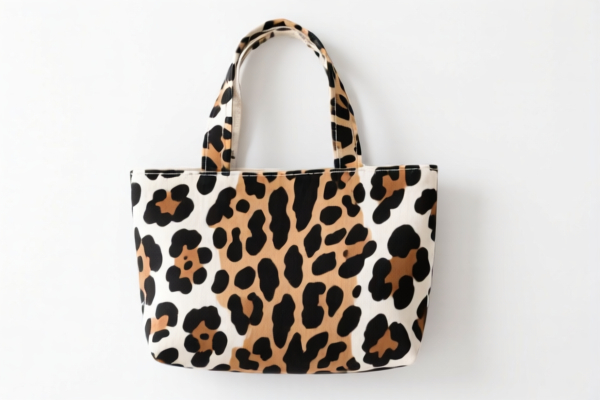
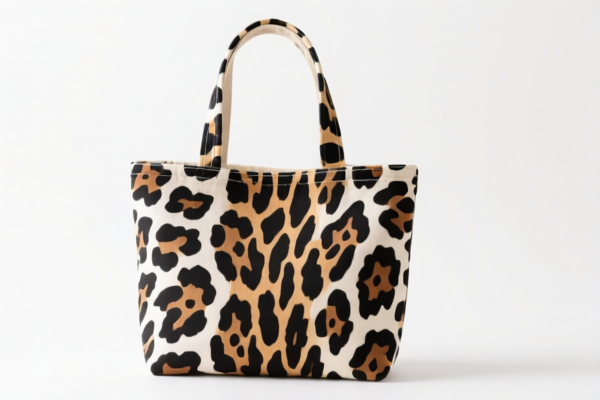
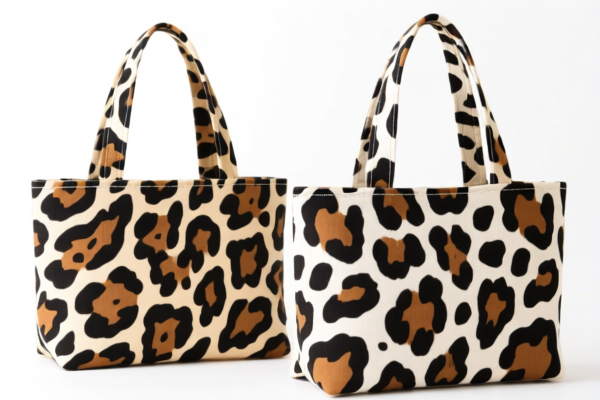
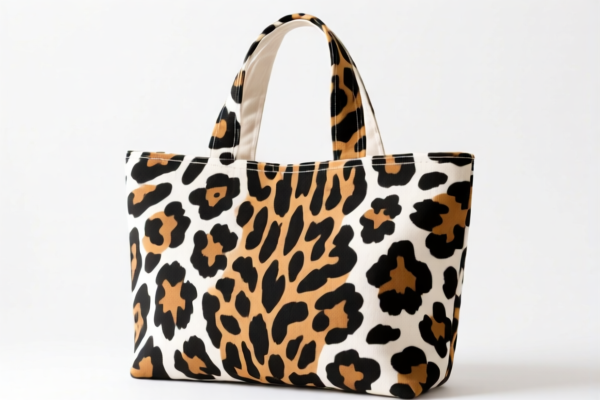
AI Analysis
👜 Cotton Handbags (Animal Print) – HS Code Classification & US Customs Clearance Guide
🌐 HS Code Reference & Customs Clearance Guide | 2026 Latest Tariff Analysis | Professional-Level Strategy
📌 I. Product Definition & Classification: Do You Really Understand "Cotton Handbags"?
Cotton handbags with animal print patterns are popular fashion accessories. However, in international trade, they are NOT all classified under a single HS Code. The classification depends heavily on the material composition of the bag’s body and lining.
Key Distinctions: - Pure Cotton Bags: The outer material is 100% cotton. - Paper-Covered/Composite Bags: The bag has a paper surface or paper components covering the structure. - Paper Shopping Bags: Made entirely of paper (often with cotton print, but classified as packaging).
⚠️ Critical Classification Point:
- If the bag is made of textile material (Cotton) → It falls under Chapter 42 (Articles of Leather; Travel Goods, Handbags).
- If the bag is made of Paper → It falls under Chapter 48 (Paper and Paperboard; Articles of Paper Pulp, of Paper or of Paperboard).
- Animal Print does NOT change the HS Code; it is considered a pattern/decoration and does not override material-based classification.
📦 II. HS Code Classification Details (Latest Tariff Authority Reference)
Based on your input data, here are the specific HS Codes applicable to Cotton Handbags (Animal Print) and related packaging items.
| HS Code | Product Description | Material Basis | Summary from Data |
|---|---|---|---|
4202.22.40.20 |
Cotton Handbags (Animal Print) | 100% Cotton Textile | Fits "Cotton handbags" classification |
4202.22.89.30 |
Other Textile Handbags (Animal Print) | Mixed/Other Textiles | Fits "Cotton handbags" classification (if mixed or other textile sub-category) |
4202.29.50.00 |
Paper-Covered Handbags (Animal Print) | Paper-covered exterior | Fits "Paper-covered bag" classification |
4819.40.00.40 |
Paper Shopping Bags (Animal Print) | 100% Paper | Fits "Paper packaging containers" classification |
4819.30.00.40 |
Paper Shopping Bags (Animal Print) | 100% Paper | Fits "Paper packaging containers" classification |
🔍 Important Note:
- HS Codes starting with4202are for Handbags/Travel Goods (Fashion items).
- HS Codes starting with4819are for Paper Packaging (Consumer goods, not fashion handbags).
- Misclassification between4202and4819can lead to significant duty differences and customs delays.
💰 III. 2026 Latest Tariff Rate Breakdown (Including Additional Taxes & Policy Surcharges)
✅ Applicable Country: United States (US)
✅ Country of Origin: China (CN)
✅ Effective Date: Includes imports after November 10, 2025 (or current applicable period)
🎯 1. 4202.22.40.20 —— Cotton Handbags (Pure Cotton)
| Item | Content |
|---|---|
| Base Tariff | 7.4% (Ad Valorem) |
| Section 301 Additional Tariff | +25.0% |
| 122 Clause Tariff (IEEPA) | +10.0% |
| Total Tariff Rate | 42.4% |
| Tax Calculation | CIF Value × 42.4% |
| De Minimis Exemption | ❌ Not Applicable (Section 321 low-value shipments do NOT exempt Section 301/122 tariffs for these codes) |
| Legal Basis Path | USITC:4202.22.40.20 → FOOTNOTE:301.02.01 → IEEPA:9903.01.25 |
📌 Explanation:
- Base Rate (7.4%): Standard MFN (Most Favored Nation) rate for cotton handbags.
- 301 Tariff (25%): Imposed on Chinese-made handbags under Trade Act Section 301.
- 122 Clause (10%): Additional surcharge under IEEPA targeting specific Chinese imports.
- Total 42.4%: This is a high duty rate. Must be factored into cost calculations.
🎯 2. 4202.22.89.30 —— Other Textile Handbags (Animal Print)
| Item | Content |
|---|---|
| Base Tariff | 17.6% (Ad Valorem) |
| Section 301 Additional Tariff | +25.0% |
| 122 Clause Tariff (IEEPA) | +10.0% |
| Total Tariff Rate | 52.6% |
| Tax Calculation | CIF Value × 52.6% |
| De Minimis Exemption | ❌ Not Applicable |
| Legal Basis Path | USITC:4202.22.89.30 → FOOTNOTE:301.02.01 → IEEPA:9903.01.25 |
📌 Note:
- This code applies if the bag is classified under a different textile sub-heading (e.g., mixed fibers, or specific synthetic-cotton blends not covered under 4202.22.40).
- Higher Base Rate (17.6%) leads to a Total Rate of 52.6%, which is even more costly.
- Do not use this code if the bag is 100% cotton, as4202.22.40.20is more accurate and cheaper.
🎯 3. 4202.29.50.00 —— Paper-Covered Handbags (Animal Print)
| Item | Content |
|---|---|
| Base Tariff | 7.8% (Ad Valorem) |
| Section 301 Additional Tariff | +25.0% |
| 122 Clause Tariff (IEEPA) | +10.0% |
| Total Tariff Rate | 42.8% |
| Tax Calculation | CIF Value × 42.8% |
| De Minimis Exemption | ❌ Not Applicable |
| Legal Basis Path | USITC:4202.29.50.00 → FOOTNOTE:301.02.01 → IEEPA:9903.01.25 |
📌 Warning:
- This code is for bags where the exterior is covered in paper (e.g., paper-reinforced fabric, or paper-laminated textile).
- If your bag is pure cotton, do NOT use this code. Misclassification can lead to penalties.
🎯 4. 4819.40.00.40 & 4819.30.00.40 —— Paper Shopping Bags (Animal Print)
| Item | Content |
|---|---|
| Base Tariff | 0.0% (Ad Valorem) |
| Section 301 Additional Tariff | +25.0% |
| 122 Clause Tariff (IEEPA) | +10.0% |
| Total Tariff Rate | 35.0% |
| Tax Calculation | CIF Value × 35.0% |
| De Minimis Exemption | ❌ Not Applicable |
| Legal Basis Path | USITC:4819.40.00.40 / 4819.30.00.40 → FOOTNOTE:301.02.01 → IEEPA:9903.01.25 |
📌 Clarification:
- These HS Codes are for Paper Packaging/Shopping Bags, NOT fashion handbags.
- If you are importing actual handbags (for personal use/fashion), classifying them as "Paper Shopping Bags" is Incorrect and constitutes misdeclaration.
- However, if you are importing paper bags used as packaging for other goods, this code applies with a lower total rate (35.0%) due to 0% base duty.
🛠️ IV. Customs Clearance Practical Advice (Avoid Pitfalls)
✅ 1. Prepare Required Documents (Mandatory)
| Document | Must Provide | Description |
|---|---|---|
| ✅ Product Specification Sheet | ✔️ | Must specify: Material (e.g., 100% Cotton), Lining, Closure Type, Brand, Model |
| ✅ Product Photos (Clear) | ✔️ | Show the exterior (animal print), interior, and any labels |
| ✅ Commercial Invoice | ✔️ | Clearly state: "Cotton Handbag, Animal Print, Made in China" |
| ✅ Packing List | ✔️ | Details quantity, weight, and dimensions |
| ✅ Certificate of Origin (CO) | ✔️ | For China origin verification |
| ✅ Material Composition Proof | ✔️ | If mixed material, provide fiber content breakdown |
✅ 2. Declaration Tips (Key Mantra)
🔥 "Material First, Function Second, Name Precise, Duty Clear!"
| Scenario | Correct Declaration | Wrong Practice |
|---|---|---|
| Pure Cotton Handbag | HS: 4202.22.40.20Name: "Cotton Handbag, Animal Print" |
Declaring as "Paper Bag" → Penalty for Misclassification |
| Mixed Fabric Handbag | HS: 4202.22.89.30 or 4202.29.50.00 |
Declaring as "Cotton" → Base rate error |
| Paper Shopping Bag (Packaging) | HS: 4819.40.00.40Name: "Paper Shopping Bag" |
Declaring as "Handbag" → Wrong chapter |
| Paper-Covered Fashion Bag | HS: 4202.29.50.00 |
Declaring as "Cotton" → Incorrect material classification |
✅ 3. Special Cases Handling
| Case | Handling Advice |
|---|---|
| OEM Custom Handbags | Provide design drawings showing material layers to prove classification |
| Cotton + Leather Trim | If leather trim is minor, still classified under 4202 (Textile) |
| Small Value Shipments (< $800) | ❌ No De Minimis Exemption for Section 301/122 tariffs on these HS codes |
| Gift Sets (Handbag + Packaging) | Declare handbag and packaging separately to avoid complex valuation issues |
🌍 V. Global Market Comparison (2026 Latest)
| Country/Region | Recommended HS Code | Tariff (China Origin) | Notes |
|---|---|---|---|
| 🇺🇸 United States | 4202.22.40.20 |
42.4% | Includes 25% Section 301 + 10% 122 Clause |
| 🇨🇳 China | 4202.22.40.20 |
~9.5% (Import Duty) | Lower rates, no Section 301 |
| 🇪🇺 European Union | 4202.22.00.10 |
~12% | No Section 301; may have ESG compliance requirements |
| 🇬🇧 United Kingdom | 4202.22.00.10 |
~12% | Post-Brexit trade terms |
| 🇯🇵 Japan | 4202.22.00.10 |
~10% | Low base tariff, no punitive tariffs |
📌 Conclusion:
- USA has the highest duty burden due to additional tariffs.
- Cost Planning is Critical: For a $100 bag, expect to pay $42.40 in duties alone.
- Consider supply chain diversification if targeting the US market.
📌 VI. Common Mistakes & Pitfalls (Blood Tears Lessons)
❌ Mistake 1: Classifying Cotton Handbags as "Paper Bags" (4819)
👉 Consequence: Customs audit → Penalties + Back Duties + Legal Fees
👉 Why: Paper bags are packaging; Cotton bags are fashion goods. They are in different chapters.
❌ Mistake 2: Ignoring Section 301 and 122 Clauses
👉 Consequence: Unexpected 35-52% duty bill → Profit Margin Destruction
👉 Why: Base rate is low (7-17%), but additional tariffs are high (25% + 10%).
❌ Mistake 3: Using "De Minimis" ($800) for Section 301 Items
👉 Consequence: Package Held or Seized → Delays + Storage Fees
👉 Why: Section 301 and 122 tariffs do not qualify for de minimis exemption.
❌ Mistake 4: Incorrect Material Declaration
👉 Consequence: Re-classification → Delayed Release + Potential Fines
👉 Why: Must accurately declare % cotton vs. other materials.
✅ Correct Practice:
"Cotton Handbag, 100% Cotton, Animal Print Pattern, Model XYZ, Made in China"
HS Code:4202.22.40.20
Duty: 42.4%
🎯 VII. Conclusion: Professional Declaration, Time-Saving, Cost-Effective!
🎯 Remember the Mantra:
🔹 "Material Determines Code, Cotton Goes to 4202, Paper to 4819"
🔹 "Section 301 and 122 Add 35%, Never Forget the De Minimis Trap!"
🔹 "Animal Print is Just Decoration, It Does Not Change the HS Code!"
📌 Pro Tip:
- If your product is 100% Cotton, use 4202.22.40.20 (42.4% duty).
- If you are importing Paper Bags for Packaging, use 4819.40.00.40 (35% duty).
- Do not mix these up! Misclassification can lead to severe penalties.
📣 Immediate Action:
📞 Contact a Professional Customs Broker + Provide Product Photos + Request HS Code Advance Ruling
🚀 Ensure your Cotton Handbags clear US Customs smoothly, avoid unexpected duties, and protect your profit margins!
✨ Professional Customs Clearance Starts with Accurate Classification!
💼 Every cent of cost deserves precise calculation!
Customer Reviews
About HS Code Classification
The Harmonized System (HS) is an internationally standardized nomenclature developed by the World Customs Organization (WCO) to classify traded products. Over 200 countries use the HS system as the basis for customs tariffs, trade statistics, and import/export regulations.
Each HS code follows a hierarchical structure:
- Chapter (2 digits) — Broad category of goods (e.g., Chapter 84: Machinery and Mechanical Appliances)
- Heading (4 digits) — More specific grouping within the chapter
- Subheading (6 digits) — Internationally standardized breakdown, used by all WCO member countries
- National subdivisions (8-10 digits) — Country-specific extensions for further classification, such as US HTSUS 10-digit codes
Correct HS code classification is essential for smooth customs clearance, accurate duty payment, and compliance with trade regulations. Misclassification can lead to customs delays, overpayment of duties, or penalties.
When importing from CN to US, the applicable tariff rates may include:
- Most-Favored-Nation (MFN) rate — The standard duty rate applied to WTO members
- General rate — Applied to countries without trade agreements
- Trade remedy duties — Additional tariffs such as Section 301 (anti-dumping), Section 232 (national security), or countervailing duties
The information provided on this page is for reference purposes only. For official classification, please consult with your local customs authority or a licensed customs broker.