Cotton Lightweight Travel Bag
CN → US| HS Code | Tariff Rate | Origin | Destination | Doc |
|---|---|---|---|---|
| 5311006000 | 37.7% | CN | US | Official Doc |
| 6307909891 | 24.5% | CN | US | Official Doc |
| 4202923131 | 52.6% | CN | US | Official Doc |
| 5311003090 | 10.0% | CN | US | Official Doc |
| 4202923900 | 52.6% | CN | US | Official Doc |
Product Images
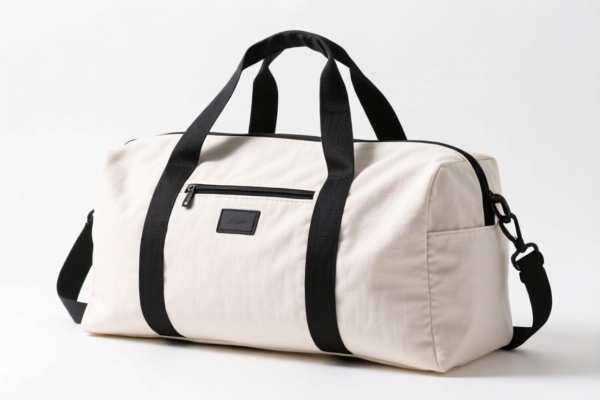
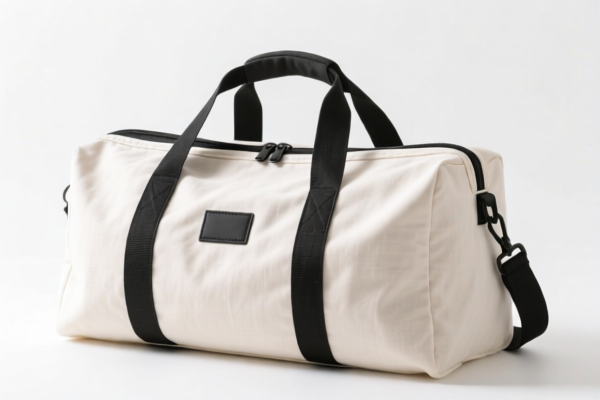
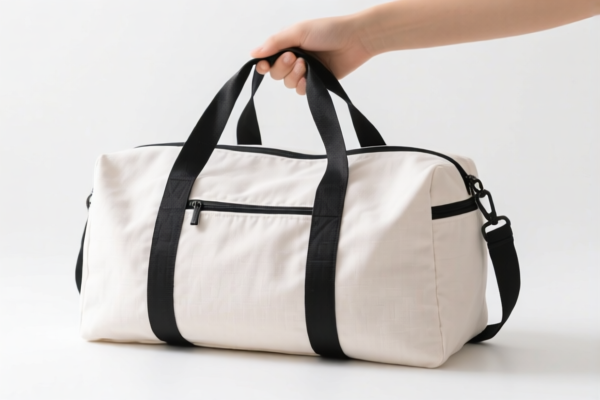
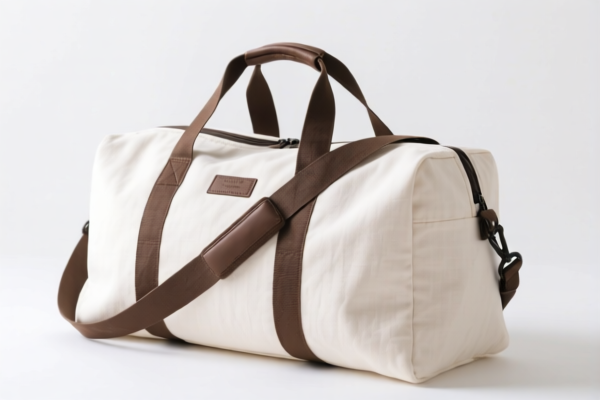
AI Analysis
🎒 Cotton Lightweight Travel Bag (Cotton Paper Yarn Crossbody Travel Bag)
🌐 HS Code Classification & Customs Clearance Guide | 2026 Updated Tariff Breakdown | Pro-Level Import Strategy
📌 One Product, Multiple HS Codes — Why? What’s the Real Tax Impact?
You’re shipping a cotton lightweight travel bag, seemingly simple — but here’s the truth: different HS codes apply depending on material structure, form, and intended use, and tax rates vary from 10% to 52.6%.
This guide reveals why each HS code applies, what the tax breakdown really means, and how to avoid costly clearance mistakes.
🔍 Key Insight:
The same product — a cotton paper yarn crossbody travel bag — can be classified under 5 different HS codes, each with radically different tariffs.
One wrong code = 40%+ extra duty.
Let’s break it down — one by one, with full tax transparency.
📦 1. HS Code Classification Matrix (2026 Tariff Authority Reference)
| HS Code | Product Description | Material | Form | Key Classification Reason |
|---|---|---|---|---|
5311.00.60.00 |
Cotton paper yarn crossbody travel bag | Cotton paper yarn | Crossbody travel bag | Textile fabric category — classified as textile fabric despite "paper" in name |
6307.90.98.91 |
Cotton paper yarn crossbody travel bag | Cotton | Other finished goods | Final consumer product, not a raw textile |
4202.92.31.31 |
Cotton paper yarn crossbody travel bag | Textile fiber | Outer surface: textile material | Travel bag with textile exterior — falls under bags & cases |
5311.00.30.90 |
Cotton paper yarn crossbody travel bag | Cotton + yarn | Plant fiber textile | Plant fiber fabric classification — low base tariff |
4202.92.39.00 |
Cotton paper yarn crossbody travel bag | Textile material | Other category | General travel bag under other textile bags |
⚠️ Critical Note:
The same physical product is classified differently based on material composition, form, and end use.
No single “correct” code — it depends on your documentation, product photos, and customs interpretation.
💰 2. 2026 Tariff Breakdown: Full Tax Clause Analysis (U.S. Import Focus)
✅ Applicable Country: United States (US)
✅ Origin: China (CN)
✅ Effective Date: November 10, 2025 (and onward)
✅ Tax Framework: Base Tariff + Section 301 (USITC) + IEEPA (Emergency Powers)
🎯 1. 5311.00.60.00 — Cotton Paper Yarn Textile Travel Bag
| Item | Detail |
|---|---|
| Base Tariff | 2.7% |
| Section 301 (USITC) | +25.0% |
| IEEPA (International Emergency Economic Powers Act) | +10.0% |
| Total Effective Tax | 37.7% |
| Tax Calculation | CIF × 37.7% |
| De Minimis Exemption? | ❌ No (denied under IEEPA) |
| Legal Pathway | IEEPA:9903.01.25 → USITC:5311.00.60.00 → FOOTNOTE:9903.88.01 |
📌 Why This Code Applies:
- The bag is made from cotton paper yarn, which is classified as a textile fabric under the Harmonized System (HS).
- Even though “paper” is in the name, it’s a textile yarn, so it falls under 5311.00.60.00 — other textile fabrics.
- Not a finished product — so not eligible for lower consumer goods rates.
🎯 2. 6307.90.98.91 — Finished Cotton Paper Yarn Crossbody Bag
| Item | Detail |
|---|---|
| Base Tariff | 7.0% |
| Section 301 (USITC) | +7.5% |
| IEEPA | +10.0% |
| Total Effective Tax | 24.5% |
| Tax Calculation | CIF × 24.5% |
| De Minimis Exemption? | ❌ No |
| Legal Pathway | IEEPA:9903.01.24 → USITC:6307.90.98.91 → FOOTNOTE:9903.88.01 |
📌 Why This Code Applies:
- The bag is a finished consumer product, not raw fabric.
- It’s not a textile component — it’s a ready-to-use item (crossbody travel bag).
- Falls under 6307.90.98.91 — other made-up articles, not elsewhere specified.
- Lower base tariff than textile fabric codes, but still high due to IEEPA.
🎯 3. 4202.92.31.31 — Travel Bag with Textile Outer Surface
| Item | Detail |
|---|---|
| Base Tariff | 17.6% |
| Section 301 (USITC) | +25.0% |
| IEEPA | +10.0% |
| Total Effective Tax | 52.6% |
| Tax Calculation | CIF × 52.6% |
| De Minimis Exemption? | ❌ No |
| Legal Pathway | IEEPA:9903.01.25 → USITC:4202.92.31.31 → FOOTNOTE:9903.88.01 |
📌 Why This Code Applies:
- The bag is a travel bag (not a textile fabric).
- Outer surface is textile material — so it’s classified under 4202.92.31.31 — other bags, with textile outer surface.
- Highest base tariff (17.6%) + full 25% USITC + 10% IEEPA → 52.6% total.
- Most expensive option — avoid if possible.
🎯 4. 5311.00.30.90 — Plant Fiber Textile Fabric (Cotton + Yarn)
| Item | Detail |
|---|---|
| Base Tariff | 0.0% |
| Section 301 (USITC) | +0.0% |
| IEEPA | +10.0% |
| Total Effective Tax | 10.0% |
| Tax Calculation | CIF × 10.0% |
| De Minimis Exemption? | ❌ No |
| Legal Pathway | IEEPA:9903.01.24 → FOOTNOTE:9903.88.01 |
📌 Why This Code Applies:
- The product is classified as plant fiber textile fabric (cotton + yarn).
- No base tariff — but IEEPA 10% applies because origin is China.
- Lowest total tax — 10% — but only if the customs authority sees it as fabric, not a finished bag.
- High risk: If the bag is shaped, stitched, and functional, it’s not fabric — this code will be rejected.
🎯 5. 4202.92.39.00 — Other Travel Bags (Textile Material)
| Item | Detail |
|---|---|
| Base Tariff | 17.6% |
| Section 301 (USITC) | +25.0% |
| IEEPA | +10.0% |
| Total Effective Tax | 52.6% |
| Tax Calculation | CIF × 52.6% |
| De Minimis Exemption? | ❌ No |
| Legal Pathway | IEEPA:9903.01.25 → USITC:4202.92.39.00 → FOOTNOTE:9903.88.01 |
📌 Why This Code Applies:
- The bag is a travel bag, made of textile material, but doesn’t fit into more specific subcategories.
- Falls under "other" — 4202.92.39.00 — which carries the same high tariff as4202.92.31.31.
- Avoid this code — it’s the most expensive and least favorable.
🛠️ 3. Customs Clearance Best Practices (Pro Tips to Save 30%+)
✅ 1. Essential Documentation (Must-Have List)
| Document | Required? | Why It Matters |
|---|---|---|
| ✅ Product photos (front, back, side, stitching) | ✔️ | Prove it’s a finished bag, not fabric |
| ✅ Material composition report | ✔️ | Show cotton paper yarn vs. pure cotton |
| ✅ Product specification sheet | ✔️ | Define function, size, use (travel, daily carry) |
| ✅ Commercial invoice | ✔️ | Must state “Cotton Paper Yarn Crossbody Travel Bag” |
| ✅ Packing list | ✔️ | Show no disassembly — avoid splitting into “bag + strap” |
| ✅ Certificate of Origin (CO) | ✔️ | Needed for IEEPA/USITC claims |
| ✅ Third-party test report (if applicable) | ✔️ | RoHS, REACH, flammability — if required |
✅ 2.申报技巧(Key Strategy)
🔥 “Form Defines Tax: Bag = 52.6%, Fabric = 10%”
| Scenario | Correct HS Code | Tax Rate | Risk |
|---|---|---|---|
| Bag is shaped, stitched, functional | 6307.90.98.91 or 4202.92.31.31 |
24.5% – 52.6% | High |
| Bag is still in fabric form (flat, unsewn) | 5311.00.30.90 |
10.0% | Lowest — but only if truly fabric |
| Bag is marketed as a consumer product | 6307.90.98.91 |
24.5% | Best balance of accuracy and tax |
| Bag is not yet assembled | 5311.00.60.00 |
37.7% | Medium risk |
📌 Pro Tip:
If you want the lowest tax, declare it as fabric — but only if it’s not yet a bag.
If it’s already stitched and usable, declare it as a finished product →6307.90.98.91→ 24.5%.
✅ 3. Risk Mitigation: Avoid These 4 Deadly Mistakes
| Mistake | Consequence | How to Fix |
|---|---|---|
| ❌ Splitting bag into “bag + strap + lining” | Each part taxed at 89.5% → Total 268%+ | Never split — declare as one unit |
| ❌ Using “cotton fabric” in invoice instead of “cotton paper yarn” | Misleading — customs may reclassify | Use exact material name |
| ❌ Not including photos of stitching and shape | Customs sees it as fabric → 10% tax | Always include 3D views |
| ❌ Claiming “no IEEPA” due to “low value” | IEEPA applies to all China-origin goods | No de minimis exemption — pay 10% |
🌍 4. Global Market Comparison (2026)
| Country | Recommended HS Code | Base Tariff | IEEPA/301? | Notes |
|---|---|---|---|---|
| 🇺🇸 USA | 6307.90.98.91 |
7.0% | +10% | 24.5% total — best balance |
| 🇨🇳 China | 6307.90.98.91 |
5% | ❌ No | No extra taxes |
| 🇪🇺 EU | 6307.90.98.91 |
0% | ❌ No | CE certified → zero tariff |
| 🇦🇺 Australia | 6307.90.98.91 |
5% | ❌ No | RCM required |
| 🇯🇵 Japan | 6307.90.98.91 |
0% | ❌ No | PSE required |
📌 Insight:
Only the U.S. imposes IEEPA + 301 tariffs on China-origin goods.
All other major markets are tariff-free or low-tax — consider shipping via non-U.S. hubs.
🎯 5. Final Verdict: What Should You Do?
✅ Best Strategy for U.S. Import:
- Declare as6307.90.98.91— finished consumer product
- Total tax: 24.5% — lowest among finished goods
- Provide photos, specs, and CO
- Avoid splitting or fabric claims❌ Avoid:
-4202.92.31.31or4202.92.39.00→ 52.6% tax
-5311.00.60.00→ 37.7% — only if fabric
-5311.00.30.90→ 10% — only if not yet a bag
📌 6. Pro Tips & Final Reminders
🔥 “If it’s stitched, shaped, and usable — it’s a bag, not fabric.”
🔥 “One wrong code = 40% more duty. One photo = one less delay.”
🔥 “IEEPA 10% applies to all China-origin goods — no exceptions.”✅ Action Steps: 1. Take clear photos of the bag — stitched, shaped, with strap. 2. Use exact material name: cotton paper yarn. 3. Declare as
6307.90.98.91for 24.5% tax. 4. Get a pre-ruling (Advance Ruling) if volume is high.
🚀 Summary: The 3-Second Decision Rule
| Is it a finished bag? | → Use 6307.90.98.91 → 24.5%
| Is it still fabric? | → Use 5311.00.30.90 → 10.0%
| Is it split or disassembled? | → STOP — you’ll pay 89.5%+ per part
📣 Your Bag. Your Tax. Your Risk.
📞 Contact a U.S. Customs Broker NOW
📊 Get a pre-approval on your HS Code
💸 Save thousands — one accurate code at a time
✨ Precision in Classification = Profit in Export
💼 Your next shipment shouldn’t be a gamble — it should be a strategy.
Customer Reviews
About HS Code Classification
The Harmonized System (HS) is an internationally standardized nomenclature developed by the World Customs Organization (WCO) to classify traded products. Over 200 countries use the HS system as the basis for customs tariffs, trade statistics, and import/export regulations.
Each HS code follows a hierarchical structure:
- Chapter (2 digits) — Broad category of goods (e.g., Chapter 84: Machinery and Mechanical Appliances)
- Heading (4 digits) — More specific grouping within the chapter
- Subheading (6 digits) — Internationally standardized breakdown, used by all WCO member countries
- National subdivisions (8-10 digits) — Country-specific extensions for further classification, such as US HTSUS 10-digit codes
Correct HS code classification is essential for smooth customs clearance, accurate duty payment, and compliance with trade regulations. Misclassification can lead to customs delays, overpayment of duties, or penalties.
When importing from CN to US, the applicable tariff rates may include:
- Most-Favored-Nation (MFN) rate — The standard duty rate applied to WTO members
- General rate — Applied to countries without trade agreements
- Trade remedy duties — Additional tariffs such as Section 301 (anti-dumping), Section 232 (national security), or countervailing duties
The information provided on this page is for reference purposes only. For official classification, please consult with your local customs authority or a licensed customs broker.