Cotton Linters
CN → USProduct Images
AI Analysis
🌿 Cotton Linters (Cotton Fuzz)
🌐 HS Code Reference & Customs Clearance Guide | 2026 Latest Tariff Analysis | Professional Clearance Strategy
📌 1. Product Definition & Classification: Do You Really Know "Cotton Linters"?
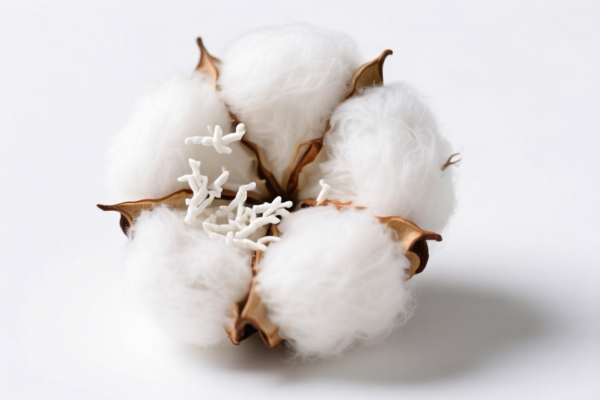
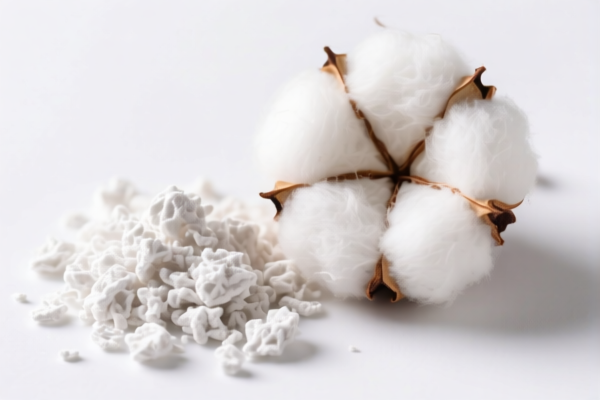
Cotton Linters are the short, fine fibers that cling to the cottonseed after the longer staple fibers (lint) have been removed during the ginning process. They are essentially the "second crop" of cotton, often considered a by-product but with significant industrial value.
In international trade, they are categorized based on whether they have been bleached or further processed:
- Raw/Unbleached Linters: Short white or brown fibers, primarily used for making wood pulp (cellulose) for explosives, cellulose derivatives, and high-quality paper.
- Bleached Linters: Purified white fibers, used in high-end applications like pharmaceuticals, cosmetics, cellophane, and specialized explosives (nitrocellulose).
⚠️ Key Distinction:
- If the material is raw, unbleached, or only mechanically cleaned → Classified under Chapter 14 (Miscellaneous vegetable products) or Chapter 52 (if closely related to cotton waste, but usually 1402 is the specific home for linters).
- Crucially: Cotton Linters are NOT classified under Chapter 52 (Cotton) as "waste" if they are sold as a distinct industrial raw material. They fall squarely under Heading 1402.
- If they are mixed with cotton waste or are of low quality, customs might scrutinize them under 5203 (Cotton Waste), but pure "Linters" are distinct.
📦 2. HS Code Classification Details (2026 Latest Tariff Authority Comparison)
| HS Code | Product Description | Applicable Scenario | Bleached? |
|---|---|---|---|
1402.00.10 |
Cotton linters | Raw/Unbleached Linters | ❌ No |
1402.00.90 |
Other vegetable materials (including linters) | Bleached Linters or other specialized linter products | ✅ Yes (often grouped here if not specifically listed elsewhere, but check local sub-headings) |
5203.00.00 |
Cotton waste (including yarn waste and garnetted stock) | Low-grade linters mixed with waste, or if customs deems them "waste" rather than "material" | N/A |
🔍 Key Reminder:
- Chapter 1402 is the primary home for Cotton Linters in most major trading nations (US, EU, China).
- Do NOT classify under5203unless the material is truly "waste" (dirty, mixed with seed husks) and not sold as a clean industrial raw material. Misclassification can lead to significant duty differences and penalties.
- Bleached vs. Unbleached: In some jurisdictions, bleached linters may have different duty rates or require additional documentation to prove purity.
💰 3. 2026 Latest Tariff Rate Details (Including Surtaxes, Policy Add-ons)
✅ Applicable Country: United States (US)
✅ Origin: China (CN)
✅ Effective Date: November 10, 2025 onwards (for subsequent imports)
🎯 1. 1402.00.10 —— Cotton Linters (Unbleached)
| Item | Content |
|---|---|
| Base Duty Rate | Free (0% ad valorem) |
| USITC Surtax | 0% (Not subject to Section 301 tariffs in most cases, but verify latest USITC lists) |
| IEEPA Surtax | 0% (Cotton linters are often exempt from China-specific IEEPA tariffs as they are agricultural by-products, not manufactured goods) |
| Total Rate | 0% |
| Tax Calculation | CIF Value × 0% |
| De Minimis Eligibility | ✅ Yes (Subject to current de minimis rules, typically under $800) |
| Legal Path | HTSUS:1402.00.10 |
📌 Explanation:
- Cotton linters are considered agricultural by-products, not high-tech or strategic manufactured goods.
- Therefore, they are generally exempt from the punitive Section 301 and IEEPA tariffs that affect electronics, machinery, and consumer goods.
- Zero Duty makes this a highly cost-effective import category if properly classified.
🎯 2. 1402.00.90 —— Other (e.g., Bleached Linters)
| Item | Content |
|---|---|
| Base Duty Rate | Free (0% ad valorem) |
| USITC Surtax | 0% |
| IEEPA Surtax | 0% |
| Total Rate | 0% |
| Tax Calculation | CIF Value × 0% |
| De Minimis Eligibility | ✅ Yes |
📌 Note:
- Bleaching is a chemical process, but it does not change the fundamental nature of the product from "vegetable material" to "manufactured good" for tariff purposes in most cases.
- Ensure the bleaching process is documented to prove it is still within Chapter 14.
🛠️ 4. Customs Clearance Practical Advice (Real-world Pitfall Guide)
✅ 1. Document Checklist (Non-negotiable)
| Document | Must Provide | Description |
|---|---|---|
| ✅ Product Specification Sheet | ✔️ | Detail fiber length, purity, moisture content, and whether bleached. |
| ✅ Commercial Invoice | ✔️ | Clearly state "Cotton Linters" or "Cotton Fuzz," NOT "Cotton Waste" or "Textile Raw Material." |
| ✅ Certificate of Origin | ✔️ | Essential for proving origin, especially if claiming FTZ benefits (though unlikely here). |
| ✅ Packing List | ✔️ | Show weight, volume, and packaging type (bales, bags). |
| ✅ Phytosanitary Certificate | ✔️ | Critical! Since it is a plant product, many countries require a phytosanitary certificate to ensure no pests/seeds are present. |
| ✅ Bill of Lading/Air Waybill | ✔️ | Standard shipping docs. |
✅ 2. Declaration Tips (Key Mantra)
🔥 “Label as Linters, Not Waste; Purity Matters, Docs Complete!”
| Scenario | Correct Declaration | Incorrect Practice |
|---|---|---|
| Raw Linters | 1402.00.10 - "Cotton Linters, Unbleached" |
Calling it "Cotton Waste" (5203) → Potential audit for misclassification. |
| Bleached Linters | 1402.00.90 - "Bleached Cotton Linters" |
Calling it "Cellulose Pulp" → Wrong chapter, higher scrutiny. |
| Mixed with Husks | 1402.00.10 or 5203 depending on purity |
Hiding impurities → Customs may reject or reclassify as waste. |
✅ 3. Special Situation Handling
| Situation | Handling Advice |
|---|---|
| Phytosanitary Issues | Ensure the linters are processed to remove all seeds and husks. If seeds are present, a Fumigation Certificate is required. |
| High Purity Requests | For pharmaceutical-grade linters, provide a Quality Certificate from a third-party lab (e.g., cellulose content > 90%). |
| Small Shipments | If under $800, can use Section 321 (De Minimis) entry for fastest clearance, but ensure the HS Code is accurate. |
| Bulk Bales | Inspect for moisture content. High moisture can lead to mold, triggering customs inspection and potential rejection. |
🌍 5. Global Major Market Clearance Comparison (2026 Latest)
| Country/Region | Recommended HS Code | Tariff | Certification Requirements | Notes |
|---|---|---|---|---|
| 🇺🇸 US | 1402.00.10 |
0% | Phytosanitary Certificate | No Section 301 tariffs. |
| 🇨🇳 China | 1402.00.10 |
Free | None usually | Major exporter of linters. |
| 🇪🇺 EU | 1402.00.10 |
0% | Phytosanitary Certificate | Strict on plant pests. |
| 🇮🇳 India | 1402.00.10 |
0-5% | Phytosanitary Certificate | Varies by state regulations. |
| 🇻🇳 Vietnam | 1402.00.10 |
0% | None | Growing textile hub, imports linters for processing. |
📌 Conclusion:
- Cotton Linters enjoy 0% duty in most major markets, including the US and EU.
- Phytosanitary certification is the biggest hurdle, not duty.
- Misclassification as "Cotton Waste" (5203) can lead to unnecessary duties and delays, so be precise in your documentation.
📌 6. Common Errors & Pitfall Guide (Blood Lessons)
❌ Error 1: Calling "Cotton Linters" as "Cotton Waste" (5203)
👉 Consequence: Potential audit, even if duty is similar, it raises red flags for agricultural imports.
❌ Error 2: Ignoring Phytosanitary Requirements
👉 Consequence: Shipment held at port, fumigation required, or returned.
❌ Error 3: Not declaring Bleached vs. Unbleached
👉 Consequence: Incorrect HS Code classification, leading to delays.
❌ Error 4: High Moisture Content in Bales
👉 Consequence: Mold growth, customs rejection, or quality disputes.
✅ Correct Approach:
"Cotton Linters, Unbleached, Cleaned, Seed-Free, Moisture < 12%, Baled, Phytosanitary Certificate Attached"
🎯 7. Conclusion: Professional Declaration, Save Time & Money!
🎯 Remember the Mantra:
🔹 "Linters are 1402, not 5203. Zero duty, but watch for pests. Docs clean, clearance fast!"
🔹 "HS Code 1402.00 is your friend. Misclassify as waste, and you'll find no peace!"
📌 Pro Tip:
If you are importing bleached linters for high-value applications (e.g., pharmaceuticals), ensure your supplier provides a Certificate of Analysis (CoA) to prove purity. This can help expedite customs clearance and avoid unnecessary laboratory tests by customs authorities.
📣 Immediate Action:
📞 Contact your freight forwarder + Provide Phytosanitary Certificate + Declare accurately as
1402.00.10
🚀 Ensure your cotton linters, clear customs smoothly, avoid delays, and maximize your supply chain efficiency!
✨ Professional Customs Clearance, Starting with Accurate Classification!
💼 Every Dollar Saved is a Dollar Earned!
Customer Reviews
About HS Code Classification
The Harmonized System (HS) is an internationally standardized nomenclature developed by the World Customs Organization (WCO) to classify traded products. Over 200 countries use the HS system as the basis for customs tariffs, trade statistics, and import/export regulations.
Each HS code follows a hierarchical structure:
- Chapter (2 digits) — Broad category of goods (e.g., Chapter 84: Machinery and Mechanical Appliances)
- Heading (4 digits) — More specific grouping within the chapter
- Subheading (6 digits) — Internationally standardized breakdown, used by all WCO member countries
- National subdivisions (8-10 digits) — Country-specific extensions for further classification, such as US HTSUS 10-digit codes
Correct HS code classification is essential for smooth customs clearance, accurate duty payment, and compliance with trade regulations. Misclassification can lead to customs delays, overpayment of duties, or penalties.
When importing from CN to US, the applicable tariff rates may include:
- Most-Favored-Nation (MFN) rate — The standard duty rate applied to WTO members
- General rate — Applied to countries without trade agreements
- Trade remedy duties — Additional tariffs such as Section 301 (anti-dumping), Section 232 (national security), or countervailing duties
The information provided on this page is for reference purposes only. For official classification, please consult with your local customs authority or a licensed customs broker.