Cotton Long Sleeve T Shirt
CN → US| HS Code | Tariff Rate | Origin | Destination | Doc |
|---|---|---|---|---|
| 6109100012 | 34.0% | CN | US | Official Doc |
| 6109100004 | 34.0% | CN | US | Official Doc |
| 6110202079 | 34.0% | CN | US | Official Doc |
| 6105100010 | 29.7% | CN | US | Official Doc |
| 6110202010 | 34.0% | CN | US | Official Doc |
Product Images
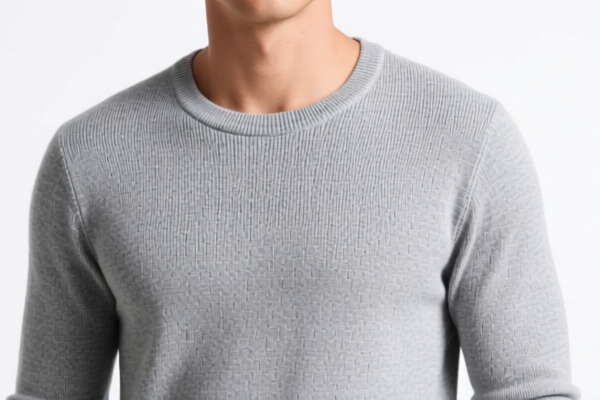
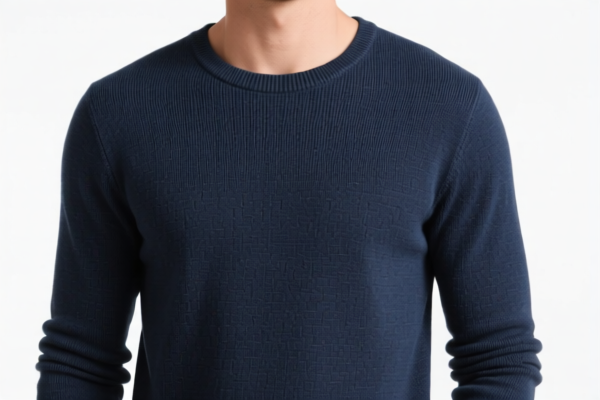
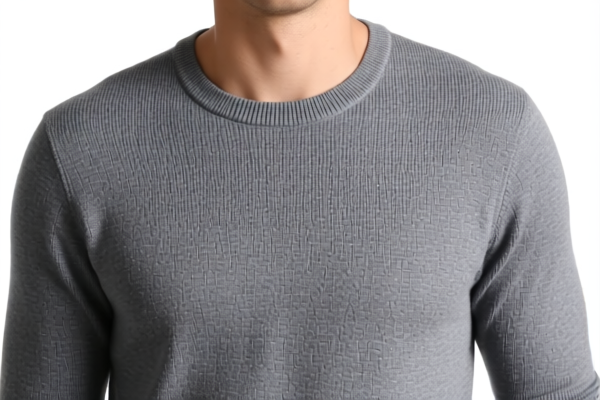
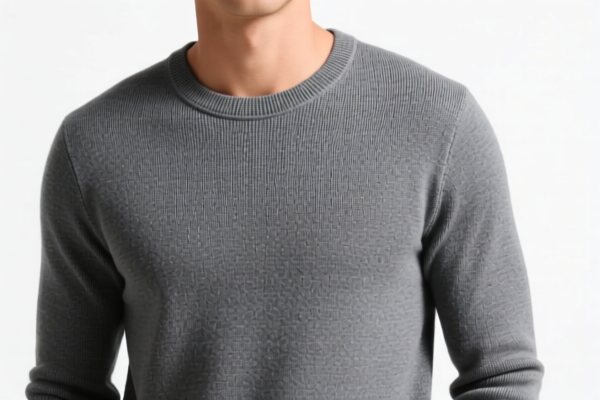
AI Analysis
👕 Cotton Long Sleeve T-Shirt (Men's)
🌐 HS Code Reference & Customs Clearance Guide | 2026 Latest Tariff Analysis | Professional Clearance Strategy
📌 I. Product Definition & Classification: Do You Really Understand "Cotton Long Sleeve T-Shirt"?
The "Cotton Long Sleeve T-Shirt" is a versatile garment falling under the category of knitted or crocheted apparel. In international trade, its classification is strictly determined by material composition (Cotton), gender specificity (Men's/Boys'), and structural form (T-Shirt vs. Shirt/Blouse).
Two Main Classification Paths:
- As a "T-Shirt" (6109): If the garment is primarily a pullover, crew-neck, or V-neck top without a front opening (buttons/plackets) extending to the waist, it is classified as a T-shirt.
- As a "Shirt/Blouse" (6105): If the garment features a full front opening with buttons (a placket), it is technically classified as a "men's shirt" or "blouse," even if made of jersey fabric.
⚠️ Critical Distinction Point:
- If it has no front buttons (pullover style) → HS Code 6109 (T-shirts)
- If it has front buttons/placket → HS Code 6105 (Shirts)
- Material: Must be 100% Cotton to fit the subheadings below.
📦 II. HS Code Classification Details (2026 Latest Tariff Authority Mapping)
Based on the provided data, here are the valid HS Codes for Cotton Long Sleeve T-Shirts, categorized by their structural definition:
| HS Code | Product Description | Applicable Scenario | Structural Feature |
|---|---|---|---|
6109.10.00.12 |
Cotton T-shirts (Men's/Boys'), knitted/crocheted | Pullover style, no front placket | ❌ No buttons |
6109.10.00.04 |
Cotton T-shirts (Men's/Boys'), knitted/crocheted | Standard T-shirt form, cotton material | ❌ No buttons |
6110.20.20.79 |
Cotton T-shirts (Men's/Boys'), knitted/crocheted | General cotton knitted tops, broad category | ❌ No buttons |
6105.10.00.10 |
Men's Cotton Long Sleeve Shirts | Button-down front, shirt style | ✅ Has Buttons |
6110.20.20.10 |
Men's Cotton Long Sleeve Shirts | Broad category for cotton knitted shirts | ✅ Has Buttons |
🔍 Key Reminder:
- The primary difference between6109and6105is the front opening. A "long sleeve T-shirt" with buttons down the front is often misclassified. Customs may reclassify it as6105(Shirt) if a placket is present, which can have different duty implications (though in this specific data set, the tax rates are similar or identical). - Material Accuracy: Ensure the label says 100% Cotton or Cotton to qualify for these 6-digit subheadings. Blends (e.g., 95% Cotton/5% Spandex) may fall under different headings (e.g., 6109.90).
💰 III. 2026 Latest Tariff Rate Breakdown (Including Additional Taxes & Policy Surcharges)
✅ Applicable Country: United States (US)
✅ Origin: China (CN)
✅ Effective Date: 2025/2026 (Post-Trade War Adjustments)
🎯 1. 6109.10.00.12 & 6109.10.00.04 —— Cotton T-Shirts (Pullover Style)
| Item | Content |
|---|---|
| Base Duty Rate | 16.5% (Standard MFN Rate) |
| Section 301 Additional Tariff | +7.5% |
| Section 122 Tariff (Bikini Tariff) | +10% |
| Total Effective Tax Rate | 34.0% |
| Tax Calculation | CIF Value × 34.0% |
| De Minimis Exemption | ❌ Not Eligible (High-value or bulk shipments >$800 may be scrutinized; small packages < $800 may qualify under de minimis, but Section 301/122 often apply if flagged) |
| Legal Basis Path | HTSUS:6109.10.00 → Section 301: Footnote 1 → Section 122: 19 USC 1677j |
📌 Explanation:
- "Base 16.5%": The standard most-favored-nation (MFN) duty for cotton knitted T-shirts. - "Section 301 7.5%": The standard retaliatory tariff imposed on Chinese goods under the US Trade Representative. - "Section 122 10%": A special safeguard tariff on certain textile/apparel imports (often referred to as the "Bikini Tariff," though it applies to various apparel including T-shirts). - Total 34%: This is a significant cost burden. Profit margins must account for this.
🎯 2. 6110.20.20.79 —— General Cotton Knitted T-Shirts
| Item | Content |
|---|---|
| Base Duty Rate | 16.5% |
| Section 301 Additional Tariff | +7.5% |
| Section 122 Tariff | +10% |
| Total Effective Tax Rate | 34.0% |
| Tax Calculation | CIF Value × 34.0% |
| De Minimis Exemption | ❌ Not Eligible |
| Legal Basis Path | HTSUS:6110.20.20 → Section 301 → Section 122 |
📌 Note:
- Same tariff structure as6109. The difference in HS Code is primarily administrative/structural. - No advantage in tariff rate compared to6109.
🎯 3. 6105.10.00.10 —— Men's Cotton Long Sleeve Shirts (Button-Down)
| Item | Content |
|---|---|
| Base Duty Rate | 19.7% |
| Section 301 Additional Tariff | 0.0% (Note: Data shows 0.0%, potentially due to specific trade agreements or temporary exclusions for certain shirts, but verify current status) |
| Section 122 Tariff | +10% |
| Total Effective Tax Rate | 29.7% |
| Tax Calculation | CIF Value × 29.7% |
| De Minimis Exemption | ❌ Not Eligible |
| Legal Basis Path | HTSUS:6105.10.00 → Section 301 → Section 122 |
📌 Critical Insight:
- Lower Total Tax (29.7% vs 34.0%): If your "Long Sleeve T-Shirt" has buttons, classifying it as6105(Shirt) instead of6109(T-Shirt) saves 4.3% in total duties due to the 0% Section 301 rate shown in the data. - ⚠️ Risk: Customs officers are strict. If you declare a button-down shirt as6109to simplify, you risk misclassification penalties. If you declare a pullover as6105, it is also misclassification. Accuracy is key.
🎯 4. 6110.20.20.10 —— Men's Cotton Long Sleeve Shirts (General)
| Item | Content |
|---|---|
| Base Duty Rate | 16.5% |
| Section 301 Additional Tariff | +7.5% |
| Section 122 Tariff | +10% |
| Total Effective Tax Rate | 34.0% |
| Tax Calculation | CIF Value × 34.0% |
| De Minimis Exemption | ❌ Not Eligible |
| Legal Basis Path | HTSUS:6110.20.20 → Section 301 → Section 122 |
📌 Note:
- This code behaves like6110.20.20.79. If your shirt is complex, it might fall here.
🛠️ IV. Customs Clearance Practical Advice (Real-World Pitfall Guide)
✅ 1. Required Documentation Checklist (No Shortcuts)
| Document | Required | Explanation |
|---|---|---|
| ✅ Product Description | ✔️ | Must clearly state: "Men's Cotton Knitted Long Sleeve T-Shirt" OR "Men's Cotton Knitted Long Sleeve Shirt with Placket" |
| ✅ Material Composition | ✔️ | Must specify 100% Cotton (or blend %). Mislabeling leads to reclassification. |
| ✅ Photos (Flat & On-Model) | ✔️ | Must clearly show front opening. If buttons exist, they must be visible. |
| ✅ Commercial Invoice | ✔️ | Value must match CIF. Must not undervalue. |
| ✅ Packing List | ✔️ | Include quantity, weight, and package dimensions. |
| ✅ Section 301 Exclusion (if applicable) | ✔️ | Check if your specific style was excluded from Section 301 tariffs (rare for basic apparel, but verify). |
✅ 2. Declaration Tips (Key Mantra)
🔥 "Check the Front! Buttons = Shirt (6105). No Buttons = T-Shirt (6109)."
| Scenario | Correct Declaration | Wrong Approach |
|---|---|---|
| Pullover, Crew Neck | 6109.10.00.12 / 6109.10.00.04 |
Declare as 6105 → Misclassification Risk |
| Button-Down, Collar | 6105.10.00.10 |
Declare as 6109 → Potential Penalty |
| Button-Down, No Collar (Polo-like) | Check if it has a placket. If yes, 6105. If no, 6109. |
Ambiguous description → Customs Hold |
| Cotton Blend | Do NOT use 6109.10 (Pure Cotton). Use 6109.90 or relevant blend code. |
Declare as 100% Cotton → Fraud Penalty |
✅ 3. Special Cases Handling
| Situation | Handling Advice |
|---|---|
| OEM Custom Design | Provide design sheets. Ensure "Cotton" is the dominant fiber. |
| Long Sleeve "Tee" with Buttons | This is a "Henley" or "Placket Tee". Customs often classify these as Shirts (6105) due to the placket. Using 6105.10.00.10 (29.7%) is strategically advantageous. |
| De Minimis (Section 321) | For shipments < $800, you might avoid duties, but Section 301 and 122 tariffs still apply to Chinese origin goods in many cases. Do not assume $0 tax. |
| Labeling Issues | If the label says "T-Shirt" but has buttons, Customs will reclassify to 6105. Always describe by structure, not just name. |
🌍 V. Global Market Comparison (2026 Latest)
| Country/Region | Recommended HS Code | Estimated Duty | Certification | Notes |
|---|---|---|---|---|
| 🇺🇸 USA | 6109.10.00.12 / 6105.10.00.10 |
29.7% - 34.0% | None (Basic) | High tariffs due to Sec 301 & 122. Critical Cost Factor. |
| 🇨🇳 China | 6109.10.00.00 / 6105.10.00.00 |
9.5% - 16.5% | None | Import duties for raw apparel are moderate. |
| 🇪🇺 EU | 6109.10.00 / 6105.10.00 |
12% - 16% | CE (if special) | No Section 301/122 equivalent. Lower cost than US. |
| 🇬🇧 UK | 6109.10.00 / 6105.10.00 |
12% - 16% | None | Post-Brexit tariffs. |
| 🇨🇦 Canada | 6109.10.00 / 6105.10.00 |
17.5% - 19.5% | None | CUSMA benefits may apply for Mexican/US origin. |
📌 Conclusion:
- USA is the most expensive market for cotton apparel due to Section 301 and 122 tariffs. - Strategy: Consider sourcing from Vietnam, Bangladesh, or Mexico to avoid Section 301 tariffs (Mexico benefits from CUSMA).
📌 VI. Common Errors & Pitfalls (Lessons Learned)
❌ Error 1: Calling a button-down shirt a "T-Shirt" to simplify
👉 Consequence: Customs may reclassify to 6105. If 6105 has a higher base rate (e.g., 19.7% vs 16.5%), you might face underpayment penalties. However, in this data, 6105 has lower total tax (29.7% vs 34%), so you might overpay if you mistakenly use 6109.
❌ Error 2: Misdeclaring material as "Synthetic" when it's Cotton
👉 Consequence: Wrong HS Code (6109.90 vs 6109.10). Different duty rates and false declaration fines.
❌ Error 3: Ignoring Section 122 Tariff
👉 Consequence: Underestimating landed cost. Section 122 (10%) is often forgotten in early quotes.
❌ Error 4: Assuming De Minimis ($800) exemption applies
👉 Consequence: CBP now heavily scrutinizes Section 301 goods under Section 321. Many Chinese apparel items lose de minimis exemption or face rigorous inspection.
✅ Correct Approach:
"Men's Cotton Knitted Long Sleeve Shirt, Front Placket, 100% Cotton, Black, Size M"
HS Code:6105.10.00.10
Total Duty: 29.7%
🎯 VII. Conclusion: Professional Declaration, Cost Control, Efficiency!
🎯 Remember the Mantra:
🔹 "Buttons = Shirt (6105). No Buttons = T-Shirt (6109)."
🔹 "Check the 4.3% Difference: 29.7% vs 34.0%."
🔹 "Accurate Description Saves Money and Avoids Penalties!"
📌 Pro Tip:
If your "Long Sleeve T-Shirt" has buttons, strategically declare it as 6105.10.00.10 to benefit from the lower total tax rate (29.7%) compared to the T-Shirt classification (34.0%). This is a legitimate tax optimization strategy based on structural accuracy.
📣 Immediate Action:
📞 Consult with a customs broker + Provide clear photos of the front placket + Apply for Advance Ruling if shipping large volumes.
🚀 Optimize your classification, reduce landed costs, and ensure smooth clearance!
✨ Professional Customs Clearance Starts with Precise Classification!
💼 Every percentage point counts!
Customer Reviews
About HS Code Classification
The Harmonized System (HS) is an internationally standardized nomenclature developed by the World Customs Organization (WCO) to classify traded products. Over 200 countries use the HS system as the basis for customs tariffs, trade statistics, and import/export regulations.
Each HS code follows a hierarchical structure:
- Chapter (2 digits) — Broad category of goods (e.g., Chapter 84: Machinery and Mechanical Appliances)
- Heading (4 digits) — More specific grouping within the chapter
- Subheading (6 digits) — Internationally standardized breakdown, used by all WCO member countries
- National subdivisions (8-10 digits) — Country-specific extensions for further classification, such as US HTSUS 10-digit codes
Correct HS code classification is essential for smooth customs clearance, accurate duty payment, and compliance with trade regulations. Misclassification can lead to customs delays, overpayment of duties, or penalties.
When importing from CN to US, the applicable tariff rates may include:
- Most-Favored-Nation (MFN) rate — The standard duty rate applied to WTO members
- General rate — Applied to countries without trade agreements
- Trade remedy duties — Additional tariffs such as Section 301 (anti-dumping), Section 232 (national security), or countervailing duties
The information provided on this page is for reference purposes only. For official classification, please consult with your local customs authority or a licensed customs broker.