Cotton Outdoor Travel Bag
CN → US| HS Code | Tariff Rate | Origin | Destination | Doc |
|---|---|---|---|---|
| 5311006000 | 37.7% | CN | US | Official Doc |
| 6307909891 | 24.5% | CN | US | Official Doc |
| 4202923131 | 52.6% | CN | US | Official Doc |
| 4202923900 | 52.6% | CN | US | Official Doc |
| 5311003090 | 10.0% | CN | US | Official Doc |
Product Images
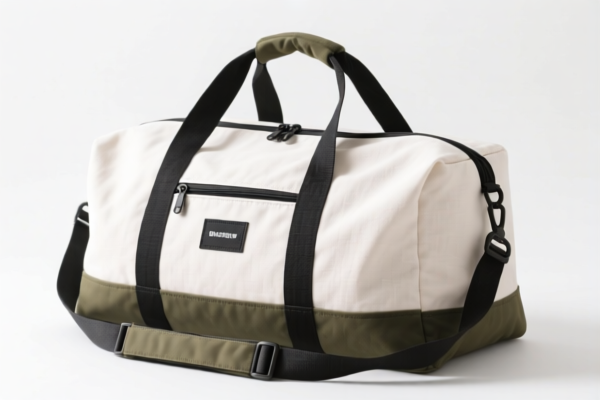
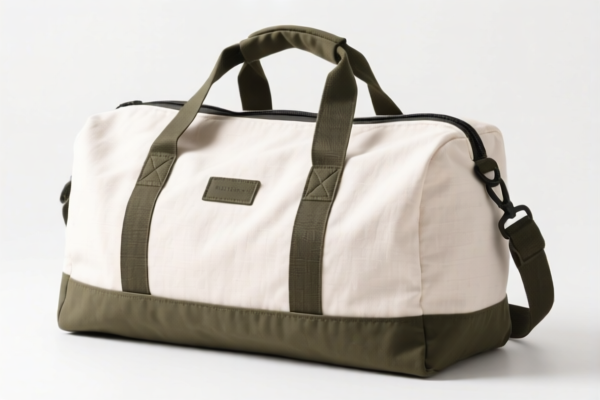
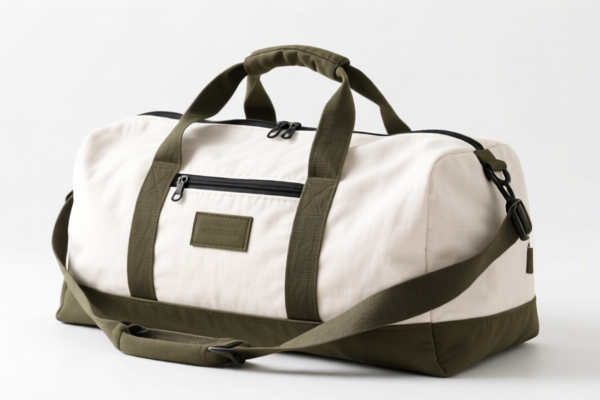
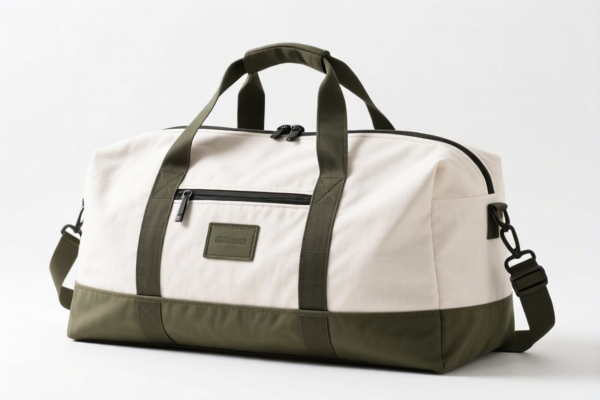
AI Analysis
🎒 Cotton Outdoor Travel Bag (Cotton Paper Yarn Crossbody Travel Bag)
🌐 HS Code Reference & Customs Clearance Guide | 2026 Latest Tariff Analysis | Professional Clearance Strategy
📌 I. Product Definition & Classification: What exactly is "Cotton Paper Yarn"?
The product in question is a Crossbody Travel Bag made from "Cotton Paper Yarn" (a hybrid material often referred to as Mian Zhi Sha). In international trade, this ambiguous material description can lead to significant classification errors. It sits at the intersection of textile fabrics, paper products, and finished goods.
The classification depends entirely on how customs authorities interpret the primary material and the structural composition:
- As a Paper/Yarn Fabric: If the bag is primarily constructed from non-woven paper yarn or paper-based textile blends, it may fall under Chapter 53 (Other vegetable textile fibers).
- As a Textile Accessory: If considered a standard travel bag made of textile materials, it falls under Chapter 42 (Articles of leather or of composition leather).
- As a Generic Finished Good: If the material composition is too complex or non-standard to fit specific textile headings, it may be classified as a "made up" article of other materials.
⚠️ Key Distinction Point:
- If the outer surface is clearly a textile (cotton/paper blend) → Chapter 42 (Higher Tariff).
- If it is considered a specialty paper fabric → Chapter 53 (Variable Tariff).
- If it is a miscellaneous textile article → Chapter 63 (Medium Tariff).
📦 II. HS Code Classification Details (2026 Latest Tariff Authority Comparison)
| HS Code | Product Description (from Data) | Applicable Scenario | Material Interpretation | Total Tax Rate* |
|---|---|---|---|---|
5311.00.30.90 |
Cotton paper yarn travel bag; contains cotton and yarn, fits vegetable fiber fabric definition. | Specialty paper-yarn blend | Vegetable Fiber/Paper Yarn | 10.0% |
6307.90.98.91 |
Cotton paper yarn travel bag; finished consumer good; form/use: other made up articles; material: cotton. | General textile finished good | Cotton/Textile Blend | 24.5% |
5311.00.60.00 |
Cotton paper yarn travel bag; material: cotton paper yarn; form: crossbody travel bag; category: paper yarn fabric. | Paper-based textile fabric | Paper Yarn Fabric | 37.7% |
4202.92.31.31 |
Cotton paper yarn travel bag; use: travel bag; material: textile fiber; outer surface: textile material. | Standard textile travel bag | Textile Material | 52.6% |
4202.92.39.00 |
Cotton paper yarn travel bag; use: travel bag; material: textile material; category: other. | Standard textile travel bag (Other) | Textile Material | 52.6% |
🔍 Important Note:
- Lowest Tax Option:5311.00.30.90(10.0%) if the bag can be legally classified as a vegetable fiber fabric. - Highest Tax Risk:4202.92.xxxxxx(52.6%) if classified strictly as a standard textile travel bag. - The difference between 10% and 52.6% is massive and directly impacts profitability.
💰 III. 2026 Latest Tariff Rate Breakdown (Including Surcharges & Policy Add-ons)
✅ Applicable Country: United States (US)
✅ Origin: China (CN)
✅ Effective Time: 2025 November 10 onwards (including subsequent imports)
🎯 1. 5311.00.30.90 —— Vegetable Fiber Fabric (Lowest Cost)
| Item | Content |
|---|---|
| Base Rate | 0.0% |
| Section 301 Surcharge | 0.0% |
| Section 122 Tariff | 10.0% |
| Total Rate | 10.0% |
| Tax Calculation | CIF Value × 10% |
| De Minimis Eligibility | ❌ Not Eligible (Deny De Minimis) |
| Legal Basis Path | FOOTNOTE:122 → USITC:5311.00.30.90 |
📌 Explanation:
- Base + 301 Tax: 0% – This is the "golden ticket" if the product qualifies under this specific vegetable fiber heading. - 122 Tariff: 10% – This is a specific additional tariff applied to certain textile/paper goods from China. - Total: 10% – This is the most advantageous classification for cost-saving.
🎯 2. 6307.90.98.91 —— Other Made Up Articles (Medium Cost)
| Item | Content |
|---|---|
| Base Rate | 7.0% |
| Section 301 Surcharge | 7.5% |
| Section 122 Tariff | 10.0% |
| Total Rate | 24.5% |
| Tax Calculation | CIF Value × 24.5% |
| De Minimis Eligibility | ❌ Not Eligible (Deny De Minimis) |
| Legal Basis Path | USITC:6307.90.98.91 → FOOTNOTE:122 |
📌 Note:
- Classified as a "finished consumer good" or "other made up article." - Higher base duty (7%) plus 301 tariff (7.5%) and 122 tariff (10%). - Suitable if the "paper yarn" definition is rejected by customs.
🎯 3. 5311.00.60.00 —— Paper Yarn Fabric (High Cost)
| Item | Content |
|---|---|
| Base Rate | 2.7% |
| Section 301 Surcharge | 25.0% |
| Section 122 Tariff | 10.0% |
| Total Rate | 37.7% |
| Tax Calculation | CIF Value × 37.7% |
| De Minimis Eligibility | ❌ Not Eligible (Deny De Minimis) |
| Legal Basis Path | USITC:5311.00.60.00 → FOOTNOTE:9903.88.01 → FOOTNOTE:122 |
📌 Warning:
- Although still in Chapter 53 (Vegetable Fibers), this specific subheading carries a 25% Section 301 tariff. - Total cost jumps to 37.7%. Do not assume all "5311" codes have low tariffs.
🎯 4. 4202.92.31.31 & 4202.92.39.00 —— Standard Travel Bags (Highest Cost)
| Item | Content |
|---|---|
| Base Rate | 17.6% |
| Section 301 Surcharge | 25.0% |
| Section 122 Tariff | 10.0% |
| Total Rate | 52.6% |
| Tax Calculation | CIF Value × 52.6% |
| De Minimis Eligibility | ❌ Not Eligible (Deny De Minimis) |
| Legal Basis Path | USITC:4202.92.xxxx → FOOTNOTE:9903.88.01 → FOOTNOTE:122 |
📌 Critical Alert:
- Classified under Chapter 42 (Articles of Leather/Textiles). - Highest Tax Burden: 52.6%. - This occurs if customs views the "cotton paper yarn" simply as a "textile material" used for a "travel bag." - Avoid this classification if possible!
🛠️ IV. Customs Clearance Practical Advice (Battle-Tested Pitfall Guide)
✅ 1. Required Documentation Checklist (No Exceptions)
| Document | Mandatory? | Explanation |
|---|---|---|
| ✅ Material Composition Certificate | ✔️ | Must detail the ratio of "Cotton" to "Paper Yarn." Crucial for arguing 5311.00.30.90. |
| ✅ Product Photos (Clear) | ✔️ | Show the texture. Is it woven paper? Non-woven textile? |
| ✅ Technical Specification Sheet | ✔️ | Include weight, dimensions, lining material, zipper type. |
| ✅ Commercial Invoice | ✔️ | Description: "Cotton Paper Yarn Crossbody Bag" – DO NOT write "Travel Bag" without material detail. |
| ✅ Packing List | ✔️ | Match invoice exactly. |
| ✅ Origin Certificate (CO) | ✔️ | Proves CN origin for 301/122 calculation. |
✅ 2. Declaration Strategy (Key Mantras)
🔥 "Define Material, Not Just Use; Paper Yarn is Key, Chapter 42 is Fee!"
| Scenario | Correct Declaration | Incorrect Practice |
|---|---|---|
| Primary Material is Paper-Yarn | 5311.00.30.90 (10%) |
Describe as "Cotton Bag" → 4202.92 (52.6%) |
| Material is Ambiguous | 6307.90.98.91 (24.5%) |
No material detail → High scrutiny risk |
| Standard Textile Bag | 4202.92.39.00 (52.6%) |
Trying to hide 301 tariff → Audit/Seizure |
| Bag with Leather Trim | 4202.92.39.00 (52.6%) |
Claiming "Textile" if leather is primary → Misclassification |
💡 Pro Tip:
- When declaring, emphasize the "Paper Yarn" (纸纱) aspect.
- Provide a material test report showing the fabric is predominantly paper-based or paper-yarn blend, not just standard cotton weave.
- Avoid the term "Travel Bag" as the primary descriptor in the Material section; use "Paper Yarn Fabric Article."
✅ 3. Special Circumstances Handling
| Situation | Handling Advice |
|---|---|
| Mixed Materials (Leather + Paper Yarn) | If leather is >50% of exterior surface, it may still go to 4202. If paper yarn is exterior, fight for 5311. |
| Lining Material | Ensure the lining (polyester/cotton) does not confuse the classification. The exterior surface determines Chapter 42 vs 53. |
| OEM Custom Bags | Provide design drawings showing the paper-yarn texture. |
| Samples vs Bulk | Ensure samples match bulk material exactly. Discrepancies lead to reclassification at 52.6%. |
🌍 V. Global Market Clearance Comparison (2026 Latest)
| Country/Region | Recommended HS Code | Tariff Rate | Certification Requirements | Notes |
|---|---|---|---|---|
| 🇺🇸 USA | 5311.00.30.90 |
10.0% | None specific | 122 Tariff applies. Avoid 4202 (52.6%). |
| 🇨🇳 China | 5311.00.30.90 |
Low (Check local) | None | Domestic trade usually lower tax. |
| 🇪🇺 EU | 6307.90.98 |
0-4% (if eligible) | CE (if functional) | Different tariff structure; 301/122 do not apply. |
| 🇬🇧 UK | 6307.90.98 |
0-4% | UKCA | Post-Brexit tariffs may vary. |
📌 Conclusion:
- The US is the most critical market for this classification due to Section 301 and 122 Tariffs.
- Chapter 42 (52.6%) is a cost killer.
- Chapter 53.30 (10%) is the target.
📌 VI. Common Errors & Pitfall Guide (Blood & Tears Lessons)
❌ Error 1: Describing the product simply as "Cotton Travel Bag"
👉 Consequence: Customs assumes standard textile → Classifies as 4202.92.39.00 → 52.6% Tax!
❌ Error 2: Failing to prove "Paper Yarn" composition
👉 Consequence: Customs rejects 5311.00.30.90 → Re-routes to 6307 (24.5%) or 4202 (52.6%).
❌ Error 3: Ignoring the "122 Tariff"
👉 Consequence: Even with 0% base tax, forgetting the 10% 122 tariff leads to underpayment and penalties.
❌ Error 4: Using "Crossbody Bag" without material detail
👉 Consequence: Ambiguity leads to random classification by CBP, often favoring higher-duty categories.
✅ Correct Approach:
"Crossbody Bag, Exterior Material: Paper Yarn Blend (Cotton/Paper), Lining: Polyester. Specifically manufactured from Paper Yarn Fabric."
🎯 VII. Conclusion: Professional Declaration, Save Money, Boost Profit!
🎯 Remember the Mantra:
🔹 "Paper Yarn is Key, Chapter 53 is Low!"
🔹 "Don't say Cotton, Say Paper Yarn Fabric!"
🔹 "122 Tariff is 10%, Don't Forget It!"
🔹 "Chapter 42 is 52.6%, Avoid It Like Poison!"
📌 Tip:
- If your bag is not made from China, you might avoid 301/122 tariffs, but the base rates still vary.
- Apply for a Pre-Ruling (Advance Ruling) with CBP if the material definition is unique.
- Provide a sworn affidavit from your manufacturer stating the material is "Paper Yarn" and not standard woven cotton.
📣 Take Action Now:
📞 Contact a professional customs broker + Provide material test report + Argue for
5311.00.30.90
🚀 Let your travel bag, pass smoothly, clear tariffs, double your profit!
✨ Professional Clearance Starts with Precise Classification!
💼 Every cent of cost deserves precise calculation!
Customer Reviews
About HS Code Classification
The Harmonized System (HS) is an internationally standardized nomenclature developed by the World Customs Organization (WCO) to classify traded products. Over 200 countries use the HS system as the basis for customs tariffs, trade statistics, and import/export regulations.
Each HS code follows a hierarchical structure:
- Chapter (2 digits) — Broad category of goods (e.g., Chapter 84: Machinery and Mechanical Appliances)
- Heading (4 digits) — More specific grouping within the chapter
- Subheading (6 digits) — Internationally standardized breakdown, used by all WCO member countries
- National subdivisions (8-10 digits) — Country-specific extensions for further classification, such as US HTSUS 10-digit codes
Correct HS code classification is essential for smooth customs clearance, accurate duty payment, and compliance with trade regulations. Misclassification can lead to customs delays, overpayment of duties, or penalties.
When importing from CN to US, the applicable tariff rates may include:
- Most-Favored-Nation (MFN) rate — The standard duty rate applied to WTO members
- General rate — Applied to countries without trade agreements
- Trade remedy duties — Additional tariffs such as Section 301 (anti-dumping), Section 232 (national security), or countervailing duties
The information provided on this page is for reference purposes only. For official classification, please consult with your local customs authority or a licensed customs broker.