Cotton Outer Layer Insulated Beverage Bag
CN → US| HS Code | Tariff Rate | Origin | Destination | Doc |
|---|---|---|---|---|
| 3923290000 | 38.0% | CN | US | Official Doc |
| 4202920809 | 42.0% | CN | US | Official Doc |
| 4202920807 | 42.0% | CN | US | Official Doc |
| 3923900080 | 38.0% | CN | US | Official Doc |
| 6305390000 | 25.9% | CN | US | Official Doc |
Product Images
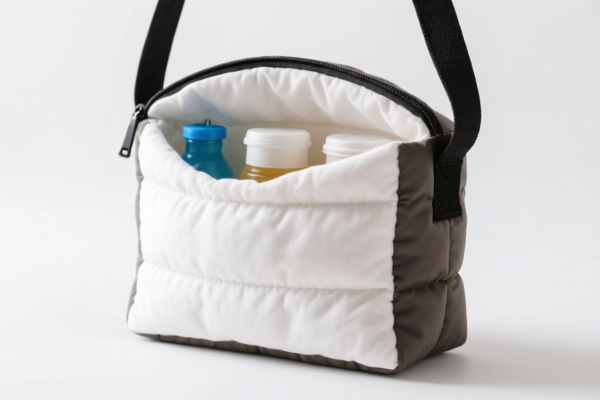
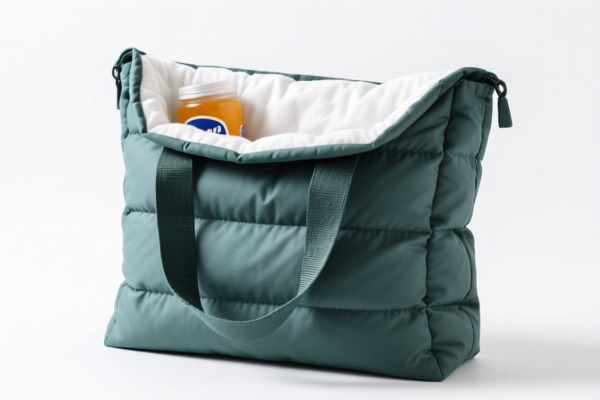
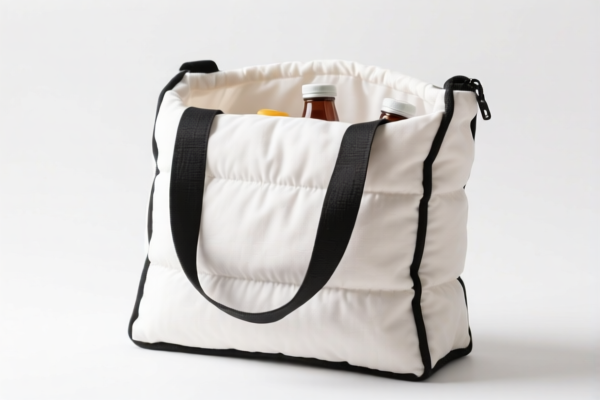
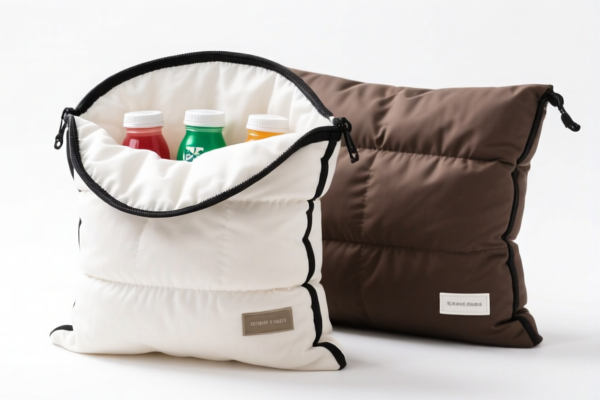
AI Analysis
🛍️ Insulated Beverage Bag (Textile Outer Layer)
🌐 HS Code Reference & Customs Clearance Guide | 2026 Latest Tariff Analysis | Professional Level Strategy
📌 1. Product Definition & Classification: What is the "Textile Outer Layer Insulated Beverage Bag"?
The product in question is an Insulated Beverage Bag where the outer surface is made of textile materials (such as cotton, polyester, or nylon). Its primary function is thermal insulation for drinks, falling under the category of packaging or travel accessories.
In international trade, the classification hinges on the outermost material. Since the outer layer is textile, it is not classified under Chapter 39 (Plastics) but under Chapter 42 (Articles of leather; traveling bags, handbags...) or Chapter 63 (Other made-up textile articles), depending on the specific textile composition and structure.
⚠️ Key Distinction Point:
- If the outer layer is Plastic (e.g., PVC, PE coated fabric) → Go to Chapter 39 (e.g., 3923.29.00.00).
- If the outer layer is Woven/Non-woven Textile (e.g., Cotton, Polyester) → Go to Chapter 42 (Traveling bags) or Chapter 63 (Other made-up textile goods).
- Specific Note for this Input: The user specified "Cotton Outer Layer," which strongly points towards textile-specific subheadings under 4202 or 6305.
📦 2. HS Code Classification Details (2026 Latest Tariff Authority Match)
Based on the provided , here are the relevant HS Codes for insulated beverage bags, specifically highlighting those with Textile/Non-Plastic Outer Layers that match your product description.
| HS Code | Product Description | Material Composition | Outer Layer Type |
|---|---|---|---|
4202.92.08.09 |
Textile material outer layer insulated beverage bag | Textile Outer | ✅ Textile (Matches "Cotton Outer") |
4202.92.08.07 |
Textile or man-made fiber outer insulated beverage bag | Textile/Man-made Outer | ✅ Textile (Matches "Cotton Outer") |
6305.39.00.00 |
Bag for packaging, made of man-made textile materials | Man-made Textile | ✅ Textile (Note: Specific to "man-made" usually, but often grouped with textile bags) |
3923.29.00.00 |
Plastic insulated beverage bag, bag form | Plastic | ❌ Plastic (Exclude if outer is cotton) |
3923.90.00.80 |
Plastic film or composite plastic insulated bag | Plastic/Composite | ❌ Plastic (Exclude if outer is cotton) |
🔍 Critical Analysis for "Cotton Outer Layer":
- Since the outer layer is Cotton (a natural textile), the most accurate classifications are4202.92.08.09and4202.92.08.07.
- These codes fall under Chapter 42, which covers "Traveling bags, suitcases, vanity cases... and similar containers." Insulated beverage bags are often classified here if they have a handle or specific carrying function resembling a traveling bag.
-6305.39.00.00is for " sacks and bags, for packaging, of textile materials." If the bag is primarily a "sack" style (e.g., a soft sleeve without a rigid handle structure), this code is also applicable, but4202is generally preferred for structured beverage holders.
💰 3. 2026 Latest Tariff Rate Details (Including Surcharges)
✅ Applicable Country: United States (US)
✅ Country of Origin: China (CN)
✅ Effective Date: From November 10, 2025 (and subsequent imports)
🎯 1. 4202.92.08.09 & 4202.92.08.07 —— Textile Outer Insulated Bags
| Item | Content |
|---|---|
| Base Tariff | 7.0% (Ad Valorem) |
| Section 301 Surcharge | +25.0% (USITC Footnote for Chinese Origin) |
| Section 122 Surcharge | +10.0% (Specific provision for Chinese imports) |
| Total Tax Rate | 42.0% |
| Tax Calculation | CIF Value × 42.0% |
| De Minimis Exemption? | ❌ No (Not eligible for Section 321 de minimis) |
| Legal Basis Path | USITC:4202.92.08.09 → Section301:25% → Section122:10% |
📌 Explanation:
- Base Rate (7%): Standard MFN rate for textile/traveling bags.
- Section 301 (25%): Major surcharge on Chinese manufactured goods.
- Section 122 (10%): Additional surcharge on Chinese imports.
- Total (42%): This is a high-cost item for importers. The textile nature does not exempt it from Section 301.
🎯 2. 6305.39.00.00 —— Man-made Textile Packaging Bags
| Item | Content |
|---|---|
| Base Tariff | 8.4% |
| Section 301 Surcharge | +7.5% (Note: Lower surcharge applies to some textile packaging items under Section 301, verify specific footnotes) |
| Section 122 Surcharge | +10.0% |
| Total Tax Rate | 25.9% |
| Tax Calculation | CIF Value × 25.9% |
| De Minimis Exemption? | ❌ No |
| Legal Basis Path | USITC:6305.39.00.00 → Section301:7.5% → Section122:10% |
📌 Critical Warning:
- If you classify this as6305.39.00.00, the total rate is 25.9%, which is significantly lower than the 42.0% for Chapter 42 codes.
- However, ensure the product fits the definition of "Packaging Bag" (6305) rather than a "Traveling Bag/Container" (4202). If it has handles, zippers, and is designed for personal carrying, Customs may force it into4202. Misclassification risk is high here.
🛠️ 4. Customs Clearance Practical Advice (Battle-Tested Pitfall Guide)
✅ 1. Preparation Checklist (Mandatory)
| Document | Required | Explanation |
|---|---|---|
| ✅ Product Specification Sheet | ✔️ | Must clearly state: Outer Material: 100% Cotton (or blend). Inner lining material. Insulation type. |
| ✅ Product Photos | ✔️ | Clear images showing handles, zippers, and stitching. Prove it’s a "bag" not just a "sleeve." |
| ✅ Commercial Invoice | ✔️ | Description: "Insulated Beverage Bag, Cotton Outer, Textile Lining, No Electrical Components." |
| ✅ Material Composition Declaration | ✔️ | Explicitly state "Cotton Outer Layer" to distinguish from plastic-coated bags. |
| ✅ Packing List | ✔️ | Net weight and gross weight. |
✅ 2. Declaration Strategy (Key Mantra)
🔥 "Outer Material Dictates Chapter: Cotton = Textile (4202/6305), Plastic = Plastic (3923)"
| Scenario | Correct HS Code | Wrong Code | Consequence |
|---|---|---|---|
| Cotton Outer, Zipped Handle | 4202.92.08.09 |
3923.29.00.00 |
Penalty for misclassification. Tax diff: 42% vs 38%. |
| Cotton Outer, Simple Sleeve | 6305.39.00.00 |
4202.92.08.07 |
Potential Tax Savings: 25.9% vs 42.0%. Recommended if structure allows. |
| Plastic-Coated Fabric | 3923.29.00.00 |
4202.92.08.09 |
Wrong. Plastic coating >50% or essential character → Chapter 39. |
| Mixed Materials (Cotton Outer + Plastic Handle) | 4202.92.08.09 |
3923.90.00.80 |
Outer layer determines classification. Cotton wins. |
📌 Pro Tip:
- To potentially use6305.39.00.00(25.9% rate), argue that the bag is a "Packaging Bag" used for temporary holding, not a durable "Traveling Bag."
- If the bag has rigid structure, multiple compartments, and premium hardware, Customs will likely insist on4202(42% rate).
- Do NOT declare as3923if the outer is cotton. Customs will test the material.
✅ 3. Special Circumstances
| Situation | Handling Advice |
|---|---|
| Cotton + Polyester Blend | Check the weight percentage. If Cotton > Polyester, still Textile. If Plastic-coated, re-evaluate. |
| OEM/Custom Design | Provide design drawings. If unique shape, emphasize "Traveling Bag" function → 4202. |
| Sample Import | Even for samples, high tariffs apply. Consider if "De Minimis" applies? No, Section 301 goods are generally exempt from De Minimis. |
| Transshipment | If routed through Vietnam/Malaysia, ensure substantial transformation occurs. Simple relabeling will trigger penalties. |
🌍 5. Global Market Clearance Comparison (2026 Latest)
| Country/Region | Recommended HS Code | Tariff Rate (China Origin) | Certification | Note |
|---|---|---|---|---|
| 🇺🇸 USA | 4202.92.08.09 / 6305.39.00.00 |
42.0% / 25.9% | None specific | Highest Cost Market. |
| 🇨🇳 China (Imported TO China) | 4202.92.00.00 |
~10-15% | None | Low tariff, easy entry. |
| 🇪🇺 EU | 4202.92.00 |
4.5% | None | Low tariff, high VAT (19-25%). |
| 🇬🇧 UK | 4202.92.00 |
4.5% | None | Post-Brexit rules apply. |
| 🇦🇺 Australia | 4202.92.00 |
5% | None | Low tariff. |
📌 Conclusion:
- USA is the only market with prohibitive tariffs (42%) for this product.
- The 42% rate makes US imports uncompetitive unless the product value is very high or subsidized.
- Strategy: Consider dropping shipments to the US or sourcing from non-China origins (e.g., Vietnam, Bangladesh) to avoid Section 301/122 surcharges.
📌 6. Common Errors & Pitfalls (Lessons Learned)
❌ Error 1: Declaring "Cotton Bag" as 3923.29.00.00 (Plastic)
👉 Consequence: Customs tests material, finds cotton. Rejects entry + Fines.
❌ Error 2: Using 6305.39.00.00 for a structured, handle-equipped bag
👉 Consequence: Customs reclassifies to 4202. Back-tariff difference (16.1%) + Interest.
❌ Error 3: Ignoring Section 122 (10%) in cost calculation
👉 Consequence: Budget overrun. Total rate is not just 301+Base, but Base+301+122.
❌ Error 4: Assuming "Textile" means De Minimis eligible
👉 Consequence: Section 301 goods are excluded from De Minimis. No 80% savings.
✅ Correct Approach:
"Insulated Beverage Bag, Cotton Outer, Polyester Lining, Handle with Zipper.
HS Code:4202.92.08.09(Safe) or6305.39.00.00(Aggressive/Lower Tax if structure allows)."
🎯 7. Conclusion: Professional Declaration for Cost Optimization
🎯 Remember the Mantra:
🔹 "Cotton Outer = Textile Code (4202/6305), Not Plastic (3923)"
🔹 "4202 Rate: 42% (Expensive), 6305 Rate: 25.9% (Cheaper but Risky)"
🔹 "Section 301 + 122 are Non-Negotiable for China Origin"
📌 Pro Tip:
If you must import to the US, verify if your supplier can provide a "Certificate of Origin" from Vietnam or Bangladesh. If the bag is substantially transformed there, you may avoid the 35% (25%+10%) surcharge, reducing the total tax to just the Base Rate (7%).
🚀 Action:
1. Confirm outer material: 100% Cotton?
2. Decide structure: Handle/Zipper (Go 4202) or Soft Sleeve (Go 6305)?
3. Calculate landed cost with 42% vs 25.9%.
4. Consult a customs broker for Pre-Ruling if the structure is ambiguous.
✨ Professional Customs Clearance Starts with Accurate Classification!
💼 Every 1% of tax rate matters in low-margin textile imports!
Customer Reviews
About HS Code Classification
The Harmonized System (HS) is an internationally standardized nomenclature developed by the World Customs Organization (WCO) to classify traded products. Over 200 countries use the HS system as the basis for customs tariffs, trade statistics, and import/export regulations.
Each HS code follows a hierarchical structure:
- Chapter (2 digits) — Broad category of goods (e.g., Chapter 84: Machinery and Mechanical Appliances)
- Heading (4 digits) — More specific grouping within the chapter
- Subheading (6 digits) — Internationally standardized breakdown, used by all WCO member countries
- National subdivisions (8-10 digits) — Country-specific extensions for further classification, such as US HTSUS 10-digit codes
Correct HS code classification is essential for smooth customs clearance, accurate duty payment, and compliance with trade regulations. Misclassification can lead to customs delays, overpayment of duties, or penalties.
When importing from CN to US, the applicable tariff rates may include:
- Most-Favored-Nation (MFN) rate — The standard duty rate applied to WTO members
- General rate — Applied to countries without trade agreements
- Trade remedy duties — Additional tariffs such as Section 301 (anti-dumping), Section 232 (national security), or countervailing duties
The information provided on this page is for reference purposes only. For official classification, please consult with your local customs authority or a licensed customs broker.