Cotton Outer Layer Insulated Beverage Bags
CN → US| HS Code | Tariff Rate | Origin | Destination | Doc |
|---|---|---|---|---|
| 6307909891 | 24.5% | CN | US | Official Doc |
| 4202920809 | 42.0% | CN | US | Official Doc |
| 6305900000 | 23.7% | CN | US | Official Doc |
| 6305390000 | 25.9% | CN | US | Official Doc |
| 4202920807 | 42.0% | CN | US | Official Doc |
Product Images
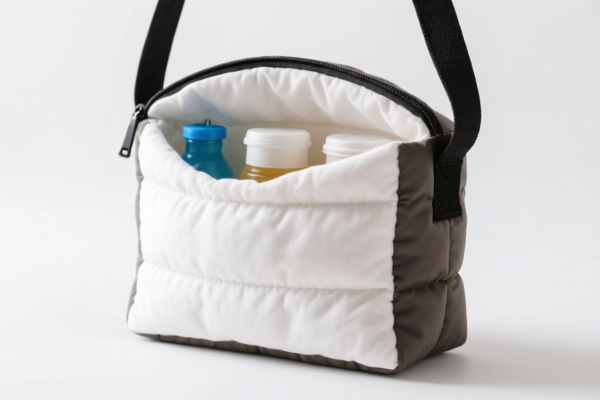
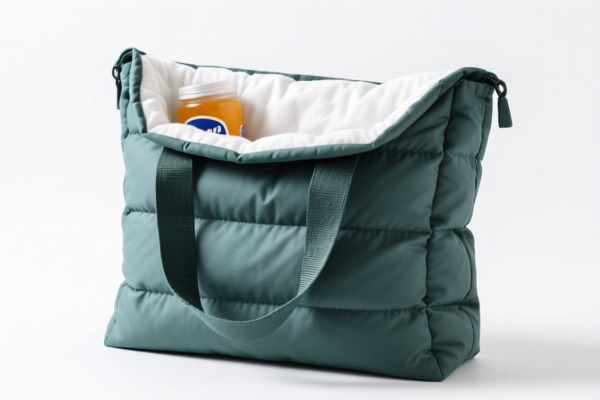
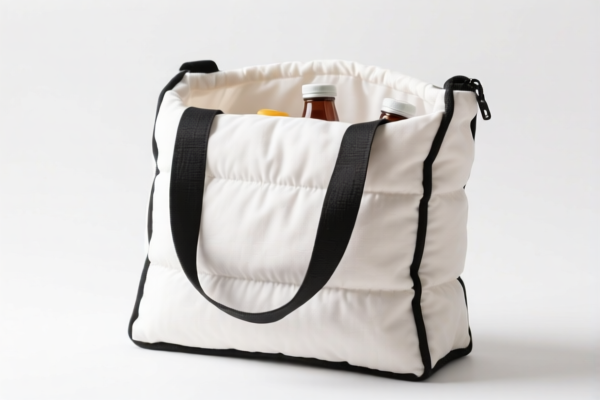
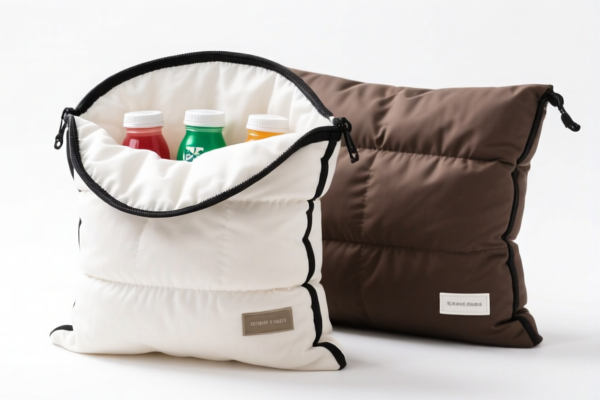
AI Analysis
🥤 Cotton Outer Layer Insulated Beverage Bags (Foldable Textile Outer Beverage Bags)
🌐 HS Code Reference & Customs Clearance Guide | 2026 Latest Tariff Analysis | Professional Clearance Strategy
📌 I. Product Definition & Classification: Do You Really Understand "Textile Beverage Bags"?
Cotton Outer Layer Insulated Beverage Bags are portable, foldable containers designed specifically for transporting beverages. In international trade, they are classified based on their primary material composition and specific end-use. The key debate lies in whether they are classified as "General Textile Articles" or "Specialized Luggage/Containers for Food/Beverages."
⚠️ Key Classification Distinction:
- If the bag is viewed primarily as a general textile sack/bag without specific food-grade insulation features emphasized in the heading → Classified under Heading 6305 or 6307.
- If the bag is viewed as a specialized insulated container (often with thermal lining) made of textile materials, specifically for food/beverage storage → Classified under Heading 4202.
- Material Nuance: "Cotton" implies natural fibers, but "Textile" in HS codes often covers both natural and synthetic (man-made) fibers depending on the specific subheading.
📦 II. HS Code Classification Details (2026 Latest Tariff Authoritative Comparison)
Based on the provided data, there are 5 potential HS Code classifications with varying tax implications. The choice depends on how customs interprets the "textile outer layer" and the "insulated beverage bag" nature.
| HS Code | Product Description & Logic | Total Tax Rate | Key Tax Components |
|---|---|---|---|
| 6307.90.98.91 | Foldable Textile Outer Beverage Bag (General Finished Goods) Made of textile, considered a finished good under "Other Made-Up Articles." Broad category for textile products not elsewhere specified. |
24.5% | Base: 7.0% Add-on: 7.5% Section 301: 10% |
| 4202.92.08.09 | Foldable Textile Outer Beverage Bag (Specific Insulated Container) Explicitly contains textile outer layer and beverage bag purpose. Fits "Containers for food or beverages" made of textile materials. |
42.0% | Base: 7.0% Add-on: 25.0% Section 301: 10% |
| 6305.90.00.00 | Foldable Textile Outer Beverage Bag (Other Textile Packaging) "Textile" corresponds to other textile materials; "Bag" corresponds to packaging goods. |
23.7% | Base: 6.2% Add-on: 7.5% Section 301: 10% |
| 6305.39.00.00 | Foldable Textile Outer Beverage Bag (Man-Made Fiber Packaging) "Textile" corresponds to man-made textile materials; "Bag" corresponds to bag type. Note: May require proving synthetic content if cotton is blended or mislabeled. |
25.9% | Base: 8.4% Add-on: 7.5% Section 301: 10% |
| 4202.92.08.07 | Foldable Textile Outer Beverage Bag (Synthetic/Man-Made Fiber Luggage) Textile outer layer and beverage bag purpose fit classification requirements, inferred as synthetic fiber material. |
42.0% | Base: 7.0% Add-on: 25.0% Section 301: 10% |
🔍 Critical Insight:
- Headings 4202 vs. 630x:
- 4202 is for "Luggage, handbags, containers..." and typically carries a 25% Section 301 Add-on Tax (Total ~42%) because it's considered a higher-value consumer good/container.
- Headings 6305/6307 are for "Sacks," "Packaging," or "Other Made-Up Articles." These usually have a lower 7.5% Section 301 Add-on Tax (Total ~24-26%).
- Material Matters: If the "Cotton" claim is inaccurate (e.g., it's actually polyester/polypropylene), customs may force you into 6305.39 (Man-Made) or 4202 with synthetic inference, affecting the base rate.
💰 III. 2026 Latest Tariff Rate Breakdown (Including Additional Taxes & Policy Surcharges)
✅ Applicable Country: United States (US)
✅ Origin: China (CN)
✅ Effective Time: 2025/2026 (Current Trade Rules)
🎯 1. The "Low Tax" Path: 6307.90.98.91 & 6305.90.00.00 & 6305.39.00.00
These codes classify the product as a general textile article or packaging material, avoiding the harsher "luggage/container" tariffs.
| Project | 6307.90.98.91 |
6305.90.00.00 |
6305.39.00.00 |
|---|---|---|---|
| Base Duty | 7.0% | 6.2% | 8.4% |
| Section 301 (Add-on) | 7.5% | 7.5% | 7.5% |
| IEEPA/Special Tariff | 10% | 10% | 10% |
| Total Effective Rate | 24.5% | 23.7% | 25.9% |
| De Minimis Eligibility | ❌ No (Subject to tariffs) | ❌ No | ❌ No |
| Legal Basis Path | HTSUS:6307.90.98 → Footnote 122:7.5 → IEEPA:10 |
HTSUS:6305.90 → Footnote 122:7.5 → IEEPA:10 |
HTSUS:6305.39 → Footnote 122:7.5 → IEEPA:10 |
📌 Explanation:
- Section 301 (7.5%): A significant reduction from the previous 25% for some textile categories, but still applies.
- IEEPA (10%): Standard surcharge for certain Chinese-origin goods.
- Strategy: Aiming for 6305 or 6307 can save you ~18-18.3% in duties compared to 4202.
🎯 2. The "High Tax" Path: 4202.92.08.09 & 4202.92.08.07
These codes classify the product as a specialized container for food/beverages, triggering the higher Section 301 rate.
| Project | 4202.92.08.09 |
4202.92.08.07 |
|---|---|---|
| Base Duty | 7.0% | 7.0% |
| Section 301 (Add-on) | 25.0% | 25.0% |
| IEEPA/Special Tariff | 10% | 10% |
| Total Effective Rate | 42.0% | 42.0% |
| De Minimis Eligibility | ❌ No | ❌ No |
| Legal Basis Path | HTSUS:4202.92.08 → Footnote 122:25 → IEEPA:10 |
HTSUS:4202.92.08 → Footnote 122:25 → IEEPA:10 |
📌 Explanation:
- Section 301 (25%): This is the punitive tariff for "Luggage and Containers."
- Risk: If customs determines your bag is primarily a "beverage container" rather than just a "textile sack," they will apply this higher rate.
- Difference between .09 and .07:
- .09: Textile outer layer, unspecified other material (e.g., natural fibers like cotton).
- .07: Inferred as man-made/synthetic fibers.
- Note: Both have the SAME total tax rate of 42% in this dataset, so material distinction doesn't save money here.
🛠️ IV. Customs Clearance Practical Advice (Real-World Pitfall Avoidance)
✅ 1. Document Preparation Checklist (Non-Negotiable)
| Document | Must Provide? | Purpose |
|---|---|---|
| ✅ Product Specification Sheet | ✔️ | Detail: "Foldable," "Textile Outer Layer," "Insulated Inner Lining (if any)," "Closure Type." |
| ✅ Material Composition Certificate | ✔️ | Crucial! Must specify % of Cotton vs. Polyester/Other. If "Cotton" is claimed but >50% is synthetic, you risk misclassification. |
| ✅ Product Photos | ✔️ | Show the bag flat, folded, and with contents. Highlight the "Beverage" shape (cylindrical/rectangular) vs. a general sack. |
| ✅ Commercial Invoice | ✔️ | Description should be precise: "Foldable Insulated Bag for Beverages, Textile Outer, Cotton Blend." Avoid vague terms like "Gift Bag." |
| ✅ Origin Certificate (CO) | ✔️ | To prove Chinese origin and apply correct Section 301/IEEPA rates. |
| ✅ Structure Diagram | ✔️ | If insulated, show the lining material. If it has rigid bottoms/handles, it leans towards 4202. If it's soft and collapsible, lean towards 6307/6305. |
✅ 2. Classification Strategy & Declaration Tips
🔥 “Soft & Foldable = 630x; Hard & Insulated = 4202!”
| Scenario | Recommended HS Code | Why? |
|---|---|---|
| Soft, collapsible, no rigid handles, primarily for keeping drinks cool | 6307.90.98.91 or 6305.90.00.00 | Fits "Other Made-Up Textile Articles" or "Sacks." Lower tariff (24%). |
| Has rigid plastic bottom, sturdy handles, dedicated "Beverage Carrier" design | 4202.92.08.09 | Fits "Containers for food/beverages." Higher tariff (42%). |
| Made of 100% Cotton | 6307.90.98.91 or 4202.92.08.09 | Ensure material matches description. Mislabeling cotton as synthetic can lead to fines. |
| Made of Polyester/Neoprene (often called "Cotton-Touch" or similar) | 6305.39.00.00 or 4202.92.08.07 | If it's synthetic, don't claim "Cotton." Use 6305.39 for lower tax if possible. |
✅ 3. Special Situations Handling
| Situation | Handling Advice |
|---|---|
| "Cotton" is actually a blend | Declare the actual blend. If >50% synthetic, use 6305.39 or 4202.92.08.07 to avoid fraud claims. |
| Packaged with Bottles/Cans | Declare the Bag and the Beverages Separately! Do not bundle. Beverages have different HS codes and tariffs. |
| OEM Custom Design | Provide design specs. If it has branding, ensure the description matches the commercial invoice exactly. |
| Insulation Material | If the inner lining is foam/plastic, it doesn't change the HS code from 630x to 4202 automatically, but it strengthens the argument for a "specialized container." Use this to argue for 4202 if you want to avoid "Sack" scrutiny, or 6307 if you want lower taxes (risky). |
🌍 V. Global Main Market Clearance Comparison (2026 Latest)
| Country/Region | Recommended HS Code | Approx. Tariff (CN Origin) | Certification | Notes |
|---|---|---|---|---|
| 🇺🇸 USA | 6307.90.98.91 |
24.5% | N/A | Best for cost. Avoid 4202 (42%). |
| 🇺🇸 USA | 4202.92.08.09 |
42.0% | N/A | High risk, high cost. |
| 🇪🇺 EU | 6307.90 / 4202.92 |
~4-12% | CE (if applicable) | No Section 301. Lower base duties. |
| 🇨🇳 China | 6307.90 / 4202.92 |
~8-15% | CCC (if applicable) | Domestic tariffs vary. |
| 🇬🇧 UK | 6307.90 / 4202.92 |
~4-12% | UKCA | Post-Brexit rules apply. |
📌 Conclusion for USA Market:
- Aggressively pursue6307or6305classification to save ~18% in duties.
- Justification: Emphasize "Foldable," "Textile Sack," and "General Use" rather than "Premium Insulated Container."
- Risk: US Customs may challenge this. Be prepared with technical specs showing it lacks rigid structural elements.
📌 VI. Common Errors & Pitfall Guide (Blood & Tears Lessons)
❌ Mistake 1: Declaring as 4202.92.08.09 when the bag is a simple soft sack.
👉 Consequence: Overpaying 18% more in duties ($18 per $100).
Fix: Argue for 6307 by highlighting foldability and lack of rigid structure.
❌ Mistake 2: Calling it "Cotton" when it's 100% Polyester.
👉 Consequence: Customs penalty, re-classification to 6305.39 or 4202.92.08.07, and potential fraud investigation.
Fix: Accurate material declaration is mandatory.
❌ Mistake 3: Bundling drinks with the bag in one HS code.
👉 Consequence: Customs will split the shipment, assess duties on drinks separately, and possibly delay entry for inspection.
Fix: Always separate "Beverage Container" from "Beverages."
❌ Mistake 4: Using vague descriptions like "Textile Bag" on the invoice.
👉 Consequence: Customs assigns a default (often higher) rate or requests extensive clarification.
Fix: Use precise language: "Foldable Insulated Beverage Sleeve, Textile Outer, Cotton/Polyester Blend."
✅ Best Practice Declaration:
"Foldable Insulated Beverage Bag, Outer Layer: Textile (Cotton Blend), Inner Lining: Foam/Insulation, Purpose: Beverage Transport, Model: XYZ."
🎯 VII. Conclusion: Professional Classification Saves Money!
🎯 Remember the Rule of Thumb:
🔹 "Soft & Foldable → 6307 (24.5%); Hard & Specialized → 4202 (42%)."
🔹 "Cotton vs. Synthetic → Check Composition! Mislabeling = Fines."
🔹 "Don't Bundle Drinks with Bags!"
📌 Pro Tip:
If your product is foldable, lightweight, and lacks rigid handles, push for 6307.90.98.91. This saves you 18% in duties compared to 4202. However, be prepared to defend why it's not a "luggage container."
If you need higher durability and rigid structure, accept the 4202 rate but ensure the description matches 4202.92.08.09 (Natural Fiber/Cotton) to avoid synthetic misclassification penalties.
📣 Immediate Action:
📞 Contact your Customs Broker to discuss the "Foldable" feature.
📄 Provide Material Test Reports to prove "Cotton" content.
🚀 Optimize your supply chain to account for the 24.5% - 42.0% duty range in your pricing model.
✨ Professional Clearance Starts with Accurate Classification!
💼 Every Percent of Duty Saved is Pure Profit!
Customer Reviews
About HS Code Classification
The Harmonized System (HS) is an internationally standardized nomenclature developed by the World Customs Organization (WCO) to classify traded products. Over 200 countries use the HS system as the basis for customs tariffs, trade statistics, and import/export regulations.
Each HS code follows a hierarchical structure:
- Chapter (2 digits) — Broad category of goods (e.g., Chapter 84: Machinery and Mechanical Appliances)
- Heading (4 digits) — More specific grouping within the chapter
- Subheading (6 digits) — Internationally standardized breakdown, used by all WCO member countries
- National subdivisions (8-10 digits) — Country-specific extensions for further classification, such as US HTSUS 10-digit codes
Correct HS code classification is essential for smooth customs clearance, accurate duty payment, and compliance with trade regulations. Misclassification can lead to customs delays, overpayment of duties, or penalties.
When importing from CN to US, the applicable tariff rates may include:
- Most-Favored-Nation (MFN) rate — The standard duty rate applied to WTO members
- General rate — Applied to countries without trade agreements
- Trade remedy duties — Additional tariffs such as Section 301 (anti-dumping), Section 232 (national security), or countervailing duties
The information provided on this page is for reference purposes only. For official classification, please consult with your local customs authority or a licensed customs broker.