Cotton Paper Label Roll
CN → US| HS Code | Tariff Rate | Origin | Destination | Doc |
|---|---|---|---|---|
| 4811412100 | 35.0% | CN | US | Official Doc |
| 4821902000 | 35.0% | CN | US | Official Doc |
| 3919905060 | 40.8% | CN | US | Official Doc |
| 3919905040 | 40.8% | CN | US | Official Doc |
| 3919102055 | 40.8% | CN | US | Official Doc |
Product Images
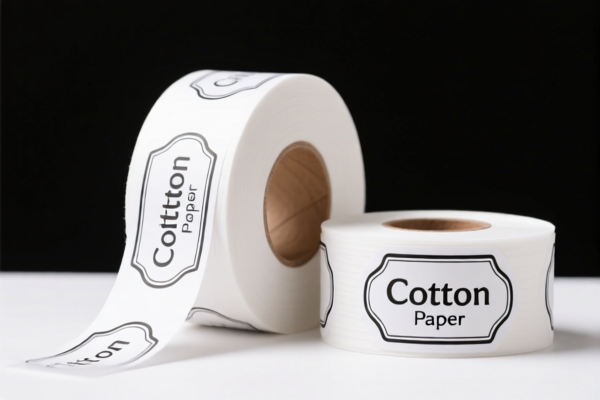
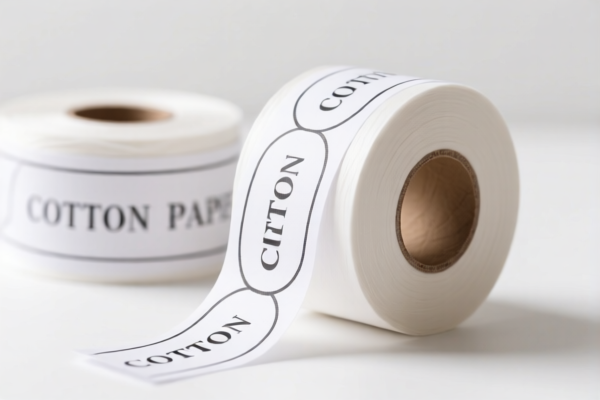
AI Analysis
🏷️ Cotton Paper Label Roll (Paper-based Adhesive Labels on Rolls)
🌐 HS Code Reference & Customs Clearance Guide | 2026 Latest Tariff Analysis | Professional Clearance Strategy 📌 I. Product Definition & Classification: Do You Truly Understand "Cotton Paper Labels"?
Cotton Paper Label Rolls are specialized labeling materials widely used in packaging, apparel, and industrial logistics. In international trade, they are distinguished by two critical factors: * Material Nature: Although "cotton" is mentioned, the substrate is predominantly paper-based (often with a soft, textured finish similar to cotton). If the backing or the label itself contains significant plastic film or synthetic adhesive layers that define it as a plastic product, it may fall under Chapter 39. However, the default assumption for "Paper Label" is Chapter 48. * Form Factor: They are supplied in rolls (rolls of paper) and are often self-adhesive (pressure-sensitive).
⚠️ Critical Distinction Point: * If the product is primarily paper (even if labeled "cotton-finish") and self-adhesive → It falls under HS 4811 or 4821. * If the product is primarily plastic film (e.g., polyester, polypropylene) with a paper-like appearance, or if the adhesive layer constitutes the main functional characteristic in a plastic context → It may fall under HS 3919.
📦 II. HS Code Classification Details (2026 Latest Tariff Authority Cross-Reference)
Based on the provided data, here are the applicable HS Codes and the logical deduction for each:
| HS Code | Product Description | Applicability Scenario | Key Matching Criteria |
|---|---|---|---|
4811.41.21.00 |
Paper Labels, Self-Adhesive, on Rolls | ✅ Best Match for Paper-Based Labels | Material: Paper inferred. Form: Rolls. Use: Adhesive/Self-adhesive. Matches common sense for paper labels. |
4821.90.20.00 |
Other Paper Labels, Not Printed or Printed | ✅ Match for Printed/Paper Labels | Name: "Label Paper" matches "Paper Labels". Form: Rolls. Inference: Self-adhesive properties align with common label storage forms. |
3919.90.50.60 |
Plastic Self-Adhesive Sheets/Films (Other) | ⚠️ Alternative if Plastic Composition | Form: Rolls. Material: If the label is made of plastic film (common in durable labels) or has a plastic coating, it fits here. Conflict Check: No obvious conflict with "plastic self-adhesive shape" definition. |
3919.90.50.40 |
Plastic Self-Adhesive Tape/Flat Shapes | ⚠️ Alternative for Composite/Plastic | Shape: Flat strip/band. Material: Plastic or composite inferred. Conflict Check: No material conflict with transparent tape/self-adhesive product forms. |
3919.10.20.55 |
Plastic Self-Adhesive Tape, in Rolls | ⚠️ Alternative for Roll-Fed Plastic | Form: Rolls. Material: Plastic or plastic-coated paper inferred. Use: Labels/Tags. Conflict Check: Matches "flat shape, roll-fed" and "other" categories. |
🔍 Key Reminder: * If the product is 100% Paper (with adhesive backing), prioritize 4811 or 4821. * If the product is Plastic Film (e.g., Vinyl, PET) marketed as "Cotton-feel" or similar, it must be classified under 3919. * Misclassification Risk: Declaring a plastic label as paper (or vice versa) can lead to significant duty discrepancies and customs penalties.
💰 III. 2026 Latest Tariff Rate Details (Including Additional Taxes, Policy Add-ons)
✅ Applicable Country: United States (US) ✅ Origin: China (CN) ✅ Effective Date: November 10, 2025 (and subsequent imports)
🎯 1. 4811.41.21.00 & 4821.90.20.00 —— Paper-Based Labels (Best Case for Paper)
| Item | Content |
|---|---|
| Base Duty Rate | 0% (ad valorem) |
| USITC Additional Duty (Section 301) | +25% (from USITC Footnote 9903.88.01) |
| IEEPA Additional Duty | +10% (Targeting China/HK products, effective from Nov 10, 2025) |
| Total Effective Rate | 35.0% |
| Tax Calculation | CIF Value × 35% |
| De Minimis Exemption? | ❌ No (deny_de_minimis) |
| Legal Basis Path | IEEPA:9903.01.25 → IEEPA:9903.01.24 → USITC:4811.41.21.00 / 4821.90.20.00 → FOOTNOTE:9903.88.01 |
📌 Explanation: * Even though the base duty is 0%, the 301 Tariff (25%) and IEEPA Tariff (10%) apply strictly. * Total 35% is a high cost. Ensure the product truly qualifies as "Paper" to avoid the higher 40.8% plastic tariff.
🎯 2. 3919.90.50.60, 3919.90.50.40, 3919.10.20.55 —— Plastic-Based Labels (Alternative Scenario)
| Item | Content |
|---|---|
| Base Duty Rate | 5.8% (ad valorem) |
| USITC Additional Duty (Section 301) | +25% (from USITC Footnote 9903.88.01) |
| IEEPA Additional Duty | +10% (Targeting China/HK products) |
| Total Effective Rate | 40.8% |
| Tax Calculation | CIF Value × 40.8% |
| De Minimis Exemption? | ❌ No (deny_de_minimis) |
| Legal Basis Path | IEEPA:9903.01.25 → IEEPA:9903.01.24 → USITC:3919.xxxx.xxxx → FOOTNOTE:9903.88.01 |
📌 Note: * If the label is made of plastic (even if it looks like paper), the base duty starts at 5.8%. * Adding 25% + 10% results in 40.8%, which is 5.8 percentage points higher than the paper classification. * Critical: Do not underestimate the material composition. "Cotton paper" is still paper. If it's "Vinyl with a cotton texture," it's plastic.
🛠️ IV. Customs Clearance Practical Advice (Real-World Pitfall Guide)
✅ 1. Required Documentation Checklist (Missing Items = Delays)
| Document | Must Provide | Description |
|---|---|---|
| ✅ Product Specification Sheet | ✔️ | Must specify Material Composition (e.g., "Paper Base, Acrylic Adhesive, PET Release Liner") and Form (Rolls). |
| ✅ Material Breakdown | ✔️ | Percentage of paper vs. plastic/adhesive. Crucial for distinguishing between HS 48xx and 39xx. |
| ✅ Product Photos (Labeled) | ✔️ | Clear shots of the roll core, label surface, and adhesive side. Show texture to confirm "paper" feel. |
| ✅ Commercial Invoice | ✔️ | Description: "Self-Adhesive Paper Labels on Rolls, for Apparel/Industrial Use." Avoid vague terms like "Cotton." |
| ✅ Packing List | ✔️ | Details roll dimensions, weight, and quantity. |
| ✅ Third-Party Test Report | ✔️ | Optional but recommended: Material analysis report confirming paper composition. |
✅ 2. Declaration Tips (Key Mantra)
🔥 "Material First, Form Second, Name Precise, Tax Down!"
| Scenario | Correct Declaration Approach | Wrong Approach |
|---|---|---|
| True Paper Labels (Paper base, adhesive) | HS 4811.41.21.00 or 4821.90.20.00 Description: "Paper Adhesive Labels" |
Call it "Sticker" or "Tape" → Might trigger HS 3919 → 40.8% Duty |
| Plastic Film Labels (Vinyl/PET) | HS 3919.90.50.60 Description: "Plastic Self-Adhesive Films" |
Call it "Paper Label" → Misclassification Risk, Penalties + Back Taxes |
| Rolls vs. Sheets | Emphasize "On Rolls" in description | Declare as "Sheets" if they are rolls → Inspection Delay |
✅ 3. Special Situation Handling
| Situation | Handling Advice |
|---|---|
| "Cotton-Finish" Paper | Clearly state "Paper Base with Textured Finish" to support HS 48xx classification. |
| Composite Labels (e.g., Paper + Plastic Overlay) | If plastic is >50% by weight or function, consider HS 39xx. If minor, HS 48xx may still apply. |
| OEM Custom Labels | Provide design files or mockups to prove the intended use and material structure. |
| Small Quantity Samples | Still subject to full duties if shipped via express couriers (no de minimis). Plan for 35-40.8% cost. |
🌍 V. Global Market Customs Comparison (2026 Latest)
| Country/Region | Recommended HS Code | Tariff (China Origin) | Certification Requirements | Notes |
|---|---|---|---|---|
| 🇺🇸 USA | 4811.41.21.00 (Paper) 3919.90.50.60 (Plastic) |
35% (Paper) 40.8% (Plastic) |
None specific for labels | High additional taxes apply. No de minimis. |
| 🇨🇳 China | 4811.41.21.00 |
~5-10% | CCC (if applicable) | Standard import duties. |
| 🇪🇺 EU | 4823.69.90 (Approx) |
~0-2.5% (if paper) | REACH, CE (if adhesive components regulated) | Lower tariffs if classified as paper. |
| 🇬🇧 UK | 4823.69.90 |
~5% | UKCA (if applicable) | Post-Brexit rules apply. |
| 🇦🇺 Australia | 4823.69.90 |
~5% | GTSR (if applicable) | Moderate duties. |
📌 Conclusion: * The USA has the most complex and high-cost tariff structure due to Section 301 and IEEPA add-ons. * Accurate Material Declaration is the single most important factor to save 5.8% in duty (35% vs 40.8%).
📌 VI. Common Mistakes & Pitfall Guide (Blood-Teaching Lessons)
❌ Mistake 1: Declaring "Plastic Labels" as "Paper Labels" to save 5.8% 👉 Consequence: Customs inspection reveals plastic composition → Back taxes + 25% Section 301 on base value + Penalties!
❌ Mistake 2: Vague Description: "Cotton Stickers" 👉 Consequence: Customs cannot determine material → Delay for further inquiry, potential reclassification to highest duty rate.
❌ Mistake 3: Ignoring the Adhesive Layer 👉 Consequence: If the adhesive makes it a "plastic sheet" under some interpretations, misclassification occurs. Always specify "Pressure-Sensitive Paper Labels."
❌ Mistake 4: Assuming De Minimis Exemption for Samples 👉 Consequence: No de minimis for China-origin goods under IEEPA. Even small shipments are taxed at 35-40.8%.
✅ Correct Practice:
"Self-Adhesive Paper Labels on Rolls, Paper Base with Acrylic Adhesive, Textured 'Cotton' Finish, for Garment Tagging, Model XYZ"
🎯 VII. Conclusion: Professional Declaration Saves Money!
🎯 Remember the Mantra:
🔹 "Paper vs. Plastic: One Character Difference, 5.8% Duty Difference!" 🔹 "USA Tariff: 35% for Paper, 40.8% for Plastic. Declare Right, Pay Less." 🔹 "No De Minimis for China. Plan Your Costs Accordingly."
📌 Pro Tip: If your labels are truly paper-based, provide a material composition statement from your manufacturer stating "100% Paper Base, 100% Acrylic Adhesive." This solidifies your claim for HS 4811/4821 and the 35% rate.
📣 Immediate Action:
📞 Contact your customs broker with the material breakdown. 🚀 Save 5.8% on every shipment by correctly classifying as Paper (HS 48xx) instead of Plastic (HS 39xx).
✨ Professional Clearance Starts with Precise Classification! 💼 Every Cent Saved is Pure Profit!
Customer Reviews
About HS Code Classification
The Harmonized System (HS) is an internationally standardized nomenclature developed by the World Customs Organization (WCO) to classify traded products. Over 200 countries use the HS system as the basis for customs tariffs, trade statistics, and import/export regulations.
Each HS code follows a hierarchical structure:
- Chapter (2 digits) — Broad category of goods (e.g., Chapter 84: Machinery and Mechanical Appliances)
- Heading (4 digits) — More specific grouping within the chapter
- Subheading (6 digits) — Internationally standardized breakdown, used by all WCO member countries
- National subdivisions (8-10 digits) — Country-specific extensions for further classification, such as US HTSUS 10-digit codes
Correct HS code classification is essential for smooth customs clearance, accurate duty payment, and compliance with trade regulations. Misclassification can lead to customs delays, overpayment of duties, or penalties.
When importing from CN to US, the applicable tariff rates may include:
- Most-Favored-Nation (MFN) rate — The standard duty rate applied to WTO members
- General rate — Applied to countries without trade agreements
- Trade remedy duties — Additional tariffs such as Section 301 (anti-dumping), Section 232 (national security), or countervailing duties
The information provided on this page is for reference purposes only. For official classification, please consult with your local customs authority or a licensed customs broker.