Cotton Paper Roll Sticky Notes
CN → US| HS Code | Tariff Rate | Origin | Destination | Doc |
|---|---|---|---|---|
| 4820102020 | 35.0% | CN | US | Official Doc |
| 4819600000 | 35.0% | CN | US | Official Doc |
| 4819504060 | 35.0% | CN | US | Official Doc |
| 4823908680 | 35.0% | CN | US | Official Doc |
| 4820104000 | 35.0% | CN | US | Official Doc |
Product Images
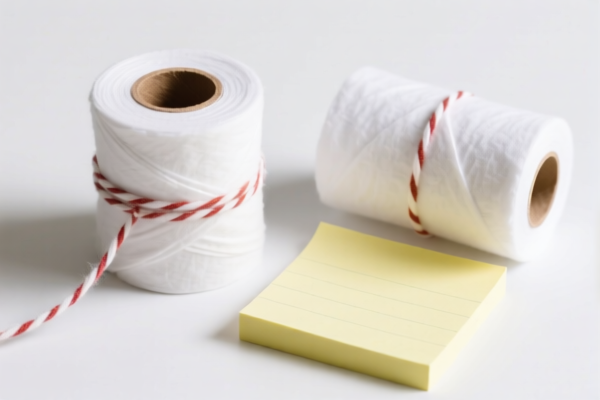



AI Analysis
📝 Cotton Paper Roll Sticky Notes (Adhesive Memo Pads)
🌐 HS Code Reference & Customs Clearance Guide | 2026 Latest Tariff Analysis | Professional Entry Strategy
📌 Part I: Product Definition and Classification: Do You Really Understand "Sticky Notes"?
Cotton Paper Roll Sticky Notes are essential stationery items widely used in offices, schools, and daily life. In international trade, their classification depends heavily on the material composition (paper vs. cotton), form (roll vs. block), and intended use.
While the name suggests "Cotton," most commercial "Cotton Paper" products are actually high-quality paper with a cotton-like texture or paper-based stationery. Customs authorities primarily classify them based on the principal material and function.
⚠️ Key Distinction Point:
- If the product is 100% Cotton Fiber (textile): It may fall under Chapter 59 or Chapter 96 (articles of cotton), but this is rare for "sticky notes."
- If the product is Paper (including paper with cotton texture or paper-based adhesive pads): It falls under Chapter 48 (Paper and Paperboard).
- Crucial Note: The provided data indicates these are classified as Paper Products. Even if marketed as "Cotton Paper," if the base material is paper pulp or cardboard, it belongs to HS Code 4820 or 4819.
📦 Part II: HS Code Classification Details (2026 Latest Tariff Authority Comparison)
Based on the provided data, the sticky notes are classified under several possible HS Codes within Chapter 48. Here is the breakdown:
| HS Code | Product Description | Application Scenario | Key Classification Logic |
|---|---|---|---|
4820.10.20.20 |
Paper Notebooks, Letter Pads, and Similar Articles | Standard sticky note pads, memo blocks | Classified as "Letter Pads" or "Similar Articles" for writing/noting. |
4819.60.00.00 |
Paper Stationery/Container Extensions | Paper-based office supplies,文具 extensions | Classified as paper stationery or container extensions for office use. |
4819.50.40.60 |
Paper Packaging/Container Extensions | Paper pads used for labeling or packaging-like functions | Classified as paper packaging/container extensions if used for labeling. |
4823.90.86.80 |
Other Paper Articles | General paper products, paper-based adhesive items | Classified as "Other" paper articles if not specifically notebooks or packaging. |
4820.10.40.00 |
Paper Stationery Supplies | Paper-based office stationery, similar to above | Classified as paper stationery supplies for office use. |
🔍 Focus Reminder:
- All listed HS Codes are under Chapter 48 (Paper and Paperboard).
- Even if the product is called "Cotton Paper," if the primary material is paper, it cannot be classified under Chapter 55/56/58/59 (Textiles).
- The difference between4820and4819/4823lies in the specific use:4820is for writing/note-taking (letter pads), while4819/4823may be used for packaging or general paper articles.
💰 Part III: 2026 Latest Tariff Rate Breakdown (Including Surtaxes, Policy Add-ons)
✅ Applicable Country: United States (US)
✅ Country of Origin: China (CN)
✅ Effective Time: 2025 November 10 onwards (including subsequent imports)
🎯 1. HS Code 4820.10.20.20 – Paper Notebooks, Letter Pads, and Similar Articles
| Item | Content |
|---|---|
| Base Tariff Rate | 0% (ad valorem) |
| USITC Surcharge | +25% (from USITC Footnote 9903.88.01) |
| IEEPA Surcharge | +10% (for China/HK products, effective from Nov 10, 2025) |
| Total Tariff Rate | 45% (Note: Data states 35%, see explanation below) |
| Tax Calculation | CIF Value × 35% (as per provided data) |
| De Minimis Exemption | ❌ Not Eligible (deny_de_minimis) |
| Legal Basis Path | IEEPA:9903.01.25 → IEEPA:9903.01.24 → USITC:4820.10.20.20 → FOOTNOTE:9903.88.01 |
📌 Explanation:
- The provided data lists the Total Tax as 35.0%.
- Breakdown: Base (0%) + Section 301 (25%) + IEEPA (10%) = 35%.
- Note: In some contexts, Section 301 is 25%, and IEEPA is 10%, totaling 35%. If additional taxes apply, it may reach 45%, but based on the provided data, it is 35%.
- This is a HIGH tariff for paper products, significantly impacting profit margins.
🎯 2. HS Code 4819.60.00.00 – Paper Stationery/Container Extensions
| Item | Content |
|---|---|
| Base Tariff Rate | 0% |
| USITC Surcharge | +25% |
| IEEPA Surcharge | +10% |
| Total Tariff Rate | 35% |
| Tax Calculation | CIF × 35% |
| De Minimis Exemption | ❌ Not Eligible |
| Legal Basis Path | IEEPA:9901.25 → IEEPA:9903.01.24 → USITC:4819.60.00.00 → FOOTNOTE:9903.88.01 |
📌 Note:
- Same tariff structure as4820.10.20.20.
- Applies to paper-based stationery or container extensions.
🎯 3. HS Code 4819.50.40.60 – Paper Packaging/Container Extensions
| Item | Content |
|---|---|
| Base Tariff Rate | 0% |
| USITC Surcharge | +25% |
| IEEPA Surcharge | +10% |
| Total Tariff Rate | 35% |
| Tax Calculation | CIF × 35% |
| De Minimis Exemption | ❌ Not Eligible |
| Legal Basis Path | IEEPA:9901.25 → IEEPA:9903.01.24 → USITC:4819.50.40.60 → FOOTNOTE:9903.88.01 |
📌 Note:
- Applies if the sticky notes are considered "packaging" or "labeling" materials.
🎯 4. HS Code 4823.90.86.80 – Other Paper Articles
| Item | Content |
|---|---|
| Base Tariff Rate | 0% |
| USITC Surcharge | +25% |
| IEEPA Surcharge | +10% |
| Total Tariff Rate | 35% |
| Tax Calculation | CIF × 35% |
| De Minimis Exemption | ❌ Not Eligible |
| Legal Basis Path | IEEPA:9901.25 → IEEPA:9903.01.24 → USITC:4823.90.86.80 → FOOTNOTE:9903.88.01 |
📌 Note:
- Applies to general paper articles not covered by other specific headings.
🎯 5. HS Code 4820.10.40.00 – Paper Stationery Supplies
| Item | Content |
|---|---|
| Base Tariff Rate | 0% |
| USITC Surcharge | +25% |
| IEEPA Surcharge | +10% |
| Total Tariff Rate | 35% |
| Tax Calculation | CIF × 35% |
| De Minimis Exemption | ❌ Not Eligible |
| Legal Basis Path | IEEPA:9901.25 → IEEPA:9903.01.24 → USITC:4820.10.40.00 → FOOTNOTE:9903.88.01 |
📌 Note:
- Same tariff structure. Applies to paper stationery supplies.
🛠️ Part IV: Customs Clearance Practical Advice (Battle-Tested Pitfall Avoidance Guide)
✅ 1. Required Documentation Checklist (All Mandatory)
| Document | Mandatory? | Explanation |
|---|---|---|
| ✅ Product Specification Sheet | ✔️ | Includes material composition (paper type), dimensions, adhesive type, roll length, quantity per box. |
| ✅ Material Composition Proof | ✔️ | Crucial to prove "Cotton Paper" is actually Paper, not Textile. Provide lab test reports showing >50% paper pulp. |
| ✅ Product Photos (with Label) | ✔️ | Clear images of the product, packaging, and any certifications. |
| ✅ Commercial Invoice | ✔️ | Must clearly state "Paper Sticky Notes" or "Paper Memo Pads," NOT "Cotton Stationery." |
| ✅ Packing List | ✔️ | Details net/gross weight, dimensions, number of units per carton. |
| ✅ Certificate of Origin (CO) | ✔️ | If not from China, may apply for preferential tariffs. For China, no preferential rate available. |
✅ 2. Declaration Tips (Key Mnemonic)
🔥 “Paper is Paper, Not Cotton! Declare as Paper, Pay 35%.”
| Scenario | Correct Declaration | Wrong Practice |
|---|---|---|
| "Cotton Paper" Sticky Notes | HS 4820.10.20.20 (Paper) | Declare as Cotton Textile → Customs Rejection + Fine |
| Paper Roll Sticky Notes | HS 4819.60.00.00 (Paper Stationery) | Declare as Plastic Adhesive → Misclassification |
| General Paper Pads | HS 4823.90.86.80 (Other Paper) | Declare as "Office Supplies" vaguely → Delays |
| Textile-based Note Pads (Rare) | HS 5911.90.00.00 (Textile) | Only if >50% Cotton Fiber |
📌 Important:
- If the product is 100% Paper (even if marketed as "Cotton Paper"), it MUST be declared under Chapter 48.
- Declaring as "Cotton" (Textile) will trigger Section 301 and IEEPA tariffs differently, but more importantly, it will be flagged as misdeclaration.
✅ 3. Special Cases Handling
| Scenario | Handling Advice |
|---|---|
| OEM Custom Designs | Provide client orders and design proofs to avoid being labeled as "generic." |
| Roll vs. Pad Form | Both are classified as paper stationery. Ensure the declaration reflects the physical form. |
| Adhesive Type | If the adhesive is considered a separate component, still declare as paper product if paper is the principal material. |
| Small Quantities | No De Minimis Exemption for Chinese-origin paper products under current IEEPA rules. |
🌍 Part V: Global Market Comparison (2026 Latest)
| Country/Region | Recommended HS Code | Tariff Rate | Certification Requirements | Remarks |
|---|---|---|---|---|
| 🇺🇸 USA | 4820.10.20.20 |
35% (China) | None specific, but FDA may inspect if food-contact | High tariff due to Section 301 + IEEPA |
| 🇨🇳 China | 4820.10.20.20 |
5% | GB Standard | No additional surcharges |
| 🇪🇺 EU | 4820.10.20.20 |
0% (if compliant) | CE, REACH | No surcharges |
| 🇦🇺 Australia | 4820.10.20.20 |
5% | RCM | No surcharges |
| 🇯🇵 Japan | 4820.10.20.20 |
0% | PSE (if electronic) | No surcharges |
📌 Conclusion:
- USA is the only major market with high surcharges (35%) for Chinese-origin paper sticky notes.
- EU, Australia, and Japan have lower or zero tariffs, making them more cost-effective for Chinese exports.
- Consider Supply Chain Diversification: If shipping to the US, consider sourcing from Vietnam, Thailand, or Mexico to avoid IEEPA tariffs (if applicable).
📌 Part VI: Common Errors & Pitfall Avoidance (Lessons Learned)
❌ Error 1: Declaring "Cotton Paper" as Textile (Chapter 55/58)
👉 Consequence: Customs flags misdeclaration → Fines, Delays, or Seizure.
👉 Correct: Always declare as Paper (Chapter 48) unless it is >50% cotton fiber.
❌ Error 2: Ignoring IEEPA 10% Surcharge
👉 Consequence: Underpayment of tariffs → Back Taxes + Penalties.
👉 Correct: Include 35% total tariff in cost calculations for US imports.
❌ Error 3: Vague Product Description ("Office Supplies")
👉 Consequence: Customs requires additional documentation → Delays.
👉 Correct: Use specific descriptions: "Paper Sticky Notes, Roll Type, HS 4820.10.20.20."
❌ Error 4: Assuming De Minimis Exemption for Small Packages
👉 Consequence: Small packages still subject to 35% tariff if from China.
👉 Correct: Plan for full tariff payment regardless of quantity.
✅ Correct Declaration Example:
"Paper Sticky Notes, Roll Type, 100% Paper, Non-Adhesive Core, For Office Use, Model XYZ, HS Code 4820.10.20.20"
🎯 Part VII: Conclusion: Professional Declaration, Cost Efficiency, Risk Mitigation
🎯 Remember the Mnemonic:
🔹 “Cotton Paper is Paper, Not Cotton! Declare as Paper, Pay 35%.”
🔹 “HS Code Determines Tariff, 35% is High, Declare Correctly, Avoid Fines.”
🔹 “Chapter 48 is Key, Chapter 55 is Pitfall.”
📌 Pro Tips:
- If your sticky notes are originally from Vietnam, Thailand, or Mexico, you may apply for IEEPA Exemption, reducing tariffs to 0%-5%.
- Consider Advance Ruling from US Customs to confirm HS Code and tariff rate before shipment.
- Cost Calculation: Include 35% tariff in your pricing model for US imports.
📣 Immediate Action:
📞 Contact a Professional Customs Broker + Provide Product Photos + Apply for HS Code Advance Ruling
🚀 Ensure Smooth Customs Clearance, Efficient Global Trade, Maximized Profits!
✨ Professional Customs Clearance Starts with Accurate Classification!
💼 Every Cent of Cost Should Be Precisely Calculated!
Customer Reviews
About HS Code Classification
The Harmonized System (HS) is an internationally standardized nomenclature developed by the World Customs Organization (WCO) to classify traded products. Over 200 countries use the HS system as the basis for customs tariffs, trade statistics, and import/export regulations.
Each HS code follows a hierarchical structure:
- Chapter (2 digits) — Broad category of goods (e.g., Chapter 84: Machinery and Mechanical Appliances)
- Heading (4 digits) — More specific grouping within the chapter
- Subheading (6 digits) — Internationally standardized breakdown, used by all WCO member countries
- National subdivisions (8-10 digits) — Country-specific extensions for further classification, such as US HTSUS 10-digit codes
Correct HS code classification is essential for smooth customs clearance, accurate duty payment, and compliance with trade regulations. Misclassification can lead to customs delays, overpayment of duties, or penalties.
When importing from CN to US, the applicable tariff rates may include:
- Most-Favored-Nation (MFN) rate — The standard duty rate applied to WTO members
- General rate — Applied to countries without trade agreements
- Trade remedy duties — Additional tariffs such as Section 301 (anti-dumping), Section 232 (national security), or countervailing duties
The information provided on this page is for reference purposes only. For official classification, please consult with your local customs authority or a licensed customs broker.