Cotton Paper Roll for Documents
CN → US| HS Code | Tariff Rate | Origin | Destination | Doc |
|---|---|---|---|---|
| 4823908680 | 35.0% | CN | US | Official Doc |
| 4802204020 | 35.0% | CN | US | Official Doc |
| 4823906700 | 35.0% | CN | US | Official Doc |
| 4817204000 | 35.0% | CN | US | Official Doc |
| 4802557020 | 35.0% | CN | US | Official Doc |
Product Images
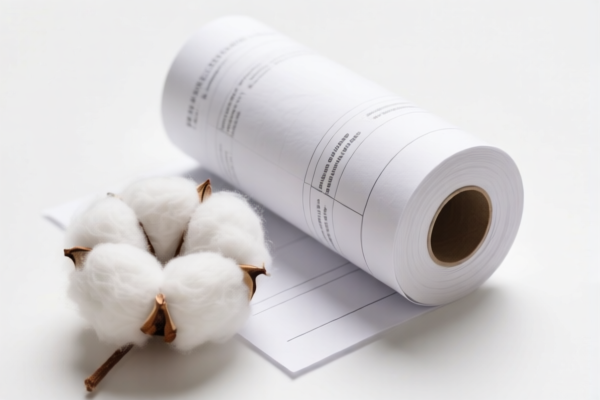

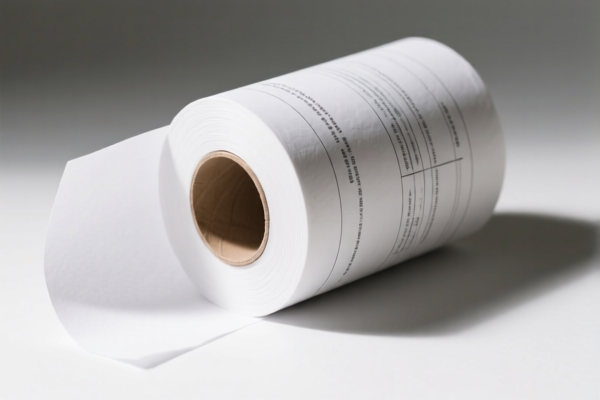
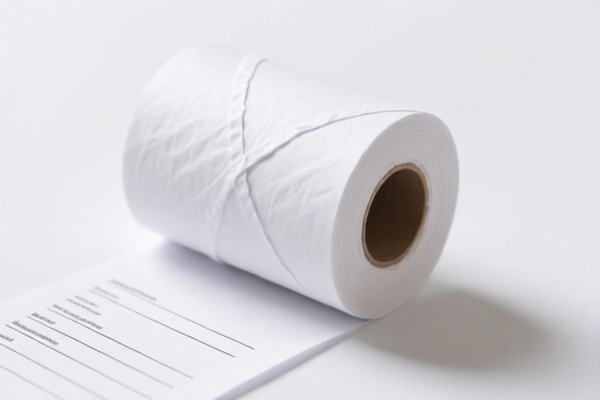
AI Analysis
📜 Cotton Paper Roll (Uncoated, Cellulose Fiber Based)
For Document Archiving & High-End Printing
🌐 HS Code Reference & Customs Clearance Guide | 2026 Latest Tariff Analysis | Professional Entry Strategies
📌 I. Product Definition & Classification: What Exactly is "Cotton Paper Roll"?
Cotton Paper Roll is a specialized paper product characterized by its high cellulose content and fiber composition. In international trade, it is primarily categorized under Chapter 48 (Paper and Paperboard). The key to correct classification lies in distinguishing between "raw material characteristics" (fiber content) and "final product form" (uncoated, rolled, or specific use).
Two Main Classification Paths: 1. Uncoated Paper Based on Cotton/Fibers: Classified under Heading 4802 if it meets specific grammage and fiber criteria (e.g., ≥25% cotton content). 2. Other Paper Products: Classified under Heading 4823 if it is considered a "made-up" article, specific size, or does not fit the strict definition of Heading 4802 (e.g., specific finishing, thickness, or commercial form).
⚠️ Key Distinction Point:
- If the paper is uncoated, has a weight of ≤150g/m², and is primarily composed of long-fiber cellulose (cotton/wood), it often falls under 4802.
- If the paper is thick, coated, or processed into specific formats not meeting 4802’s strict definitions, it may fall under 4823 (Other paper items) or 4817 (Stationery/Articulates).
📦 II. HS Code Classification Details (2026 Latest Tariff Authority Comparison)
| HS Code | Product Description | Applicability Scenario | Key Characteristics |
|---|---|---|---|
4802.20.40.20 |
Uncoated paper, including art paper, containing ≥25% cotton fibers, in rolls, ≤150g/m² | High-end document paper, archival storage paper | ✅ Cotton-rich (≥25%), Uncoated, Raw Roll |
4802.55.70.20 |
Other uncoated paper, fibrous cellulose mass, ≥25% by weight of cotton fibers, in rolls | Similar to above, but potentially different grammage or specific finishing | ✅ Cotton-rich, Uncoated, Roll Form |
4817.20.40.00 |
Letter paper and paperboard, regardless of type of fiber, in rolls, not printed | General stationery paper, communication/document carriers | ✅ Uncoated, Roll, Stationery Use |
4823.90.67.00 |
Other paper, paperboard, cellulose wadding and webs of cellulose fibers, cut to size or shape, including patterns | Specific cut rolls, patterned paper, or non-standard formats | ✅ Rolled, Specific Format |
4823.90.86.80 |
Other paper, paperboard, cellulose wadding and webs of cellulose fibers, including articles of paper pulp | General "Other" paper items, not specified elsewhere | ✅ Generic Paper Item, Roll Form |
🔍 Important Reminder:
- All listed HS Codes are for US Import (from China).
- The distinction between 4802 and 4823 often depends on the exact grammage, coating status, and commercial form.
- If the paper is "cotton-based" but processed into a specific commercial item (e.g., pre-cut sheets with specific finishing), it might shift to 4823. However, since these are rolls, 4802 is often the primary candidate if it meets fiber/weight criteria.
💰 III. 2026 Latest Tariff Rate Breakdown (Including Surtaxes & Policy Add-ons)
✅ Applicable Country: United States (US)
✅ Origin: China (CN)
✅ Effective Time: November 10, 2025 (and subsequent imports)
🎯 1. 4802.20.40.20 & 4802.55.70.20 — Uncoated Cotton Paper (≥25% Cotton)
| Item | Content |
|---|---|
| Base Rate | 0% (ad valorem) |
| USITC Surtax (Section 301) | +25% |
| IEEPA Surtax (China-specific) | +10% |
| Total Tax Rate | 35.0% |
| Tax Calculation | CIF Value × 35% |
| De Minimis Exemption? | ❌ No (deny_de_minimis) |
| Legal Basis Path | IEEPA:9903.01.25 → USITC:4802.20.40.20 → FOOTNOTE:9903.88.01 |
📌 Explanation:
- The base rate is 0% because uncoated paper is generally duty-free under HTSUS.
- However, Section 301 tariffs (25%) apply to Chinese-origin paper products.
- IEEPA tariffs (10%) further increase the burden on Chinese goods.
- Total: 35%. This is a significant cost factor for high-volume paper imports.
🎯 2. 4817.20.40.00 — Letter Paper (Stationery)
| Item | Content |
|---|---|
| Base Rate | 0% |
| USITC Surtax | +25% |
| IEEPA Surtax | +10% |
| Total Tax Rate | 35.0% |
| Tax Calculation | CIF × 35% |
| De Minimis Exemption? | ❌ No |
| Legal Basis Path | IEEPA:9903.01.25 → USITC:4817.20.40.00 |
📌 Note:
- Stationery paper also attracts the full 35% surtax.
- Classification under 4817 vs 4802 may depend on whether it is marketed as "stationery" vs "raw paper stock."
🎯 3. 4823.90.67.00 & 4823.90.86.80 — Other Paper Products
| Item | Content |
|---|---|
| Base Rate | 0% |
| USITC Surtax | +25% |
| IEEPA Surtax | +10% |
| Total Tax Rate | 35.0% |
| Tax Calculation | CIF × 35% |
| De Minimis Exemption? | ❌ No |
| Legal Basis Path | IEEPA:9903.01.25 → USITC:4823.90.xxxx |
📌 Note:
- All listed HS Codes for Chinese-origin cotton paper rolls carry the same 35% total tariff burden.
- There is no tariff advantage in switching between these codes if the origin is China.
🛠️ IV. Customs Clearance Practical Advice (实战避坑指南)
✅ 1. Document Preparation Checklist (Essential)
| Document | Must Provide? | Description |
|---|---|---|
| ✅ Commercial Invoice | ✔️ | Must clearly state "Cotton Paper Roll, Uncoated, cellulose fiber ≥25%" |
| ✅ Packing List | ✔️ | Include gross/net weight, number of rolls, dimensions |
| ✅ Product Specification Sheet | ✔️ | Detail: Grammage (gsm), fiber content (cotton %), width, core size, coating status |
| ✅ Certificate of Origin (CO) | ✔️ | Crucial for proving Chinese origin (triggers 35% tax) |
| ✅ Fiber Content Declaration | ✔️ | Third-party lab report proving cotton/ cellulose content is critical for 4802 vs 4823 |
| ✅ Photos | ✔️ | Show roll ends, labeling, and any branding |
✅ 2. Classification Strategy (Key Tips)
🔥 “Fiber is King, Form is Queen, Origin is Death!”
| Scenario | Correct Approach | Wrong Approach |
|---|---|---|
| High Cotton Content (≥25%) | Classify under 4802 (if uncoated, roll) | Misclassify as general 4823 to avoid scrutiny → Audit Risk |
| Coated Paper | Cannot be 4802 → Must use 4823 | Claim uncoated if coated → Fraud Penalty |
| Chinese Origin | Accept 35% total tax | Try to misdeclare origin → Seizure & Fine |
| Mixed Shipments | Separate HS Codes for cotton vs. wood pulp | Combine into one line item → Complexity & Delay |
✅ 3. Special Cases Handling
| Situation | Handling Advice |
|---|---|
| OEM Custom Paper | Provide customer specs + fiber analysis report. Clarify if it’s "stationery" (4817) or "stock paper" (4802). |
| Pre-cut Rolls vs. Jumbo Rolls | Jumbo rolls are more likely 4802. Pre-cut specific sizes may fall under 4823. |
| Anti-Dumping/Countervailing Duties | Check if specific paper types face additional CVD/AD duties. Generally, cotton paper does not, but verify. |
| NAFTA/USMCA | ❌ Not Applicable (Origin is China). |
🌍 V. Global Market Comparison (2026 Latest)
| Country/Region | Recommended HS Code | Tariff Rate | Certification Requirements | Notes |
|---|---|---|---|---|
| 🇺🇸 USA | 4802.20.40.20 / 4823.90.xxxx |
35% (from China) | None specific for paper | High tariff burden |
| 🇨🇳 China | 4802.20.00.00 |
5-10% | CCC (if applicable) | Lower entry barrier |
| 🇪🇺 EU | 4802.55.00.00 |
0-6.5% | CE (if printing ink) | No 301 tariffs |
| 🇬🇧 UK | 4802.55.00.00 |
0-6.5% | UKCA | Post-Brexit rules apply |
| 🇦🇺 Australia | 4802.55.00.00 |
5% | none | Moderate duty |
📌 Conclusion:
- The US market is the most expensive for Chinese cotton paper rolls due to the 35% combined surtax.
- EU, UK, and Australia are more cost-effective destinations.
- Consider supply chain diversification (e.g., sourcing from Vietnam or Thailand) if shipping to the US, to potentially bypass Section 301 tariffs.
📌 VI. Common Mistakes & Pitfalls (Blood & Tears Lessons)
❌ Mistake 1: Declaring "Paper" without specifying fiber content
👉 Consequence: Customs may classify under the highest duty code or demand a fiber test report at your expense.
❌ Mistake 2: Misdeclaring Origin (e.g., saying "Made in Vietnam" when it’s China)
👉 Consequence: Seizure, fines, and blacklisting. Customs has robust origin verification.
❌ Mistake 3: Ignoring the "Uncoated" requirement for 4802
👉 Consequence: If coated, it cannot go to 4802. Must go to 4823 or 4820/4821.
❌ Mistake 4: Underestimating Total Tax Impact
👉 Consequence: Budgeting only for base rate (0%) leads to cash flow crisis when 35% hits.
✅ Correct Practice:
"Uncoated Cotton Paper Roll, 80gsm, 90% Cotton Fiber, Width 60cm, Core 3inch, for Archival Document Storage, HS Code 4802.20.40.20, Origin China"
🎯 VII. Conclusion: Precision in Classification Saves Money!
🎯 Remember the Mantra:
🔹 "Cotton content defines the code, Origin defines the tax, Form defines the fit!"
🔹 "35% is the reality for US-China paper trade. Plan accordingly!"
🔹 "Never misdeclare origin. The penalties are worse than the tax."
📌 Pro Tip:
- If your paper is ≤25% cotton, it may fall under different subheadings with potentially different scrutiny levels, but the 35% tariff from China remains.
- Consider applying for a Section 301 Exclusion if your specific product qualifies (rare for standard paper, but worth checking).
- Pre-clearance consultation with a US customs broker is highly recommended for large shipments.
📣 Immediate Action:
📞 Engage a licensed US Customs Broker
📄 Prepare a detailed Fiber Content Analysis Report
🚀 Optimize your supply chain to mitigate the 35% tariff impact
✨ Professional Clearance Starts with Accurate Classification!
💼 Every Percent of Tariff Counts in Your Margins!
Customer Reviews
About HS Code Classification
The Harmonized System (HS) is an internationally standardized nomenclature developed by the World Customs Organization (WCO) to classify traded products. Over 200 countries use the HS system as the basis for customs tariffs, trade statistics, and import/export regulations.
Each HS code follows a hierarchical structure:
- Chapter (2 digits) — Broad category of goods (e.g., Chapter 84: Machinery and Mechanical Appliances)
- Heading (4 digits) — More specific grouping within the chapter
- Subheading (6 digits) — Internationally standardized breakdown, used by all WCO member countries
- National subdivisions (8-10 digits) — Country-specific extensions for further classification, such as US HTSUS 10-digit codes
Correct HS code classification is essential for smooth customs clearance, accurate duty payment, and compliance with trade regulations. Misclassification can lead to customs delays, overpayment of duties, or penalties.
When importing from CN to US, the applicable tariff rates may include:
- Most-Favored-Nation (MFN) rate — The standard duty rate applied to WTO members
- General rate — Applied to countries without trade agreements
- Trade remedy duties — Additional tariffs such as Section 301 (anti-dumping), Section 232 (national security), or countervailing duties
The information provided on this page is for reference purposes only. For official classification, please consult with your local customs authority or a licensed customs broker.