Cotton Paper Roll for Postcards
CN → US| HS Code | Tariff Rate | Origin | Destination | Doc |
|---|---|---|---|---|
| 4911996000 | 17.5% | CN | US | Official Doc |
| 4911998000 | 17.5% | CN | US | Official Doc |
Product Images

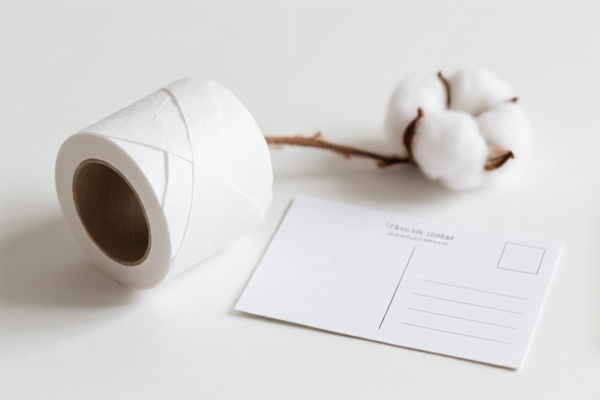
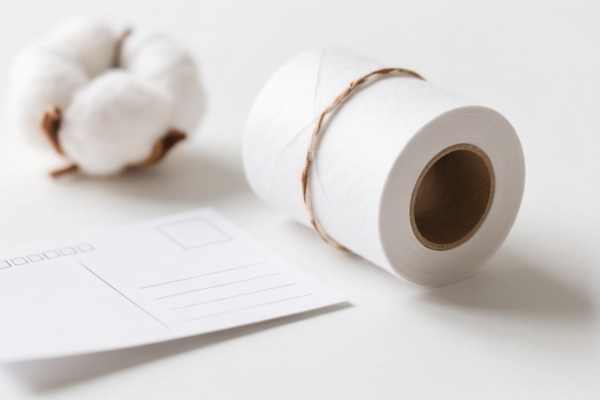
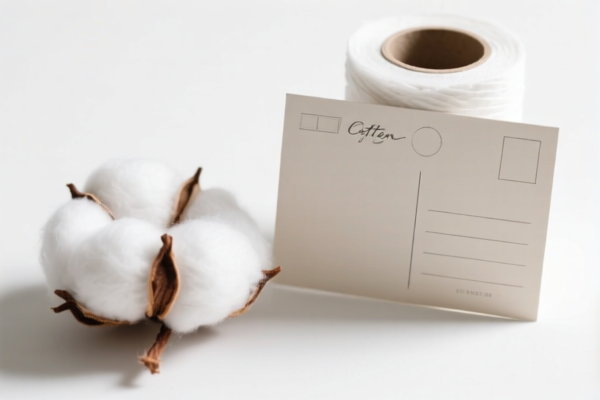
AI Analysis
📜 Postcards & Printed Matter (Cotton Paper Rolls)
🌐 HS Code Reference & Customs Clearance Guide | 2026 Latest Tariff Analysis | Professional Entry Strategy 📌 I. Product Definition & Classification: What Exactly Are "Cotton Paper Rolls"?
"Cotton paper rolls for postcards" refer to paper products primarily used for printing postcards, greeting cards, or decorative labels. In international trade, the key to classification lies not just in the material (cotton), but in the processing state and intended use.
Key Distinction: * Blank Paper Rolls: If the paper is unprinted and sold as raw material for printers to produce postcards later, it typically falls under Chapter 48 (Paper & Paperboard). * Printed Matter: If the paper rolls are already printed with designs, text, or images (finished or semi-finished postcards/cards ready for folding/cutting), they fall under Chapter 49 (Printed Books, Newspapers, Pictures, etc.).
⚠️ Critical Note for This Data: The provided
<DATA>contains HS Codes exclusively for Chapter 49 (Printed Matter). Therefore, this guide assumes the "Cotton Paper Rolls" are printed (i.e., printed on paper in whole or in part). If the rolls are blank, these codes DO NOT APPLY. You would need to look for codes like4802(Paper in rolls).
📦 II. HS Code Classification Details (Based on Provided Data)
Since the input data only includes Chapter 49 codes, we classify the item as Printed Matter. The two available codes depend on the specific printing method and completeness.
| HS Code | Product Description | Key Characteristics | Applicable Scenario |
|--------|--------------------------|-------------------------|
| 4911.99.60.00 | Printed on paper in whole or in part by a lithographic process | - Must involve lithography (offset printing, planographic printing).
- Includes items like printed labels, printed posters, or printed paper stock where the image is applied via litho process.
- Often used for high-quality graphic postcards or artistic prints. | High-quality art postcards, offset-printed promotional materials, or lithographed paper rolls. |
| 4911.99.80.00 | Other | - A "catch-all" category for printed matter not specified elsewhere in heading 49.11.
- Includes items printed by non-lithographic methods (e.g., digital printing, gravure, screen printing) or items that don't fit the specific lithographic definition.
- Standard postcards printed via standard commercial printing methods often fall here if not explicitly "lithographic" in the strict sense or if they are miscellaneous printed items. | Standard commercial postcards, digitally printed rolls, miscellaneous printed paper goods not covered by 4911.99.60. |
🔍 重点提醒 (Key Reminder): - Both codes under
4911.99are for "Other printed matter, including printed pictures and photographs". - The distinction between60and80is primarily technical (Lithographic vs. Other) and regulatory. In many cases, if you are unsure or if the printing method is mixed,4911.99.80.00(Other) is the safer, more common default for general printed postcards. - If the paper is BLANK, do NOT use these codes. Use4802.55(Uncoated paper in rolls, of a kind used for writing, printing or other graphical purposes).
💰 III. 2026 Tariff Rate Analysis (China to US)
✅ Applicable Country: United States (US) ✅ Origin: China (CN) ✅ Effective Date: 2025/2026 (Current Trade Framework)
Both HS Codes 4911.99.60.00 and 4911.99.80.00 carry the same tax structure according to the provided data.
🎯 1. 4911.99.60.00 & 4911.99.80.00 — Printed Postcards/Matter
| Item | Content |
|---|---|
| Base Tariff Rate | 0.0% (Ad Valorem) |
| Additional Tariff (Section 301 / IEEPA) | 7.5% |
| Total Tariff Rate | 7.5% |
| Tax Calculation | CIF Value × 7.5% |
| De Minimis Eligibility | ❌ No (Generally, printed matter over $800 may be subject to duties; however, Section 301 items are often excluded from de minimis exemptions depending on current enforcement). |
| Legal Basis | HTSUS 4911.99.xx → Additional Duties (China-specific) |
📌 Explanation: - Base Rate: 0% is standard for many printed goods under Chapter 49. - Additional Duty: The 7.5% is the key cost driver. This reflects the current US tariff regime on Chinese-origin "Other Printed Matter" which has been subject to ongoing trade tensions. - Total Cost Impact: For every $10,000 CIF value, you pay $750 in additional duties. This is significantly lower than electronics or steel, making it a relatively favorable category if classified correctly.
🛠️ IV. Customs Clearance Practical Advice (Pitfall Avoidance Guide)
✅ 1. Essential Documentation Checklist
| Document | Required? | Purpose |
|---|---|---|
| ✅ Commercial Invoice | ✔️ | Must clearly state "Printed Paper Rolls for Postcards". Do not just write "Paper". Specify "Printed". |
| ✅ Product Photos | ✔️ | Show the printed side. Proves it is Chapter 49, not Chapter 48. |
| ✅ Printing Method Statement | ✔️ | State if lithographic or other. Helps distinguish between 60 and 80 if audited. |
| ✅ Bill of Lading/Air Waybill | ✔️ | Standard shipping docs. |
| ✅ Packing List | ✔️ | Weight and dimensions. |
✅ 2. Declaration Tips (Crucial!)
🔥 Golden Rule: "Printed = Chapter 49; Blank = Chapter 48"
| Scenario | Correct HS Code | Risk of Misclassification |
|---|---|---|
| Rolls are already printed with postcard designs | 4911.99.80.00 (Recommended) |
Low. Ensure description says "Printed". |
| Rolls are blank paper for printing later | DO NOT USE ABOVE CODES. Use 4802.55.xx. |
HIGH. Declaring blank paper as printed matter to avoid Chapter 48 duties (if any) is fraud. |
| Mix of printed and blank rolls | Split shipment or clarify in invoice. | Medium. Customs may seize if mixed improperly. |
✅ 3. Special Considerations for Cotton Paper
- Material Declaration: While HS Code doesn't change based on cotton content for printed matter, ensure your invoice mentions "Cotton Paper" to avoid disputes over fiber content (which can affect environmental compliance or specific national standards).
- Copyright/Trademark: If the postcards feature copyrighted images or brand logos, ensure you have authorization documents. US Customs can detain goods for IP infringement under Chapter 49 if rights are registered.
🌍 V. Global Market Comparison (2026)
| Country/Region | Recommended HS Code | Tariff Rate | Notes |
|---|---|---|---|
| 🇺🇸 USA | 4911.99.80.00 |
7.5% | Subject to Section 301/IEEPA duties. |
| 🇨🇳 China | 4911.99.80.00 |
0-6% (Import) | VAT applies. Generally low duty. |
| 🇪🇺 EU | 4911.99.90 |
0-6.5% | Standard EU tariff. No major trade barriers. |
| 🇬🇧 UK | 4911.99.90 |
0-6.5% | Post-Brexit tariffs similar to EU. |
📌 Conclusion: The US market is the most expensive due to the 7.5% additional tariff. However, compared to other goods, it remains moderate. The main risk is misclassification (declaring blank paper as printed), which can lead to severe penalties.
📌 VI. Common Errors & Pitfalls (Lessons Learned)
❌ Error 1: Declaring Blank Cotton Paper Rolls as 4911.99.80.00
👉 Consequence: If Customs inspects and finds no print, they may reclassify to Chapter 48 (Paper) and assess different duties + penalties for false declaration.
Fix: If blank, use 4802 codes.
❌ Error 2: Ignoring the "Printed" Requirement 👉 Consequence: Clearance delay. Customs may request proof of printing (e.g., sample of printed roll). Fix: Provide clear photos of the printed surface on the invoice.
❌ Error 3: Not Specifying "Postcards" or "Printed Matter" 👉 Consequence: Vague descriptions ("Paper Rolls") lead to random audits. Fix: Use precise description: "Cotton Paper Rolls, Printed, for Postcards, Lithographic/Digital".
✅ Correct Declaration Example:
"Cotton Paper Rolls, 500gsm, Printed with Lithographic Process, for Greeting Cards/Postcards, Not Book Printing"
🎯 VII. Conclusion: Professional Clearance, Cost Control!
🎯 Key Takeaways:
🔹 Printed? → Use
4911.99.80.00(or.60if litho). 🔹 Blank? → Use4802codes. 🔹 Tariff? → 7.5% Additional Duty for US imports. 🔹 Documentation? → Photos of print are mandatory.
📌 Pro Tip: If you are importing large volumes, consider applying for an HTSUS Advance Ruling from US Customs to confirm the classification of your specific printed cotton paper rolls. This prevents unexpected audits and ensures the 7.5% rate is correctly applied.
📣 Immediate Action:
📞 Verify if your rolls are printed or blank. 🚀 If printed, prepare photos and invoice description: "Printed Cotton Paper Rolls for Postcards". 💰 Budget for 7.5% additional duty on CIF value for US shipments.
✨ Professional Clearance Starts with Accurate Classification! 💼 Don't let misclassification cost you more than 7.5%!
Customer Reviews
About HS Code Classification
The Harmonized System (HS) is an internationally standardized nomenclature developed by the World Customs Organization (WCO) to classify traded products. Over 200 countries use the HS system as the basis for customs tariffs, trade statistics, and import/export regulations.
Each HS code follows a hierarchical structure:
- Chapter (2 digits) — Broad category of goods (e.g., Chapter 84: Machinery and Mechanical Appliances)
- Heading (4 digits) — More specific grouping within the chapter
- Subheading (6 digits) — Internationally standardized breakdown, used by all WCO member countries
- National subdivisions (8-10 digits) — Country-specific extensions for further classification, such as US HTSUS 10-digit codes
Correct HS code classification is essential for smooth customs clearance, accurate duty payment, and compliance with trade regulations. Misclassification can lead to customs delays, overpayment of duties, or penalties.
When importing from CN to US, the applicable tariff rates may include:
- Most-Favored-Nation (MFN) rate — The standard duty rate applied to WTO members
- General rate — Applied to countries without trade agreements
- Trade remedy duties — Additional tariffs such as Section 301 (anti-dumping), Section 232 (national security), or countervailing duties
The information provided on this page is for reference purposes only. For official classification, please consult with your local customs authority or a licensed customs broker.