Cotton Paper Roll for Reports
CN → US| HS Code | Tariff Rate | Origin | Destination | Doc |
|---|---|---|---|---|
| 4823908680 | 35.0% | CN | US | Official Doc |
| 4802204020 | 35.0% | CN | US | Official Doc |
| 4823906700 | 35.0% | CN | US | Official Doc |
| 4817204000 | 35.0% | CN | US | Official Doc |
| 4802557020 | 35.0% | CN | US | Official Doc |
Product Images
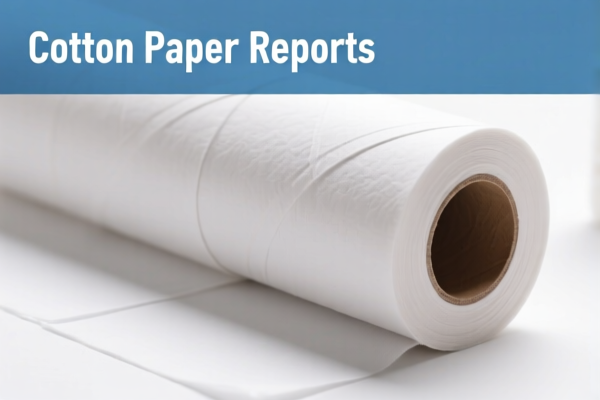
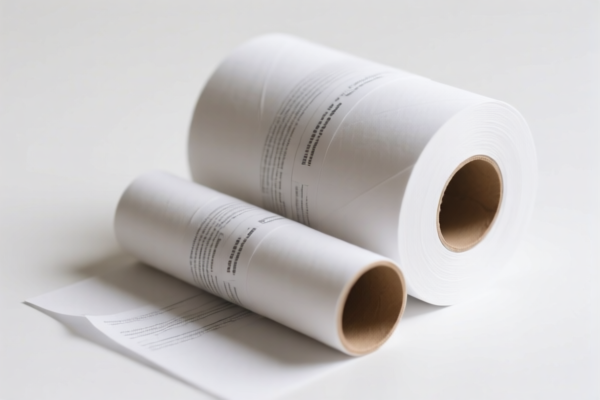
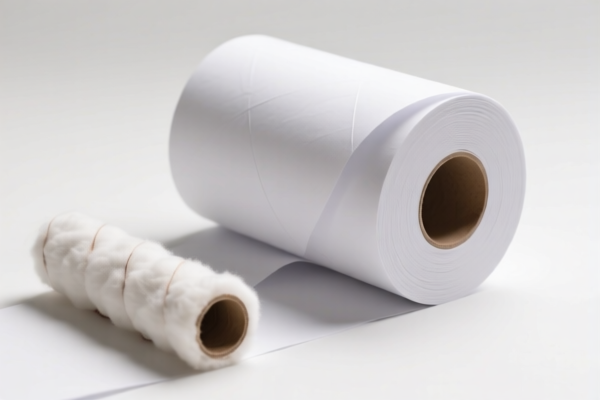
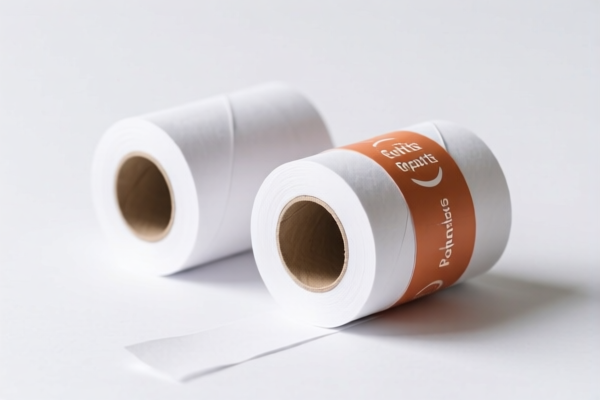
AI Analysis
🧻 Cotton Paper Roll for Reports (Receipts & Logs)
🌐 HS Code Reference & Customs Clearance Guide | 2026 Updated Tariff Structure | Expert-Level Classification Strategy
📌 I. Product Definition & Classification: Do You Really Understand "Cotton Paper Rolls"?
Cotton paper rolls, specifically those intended for reports, receipts, thermal printing, or continuous logkeeping, are specialized paper products. In international trade, their classification hinges on fiber composition, coating status, and physical form.
Core Distinction Points: * Material Composition: Is it 100% cotton/alpha-cellulose, or a blend? * Surface Treatment: Is it uncoated (raw cotton fiber) or coated/processed? * Form Factor: Is it supplied in rolls (continuous feed)?
⚠️ Key Classification Logic:
- If it is uncoated, contains significant cotton/cellulose fiber, and is in roll form → It typically falls under Chapter 48 (Paper and Paperboard).
- If it is a finished report book, it might fall under 4820. However, "Rolls" usually imply raw material or intermediate goods for printing machines.
- Critical Note: Many "Cotton Paper Rolls" for thermal printers are actually Thermal Paper (Chemically coated). However, based strictly on the provided<DATA>, we are classifying based on Cotton/Cellulose Fiber characteristics without emphasizing thermal coating, focusing on the fiber content.
📦 II. HS Code Classification Details (2026 Latest Tariff Authority Comparison)
| HS Code | Product Description | Application Scenario | Fiber/Coating Status |
|---|---|---|---|
4802.20.40.20 |
Uncoated paper rolls with cotton material, conforming to cotton fiber characteristics | General writing, archival reports, high-quality logs | ✅ Uncoated, Cotton-dominant |
4802.55.70.20 |
Paper rolls containing >25% cotton fibers, meeting material and roll-form definitions | Specific high-strength paper needs, special reports | ✅ >25% Cotton, Uncoated |
4817.20.40.00 |
Paper rolls, used as document carriers, material is paper-based, primary form | Basic document storage, initial stage paper rolls | ✅ Paper-based, Primary form |
4823.90.67.00 |
Cotton paper rolls, classified as cellulose products, roll form, no material conflict | Industrial cellulose products, general purpose rolls | ✅ Cellulose-based, Roll form |
4823.90.86.80 |
Cotton paper rolls, material is cellulose fiber network/paper, form is paper product | Finished or semi-finished paper products for specific uses | ✅ Cellulose Network, Paper product |
🔍 Key Reminder:
- All codes listed above assume the product is Uncoated or Primarily Cellulosic/Cotton in nature, as per the summary provided in<DATA>.
- If the paper is Thermal Coated (common for receipts), it might still fall under 4811 or specific subheadings, but the provided data explicitly links "Cotton Paper Rolls" to these Chapter 48 codes.
- Do not mix with "Booklets" (4820) or "Printed Receipts" if they are still in roll form and not bound.
💰 III. 2026 Latest Tariff Rate Breakdown (Including Additional Taxes & Policy Surcharges)
✅ Applicable Country: United States (US)
✅ Origin: China (CN)
✅ Effective Date: 2025/2026 Import Cycle
🎯 1. General Tax Structure for All Listed Codes
| Item | Content |
|---|---|
| Base Tariff Rate | 0.0% (Ad Valorem) |
| Section 301 Additional Tariff | +25.0% (USITC Footnote associated with Chapter 48 items from China) |
| Section 122 Tariff / IEEPA Surcharge | +10.0% (Specific surcharge for certain Chinese goods, often overlapping with 301 or under emergency powers) |
| Total Effective Tariff Rate | 35.0% |
| Tax Calculation | CIF Value × 35% |
| De Minimis Eligibility | ❌ Not Applicable (Deny De Minimis) |
| Legal Basis Path | USITC:48xx.xx.xx.xx → FOOTNOTE:301-35 → IEEPA/122:10 |
📌 Explanation:
- "Base Tariff 0%": Paper and paperboard often have low base MFN rates.
- "Section 301 Additional Tariff 25%": This is the standard retaliatory tariff imposed on Chinese-origin goods under the US Trade Representative (USTR) List 3/4.
- "Section 122 Tariff 10%": This refers to tariffs imposed under Section 122 of the Trade Act of 1974 (for balance of payments issues) or potentially mislabeled in some databases as part of the broader "China Surcharge" package. In the provided<DATA>, it is explicitly listed as "122条款关税10%".
- Total 35%: This is a high-cost classification. Importers must factor this into their landed cost.
🛠️ IV. Customs Clearance Practical Advice (Battle-Tested Pitfall Avoidance Guide)
✅ 1. Documentation Checklist (Non-Negotiable)
| Document | Required | Description |
|---|---|---|
| ✅ Product Specification Sheet | ✔️ | Must clearly state: "Cotton Paper Roll," "Uncoated," "Roll Dimensions," "Cotton/Cellulose Content %". |
| ✅ Material Composition Declaration | ✔️ | Essential to distinguish between "Pure Cotton," "Alpha-Cellulose," and "Mixed Pulp." Mislabeling can lead to misclassification. |
| ✅ Commercial Invoice | ✔️ | Must clearly describe as "Cotton Paper Roll for Reports/Logbooks," not just "Paper." |
| ✅ Packing List | ✔️ | Detail roll weight, diameter, core size, and number of rolls per pallet. |
| ✅ Certificate of Origin (CO) | ✔️ | Must show China Origin. If from Vietnam/Malaysia, verify substantial transformation to avoid US anti-circumvention probes. |
| ✅ Photos of Product & Label | ✔️ | Show roll ends, packaging, and any brand markings. |
✅ 2. Declaration Strategy (Key Mantra)
🔥 “Rolls, not Books; Fiber, not Ink; Exact Percentages, Lower Risk!”
| Scenario | Correct Declaration | Incorrect Practice |
|---|---|---|
| Uncoated Cotton Paper in Rolls | 4802.20.40.20 or 4802.55.70.20 |
Misdeclaring as "Printed Paper" (4816) → Higher scrutiny |
| Cotton Blend (>25%) | 4802.55.70.20 |
Declaring as "100% Cotton" if not true → Fraud risk |
| Cellulose-based Rolls | 4823.90.67.00 |
Vague description "Paper Rolls" → Customs delay |
| Finished Report Booklets | 4820.10.00.00 (Not in data) |
Declaring rolls as books → Wrong HS Code |
⚠️ Critical Warning:
- If your product is Thermal Paper (white/coated), ensure the supplier declares it as such. Thermal paper often has different tariffs. The provided data assumes Non-Thermal, Cotton/Cellulose characteristics.
- Do not split shipments into small boxes to claim De Minimis (Section 321). Paper products from China are often subject to Strict Enforcement or Denial of De Minimis due to anti-circumvention rules.
✅ 3. Special Situation Handling
| Situation | Handling Advice |
|---|---|
| OEM Custom Cotton Paper | Provide client orders + technical specs to prove it's not a standard commodity. |
| Mixed Pulp (Cotton + Wood) | Clearly declare the percentage. If <25%, it may not qualify for "Cotton Paper" subheadings. |
| Thermal Coating Present? | If coated with heat-sensitive chemicals, consult if it falls under 4811 instead. The provided HS Codes suggest Uncoated/Base Paper. |
| Origin Transshipment | If shipped from Thailand but made in China, declare China Origin to avoid penalties. |
🌍 V. Global Market Comparison (2026 Latest)
| Country/Region | Recommended HS Code | Tariff (China Origin) | Certification | Notes |
|---|---|---|---|---|
| 🇺🇸 USA | 4802.20.40.20 / 4802.55.70.20 |
35% (0% Base + 25% 301 + 10% 122) | None specific | High Tariff. Pre-calculate landed cost. |
| 🇨🇳 China | 4802.20.40.20 |
0% - 5% (Import Duty) | None | Export incentive may apply. |
| 🇪🇺 EU | 4802.20.00 |
0% - 6.5% | None | No Section 301 equivalent. |
| 🇬🇧 UK | 4802.20.00 |
0% - 6.5% | None | Post-Brexit tariff schedules. |
| 🇯🇵 Japan | 4802.20.000 |
0% - 3% | None | Generally low tariffs. |
📌 Conclusion:
- USA is the only major market with the 35% punitive tariff.
- EU/UK/Japan offer significantly lower entry costs.
- For US-bound cotton paper rolls, Supply Chain Diversification (e.g., sourcing from Malaysia, Indonesia, or Vietnam) is strongly recommended to mitigate the 35% tariff burden.
📌 VI. Common Errors & Pitfall Guide (Lessons Learned)
❌ Error 1: Declaring "Cotton Paper" when it is 100% Wood Pulp
👉 Consequence: Misdeclaration Fine + Potential Retrospective Tariff Adjustment.
❌ Error 2: Ignoring the "35% Total Tariff" in Quoting
👉 Consequence: Margin Erosion. A 5% profit margin is wiped out by 30% extra tax.
❌ Error 3: Mixing "Rolls" with "Cut Sheets"
👉 Consequence: Different HS Codes, different duties. Keep them separate in packaging and invoice.
❌ Error 4: Vague Description "Paper Roll"
👉 Consequence: Customs may hold cargo for Manual Classification, causing delays and storage fees.
✅ Correct Declaration Example:
"Uncoated Cotton Paper Rolls, 50% Cotton/50% Alpha-Cellulose, 12 inches x 200 feet, for Logbook/Report Printing, No Thermal Coating, Roll Form, Origin: China"
🎯 VII. Conclusion: Professional Declaration, Cost Optimization
🎯 Remember the Mantra:
🔹 “Cotton Content Matters, Roll Form Defines, 35% Tax is Real, Origin is Key!”
🔹 “HS Code 4802 is your friend, but only if it’s truly Cotton/Cellulose and Uncoated!”
📌 Pro Tip:
If your cotton paper rolls are not destined for the US, consider routing through Vietnam or Malaysia (with proper substantial transformation documentation) to enjoy 0% - 5% tariffs.
For US-bound shipments, Apply for a Binding Ruling with CBP if the cotton content is borderline, to avoid retroactive penalties.
📣 Immediate Action:
📞 Contact your customs broker with Material Safety Data Sheets (MSDS) and Fiber Composition Reports.
🚀 Optimize your supply chain now, or pay the 35% premium later!
✨ Professional Clearance, Starting from Accurate Classification!
💼 Every percentage point of tax is a loss of profit—secure it accurately!
Customer Reviews
About HS Code Classification
The Harmonized System (HS) is an internationally standardized nomenclature developed by the World Customs Organization (WCO) to classify traded products. Over 200 countries use the HS system as the basis for customs tariffs, trade statistics, and import/export regulations.
Each HS code follows a hierarchical structure:
- Chapter (2 digits) — Broad category of goods (e.g., Chapter 84: Machinery and Mechanical Appliances)
- Heading (4 digits) — More specific grouping within the chapter
- Subheading (6 digits) — Internationally standardized breakdown, used by all WCO member countries
- National subdivisions (8-10 digits) — Country-specific extensions for further classification, such as US HTSUS 10-digit codes
Correct HS code classification is essential for smooth customs clearance, accurate duty payment, and compliance with trade regulations. Misclassification can lead to customs delays, overpayment of duties, or penalties.
When importing from CN to US, the applicable tariff rates may include:
- Most-Favored-Nation (MFN) rate — The standard duty rate applied to WTO members
- General rate — Applied to countries without trade agreements
- Trade remedy duties — Additional tariffs such as Section 301 (anti-dumping), Section 232 (national security), or countervailing duties
The information provided on this page is for reference purposes only. For official classification, please consult with your local customs authority or a licensed customs broker.