Cotton Paper Rolls for Design
CN → US| HS Code | Tariff Rate | Origin | Destination | Doc |
|---|---|---|---|---|
| 4811909010 | 35.0% | CN | US | Official Doc |
| 4811904090 | 35.0% | CN | US | Official Doc |
| 4911911500 | 17.5% | CN | US | Official Doc |
Product Images
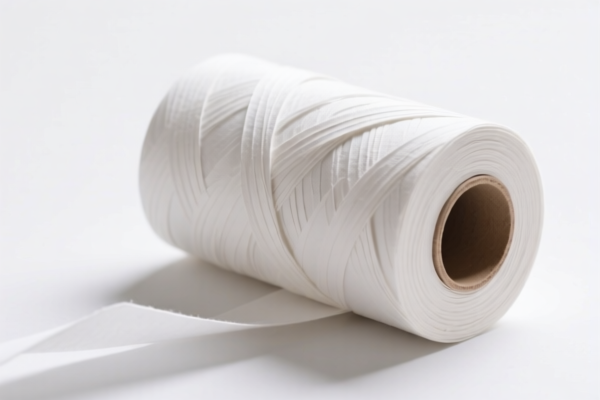

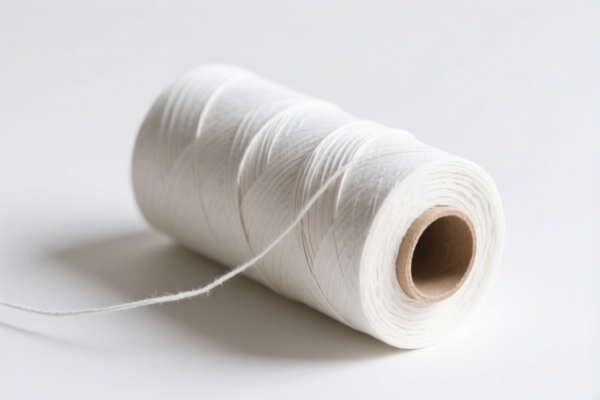
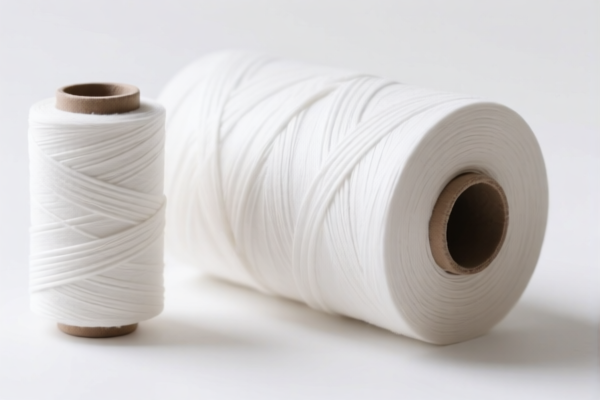
AI Analysis
📜 Cotton Paper Rolls for Design (Design Prints & Materials)
🌐 HS Code Reference & Customs Clearance Guide | 2026 Latest Tariff Analysis | Professional Clearance Strategy
📌 I. Product Definition & Classification: Do You Really Know "Cotton Paper Rolls"?
Cotton paper rolls, composed primarily of cellulose fibers (cotton/paper mix), are versatile materials used in high-end printing, design prototyping, and artistic applications. In international trade, they are classified based on their specific use and processing status:
- Raw/General Purpose Rolls: Unprocessed or simply treated paper rolls for general "other" uses (e.g., wrapping, lining, non-specific crafts).
- HS Code:
4811.90.90.10
- HS Code:
- Printed/Treated Rolls: Rolls specifically prepared for printing, coating, or industrial processing (e.g., lithographic plates, coated for specific finishes).
- HS Code:
4811.90.40.90
- HS Code:
- Design-Specific Prints: Rolls that are already printed with design layouts, patterns, or artistic elements, intended for direct use in design/architectural printing or artistic reproduction.
- HS Code:
4911.91.15.00
- HS Code:
⚠️ Key Distinction Point:
- If the roll is plain or minimally processed but not for printing →归入4811.90.90.10
- If the roll is coated, treated, or prepared for printing but not yet printed →归入4811.90.40.90
- If the roll is already printed with design elements (artistic, architectural, or graphic design prints) →归入4911.91.15.00
📦 II. HS Code Classification Details (2026 Latest Tariff Authority Comparison)
| HS Code | Product Description | Application Scenario | Printing Status |
|---|---|---|---|
4811.90.90.10 |
Cotton Paper Rolls, Material: Paper/Cellulose, Form: Roll, Use: Other Paper Products | General wrapping, lining, non-printed crafts, basic paper goods | ❌ No Print |
4811.90.40.90 |
Cotton Paper Rolls, Material: Cellulose Cotton/Paper, Form: Roll, Use: Printing/Coated Paper Products | Coated for specific finishes, treated for industrial printing, pre-print processing | ⚠️ Treated/Prepped |
4911.91.15.00 |
Cotton Paper Rolls, Form: Roll, Material: Cotton Paper, Use: Design Printed Products | Artistic prints, architectural blueprints, graphic design rolls, pre-printed artistic materials | ✅ Printed |
🔍 Important Reminder:
- All pre-printed design rolls must be classified under4911.91.15.00, not4811; - If the paper is coated but not printed, it belongs to4811.90.40.90; - Plain cotton paper rolls without any coating or printing fall under4811.90.90.10.
💰 III. 2026 Latest Tariff Rate Details (Including Surcharges, Policy Surcharges)
✅ Applicable Country: United States (US)
✅ Origin: China (CN)
✅ Effective Date: From November 10, 2025 (including subsequent imports)
🎯 1. 4811.90.90.10 —— Cotton Paper Rolls (Other/General Use)
| Item | Content |
|---|---|
| Base Tariff | 0% (ad valorem) |
| USITC Surcharge | +25% (from USITC Footnote related to Section 301) |
| IEEPA Surcharge | +10% (for China/Hong Kong products, from November 10, 2025) |
| Total Rate | 35.0% |
| Tax Calculation | CIF Value × 35.0% |
| De Minimis Exemption | ❌ Not Available (deny_de_minimis) |
| Legal Basis Path | IEEPA:9903.01.25 → IEEPA:9903.01.24 → USITC:4811.90.90.10 → FOOTNOTE:9903.88.01 |
📌 Explanation:
- "USITC Surcharge 25%" comes from "Additional Tariffs" under Section 301 of the US Trade Act; - "IEEPA 10%" is the对华加征关税 under the International Emergency Economic Powers Act; - Total 35%, which is a high tariff rate, must be predicted in advance!
🎯 2. 4811.90.40.90 —— Cotton Paper Rolls (Printing/Coated Use)
| Item | Content |
|---|---|
| Base Tariff | 0% |
| USITC Surcharge | +25% |
| IEEPA Surcharge | +10% |
| Total Rate | 35.0% |
| Tax Calculation | CIF × 35.0% |
| De Minimis Exemption | ❌ Not Available |
| Legal Basis Path | IEEPA:9901.25 → IEEPA:9903.01.24 → USITC:4811.90.40.90 → FOOTNOTE:9903.88.01 |
📌 Note:
- Same rate as the previous item; - Whether it's "coated paper," "treated paper," or "pre-print processing paper," as long as it is not yet printed, it applies this tariff.
🎯 3. 4911.91.15.00 —— Cotton Paper Rolls (Design Printed Products)
| Item | Content |
|---|---|
| Base Tariff | 0% |
| USITC Surcharge | +7.5% |
| IEEPA Surcharge | +10% |
| Total Rate | 17.5% |
| Tax Calculation | CIF × 17.5% |
| De Minimis Exemption | ❌ Not Available |
| Legal Basis Path | IEEPA:9903.01.25 → IEEPA:9903.01.24 → USITC:4911.91.15.00 → FOOTNOTE:9903.88.01 |
📌 Key Advantage:
- Significantly lower total rate (17.5%) compared to unprinted/coated paper (35%); - If your product is already printed with design elements, ensure you declare it as4911.91.15.00to save 17.5% in tariffs; - Misdeclaring printed rolls as unprinted paper (4811) will result in double taxation and penalties.
🛠️ IV. Customs Clearance Practical Advice (Real-World Pitfall Avoidance Guide)
✅ 1. Document Checklist (All Required)
| Document | Mandatory | Explanation |
|---|---|---|
| ✅ Product Specification Sheet | ✔️ | Include material composition (cotton content), dimensions, weight |
| ✅ Product Photos (Front/Back/Label) | ✔️ | Clearly show if printed or plain |
| ✅ Sample of Print Design | ✔️ | If claiming 4911, provide proof of printed design |
| ✅ Commercial Invoice | ✔️ | Clearly state "Cotton Paper Rolls for Design" or specific use |
| ✅ Packing List | ✔️ | Detail quantity, weight, and packaging type |
| ✅ Certificate of Origin (CO) | ✔️ | If not China-origin, apply for preferential rates |
| ✅ Third-Party Test Report | ✔️ | If applicable (e.g.,环保 certifications) |
✅ 2. Declaration Tips (Key Mantra)
🔥 "Printed Design? Declare 4911! Plain/Coated? 4811! Don't Mix Up, Save Half!"
| Scenario | Correct Declaration | Wrong Practice |
|---|---|---|
| Plain cotton paper rolls | 4811.90.90.10 |
Misdeclare as printed → 17.5% (underpaid, penalty risk) |
| Coated/prepped for printing | 4811.90.40.90 |
Misdeclare as plain → 35% (overpaid) |
| Already printed design rolls | 4911.91.15.00 |
Misdeclare as plain → 35% (pay double!) |
| Mixed shipment (some printed, some plain) | Split Declaration | Single declaration → Customs may reject or reclassify all |
✅ 3. Special Case Handling
| Scenario | Handling Advice |
|---|---|
| OEM Custom Design Prints | Provide client order + design files to prove "Design" nature for 4911 |
| Rolls with Partial Printing | If >50% surface area is printed/design-focused → Declare 4911.91.15.00 |
| Blank Rolls with Design Templates Included | If templates are separate, declare blank rolls as 4811 |
| Sample Rolls for Testing | Declare as "Samples" but still classify correctly by product nature |
🌍 V. Global Market Customs Clearance Comparison (2026 Latest)
| Country/Region | Recommended HS Code | Tariff | Certification Requirement | Notes |
|---|---|---|---|---|
| 🇺🇸 USA | 4911.91.15.00 |
17.5% (China Origin) | None Specific | 35% for 4811 types |
| 🇨🇳 China | 4911.91.15.00 |
5% | None Specific | No additional surcharges |
| 🇪🇺 EU | 4911.91.15.00 |
0% (If CE Compliant) | CE + RoHS | No surcharges |
| 🇬🇧 UK | 4911.91.15.00 |
0% (Post-Brexit Deal) | UKCA | No surcharges |
| 🇯🇵 Japan | 4911.91.15.00 |
0% | PSE (if applicable) | No surcharges |
📌 Conclusion:
- USA is the only market imposing high surcharges on paper products from China; - Proper classification as4911.91.15.00(Printed/Design) can halve your tariff burden compared to4811; - China-origin cotton paper rolls in the US face a 35% tariff if misclassified; ensure accurate declaration.
📌 VI. Common Errors & Pitfall Avoidance Guide (Blood-Stained Lessons)
❌ Error 1: Declaring printed design rolls as plain paper (4811)
👉 Consequence: You pay 35% instead of 17.5% → Loss of 17.5% in profit!
❌ Error 2: Declaring coated/prepped paper as plain paper (4811.90.90.10)
👉 Consequence: Customs may reclassify as 4811.90.40.90 → No savings, but risk of delay
❌ Error 3: Not providing proof of design/printing for 4911
👉 Consequence: Customs doubts "Design" classification → Reclassified to 4811, higher tariff + fines
❌ Error 4: Using vague terms like "Paper Rolls" in invoice
👉 Consequence: Customs cannot determine use → Delayed clearance, additional inspections
✅ Correct Practice:
"Printed Cotton Paper Rolls, 50% Cotton Content, 24-inch Width, Pre-printed with Architectural Design Patterns, for Design Use, Model XYZ"
🎯 VII. Conclusion: Precise Classification, Time-Saving, Cost-Reducing!
🎯 Remember the Mantra:
🔹 "Printed Design? 4911! Plain? 4811! Misclassifying Costs You 17.5%!"
🔹 "HS Code Determines Fate, Rate Difference is Key, Wrong Declaration Means Penalty!"
📌 Pro Tip:
If your cotton paper rolls are originating from Vietnam, Mexico, Thailand, or Malaysia, you may apply for IEEPA Exemption, reducing the tariff to 0%~5%;
Recommend applying for an Advance Ruling before shipment to avoid customs risks.
📣 Act Now:
📞 Contact a Professional Customs Broker + Provide Product Photos + Apply for HS Code Advance Ruling
🚀 Let your Cotton Paper Rolls, Clear Customs Smoothly, Export Efficiently, Profit Double!
✨ Professional Customs Clearance Starts with Precise Classification!
💼 Every Penny of Your Cost Deserves Accurate Calculation!
Customer Reviews
About HS Code Classification
The Harmonized System (HS) is an internationally standardized nomenclature developed by the World Customs Organization (WCO) to classify traded products. Over 200 countries use the HS system as the basis for customs tariffs, trade statistics, and import/export regulations.
Each HS code follows a hierarchical structure:
- Chapter (2 digits) — Broad category of goods (e.g., Chapter 84: Machinery and Mechanical Appliances)
- Heading (4 digits) — More specific grouping within the chapter
- Subheading (6 digits) — Internationally standardized breakdown, used by all WCO member countries
- National subdivisions (8-10 digits) — Country-specific extensions for further classification, such as US HTSUS 10-digit codes
Correct HS code classification is essential for smooth customs clearance, accurate duty payment, and compliance with trade regulations. Misclassification can lead to customs delays, overpayment of duties, or penalties.
When importing from CN to US, the applicable tariff rates may include:
- Most-Favored-Nation (MFN) rate — The standard duty rate applied to WTO members
- General rate — Applied to countries without trade agreements
- Trade remedy duties — Additional tariffs such as Section 301 (anti-dumping), Section 232 (national security), or countervailing duties
The information provided on this page is for reference purposes only. For official classification, please consult with your local customs authority or a licensed customs broker.