Cotton Paper Rolls for Drawings
CN → US| HS Code | Tariff Rate | Origin | Destination | Doc |
|---|---|---|---|---|
| 4802612000 | 35.0% | CN | US | Official Doc |
| 4802552000 | 35.0% | CN | US | Official Doc |
| 4811909010 | 35.0% | CN | US | Official Doc |
| 4811904090 | 35.0% | CN | US | Official Doc |
| 4911911500 | 17.5% | CN | US | Official Doc |
| 4823908680 | 35.0% | CN | US | Official Doc |
Product Images



AI Analysis
🎨 Cotton Paper Rolls for Drawings (Architectural & Design Drafting)
🌐 HS Code Reference & Customs Clearance Guide | 2026 Latest Tariff Analysis | Professional Clearance Strategy
📌 I. Product Definition & Classification: What Exactly Are You Importing?
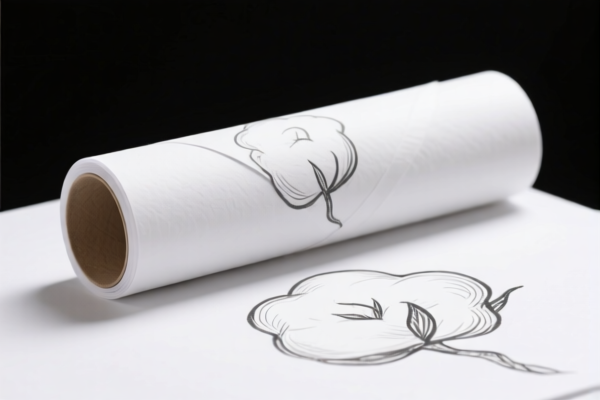
Cotton Paper Rolls for Drawings refer to high-quality, uncoated or lightly coated paper stocks made primarily from cotton fibers or cellulose. These are critical for architectural blueprints, technical drafting, fine art reproduction, and engineering sketches. In international trade, they are categorized based on their physical state (rolls vs. sheets) and processing level (uncoated vs. coated/printed).
⚠️ Key Distinction:
- Uncoated Paper Rolls (Raw material for drafting): Classify under 4802 or 4811 (depending on specific finishing).
- Printed/Coated Blueprint Paper: Classify under 4811 (paper treated for specific technical use) or 4911 (if treated as a printed carrier for designs).
- Cut Sheets: If the paper is already cut to size, it falls under 4823 (Cut paper products).
📦 II. HS Code Classification Matrix (2026 Authoritative Reference)
| HS Code | Product Description | Application Scenario | State |
|---|---|---|---|
4802.61.20.00 |
Drawing paper rolls, in rolls | Raw drawing paper, uncoated | ✅ Rolls |
4802.55.20.00 |
Uncoated paper rolls (drawing paper) | General uncoated drafting stock | ✅ Rolls |
4811.90.90.10 |
Blueprint cotton paper rolls | Technical/blueprint use, cotton/cellulose | ✅ Rolls |
4811.90.40.90 |
Blueprint cotton paper rolls | Coated/printed for technical use | ✅ Rolls |
4911.91.15.00 |
Blueprint cotton paper rolls | Printed carrier for design/engineering | ✅ Rolls |
4823.90.86.80 |
Pure cotton drawing paper | Cut to size/shape, finished product | ❌ Cut Sheets |
🔍 Critical Reminder:
- Rolls vs. Sheets: If the product is supplied in rolls, do NOT classify under4823(cut paper). Misclassification leads to severe penalties.
- Coated vs. Uncoated: If the paper has a chemical coating for blueprints (ammonia-sensitive), it may fall under4811. If it’s plain cotton rag, it’s4802or4811depending on processing history.
💰 III. 2026 Tariff Rate Breakdown (China Origin to USA)
✅ Applicable Country: United States (US)
✅ Country of Origin: China (CN)
✅ Effective Date: November 10, 2025 (and ongoing)
🎯 1. 4802.61.20.00 & 4802.55.20.00 – Drawing Paper Rolls (Uncoated/Base)
| Item | Details |
|---|---|
| Base Duty | 0.0% (Most Favored Nation Rate) |
| Section 301 Surcharge | +25.0% (USITC Footnote 9903.88.01) |
| IEEPA Surcharge | +10.0% (China-specific emergency powers) |
| Total Duty Rate | 35.0% |
| Calculation | CIF Value × 35% |
| De Minimis Exemption | ❌ Not Eligible (deny_de_minimis) |
| Legal Path | IEEPA:9903.01.25 → IEEPA:9903.01.24 → USITC:4802.61.20.00 → FOOTNOTE:9903.88.01 |
📌 Explanation:
- 25% Section 301: Standard tariff on Chinese paper products under trade remedy measures.
- 10% IEEPA: Additional layer for "national security" or emergency economic powers applicable to Chinese-origin goods.
- Total 35%: High duty burden requires precise documentation.
🎯 2. 4811.90.90.10 & 4811.90.40.90 – Blueprint Paper Rolls (Treated/Coated)
| Item | Details |
|---|---|
| Base Duty | 0.0% |
| Section 301 Surcharge | +25.0% |
| IEEPA Surcharge | +10.0% |
| Total Duty Rate | 35.0% |
| Calculation | CIF Value × 35% |
| De Minimis Exemption | ❌ Not Eligible |
| Legal Path | IEEPA:9903.01.25 → IEEPA:9903.01.24 → USITC:4811.90.90.10 → FOOTNOTE:9903.88.01 |
📌 Explanation:
- Even though these are "treated" papers, they remain subject to the same punitive tariffs as base paper rolls.
- Caution: Do not confuse with "printed" items, which have different rates.
🎯 3. 4911.91.15.00 – Blueprint Paper as Printed Carrier
| Item | Details |
|---|---|
| Base Duty | 0.0% |
| Section 301 Surcharge | +7.5% (Reduced rate for certain printed carriers) |
| IEEPA Surcharge | +10.0% |
| Total Duty Rate | 17.5% |
| Calculation | CIF Value × 17.5% |
| De Minimis Exemption | ❌ Not Eligible |
| Legal Path | IEEPA:9901.25 → IEEPA:9903.01.24 → USITC:4911.91.15.00 → FOOTNOTE:9903.88.01 |
📌 Explanation:
- This code applies if the paper is pre-printed with grids, designs, or engineering templates.
- Significant Savings: Only 17.5% total vs. 35% for blank paper.
- Requirement: Must prove the item is a "printed carrier" and not just blank paper with logos.
🎯 4. 4823.90.86.80 – Cut Cotton Drawing Paper
| Item | Details |
|---|---|
| Base Duty | 0.0% |
| Section 301 Surcharge | +25.0% |
| IEEPA Surcharge | +10.0% |
| Total Duty Rate | 35.0% |
| Calculation | CIF Value × 35% |
| De Minimis Exemption | ❌ Not Eligible |
| Legal Path | IEEPA:9903.01.25 → IEEPA:9903.01.24 → USITC:4823.90.86.80 → FOOTNOTE:9903.88.01 |
📌 Explanation:
- If you sell pre-cut sheets (e.g., A1, A2 sizes), the tax rate remains 35%.
- No benefit for cutting; the tariff structure favors rolls for classification stability.
🛠️ IV. Customs Clearance Practical Advice (Pitfall Avoidance)
✅ 1. Mandatory Documentation Checklist
| Document | Required | Notes |
|---|---|---|
| ✅ Commercial Invoice | ✔️ | Clearly state "Cotton Paper Rolls" or "Blueprint Paper". Avoid vague terms like "Paper". |
| ✅ Packing List | ✔️ | Specify weight, dimensions, and number of rolls. |
| ✅ Product Specification Sheet | ✔️ | Must indicate: Material (100% Cotton/Cellulose), Form (Rolls/Cut), Coating Status (Coated/Uncoated). |
| ✅ Photos | ✔️ | Show the core tube, the paper texture, and any printed grids/labels. |
| ✅ Certificate of Origin | ✔️ | Essential for verifying CN origin. |
✅ 2. Classification Strategy (Key Mantra)
🔥 “Rolls are 35%, Printed are 17.5%, Cut are 35% – Choose Wisely!”
| Scenario | Recommended HS Code | Duty Rate | Why? |
|---|---|---|---|
| Blank cotton paper in rolls | 4802.61.20.00 |
35% | Standard uncoated draft paper. |
| Blueprint chemical paper in rolls | 4811.90.90.10 |
35% | Treated for ammonia/alkaline development. |
| Pre-printed engineering grid paper | 4911.91.15.00 |
17.5% | Best Option if pre-printed; lower tax. |
| Pre-cut A1/A2 sheets | 4823.90.86.80 |
35% | Finished cut goods, same high tax. |
✅ 3. Special Handling Tips
| Situation | Advice |
|---|---|
| Mixed Shipments | If shipping both rolls and cut sheets, separate invoices. Do not mix to avoid audit flags. |
| "122 Clause" Mention | Ensure your broker understands "122 Clause" refers to the 10% IEEPA tariff. It is not an extra 10% on top of 35%; it is part of the calculation logic. |
| Pre-Cut vs. Roll | If you can sell rolls instead of cut sheets, buyers may prefer them for inventory flexibility, though tax is same. However, if you have pre-printed paper, pushing for 4911 saves 17.5%. |
🌍 V. Global Market Comparison (2026)
| Region | HS Code Example | Duty Rate (CN Origin) | Notes |
|---|---|---|---|
| 🇺🇸 USA | 4802.61.20.00 |
35.0% | High tariffs due to 301 + IEEPA. |
| 🇪🇺 EU | 4802.55/4811 | ~6.5% | No punitive tariffs. Standard MFN rate. |
| 🇨🇳 China | 4802.61.20.00 | 0% | Export duty may apply; no import duty for domestic use. |
| 🇯🇵 Japan | 4802.55 | ~3.0-5.0% | Generally low tariffs for paper products. |
📌 Insight:
- The US market is significantly more expensive due to geopolitical tariffs.
- Consider transshipment or supply chain diversification if volume is high, but note that "substantial transformation" rules are strict for paper.
📌 VI. Common Errors & Blood-Stained Lessons
❌ Error 1: Labeling "Blueprint Paper" as 4901 (Printing Paper)
👉 Consequence: Incorrect classification. Blueprint paper is a technical carrier, not standard printing paper.
👉 Result: Seizure or high penalty.
❌ Error 2: Claiming "De Minimis" for small samples
👉 Consequence: Denied. Paper products from China are explicitly excluded from the $800 de minimis exemption.
👉 Result: Full duty (35%) + storage fees + delay.
❌ Error 3: Confusing "Coated" with "Printed"
👉 Consequence:
- Coated (chemical treatment for blueprints) → 4811 (35%)
- Printed (ink on paper) → 4911 (17.5%)
👉 Result: Overpaying 17.5% if you incorrectly classify printed paper as coated.
✅ Correct Practice:
"Architectural Cotton Paper Rolls, 100% Rag, Uncoated, Width 36 inch, Core 3 inch"
or
"Pre-Printed Engineering Grid Paper Rolls, Carrier for Design, Width 36 inch"
🎯 VII. Conclusion: Precision Saves Money
🎯 Remember the Mantra:
🔹 "Printed is Cheaper (17.5%), Blank is Expensive (35%). Know your coating vs. printing."
🔹 "No De Minimis for Chinese Paper. Prepare for 35% Duty or Higher."
📌 Pro Tip:
If you are importing large volumes, consider applying for an Exclusion under Section 301 if available for specific paper types, or consult a customs broker for a Binding Ruling to lock in the 4911.91.15.00 (17.5%) rate if your product qualifies as a printed carrier.
📣 Immediate Action:
📞 Contact a Licensed Customs Broker
📄 Provide Product Specs (Coated? Printed? Cut?)
🚀 Optimize HS Code to Save 17.5% Tax
✨ Professional Clearance Starts with Accurate Classification!
💼 Every Percent Counts in International Trade!
Customer Reviews
About HS Code Classification
The Harmonized System (HS) is an internationally standardized nomenclature developed by the World Customs Organization (WCO) to classify traded products. Over 200 countries use the HS system as the basis for customs tariffs, trade statistics, and import/export regulations.
Each HS code follows a hierarchical structure:
- Chapter (2 digits) — Broad category of goods (e.g., Chapter 84: Machinery and Mechanical Appliances)
- Heading (4 digits) — More specific grouping within the chapter
- Subheading (6 digits) — Internationally standardized breakdown, used by all WCO member countries
- National subdivisions (8-10 digits) — Country-specific extensions for further classification, such as US HTSUS 10-digit codes
Correct HS code classification is essential for smooth customs clearance, accurate duty payment, and compliance with trade regulations. Misclassification can lead to customs delays, overpayment of duties, or penalties.
When importing from CN to US, the applicable tariff rates may include:
- Most-Favored-Nation (MFN) rate — The standard duty rate applied to WTO members
- General rate — Applied to countries without trade agreements
- Trade remedy duties — Additional tariffs such as Section 301 (anti-dumping), Section 232 (national security), or countervailing duties
The information provided on this page is for reference purposes only. For official classification, please consult with your local customs authority or a licensed customs broker.