Cotton Paper Rolls for Photocopying
CN → US| HS Code | Tariff Rate | Origin | Destination | Doc |
|---|---|---|---|---|
| 4802561000 | 35.0% | CN | US | Official Doc |
| 4811592000 | 35.0% | CN | US | Official Doc |
| 4811908050 | 35.0% | CN | US | Official Doc |
| 4802623000 | 35.0% | CN | US | Official Doc |
| 4823908680 | 35.0% | CN | US | Official Doc |
Product Images
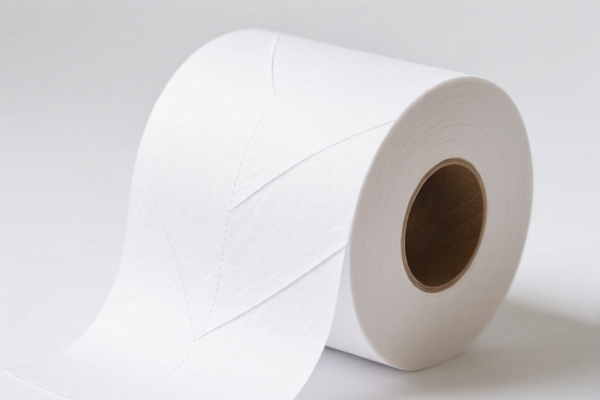
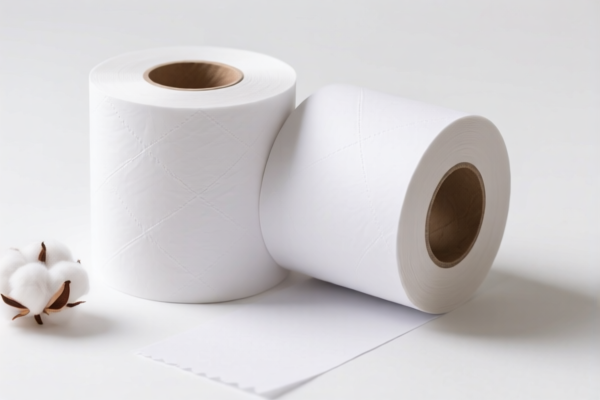
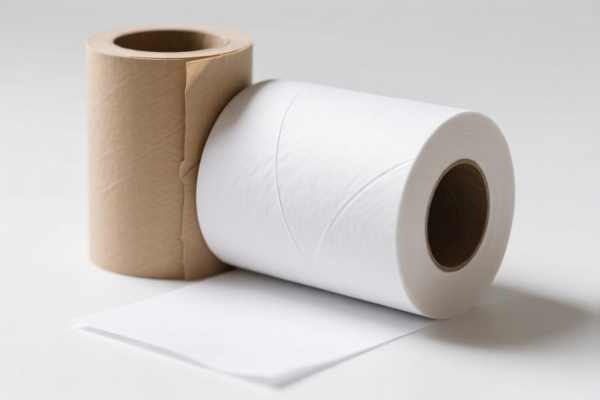
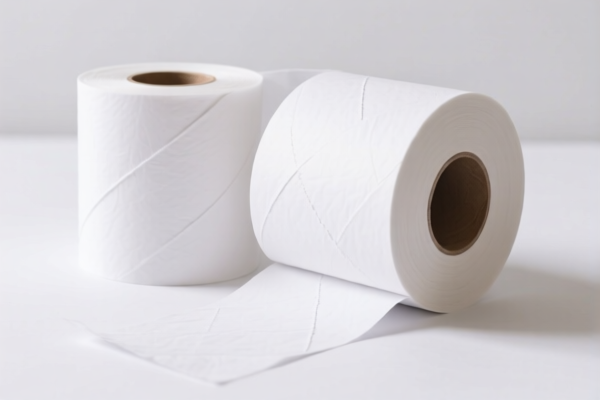
AI Analysis
📄 Cotton Paper Rolls for Photocopying (Copy Paper)
🌐 HS Code Reference & Customs Clearance Guide | 2026 Latest Tariff Analysis | Professional Clearance Strategy
📌 I. Product Definition & Classification: Do You Really Understand "Copy Paper"?
Cotton Paper Rolls (commonly referred to as Copy Paper) are essential consumables for modern digital offices, printing industries, and administrative workflows. In international trade, despite the common name "cotton," most commercial copy paper is actually made from wood pulp or mixed fibers, not pure cotton. The classification depends heavily on material composition, processing method (coated/uncoated), and final form (rolls vs. sheets).
⚠️ Key Distinction Point:
- If the product is uncoated wood-free paper used for printing/writing → Usually 4802;
- If it is coated or printed paper → Usually 4811;
- If it is a miscellaneous paper product not fitting specific categories → Often 4823 (Catch-all).
📦 II. HS Code Classification Details (2026 Latest Tariff Authority Comparison)
| HS Code | Product Description | Application Scenario | Key Attribute |
|---|---|---|---|
4802.56.10.00 |
Copy paper falls under paper products, meeting material requirements (paper/cardboard), usage belongs to writing and printing categories. | Standard office copy paper, uncoated | ✅ Uncoated |
4811.59.20.00 |
The product name "copy paper" is paper-based in material and printing/copying in usage, meeting the definition of printing paper. | Pre-printed or treated copy paper rolls | ✅ Treated/Printed |
4811.90.80.50 |
The product name is copy paper, its material belongs to paper class, fitting the category of coated or printed papers under this code. | Coated copy paper, specialty finishes | ✅ Coated |
4802.62.30.00 |
Product attributes (for printing/copying) match paper material attributes, inferring its form as uncoated paper. | Bulk uncoated copy paper rolls | ✅ Uncoated |
4823.90.86.80 |
Product material is paper (paper rolls), fitting the category of paper, cardboard, and cellulose products, serving as a catch-all category. | Miscellaneous paper rolls, non-standard copy formats | ✅ Catch-all |
🔍 Important Reminder:
- All standard uncoated copy paper should ideally be classified under 4802 series codes (e.g.,4802.56.10.00or4802.62.30.00); - If the paper has undergone significant processing (coating, lamination, or pre-printing), it may fall under 4811; - If the product is irregular or does not fit standard printing paper definitions, customs may reclassify it under 4823 as a residual category.
💰 III. 2026 Latest Tariff Rate Details (Including Surcharges & Policy Add-ons)
✅ Applicable Country: United States (US)
✅ Origin: China (CN)
✅ Effective Date: From November 10, 2025 (including subsequent imports)
🎯 1. 4802.56.10.00 —— Copy Paper (Uncoated, Writing/Printing)
| Item | Content |
|---|---|
| Base Tariff | 0.0% (ad valorem) |
| Section 301 Surcharge | +25.0% |
| Section 122 Surcharge | +10.0% |
| Total Tariff Rate | 35.0% |
| Tax Calculation | CIF Value × 35% |
| De Minimis Eligibility | ❌ No (deny_de_minimis) |
| Legal Basis Path | USITC:4802.56.10.00 → 301:847.3 → 122:Section122 |
📌 Explanation:
- "Base Tariff 0%": Standard MFN rate for paper products is often zero; - "Section 301 Surcharge +25%": Applied to Chinese-origin goods under US Trade Act Section 301; - "Section 122 Surcharge +10%": Additional tariff imposed under Section 232 or related emergency powers for specific paper imports; - Total 35%: High tariff burden, must be factored into cost accounting.
🎯 2. 4811.59.20.00 —— Printing Paper (Treated/Printed)
| Item | Content |
|---|---|
| Base Tariff | 0.0% |
| Section 301 Surcharge | +25.0% |
| Section 122 Surcharge | +10.0% |
| Total Tariff Rate | 35.0% |
| Tax Calculation | CIF × 35% |
| De Minimis Eligibility | ❌ No |
| Legal Basis Path | USITC:4811.59.20.00 → 301:847.3 → 122:Section122 |
📌 Note:
- Same tariff structure as uncoated copy paper; - Even if the paper is coated or treated, as long as it is primarily for printing/copying, it remains subject to the same surcharges.
🎯 3. 4811.90.80.50 —— Coated Paper (Miscellaneous)
| Item | Content |
|---|---|
| Base Tariff | 0.0% |
| Section 301 Surcharge | +25.0% |
| Section 122 Surcharge | +10.0% |
| Total Tariff Rate | 35.0% |
| Tax Calculation | CIF × 35% |
| De Minimis Eligibility | ❌ No |
| Legal Basis Path | USITC:4811.90.80.50 → 301:847.3 → 122:Section122 |
📌 Note:
- Coated papers (glossy, matte) face the same high tariff rates; - Classification under 4811 indicates additional processing beyond basic uncoated paper.
🎯 4. 4802.62.30.00 —— Uncoated Paper (Bulk/Industrial)
| Item | Content |
|---|---|
| Base Tariff | 0.0% |
| Section 301 Surcharge | +25.0% |
| Section 122 Surcharge | +10.0% |
| Total Tariff Rate | 35.0% |
| Tax Calculation | CIF × 35% |
| De Minimis Eligibility | ❌ No |
| Legal Basis Path | USITC:4802.62.30.00 → 301:847.3 → 122:Section122 |
📌 Note:
- This code often applies to larger rolls or industrial-grade uncoated paper; - Tariff rate remains unchanged at 35%.
🎯 5. 4823.90.86.80 —— Miscellaneous Paper Products (Catch-all)
| Item | Content |
|---|---|
| Base Tariff | 0.0% |
| Section 301 Surcharge | +25.0% |
| Section 122 Surcharge | +10.0% |
| Total Tariff Rate | 35.0% |
| Tax Calculation | CIF × 35% |
| De Minimis Eligibility | ❌ No |
| Legal Basis Path | USITC:4823.90.86.80 → 301:847.3 → 122:Section122 |
📌 Note:
- This is a residual code for paper products that do not fit specific printing/writing categories; - If misclassified, customs may audit and reclassify, leading to penalties.
🛠️ IV. Customs Clearance Practical Advice (Pitfall Avoidance Guide)
✅ 1. Required Documentation Checklist (None Can Be Omitted)
| Document | Must Provide | Description |
|---|---|---|
| ✅ Product Specifications | ✔️ | Including basis weight (gsm), roll diameter, core size, coating type |
| ✅ Material Composition Statement | ✔️ | Confirm if 100% wood pulp or mixed fiber; "Cotton" claim must be verified |
| ✅ Product Photos (with label) | ✔️ | Clear image of packaging, labeling, and roll end |
| ✅ Commercial Invoice | ✔️ | Must clearly state "Copy Paper Rolls" or "Uncoated Paper for Printing" |
| ✅ Packing List | ✔️ | Detail weight, dimensions, and number of rolls |
| ✅ Certificate of Origin (CO) | ✔️ | Required for tariff determination |
| ✅ Third-party Test Report | ✔️ | ISO certification, FSC (if eco-friendly claim) |
✅ 2. Declaration Tips (Key Mantra)
🔥 "Material First, Usage Second, Name Precise, Tariff Minimized!"
| Situation | Correct Declaration Method | Wrong Practice |
|---|---|---|
| Standard uncoated copy paper | 4802.56.10.00 or 4802.62.30.00 |
Misdeclare as "Cotton Paper" → 35% |
| Coated/glossy copy paper | 4811.59.20.00 or 4811.90.80.50 |
Misdeclare as uncoated → Risk of audit |
| Non-standard paper rolls | 4823.90.86.80 |
Force fit into 4802 → Rejection |
| Pure cotton paper (rare) | Verify under 4802 or 4803 | Claim "Cotton" without proof → Delay |
✅ 3. Special Case Handling
| Situation | Handling Advice |
|---|---|
| OEM Branded Copy Paper | Provide customer order + design specs to avoid being labeled as "generic" |
| Paper with Watermark | Still classified under 4802/4811; watermark does not change category |
| Eco-friendly/FSC Certified | Provide FSC certificate; may help in customs inspection but doesn't change tariff |
| "Cotton" Claim | If paper is truly 100% cotton, provide mill test report; otherwise, use "Wood Pulp Paper" |
🌍 V. Global Main Market Clearance Comparison (2026 Latest)
| Country/Region | Recommended HS Code | Tariff | Certification Requirements | Remarks |
|---|---|---|---|---|
| 🇺🇸 USA | 4802.56.10.00 |
35% (China origin) | None specific | High tariff due to Section 301 & 122 |
| 🇨🇳 China | 4802.56.10.00 |
5% | None | Low tariff for domestic trade |
| 🇪🇺 EU | 4802.56.10.00 |
6.5% (if >150gsm) | REACH | No additional surcharges |
| 🇦🇺 Australia | 4802.56.10.00 |
5% | None | Moderate tariff |
| 🇯🇵 Japan | 4802.56.10.00 |
5% | JIS | No surcharges |
📌 Conclusion:
- USA is the only market with extremely high additional tariffs (35%) for Chinese-origin copy paper; - EU and other markets have standard MFN rates, significantly lower than US; - Consider supply chain diversification (e.g., sourcing from Vietnam or India) to mitigate US tariffs.
📌 VI. Common Errors & Pitfall Guide (Lessons Learned)
❌ Error 1: Declaring "Cotton Paper" without verification
👉 Consequence: If not 100% cotton, customs will reclassify and apply higher rates or penalties.
❌ Error 2: Splitting "Roll + Packaging" into separate declarations
👉 Consequence: Packaging may be taxed separately, increasing total cost.
❌ Error 3: Using vague terms like "Paper Product" on invoice
👉 Consequence: Customs requires specific description; delays in clearance.
❌ Error 4: Ignoring Section 122 and 301 surcharges in cost calculation
👉 Consequence: Unexpected 35% tariff hits profit margin.
✅ Correct Practice:
"Uncoated Wood Pulp Copy Paper Rolls, 80gsm, 1200mm Width, 1000m Length, For Office Printing, Model XYZ, FSC Certified"
🎯 VII. Conclusion: Professional Declaration, Save Time and Money!
🎯 Remember the Mantra:
🔹 "Material defines HS, Usage confirms it, Name must be precise, Tariff can be saved!"
🔹 "35% is the US penalty, 0% base is a trap, Declare accurately, avoid fines!"
📌 Tips:
- If your copy paper is sourced from Vietnam, India, or Malaysia, you may avoid Section 301 surcharges (tariff drops to 0-10%);
- Consider applying for Advance Ruling from US Customs to confirm HS Code before shipment.
📣 Take Action Now:
📞 Contact professional customs broker + Provide product specs + Apply for HS Code Advance Ruling
🚀 Let your copy paper clear smoothly, export efficiently, and maximize profits!
✨ Professional Clearance Starts with Accurate Classification!
💼 Every cent of your cost deserves precise calculation!
Customer Reviews
About HS Code Classification
The Harmonized System (HS) is an internationally standardized nomenclature developed by the World Customs Organization (WCO) to classify traded products. Over 200 countries use the HS system as the basis for customs tariffs, trade statistics, and import/export regulations.
Each HS code follows a hierarchical structure:
- Chapter (2 digits) — Broad category of goods (e.g., Chapter 84: Machinery and Mechanical Appliances)
- Heading (4 digits) — More specific grouping within the chapter
- Subheading (6 digits) — Internationally standardized breakdown, used by all WCO member countries
- National subdivisions (8-10 digits) — Country-specific extensions for further classification, such as US HTSUS 10-digit codes
Correct HS code classification is essential for smooth customs clearance, accurate duty payment, and compliance with trade regulations. Misclassification can lead to customs delays, overpayment of duties, or penalties.
When importing from CN to US, the applicable tariff rates may include:
- Most-Favored-Nation (MFN) rate — The standard duty rate applied to WTO members
- General rate — Applied to countries without trade agreements
- Trade remedy duties — Additional tariffs such as Section 301 (anti-dumping), Section 232 (national security), or countervailing duties
The information provided on this page is for reference purposes only. For official classification, please consult with your local customs authority or a licensed customs broker.